campus planning
irvington union free schools
2003
irvington, ny
39 acres
master plan, new construction, renovation, additions, feasibility study, transformation
Project Manager: Sandra Mintzes
Project Architect: Errol Dawkins
Landscape Architect: Robert Reiter
Designer: Diane Abate
Designer: Danny Lam
collaborators
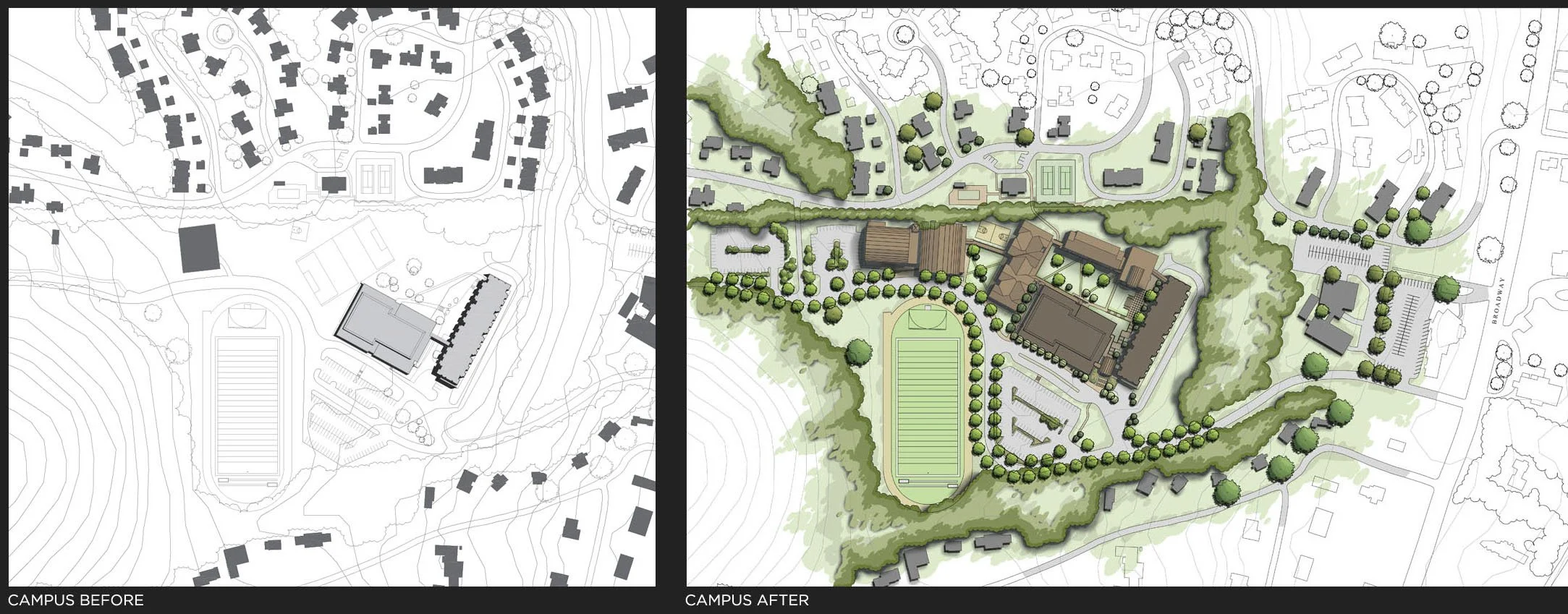
a phased master plan that knits new and existing buildings into a community campus.
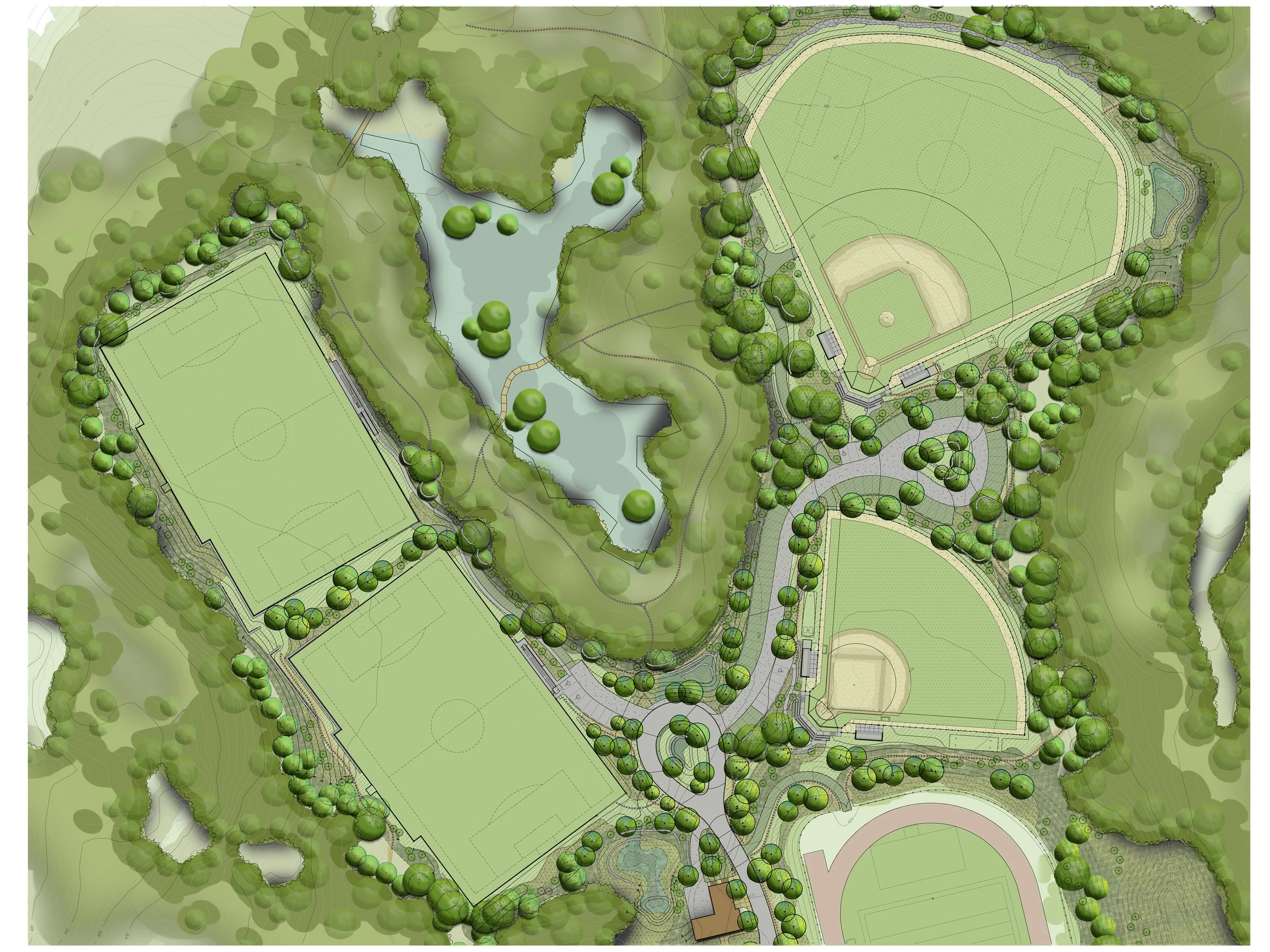
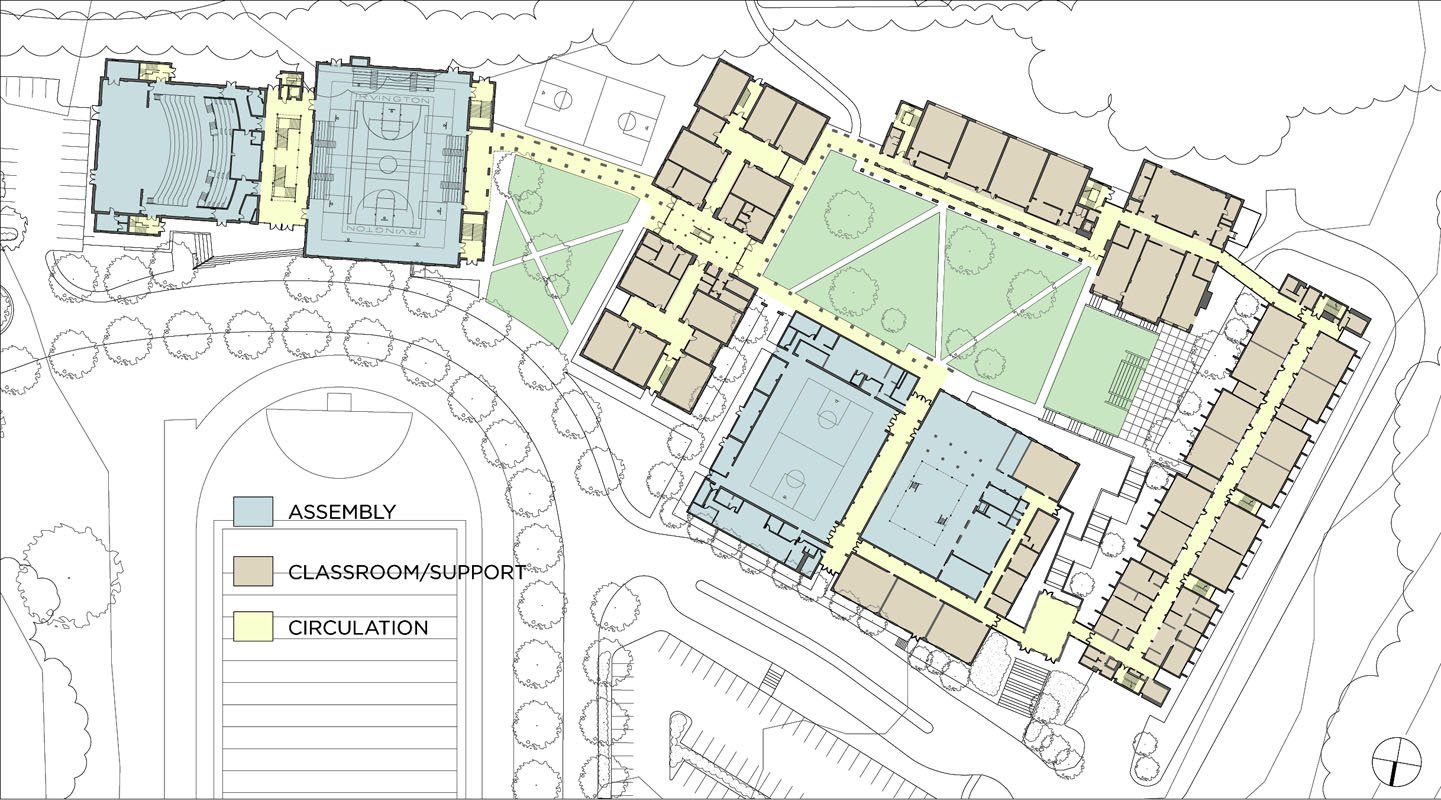
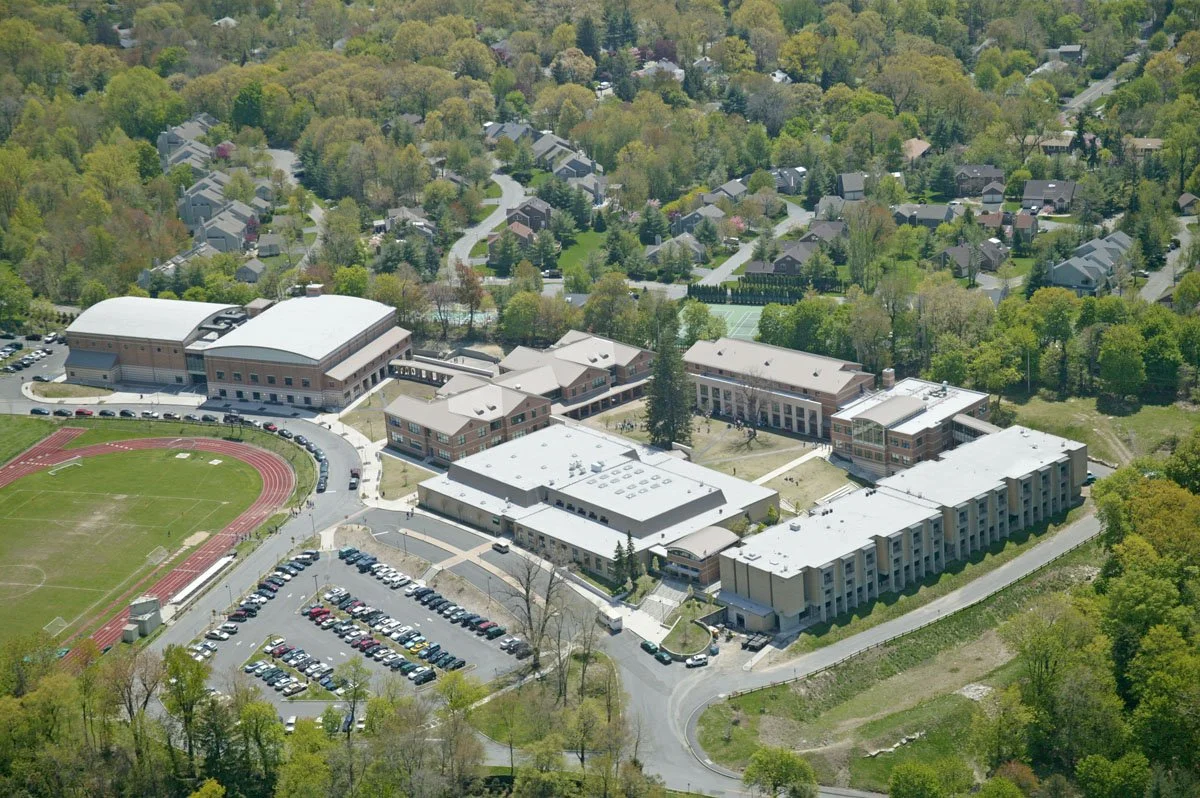
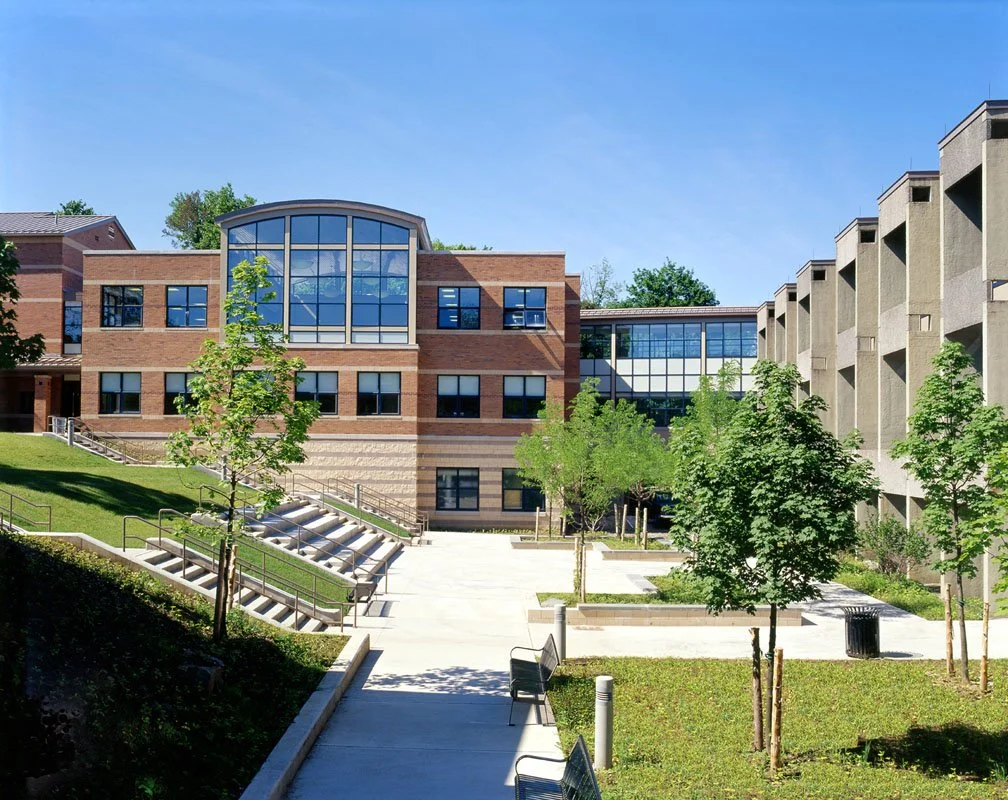
Set on a sloping, thirty‑nine acre site, the project responds to enrollment growth and district goals to create a single, community‑serving campus. The plan groups new and renovated buildings to provide distinct identities for middle and high schools while enabling shared access to core facilities such as the library, theater, and gymnasium.
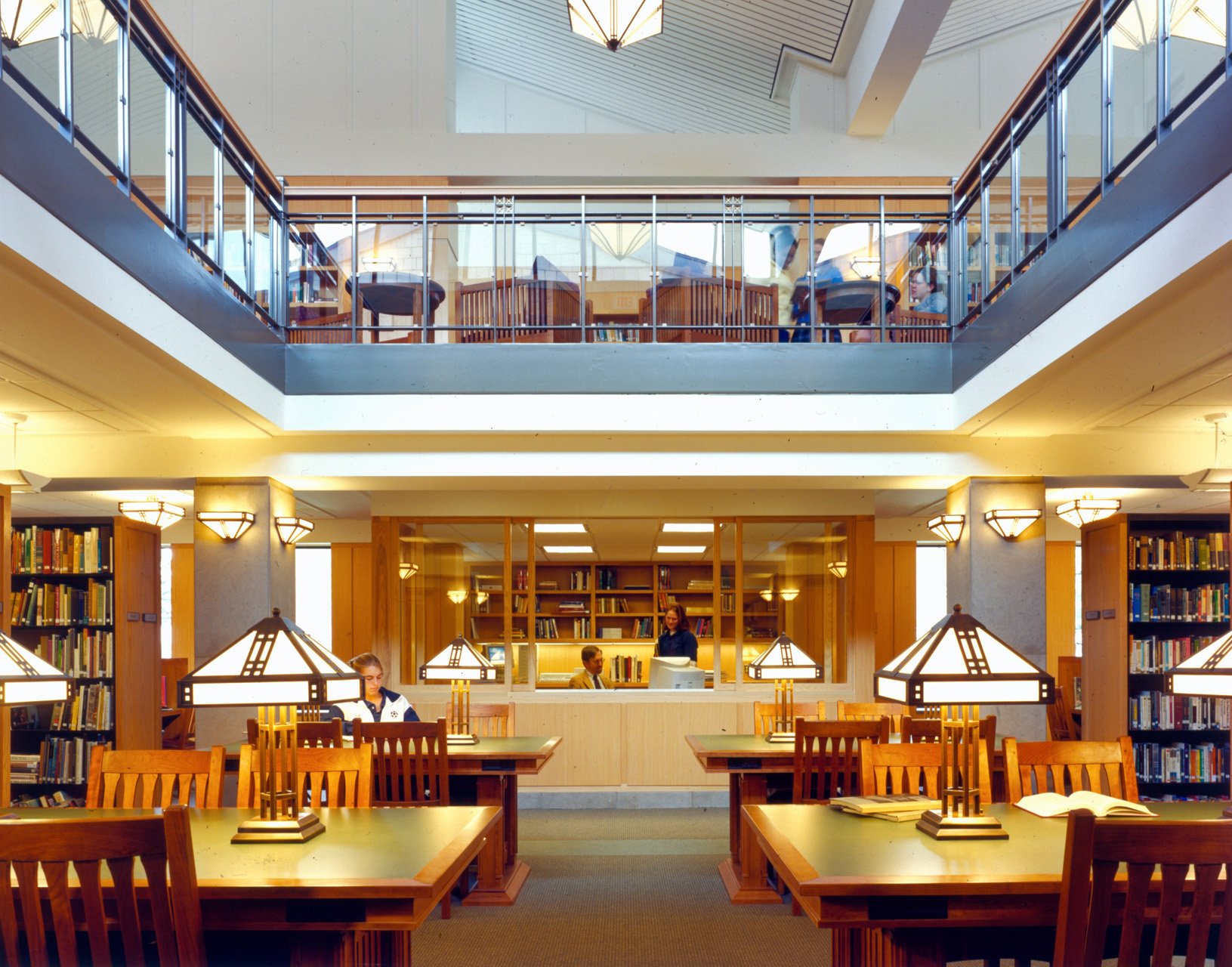
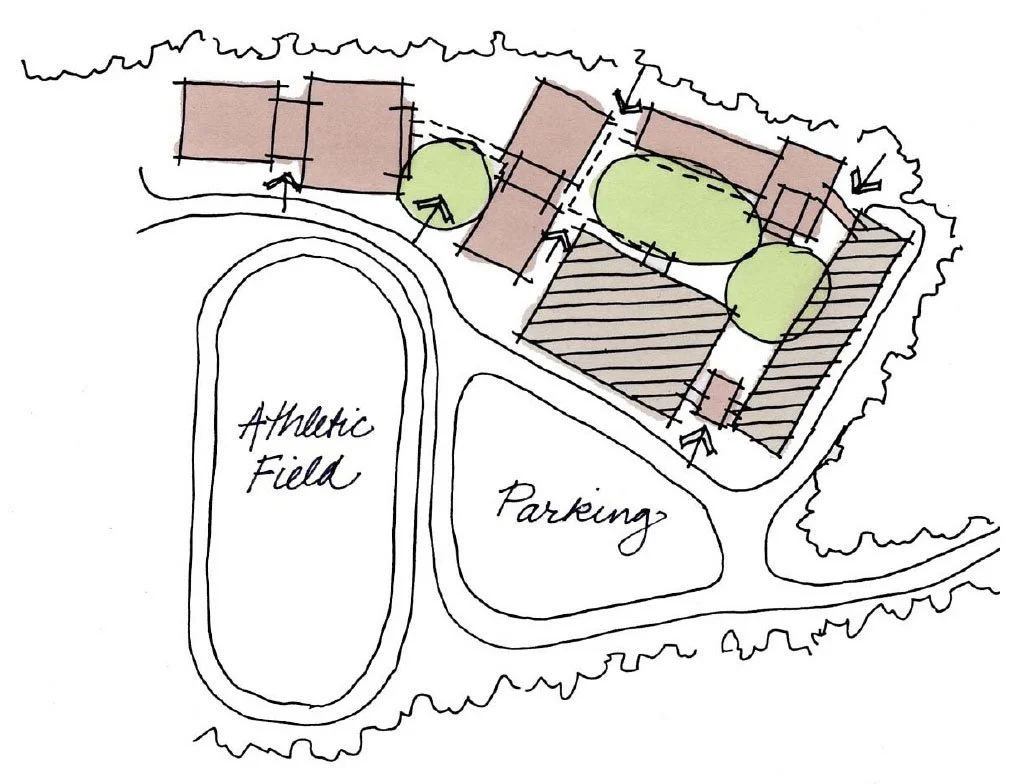
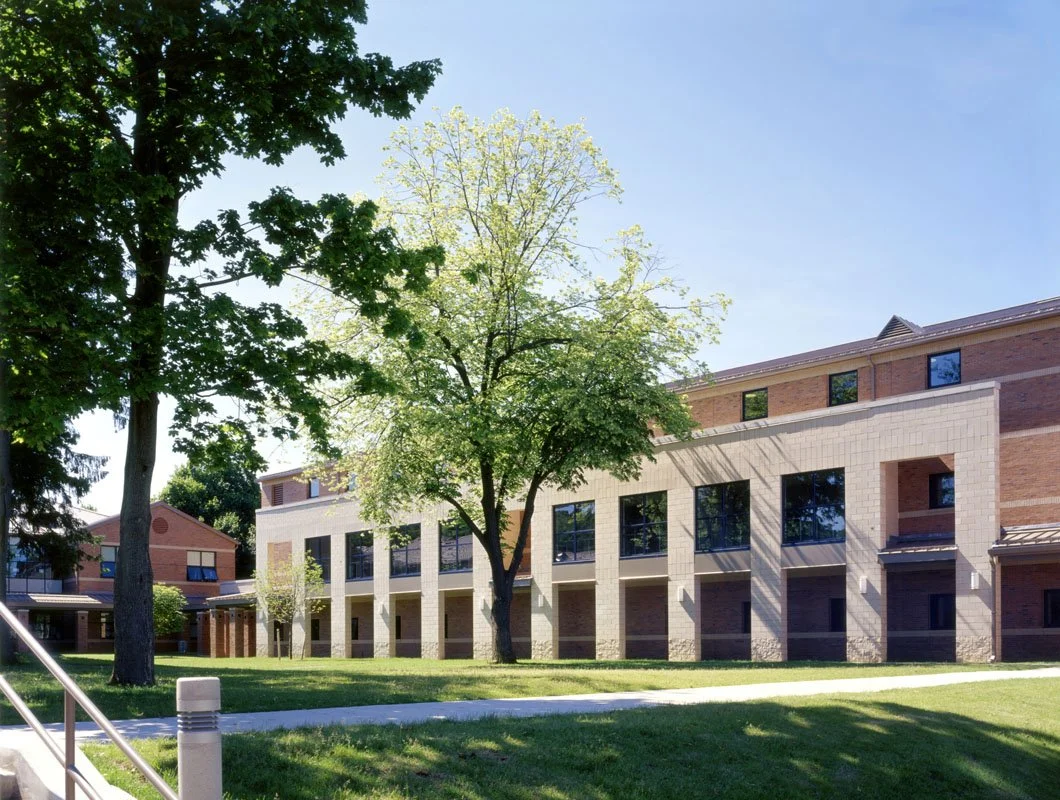
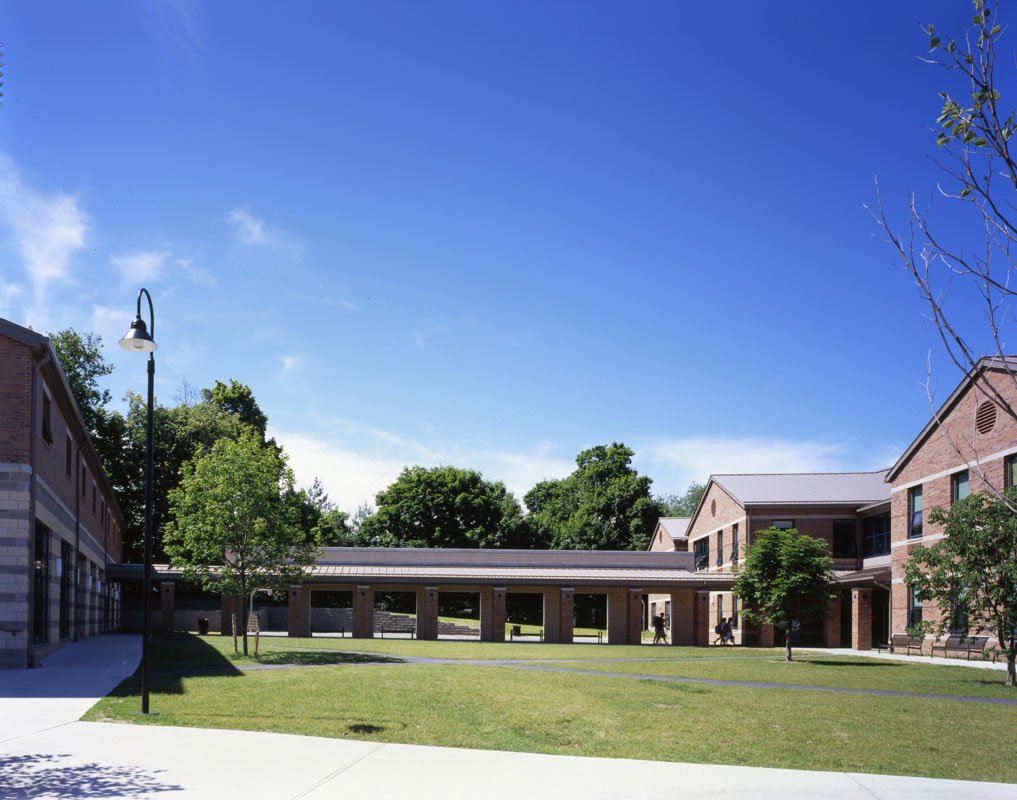
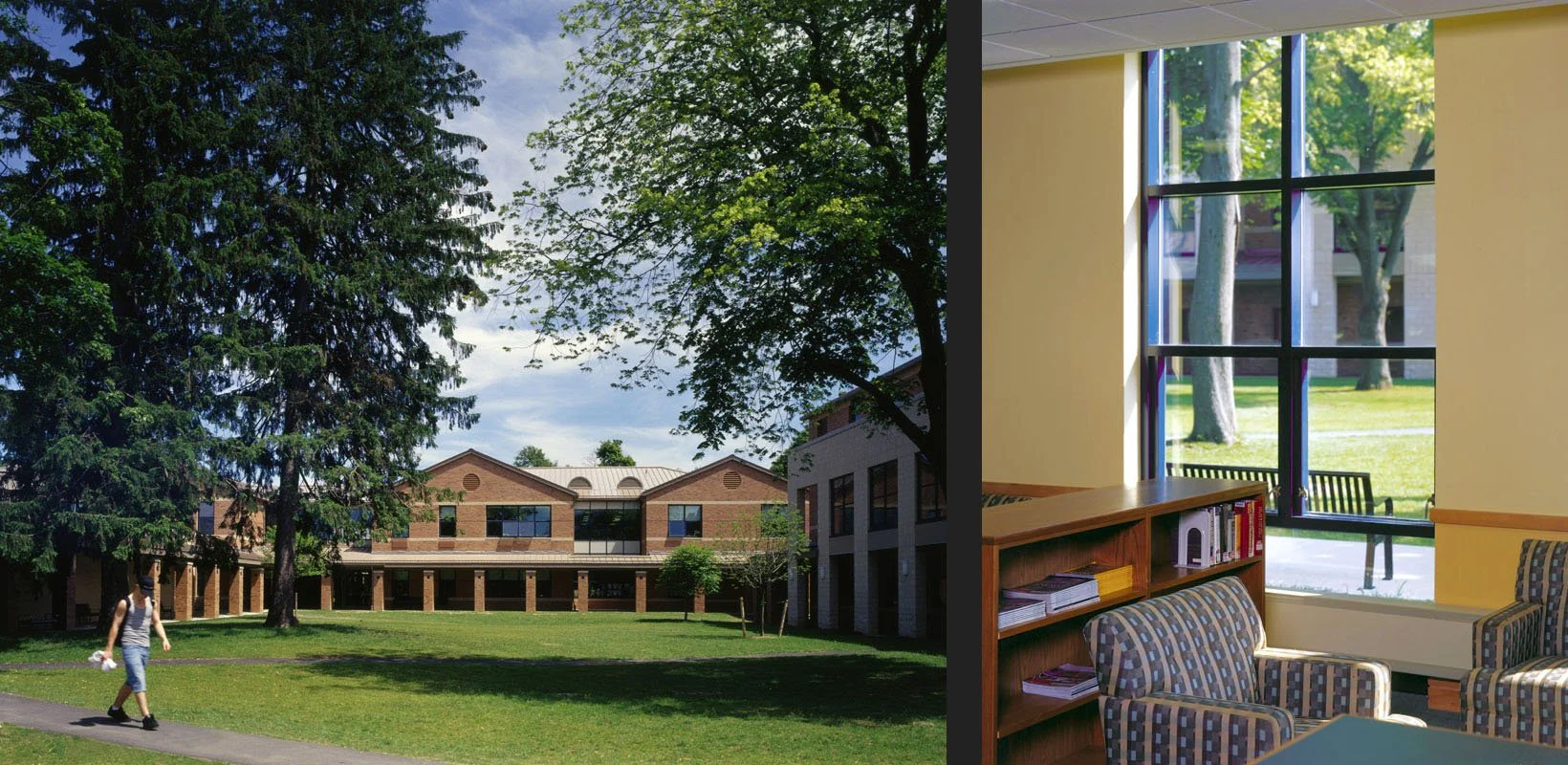
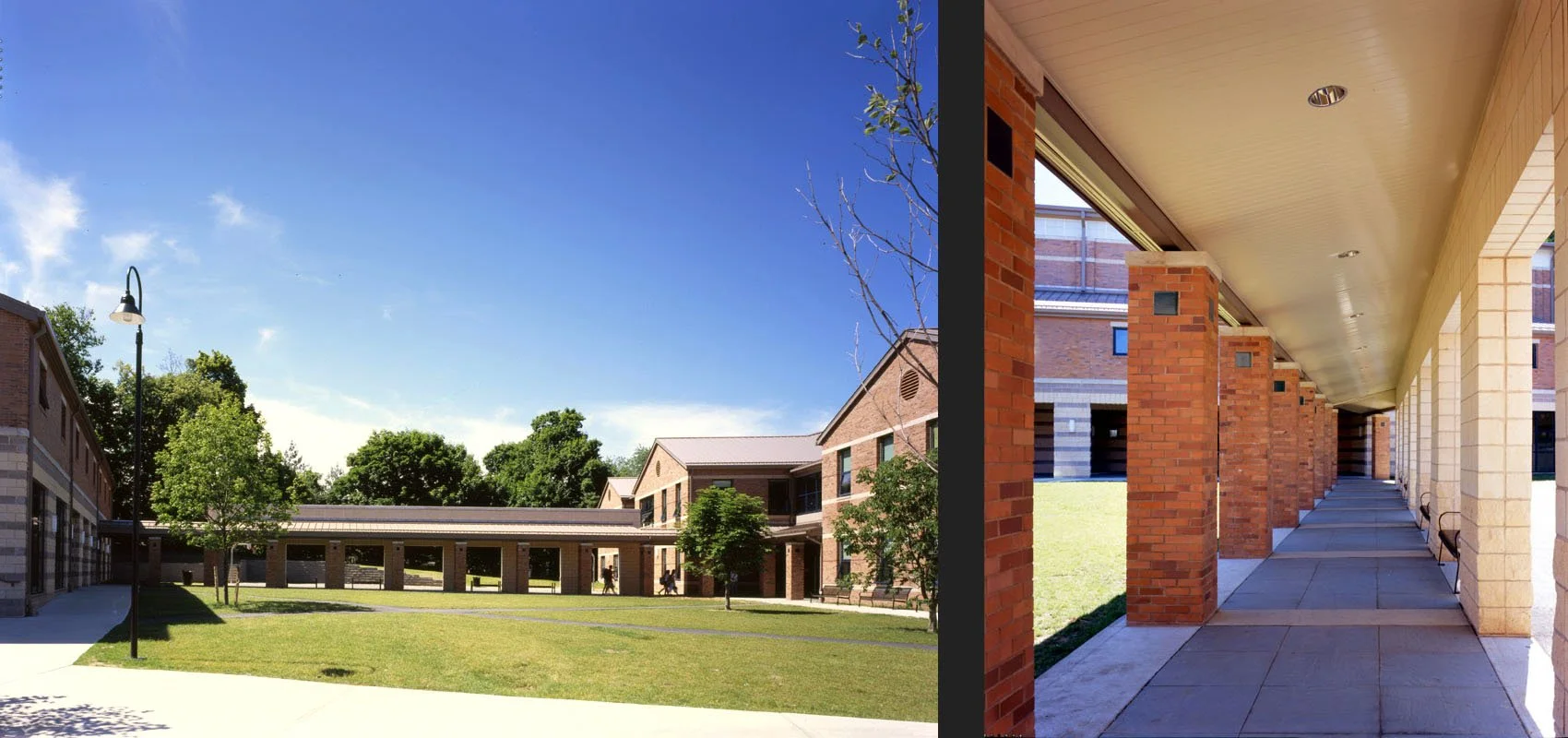
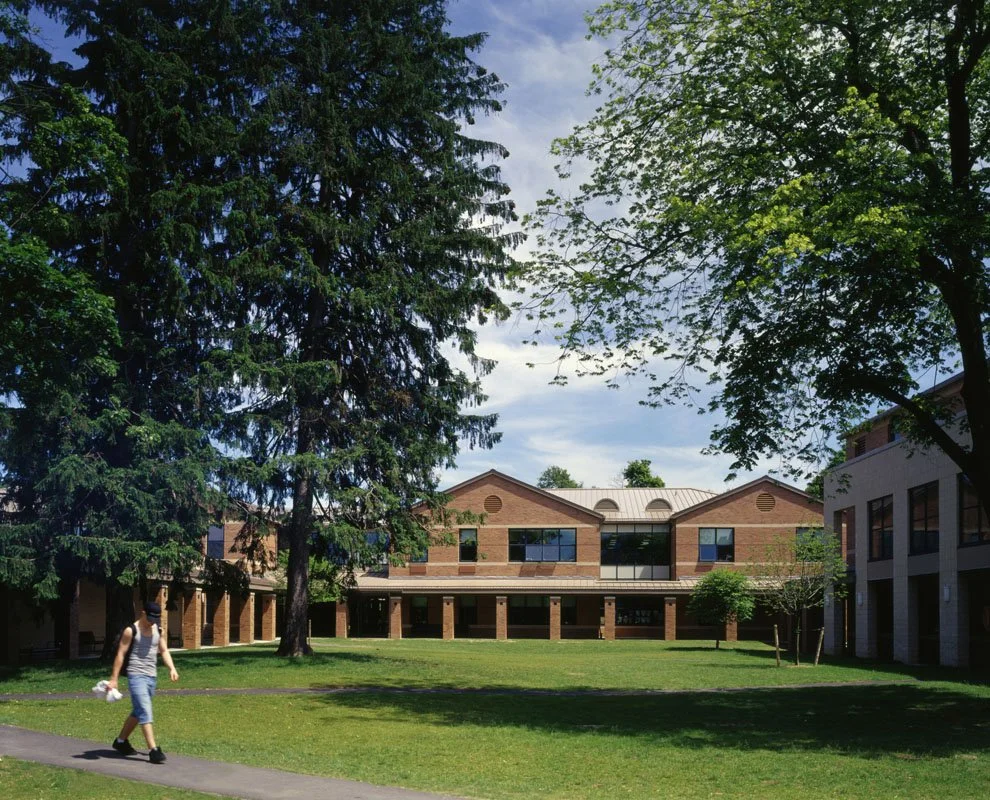
Design strategies organize buildings around three interconnected quadrangles framed by covered walkways and colonnades. Major common spaces and circulation face the quadrangles to promote supervision, social interaction, and easy movement, while an existing auditorium was transformed into a two‑story library to strengthen campus learning resources.
project narrative
-
The district required a campus solution that addressed rapid enrollment growth, multiple building deficiencies, and the desire for a community‑accessible facility while maintaining distinct identities for middle and high schools.
The sloping thirty‑nine acre site and existing high school complex created constraints for expansion and circulation.
To address these challenges, the master plan phased construction and renovations to minimize disruption while creating a clear organizational logic for movement, supervision, and shared programmatic use.
-
The concept organizes the campus as a sequence of three interlocking quadrangles that become outdoor rooms and orient interior life toward shared open space.
Building placement and covered colonnades establish visual and physical connections so that lobbies, commons, and single‑loaded corridors face the quadrangles.
This strategy reinforces identity, supports shared facilities, and creates a legible campus hierarchy that reads at both neighborhood and campus scales.
-
Realization proceeded through phased bonds that combined new construction with renovation and adaptive reuse, allowing the campus to remain operational throughout.
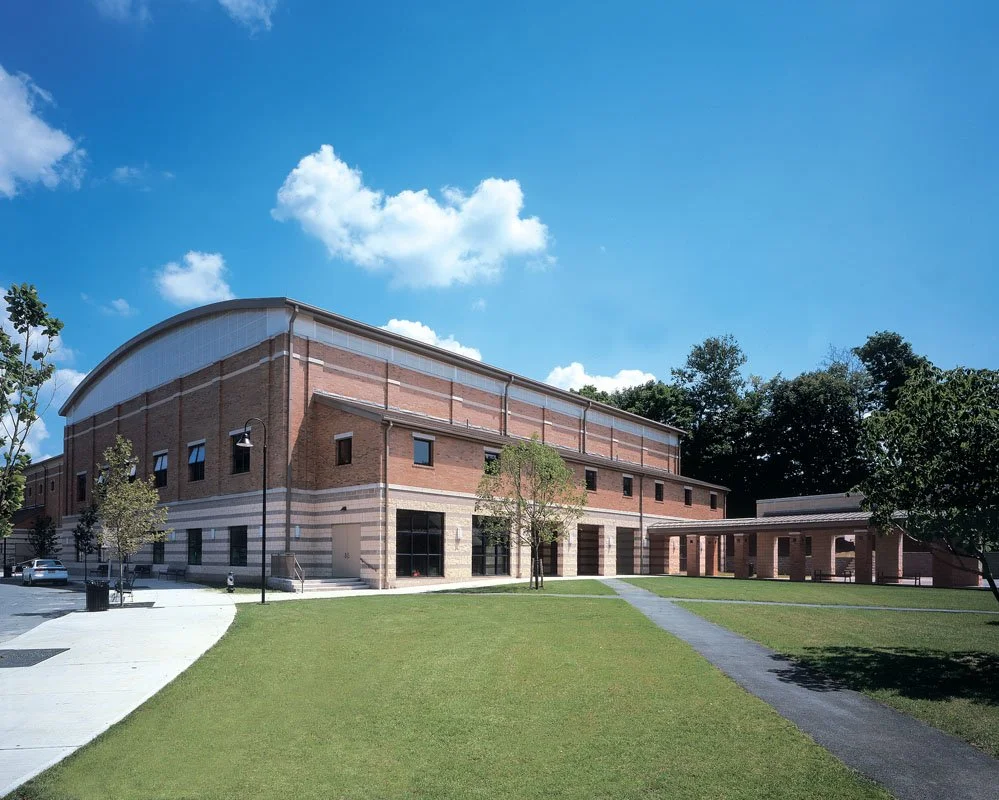
New buildings—the middle school, a science/music/cafeteria building, and a separate theater/gym—are linked by interior and exterior walkways and colonnades, while an existing auditorium was reinvented as the two‑story library.
Centralized infrastructure and shared systems support operational efficiency and programmatic overlap between middle and high school users.
project outcome
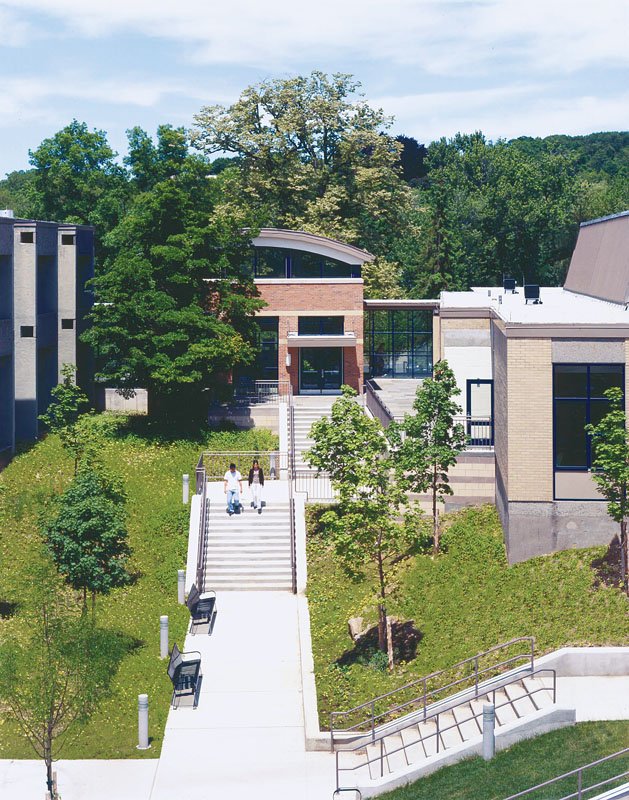
Courtyards and covered walkways connect buildings and structure daily movement, so routes between classrooms, commons, and shared facilities are clear and legible. Circulation paths balance directness with visible thresholds, which supports supervision and easy navigation for students and visitors.
Major commons and lobbies face the open courtyards, bringing daylight deep into circulation and gathering spaces and increasing visibility across program areas. This arrangement reinforces layered spatial sequences where interior volumes open to outdoor rooms and daylight modulates activity zones.
Shared facilities and program adjacencies accommodate simultaneous use by different age groups while preserving separate school identities. Reused and connected spaces adapt to shifting enrollment and program needs, which supports long term operational resilience.
let’s continue the conversation
Every project begins with listening. If you’re considering a new campus, building, or landscape, we’d welcome the chance to talk through your goals, challenges, and aspirations. Our team works collaboratively to shape places that feel grounded, connected, and built to serve people well over time.