moss library
agnes irwin school
1999
rosemont, pa
7,500 sf
renovation, transformation
2000, AS&U
Gold Citation - Educational Interiors Showcase
awards
Structural: Anastos Engineering Associates
MEP: Hill & Bell Associates, PC
Code: Bruce J. Spiewak, RA
General Contractor: E. Allen Reeves
Photography: Tom Bernard
collaborators
a transformed upper school library that reconnects levels through light and material.
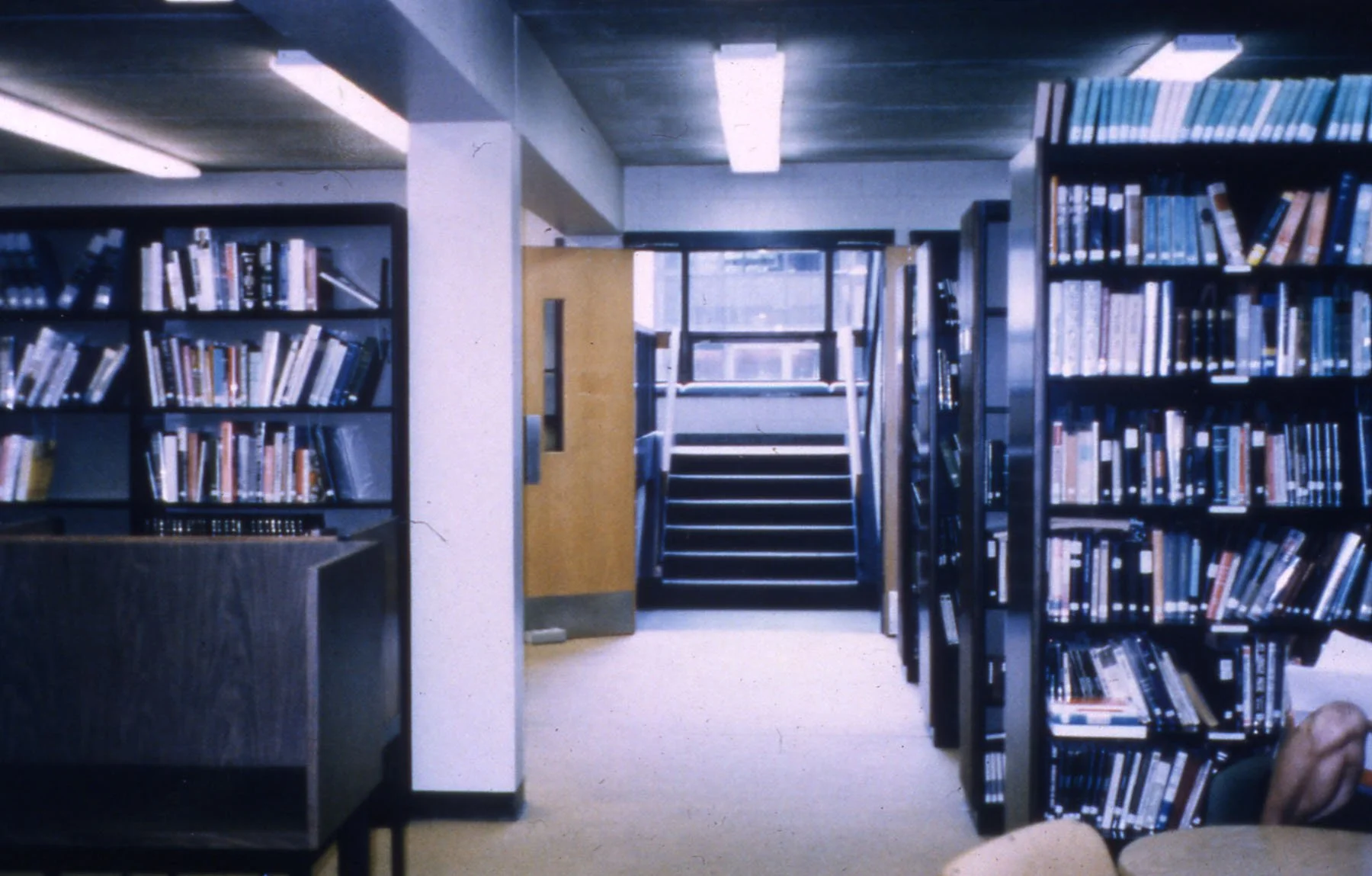
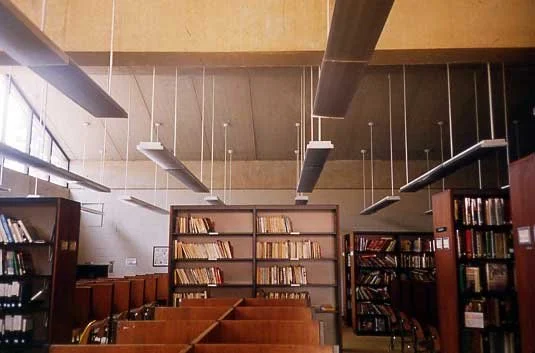
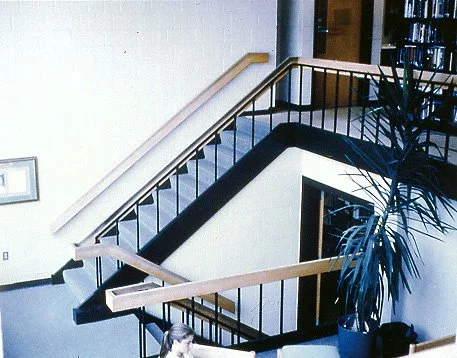
The Moss Library serves the Upper School at Agnes Irwin, an independent day school in Rosemont, PA. The original 1960s library occupied two disconnected levels in an exposed-concrete building. The renovation united the plan, adapting the 7,500 sf interior to contemporary study patterns while improving legibility and supervision.
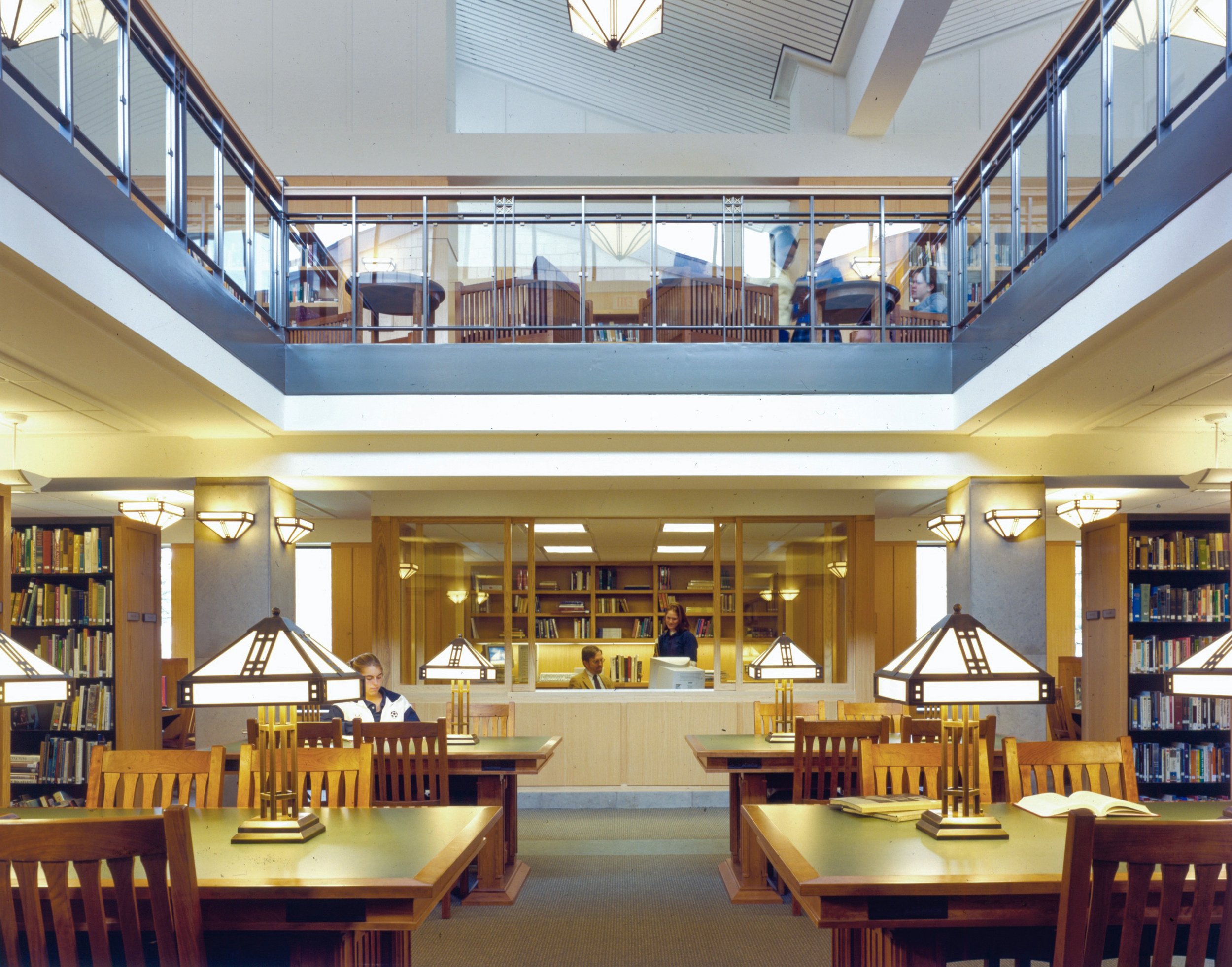
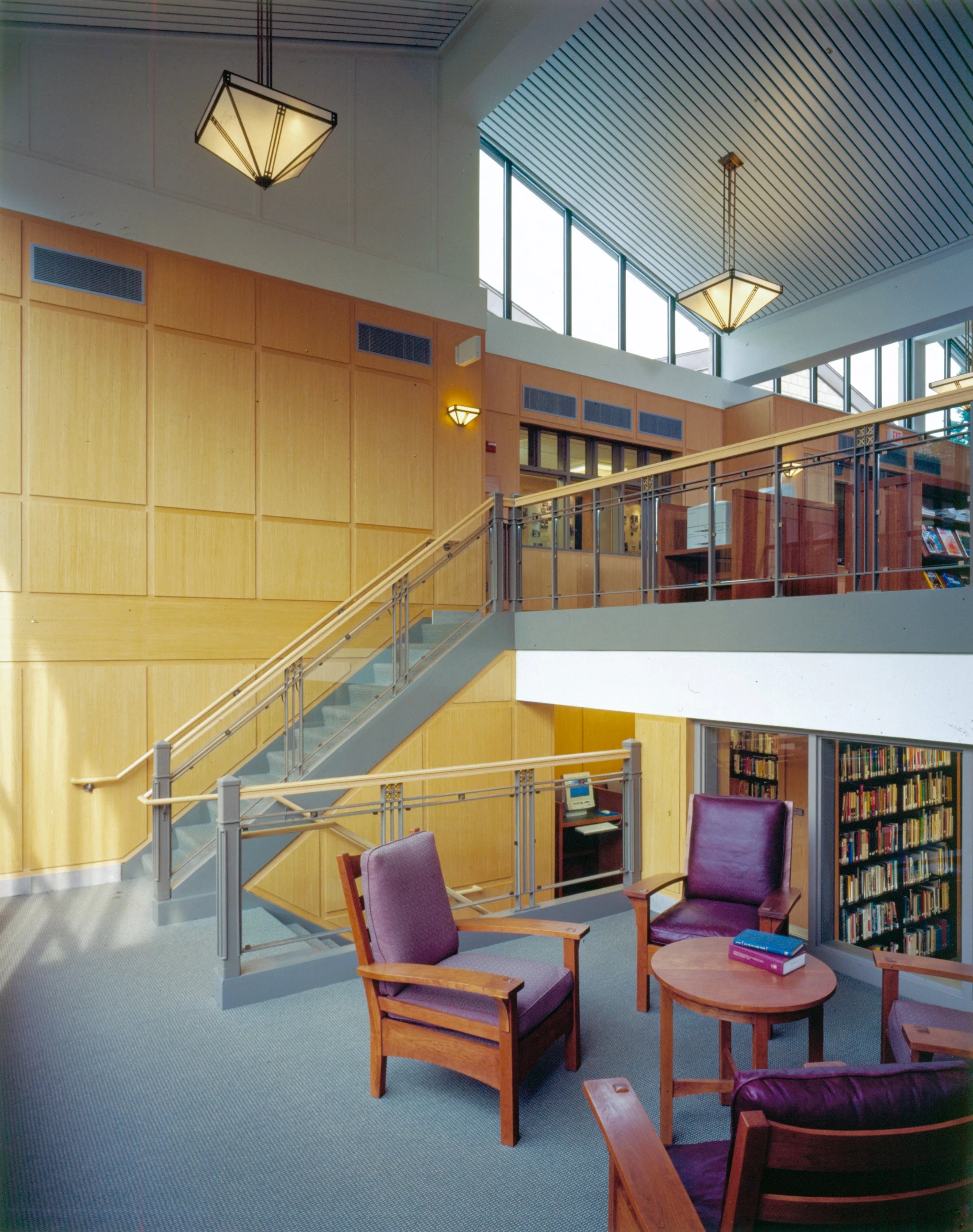
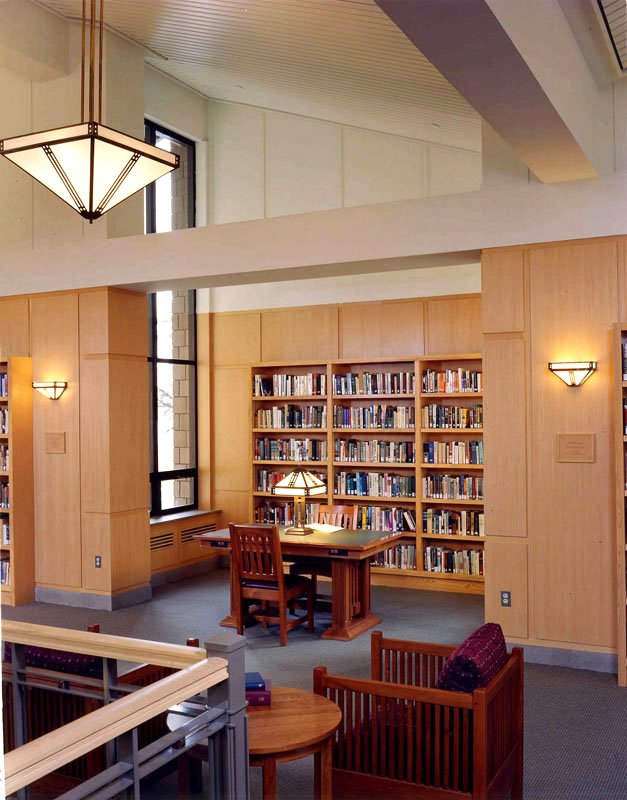
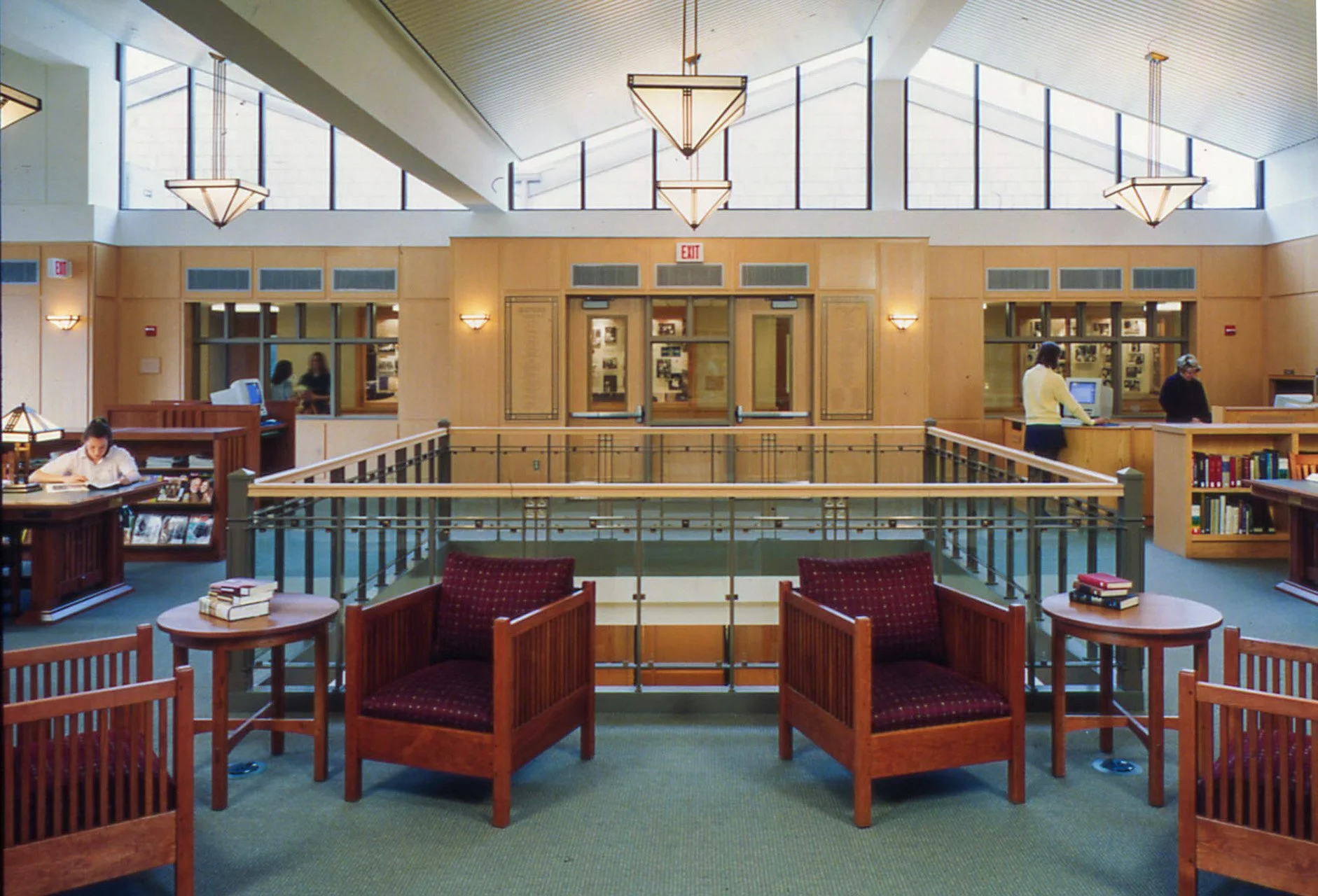
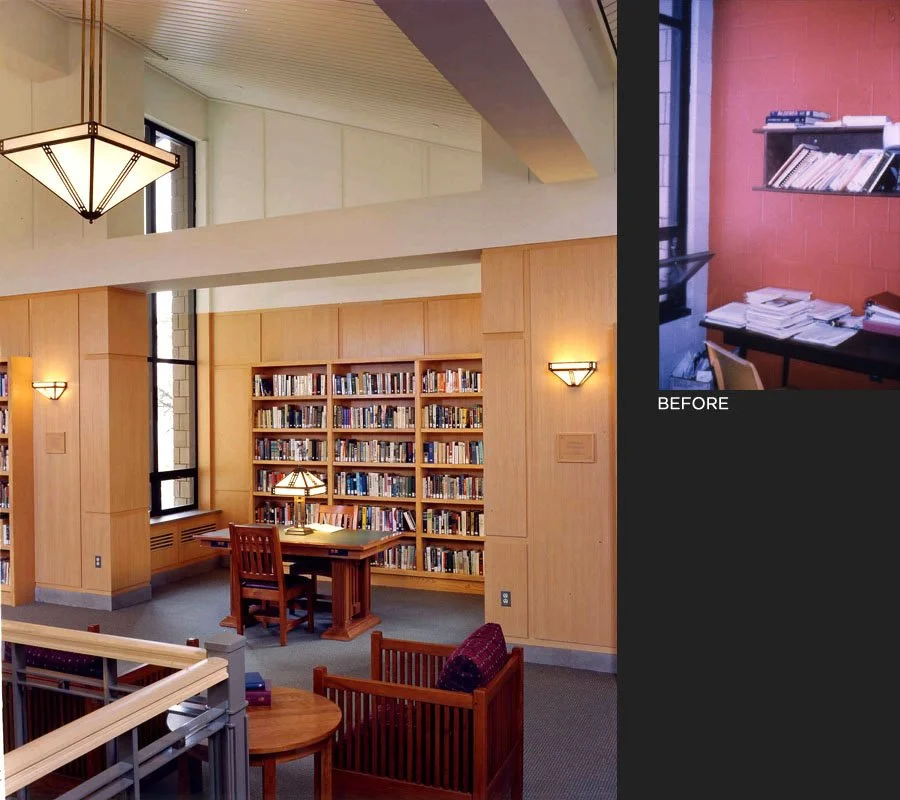
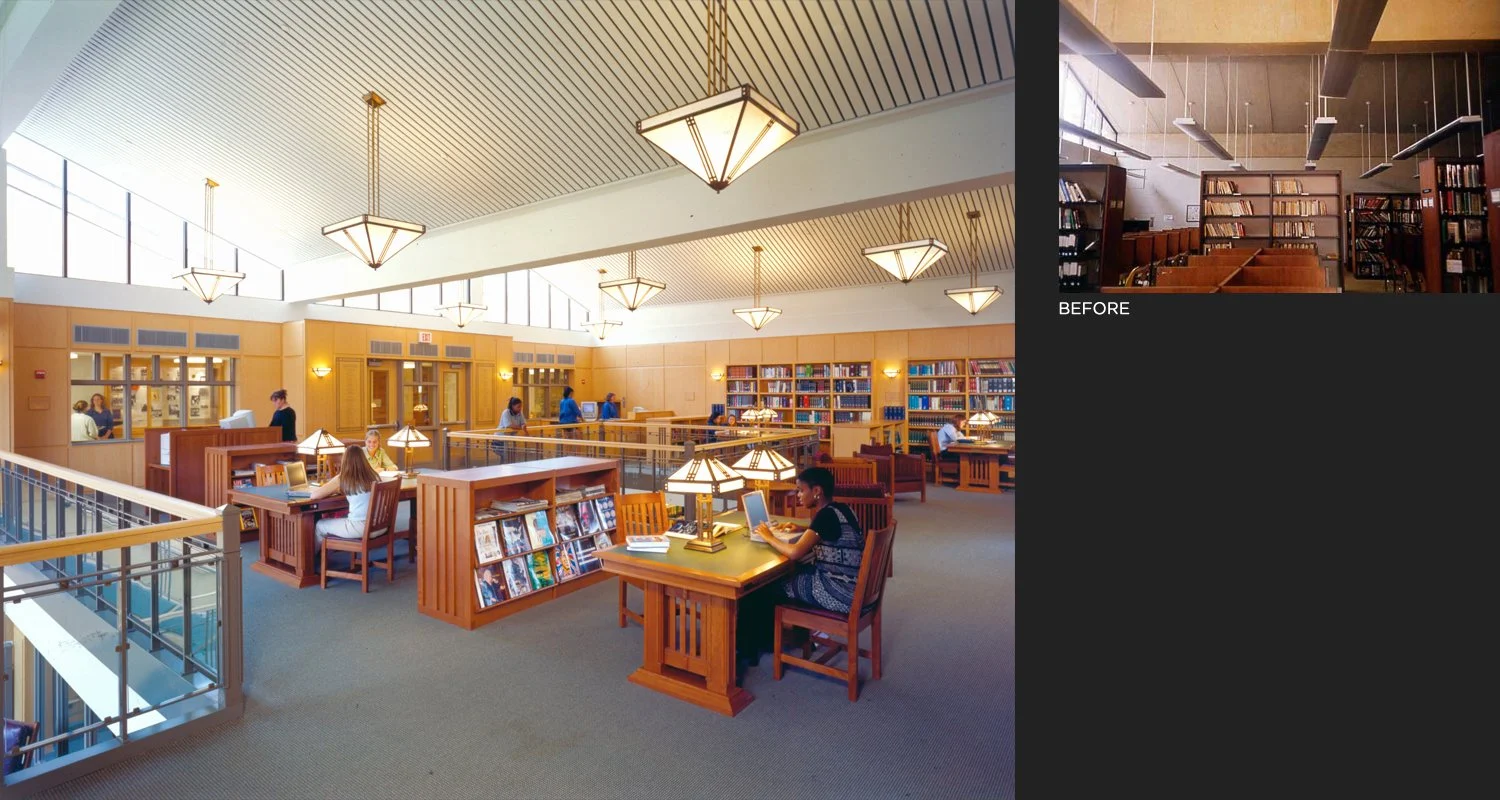
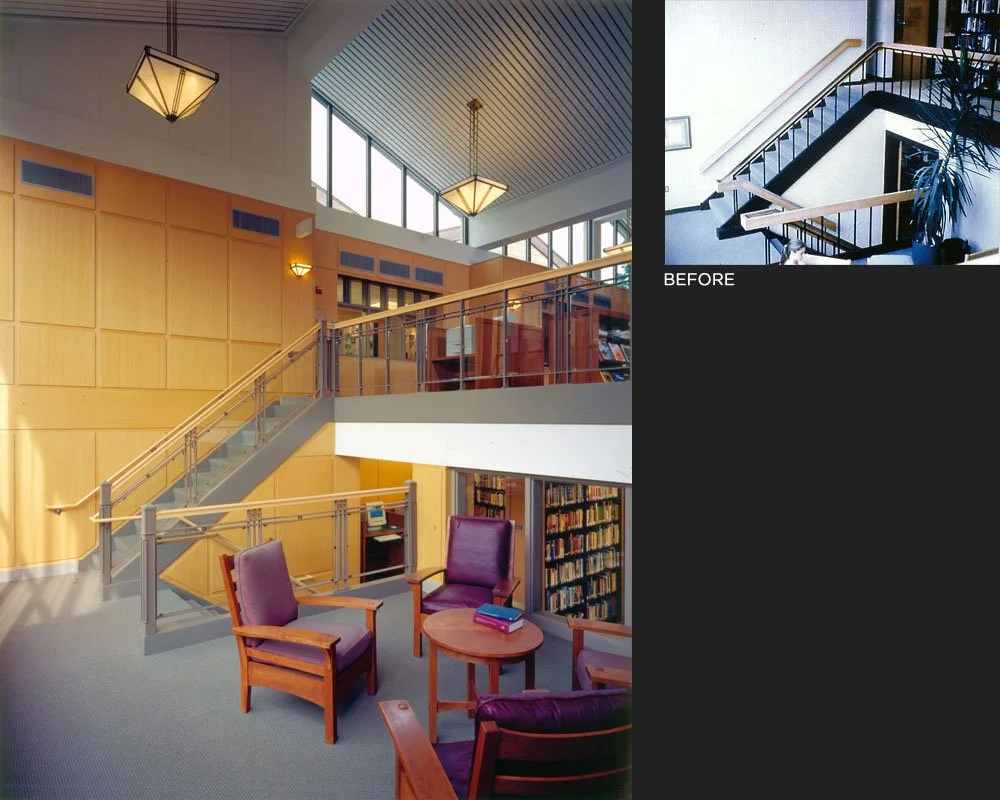
Design moves focused on visual connection and material clarity: a large opening links upper and lower floors, a mezzanine lounge sits beside an outside glass wall, and open stairs with glass railings knit the space together. A refined palette of ash paneling, slatted acoustical ceilings, limestone bases, and cherry furniture reinforces calm and durability.
project narrative
-
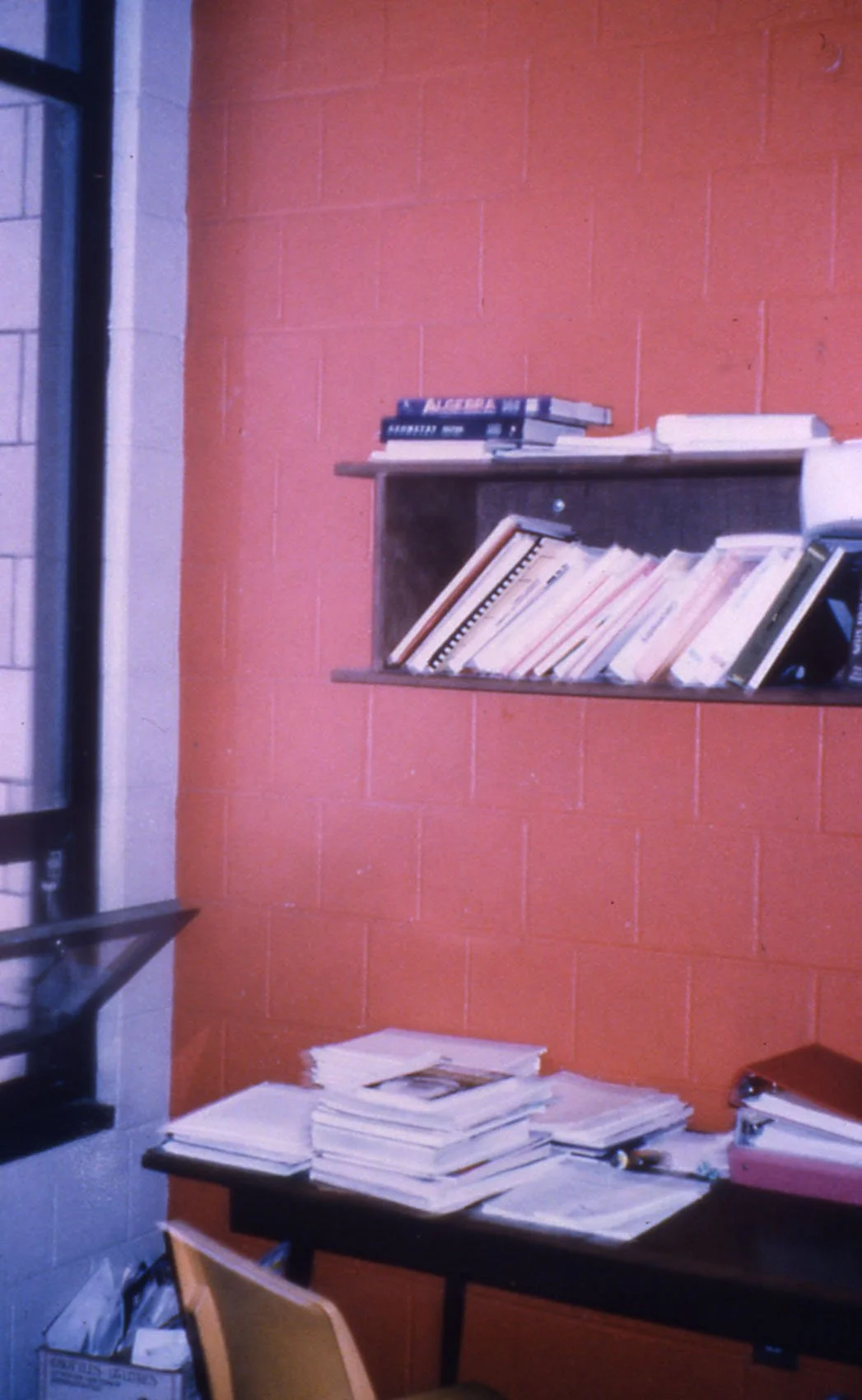
The original library was split across two largely autonomous levels with limited visual connection and a narrow stair, which constrained supervision and legibility.
The school needed a more cohesive facility that could respond to changing curricula, information systems, and increased enrollment while remaining within the existing footprint. To address this, the project prioritized clear sightlines, improved circulation, and adaptable study spaces.
-
The design concept centered on making the plan legible through transparency and layered spatial connection.
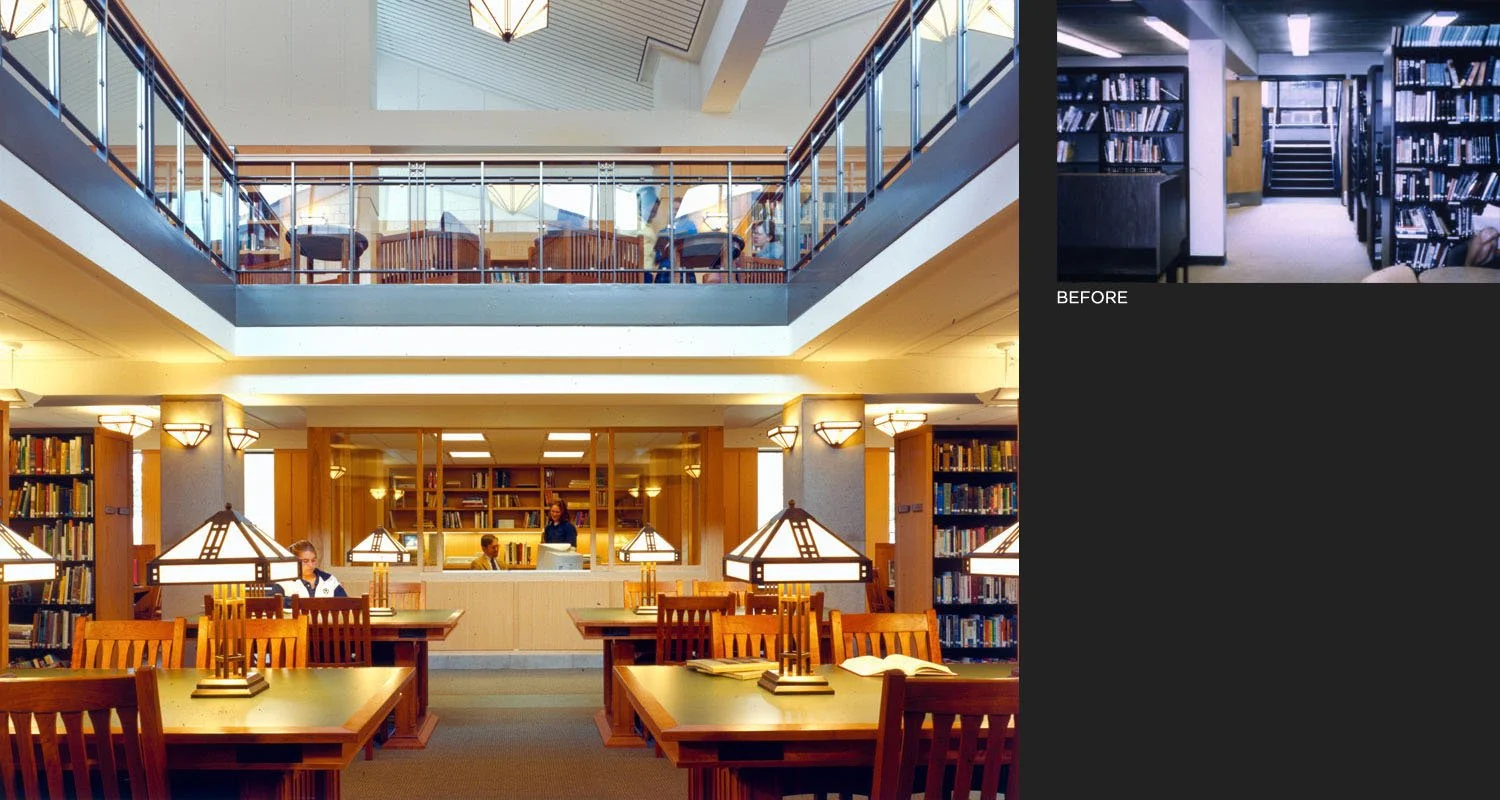
By cutting a large opening and introducing a mezzanine lounge, the library becomes a continuous, three-level interior where daylight and view lines reinforce orientation.
Building on this idea, open stairs and glass railings maintain visual continuity while defining distinct study zones.
Daylight and openness guide the organization of classrooms and gathering zones, while material choices and spatial proportions reinforce a calm, contemporary learning atmosphere.
The campus becomes a sequence of welcoming spaces that encourage movement, collaboration, and engagement.
-
The concept was realized by carving an opening in the upper floor and adding a mezzanine adjacent to the exterior glazing, which brings daylight deep into the plan.
Open stair flights with glass railings link all levels and improve supervision, while a carefully chosen material palette—ash veneer, slatted acoustic ceilings, limestone bases, and cherry furniture—calms the interior and expresses permanence.
Technical solutions concealed power and data raceways to support expanded technology without visual clutter.
project outcome
Movement between levels feels continuous, with stair sequences that remain visible from multiple vantage points. Circulation patterns support clear orientation and make supervision and wayfinding simple.
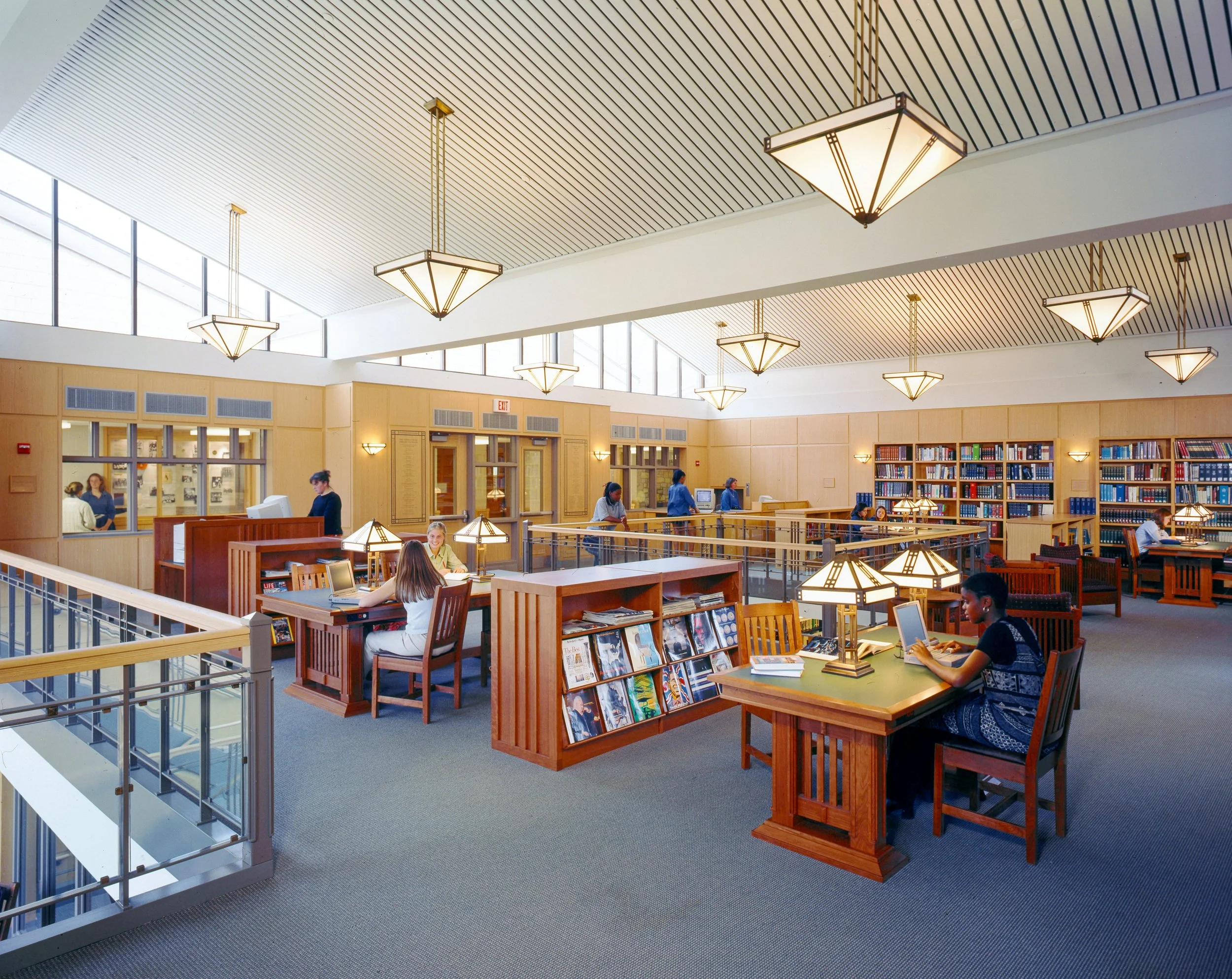
Daylight reaches deep into the interior, moderating contrast and improving reading conditions across settings. Interconnected sightlines to adjacent spaces and the exterior reinforce visual clarity and keep activity legible.
Flexible arrangements of tables and seating accommodate individual study, group work, and evolving technology without major reconfiguration. Durable surfaces and integrated power and data support daily use while minimizing visual clutter.
let’s continue the conversation
Every project begins with listening. If you’re considering a new campus, building, or landscape, we’d welcome the chance to talk through your goals, challenges, and aspirations. Our team works collaboratively to shape places that feel grounded, connected, and built to serve people well over time.