the browning school
2015
new york, ny
56,500 sf
renovation, new construction, master plan, historic preservation, transformation
collaborators
Structural: Anastos Engineering
MEP: ICOR
Site/Civil: Langan
Construction Manager: JRM
Food Service: Clevenger Frable LaVallee
reconfigured circulation and daylight strategy that unifies public spaces and supports arts and science.
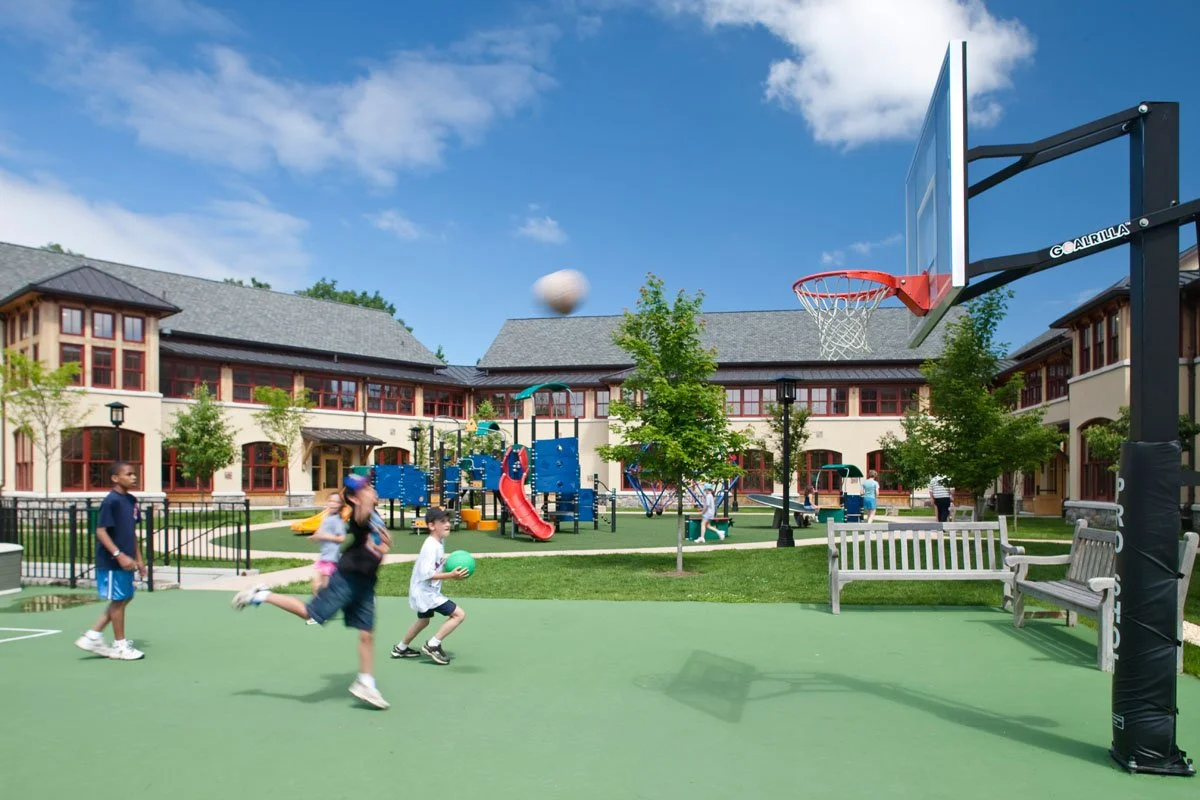
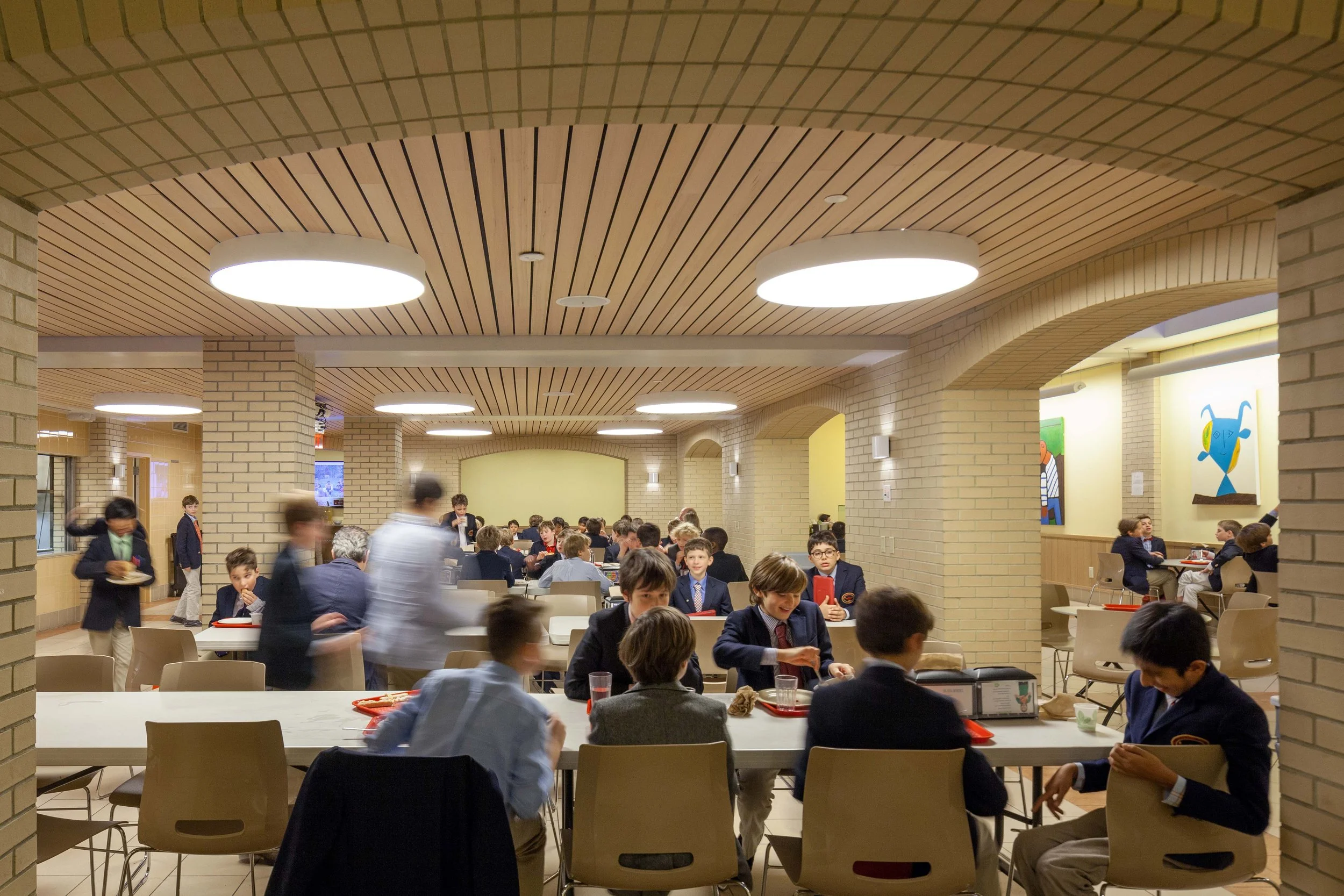
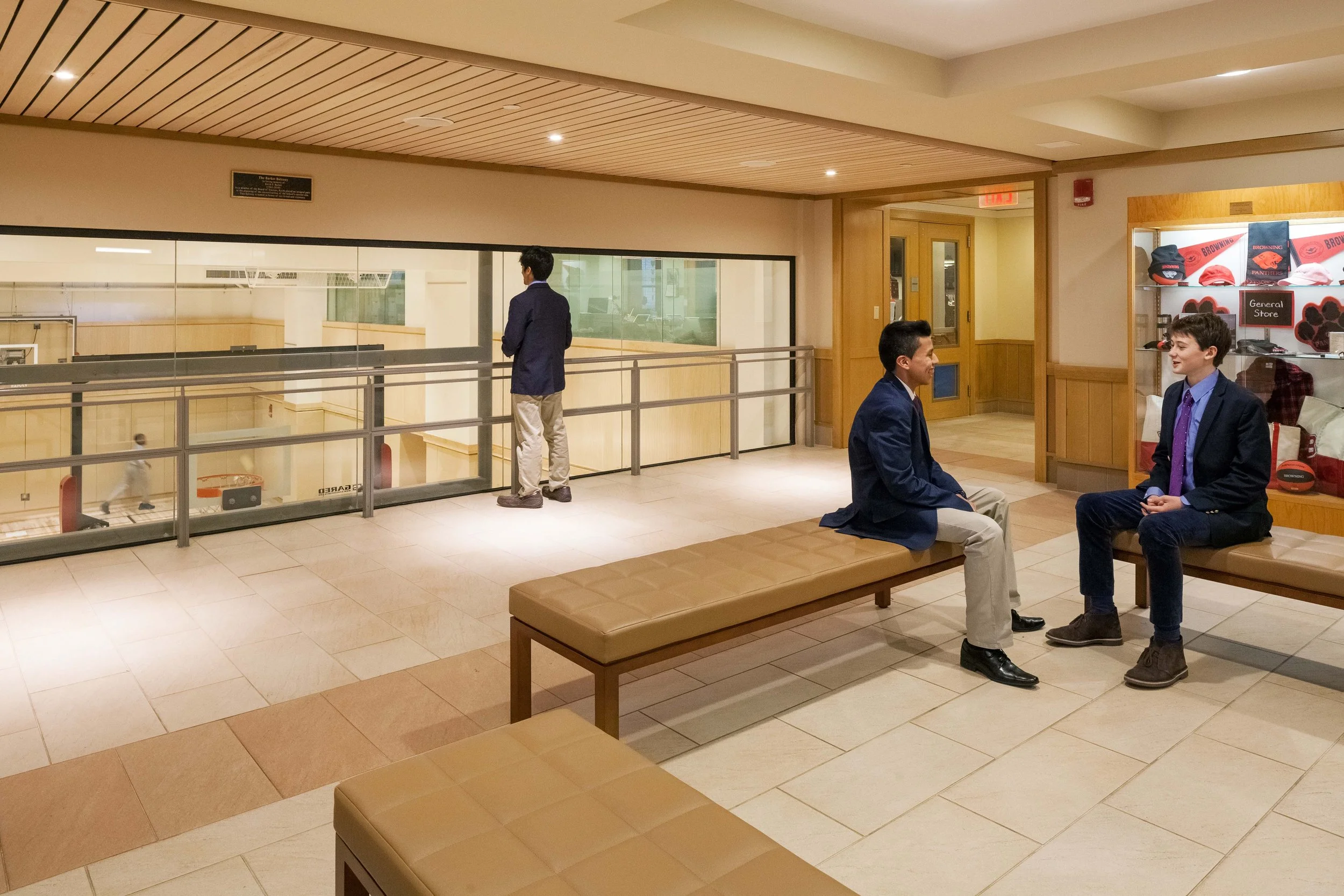
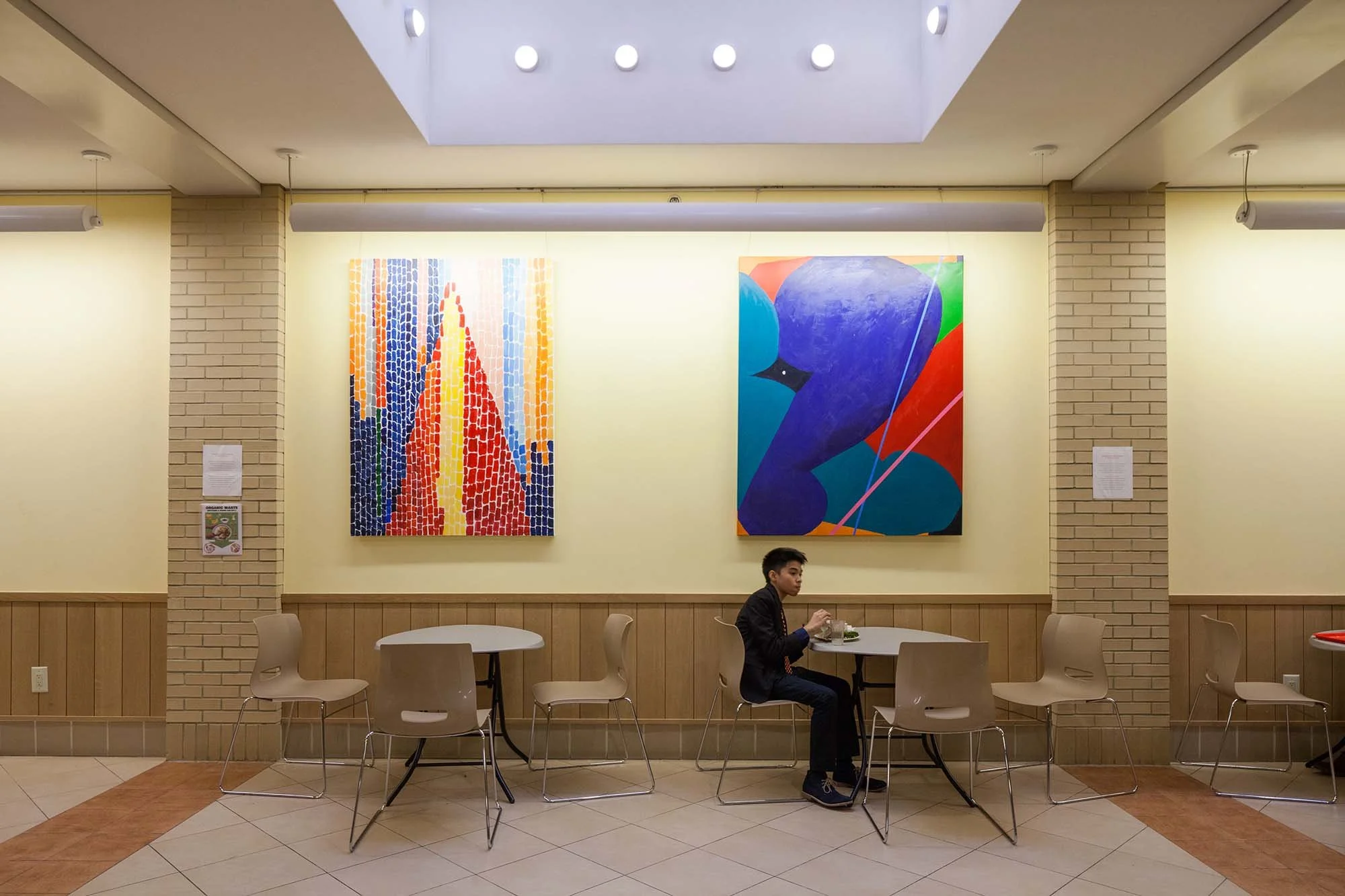
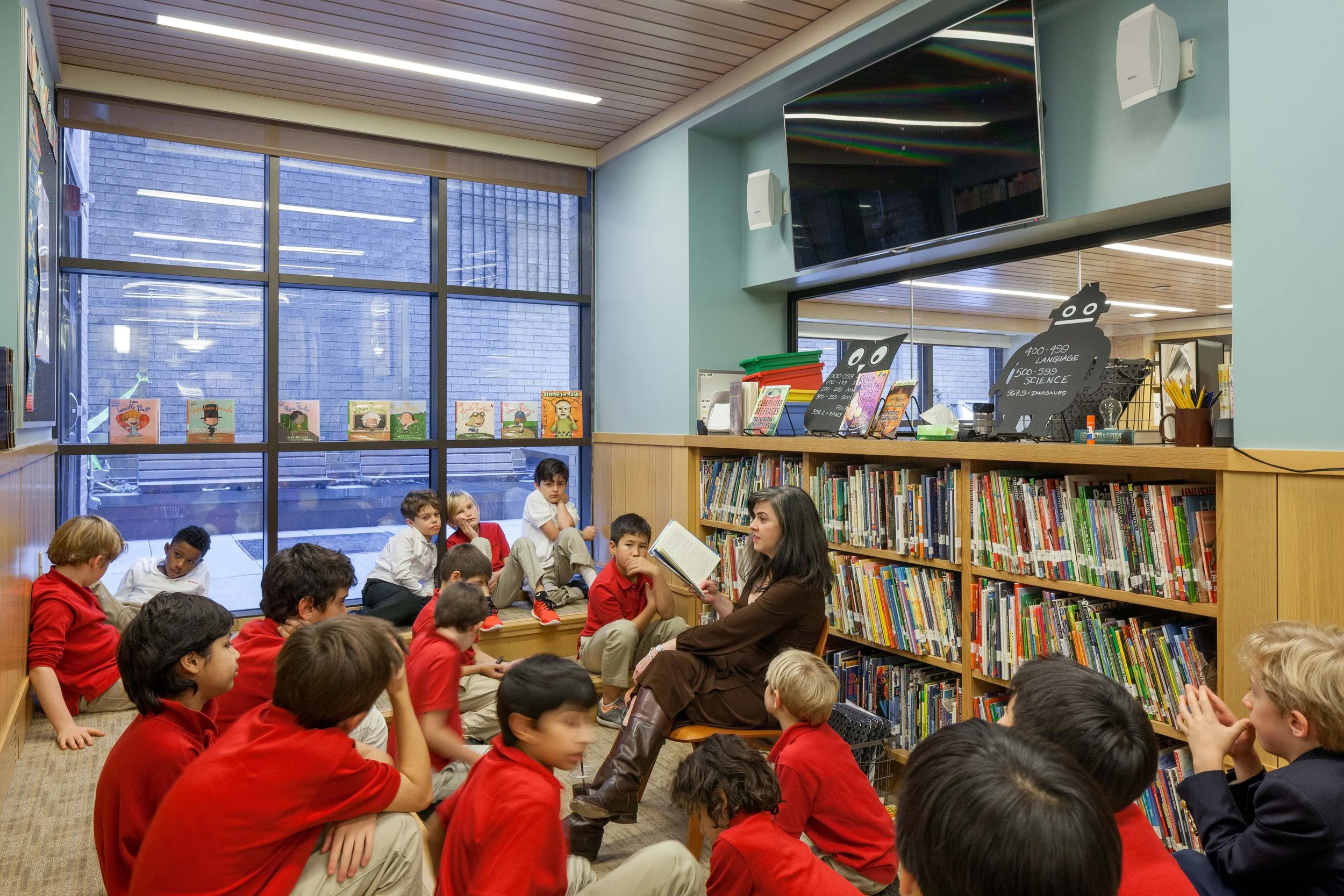
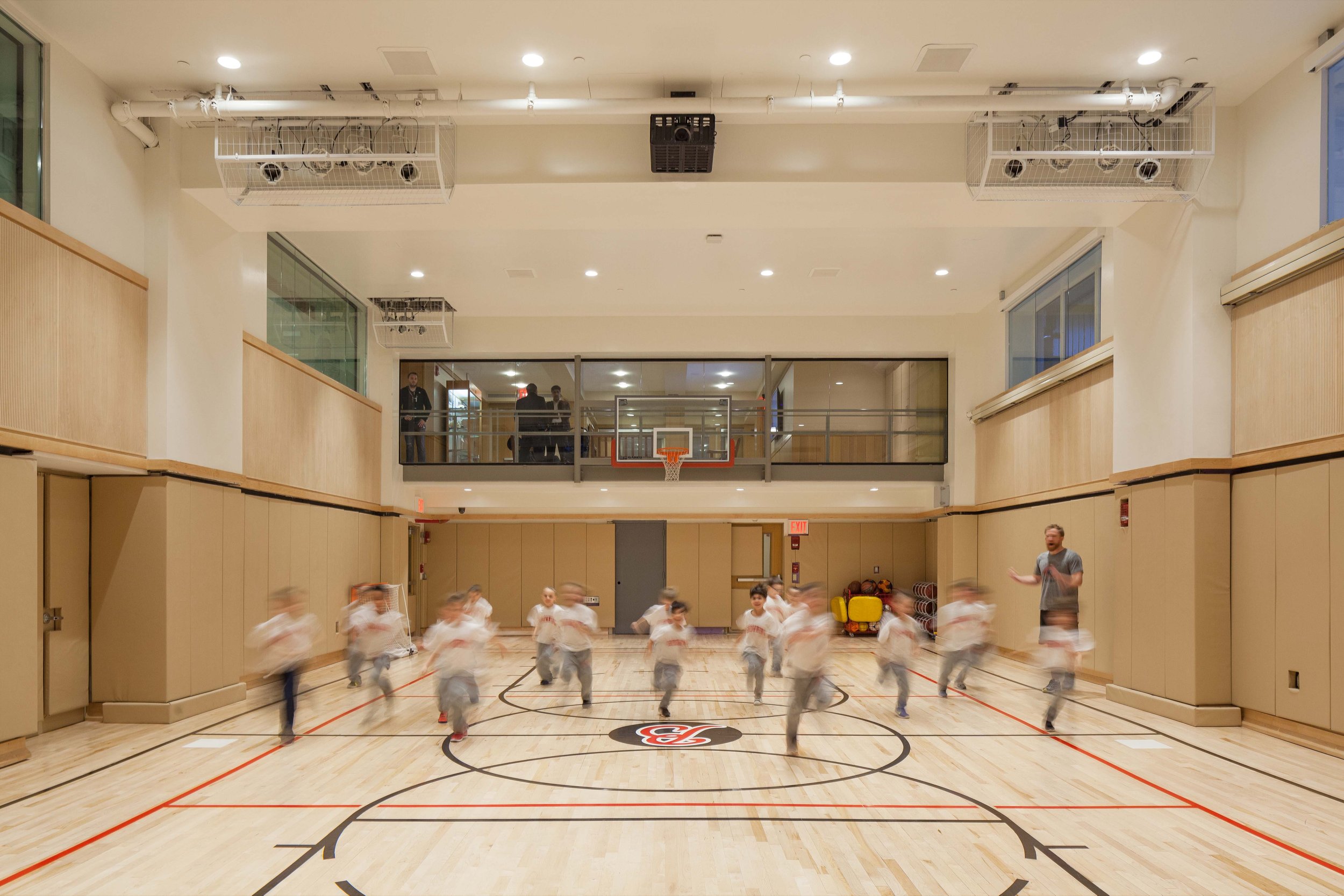
The Browning School occupies 12 levels across three adjacent buildings on East 62nd Street. After a comprehensive master plan, the project reorganized public circulation and consolidated key functions to create a new public zone with an expanded lobby, gymnasium, dining hall and library. This shift clarified movement and made primary spaces legible to students and visitors.
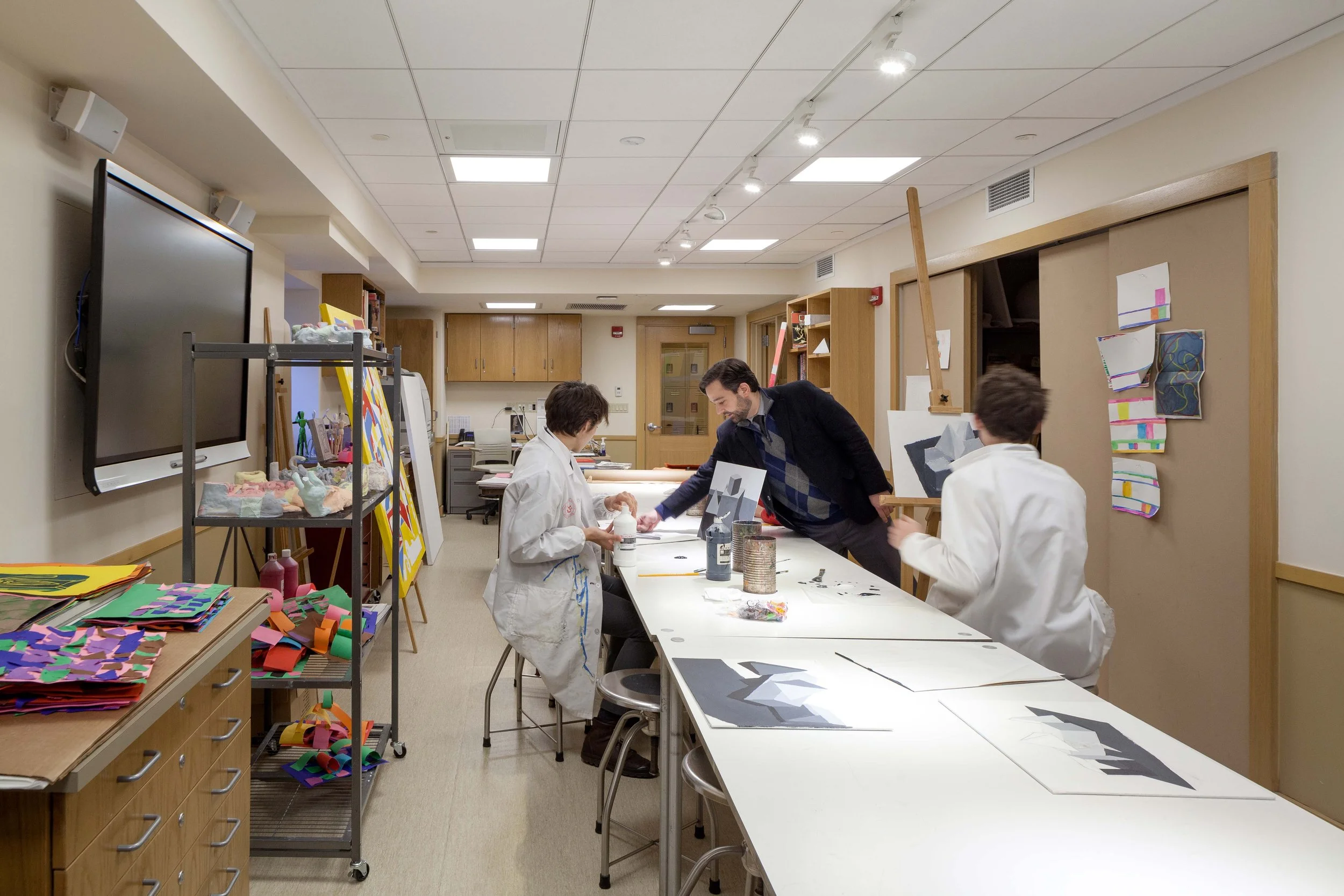
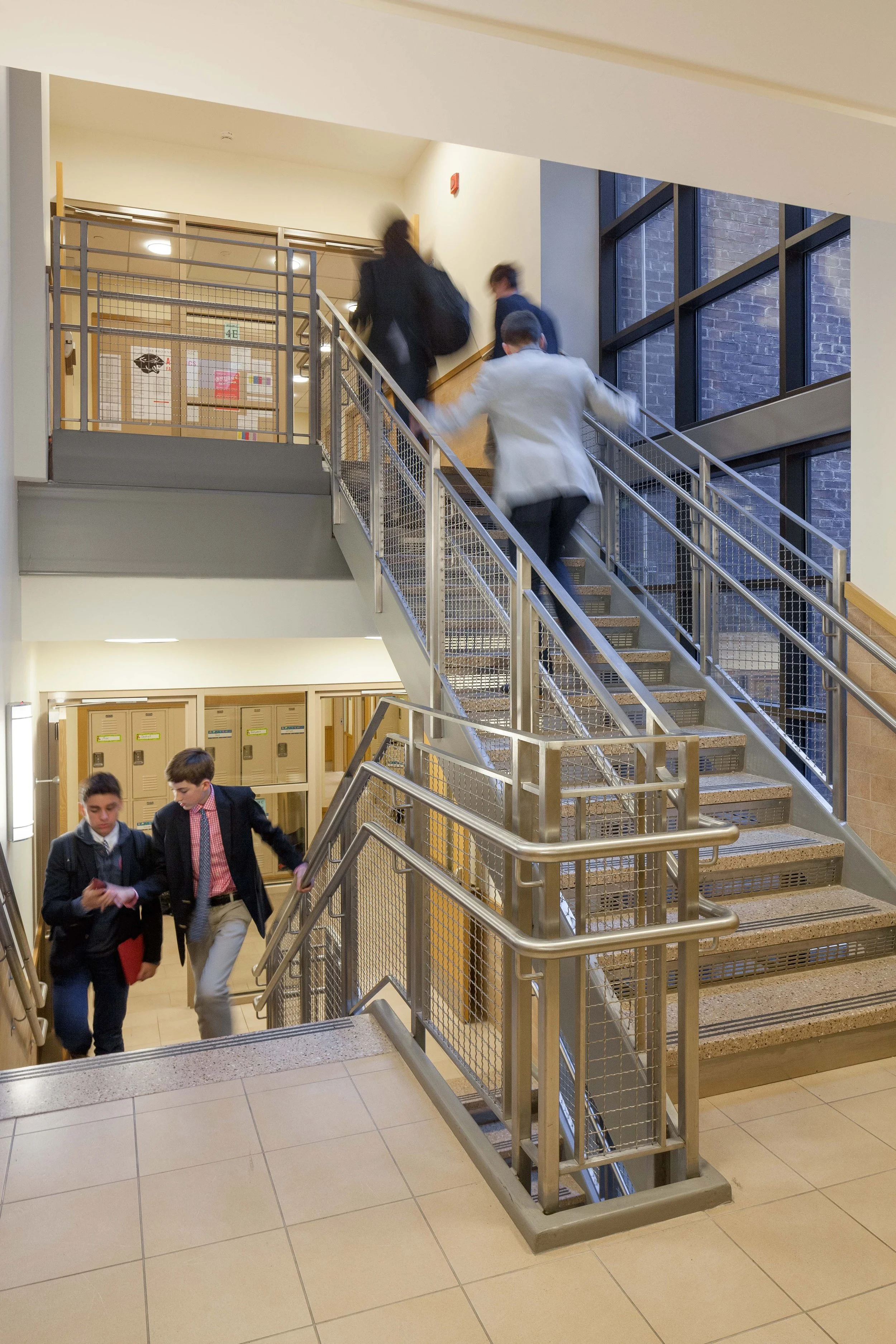
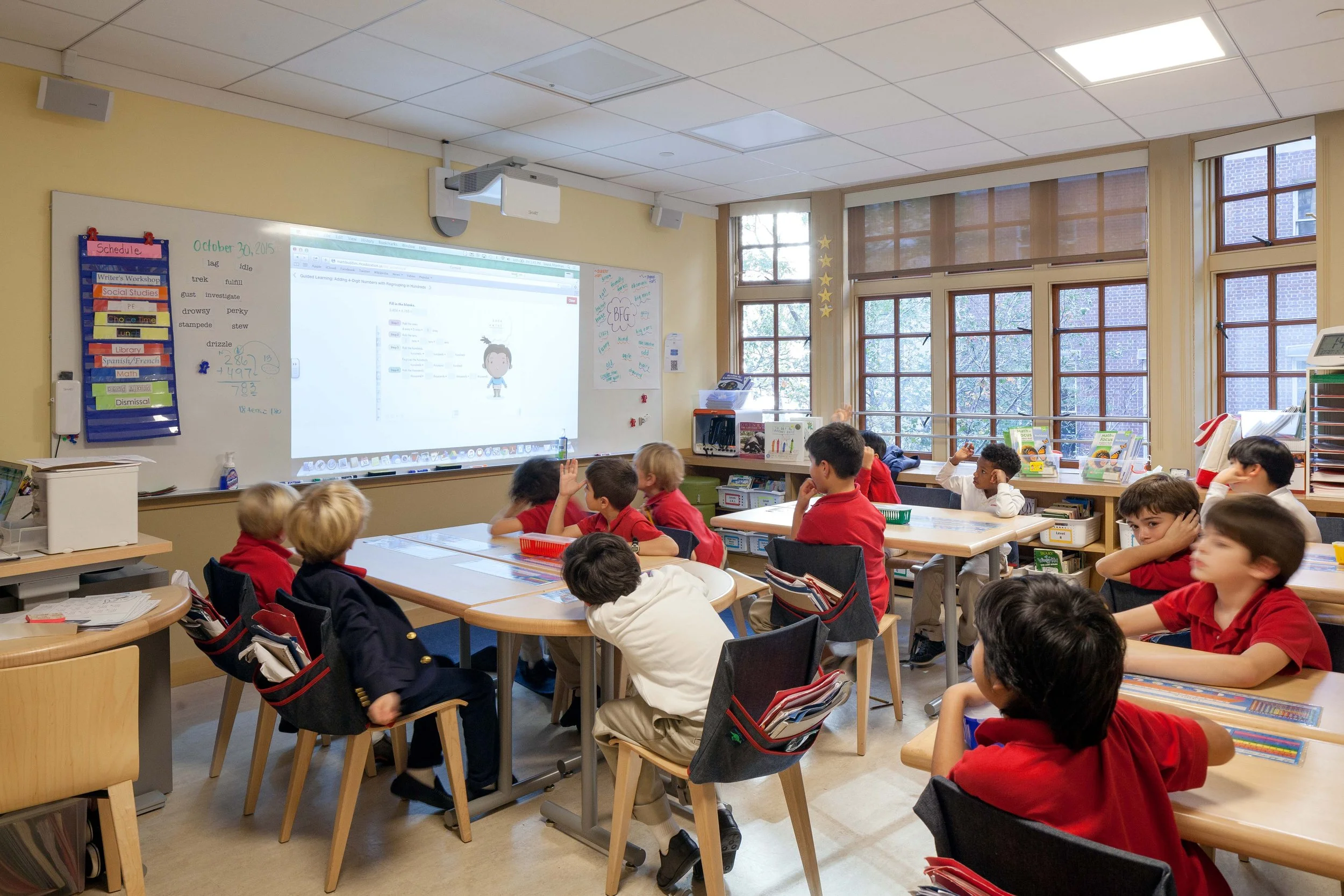
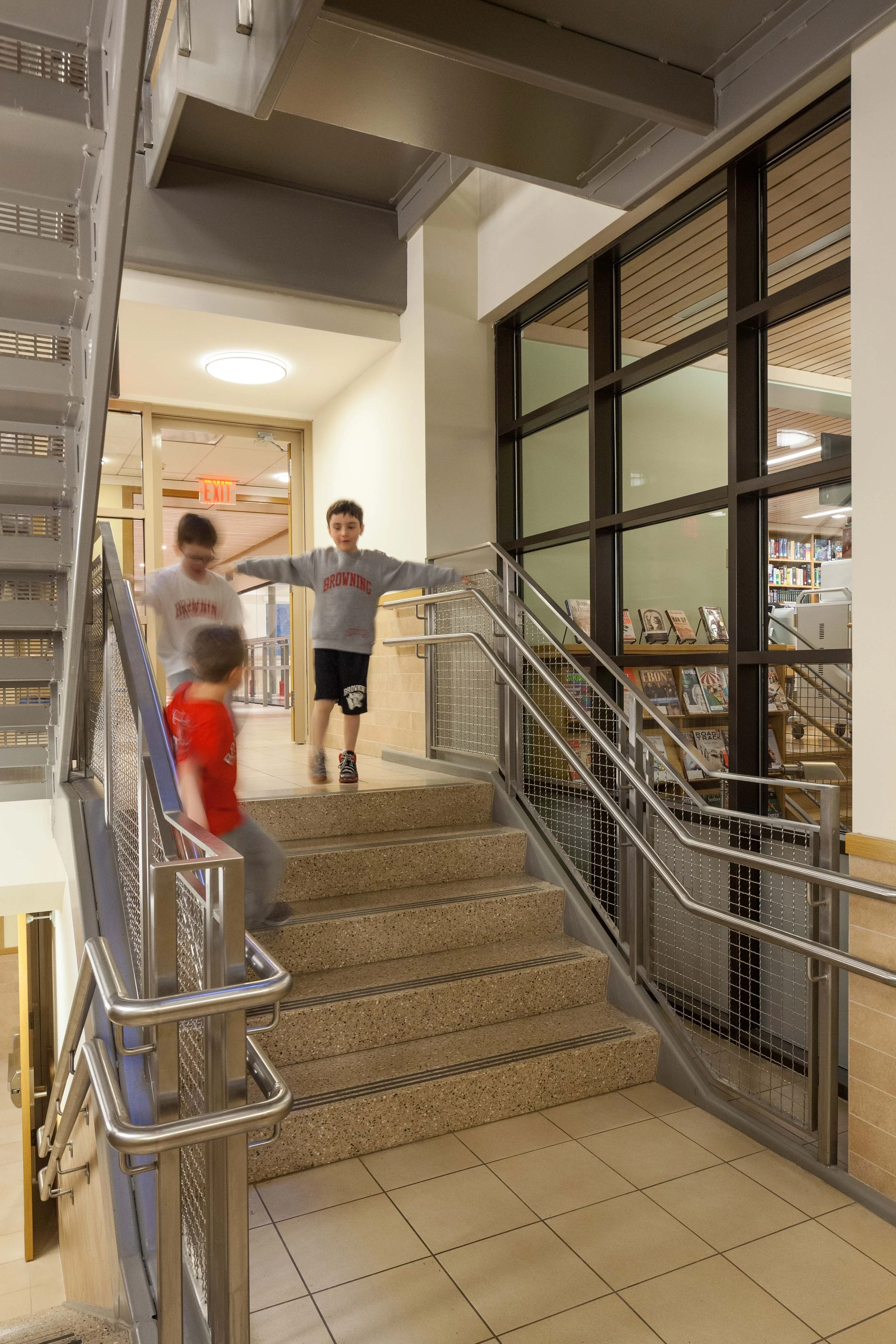
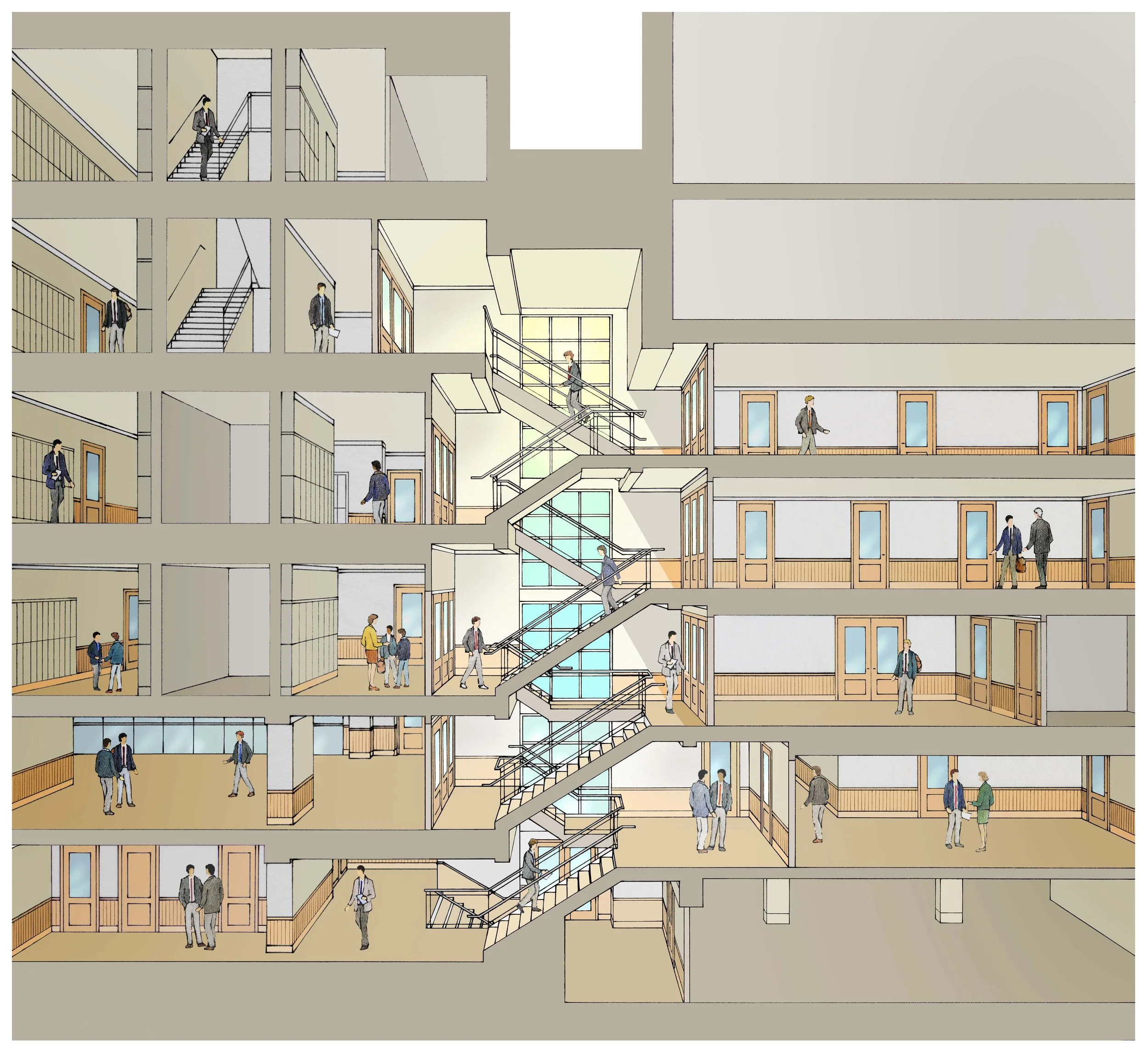
The central core was redesigned to introduce a south-facing atrium stair and a new light-filled stair, bringing daylight deep into the plan. A multi-stop elevator provides accessible circulation. Transparency between rooms, dedicated studios for Lower and Upper School art, and a maker space adjacent to the library support collaborative learning and display.
project narrative
-
Located within three attached buildings of differing heights, the school’s original plan had dark, cramped spaces and confusing circulation spread over twelve levels.
The client sought a coherent plan that would improve supervision, accessibility, and daylight distribution while preserving the historic building fabric.
To address this, the design refocused the plan around a new, visible public spine that could reconcile program across varied levels.
-
The concept centers on a clear, continuous public spine that reconnects separated levels and makes civic programs visible.
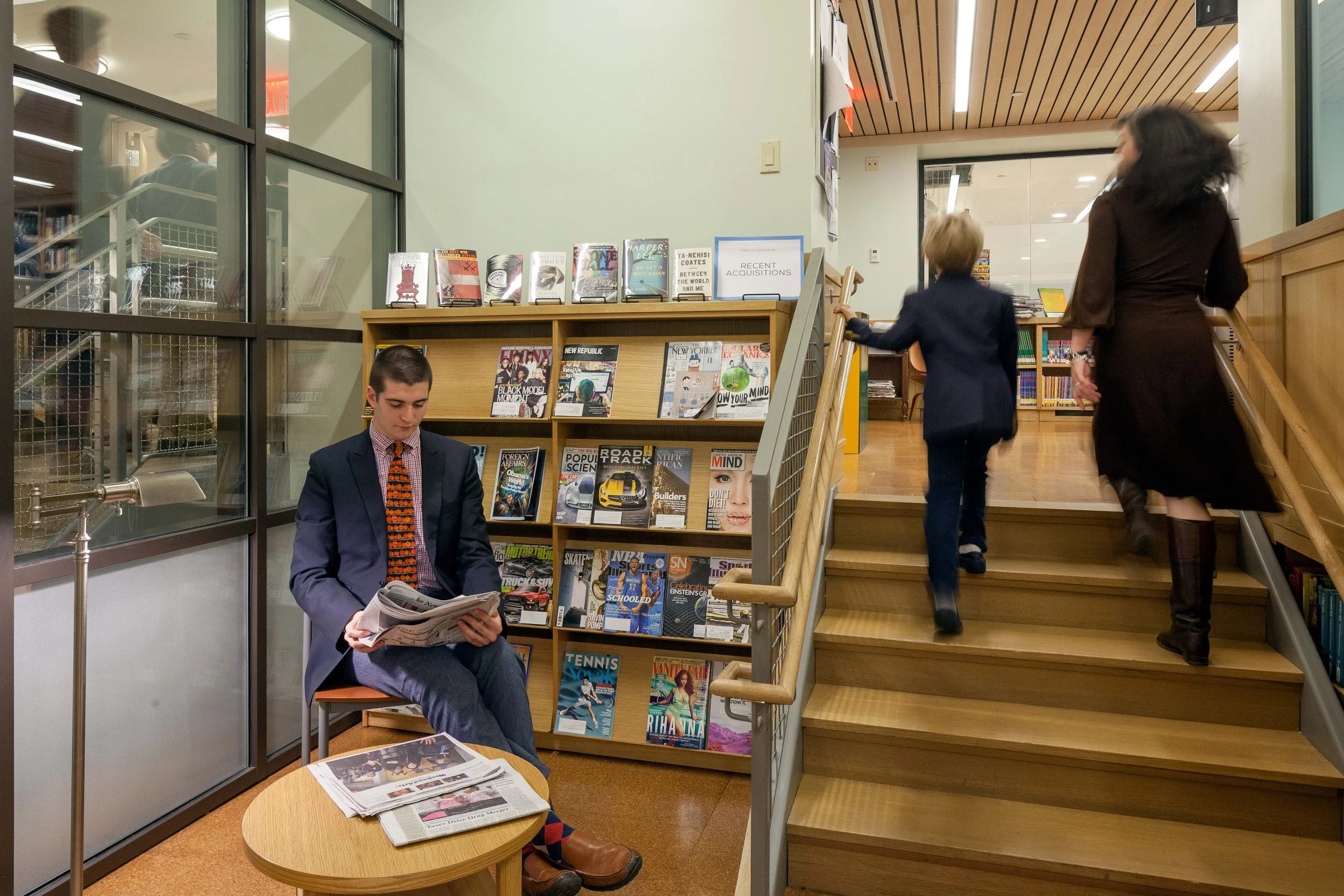
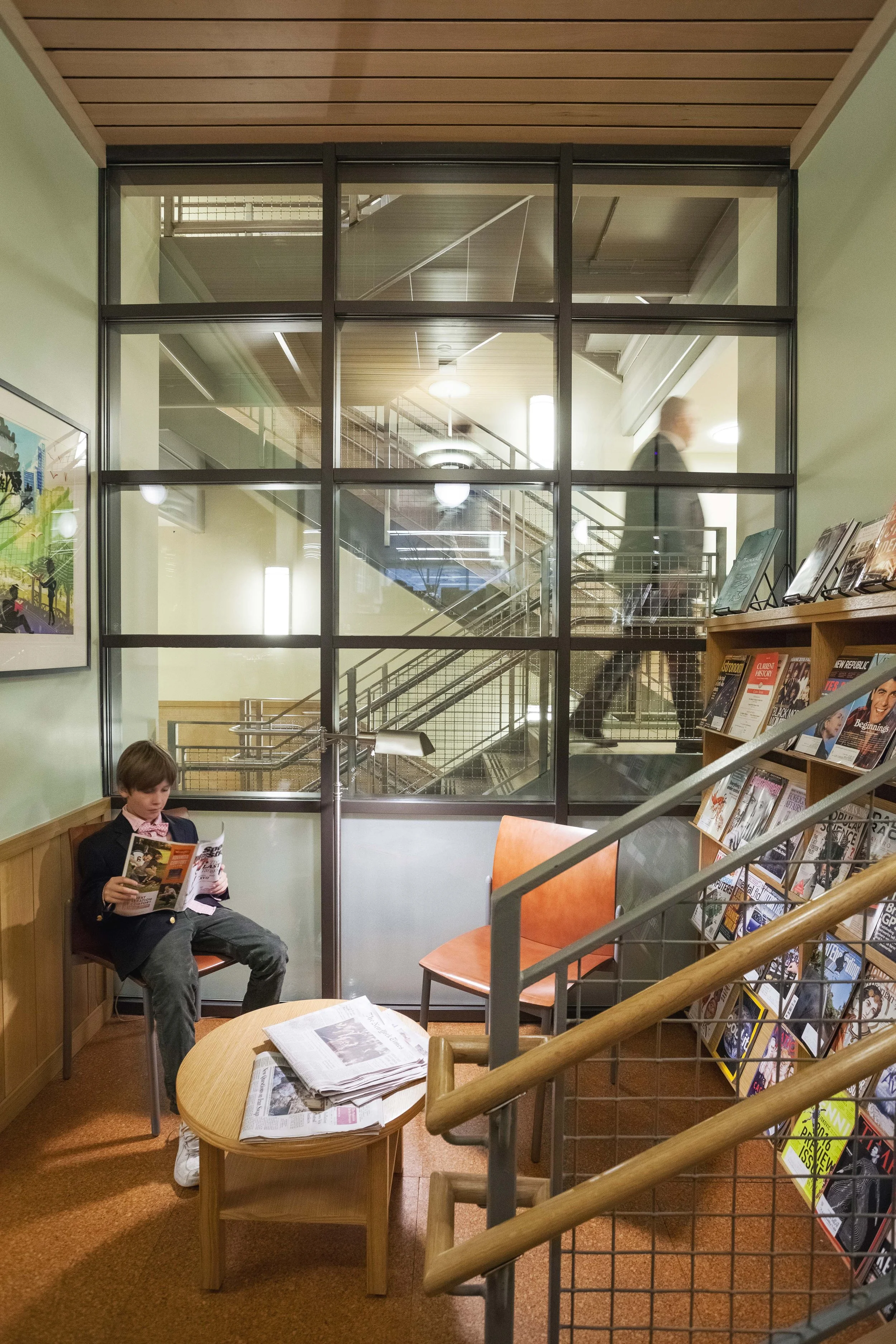
Building on this idea, a south-facing atrium stair and a new west stair form a light-filled spine that organizes arrival, social space, and study. Locating the principal library on the first floor adjacent to the transparent stair reinforces openness and programmatic adjacency.
-
The approach retained the original east stair while inserting new vertical elements—a glazed atrium stair to the south and a light-filled stair to the west—so daylight could penetrate deep into the plan.
A multi-stop elevator was added for ADA access and improved circulation between distinct building sections.
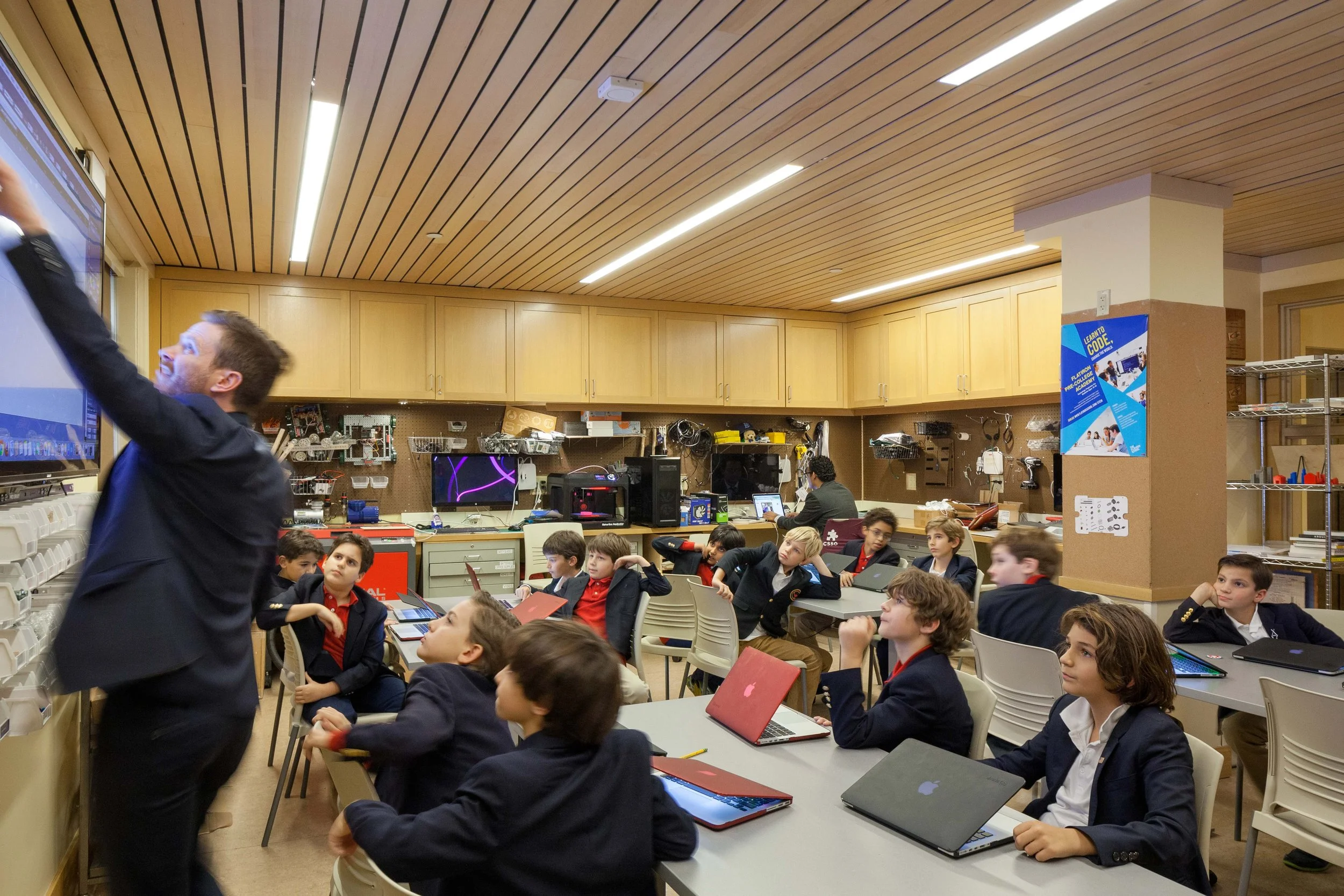
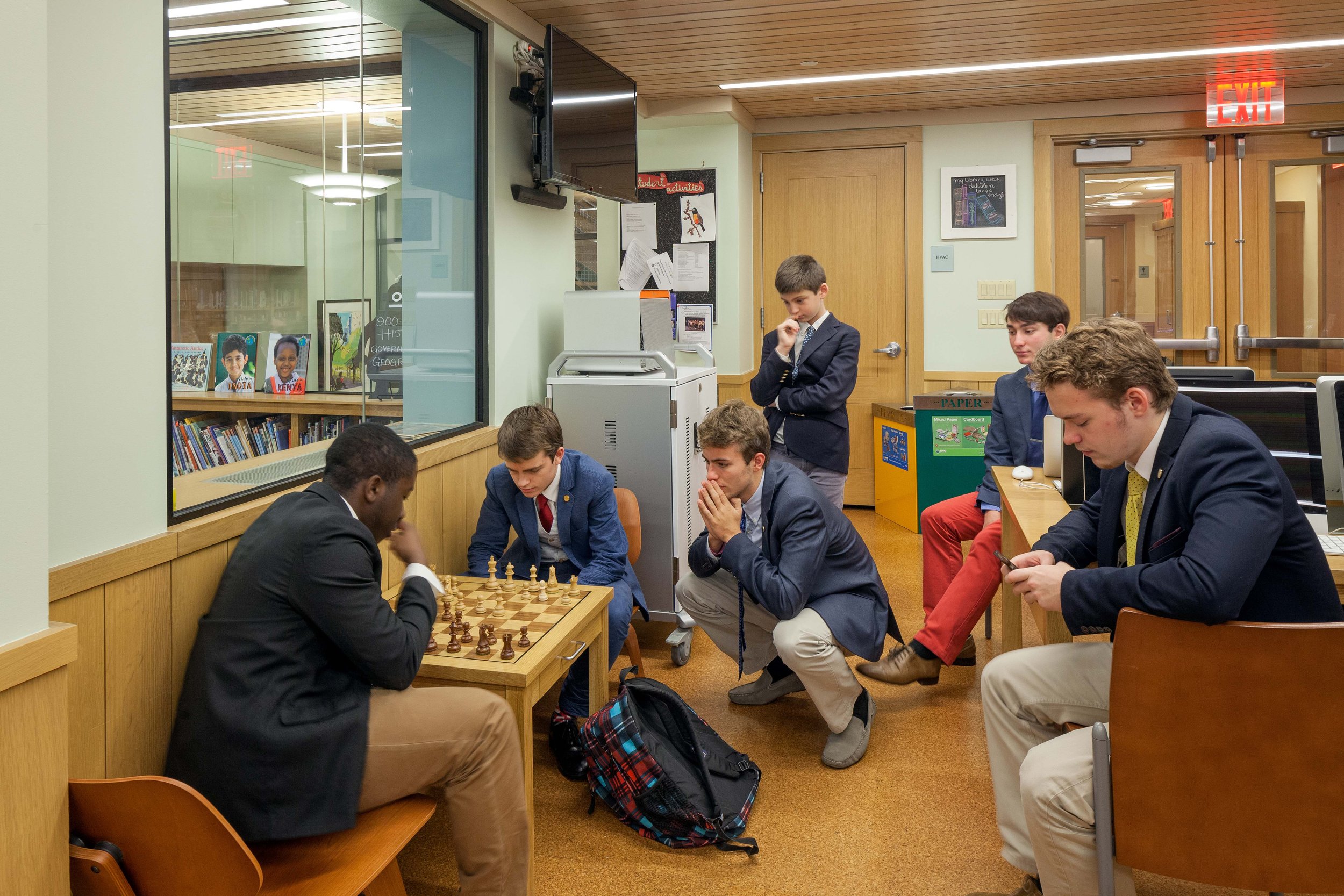
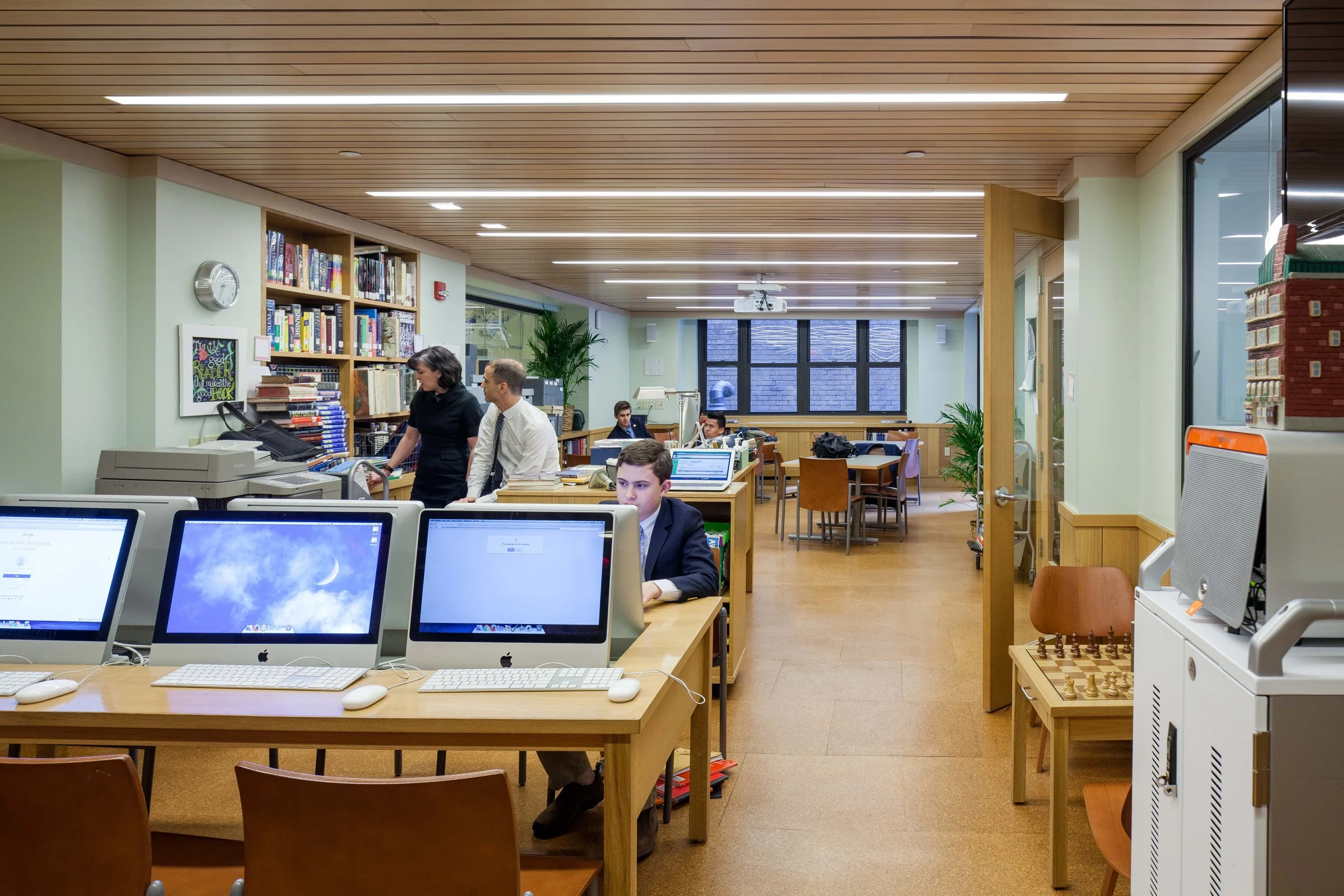
Glass partitions, a separated maker space, and tiered library levels with access to an outdoor reading terrace translate the concept into clear, usable spaces.
project outcome
Circulation across the building is clarified by a continuous public route that links the lobby, gym, dining hall, and library. Movement is straightforward for students and visitors and supervision is reinforced by visible corridors.
Vertical openings admit south light into interior zones and increase daylight penetration, improving visibility between floors. Glass partitions and transparent transitions clarify sightlines so activity in studios, study areas, and social spaces is apparent from adjacent circulation.
Tiered library levels, separate art studios, and an acoustically separated maker space accommodate individual study, collaborative work, and display. A multi-stop elevator and defined vertical routes support accessible movement and adaptability as program needs shift.
let’s continue the conversation
Every project begins with listening. If you’re considering a new campus, building, or landscape, we’d welcome the chance to talk through your goals, challenges, and aspirations. Our team works collaboratively to shape places that feel grounded, connected, and built to serve people well over time.