agnes irwin school
2004
rosemont, pa
33,350 sf
new construction, arts and science center and library transformation
awards
2007, National School Boards Association
Citation of Excellence
2006, American School & University
William W. Caudill Citation
2006, AIA Westchester / Mid-Hudson Valley
Recognition of Excellence
collaborators
Structural: Anastos Engineering Associates
MEP: Hill & Bell Associates, PC
Site/Civil: Chambers Associates, Inc.
Theatre: Harvey Marshall Berling
Code: Bruce J. Spiewak, RA
Photography: Tom Bernard
General Contractor: E. Allen Reeves
an arts and science building conceived as a gallery to share work and cross-disciplinary activity.
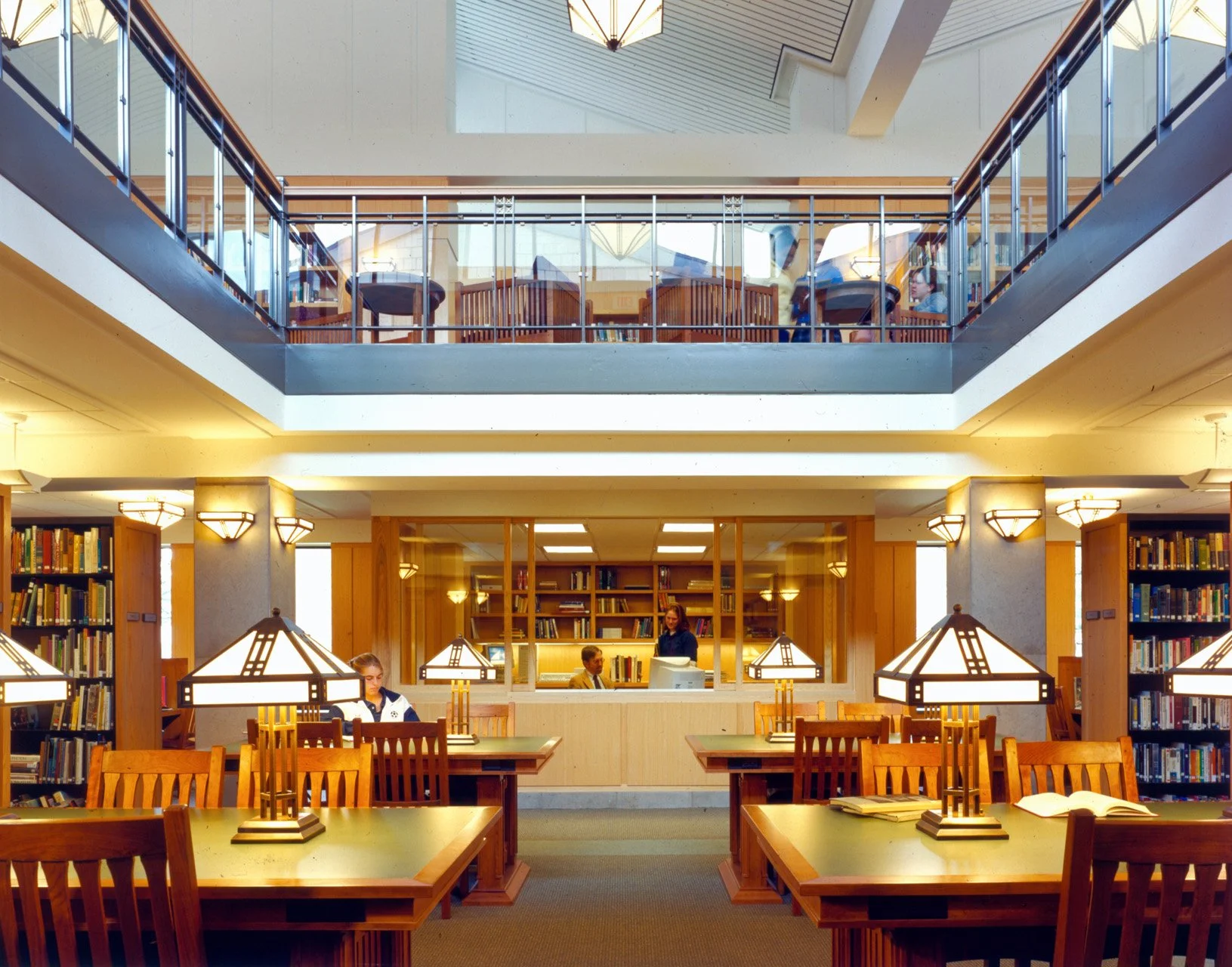
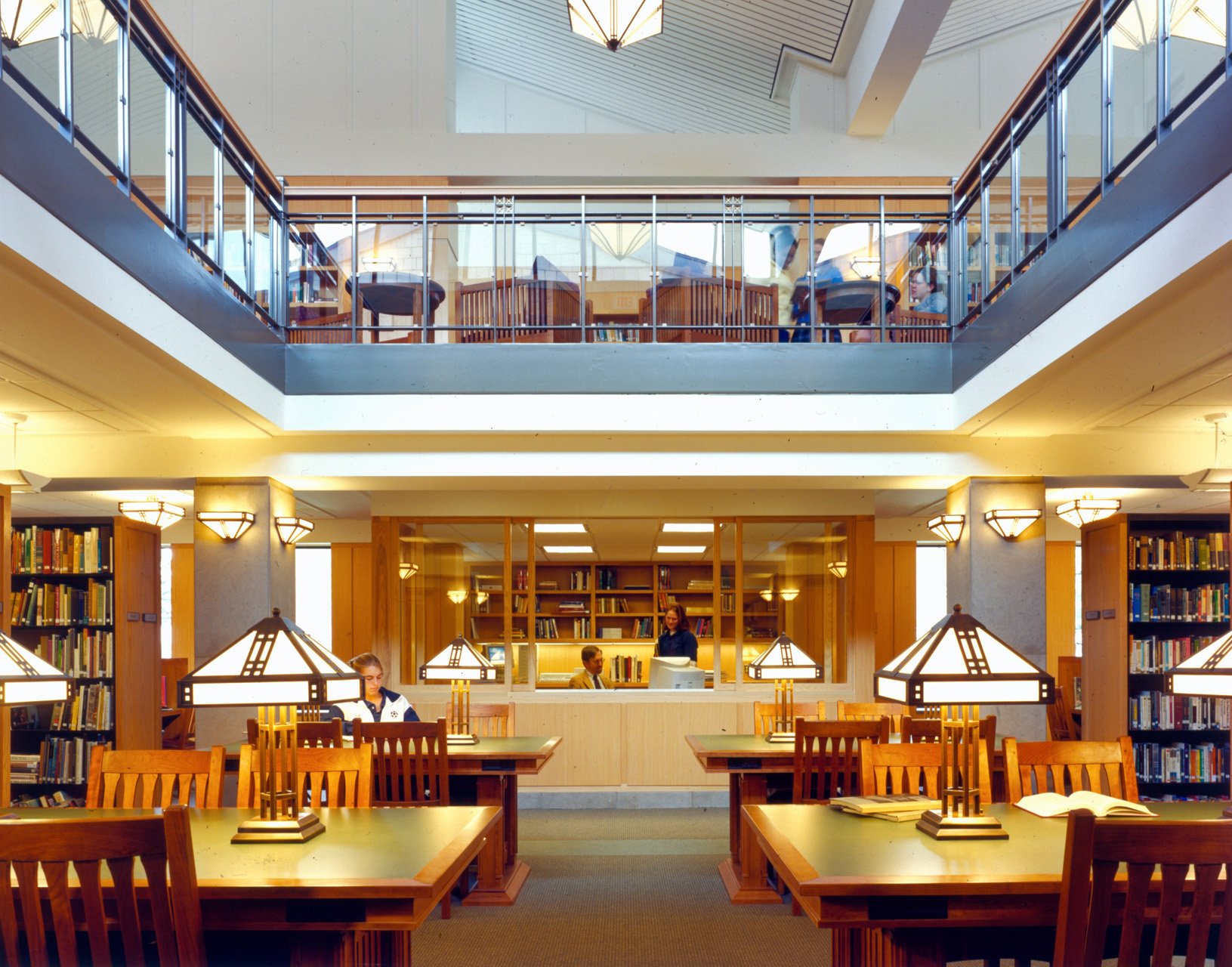
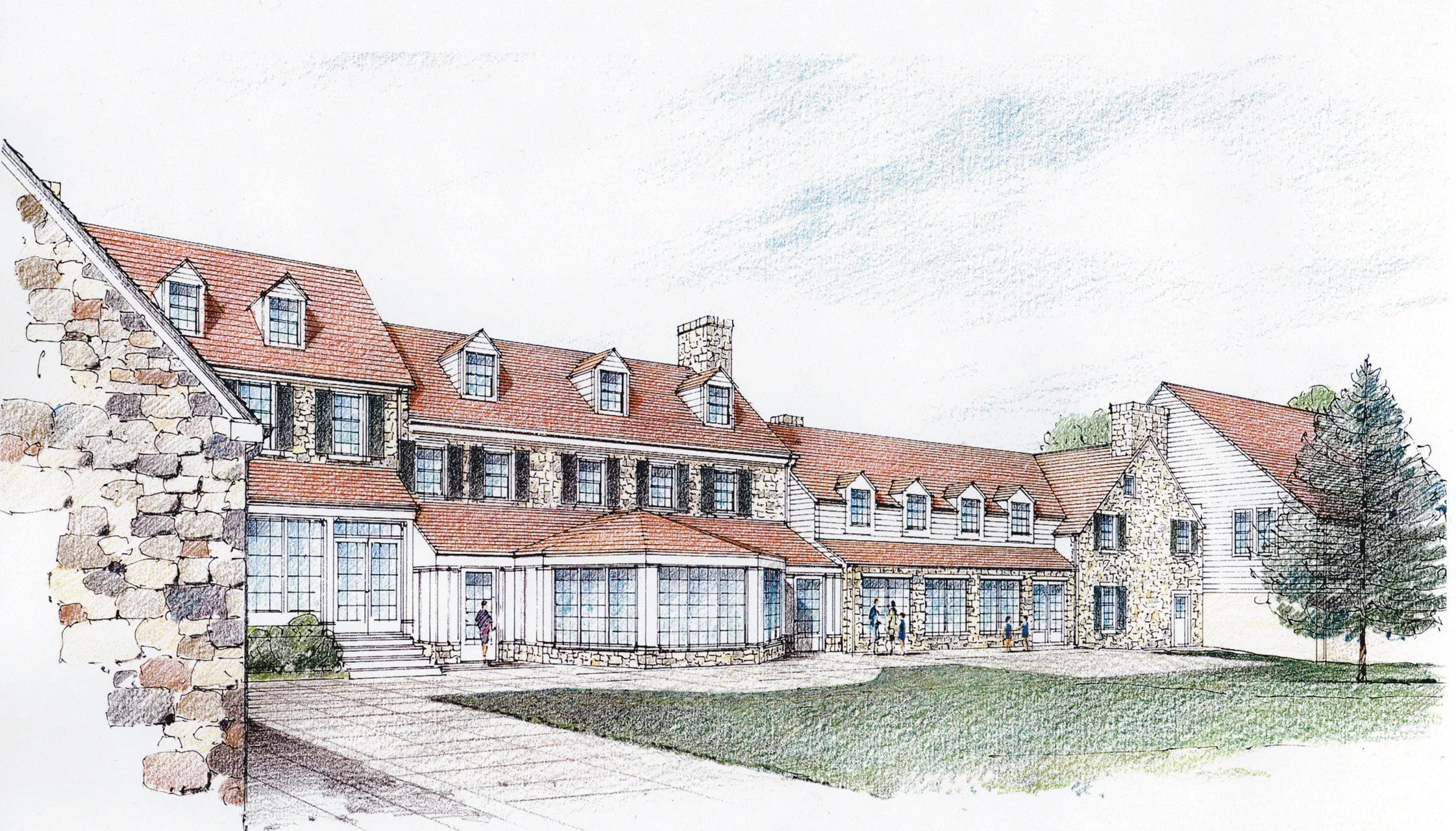
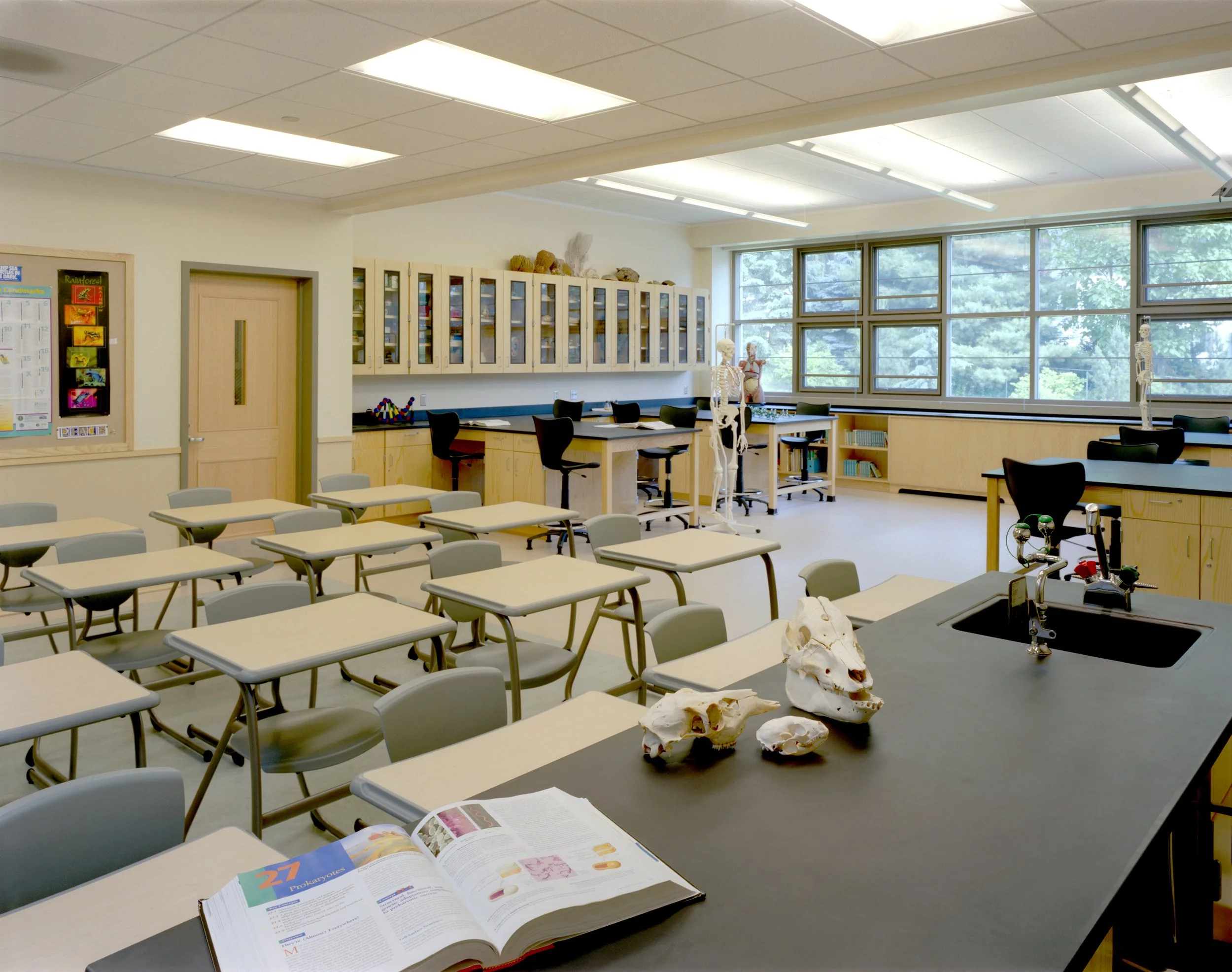
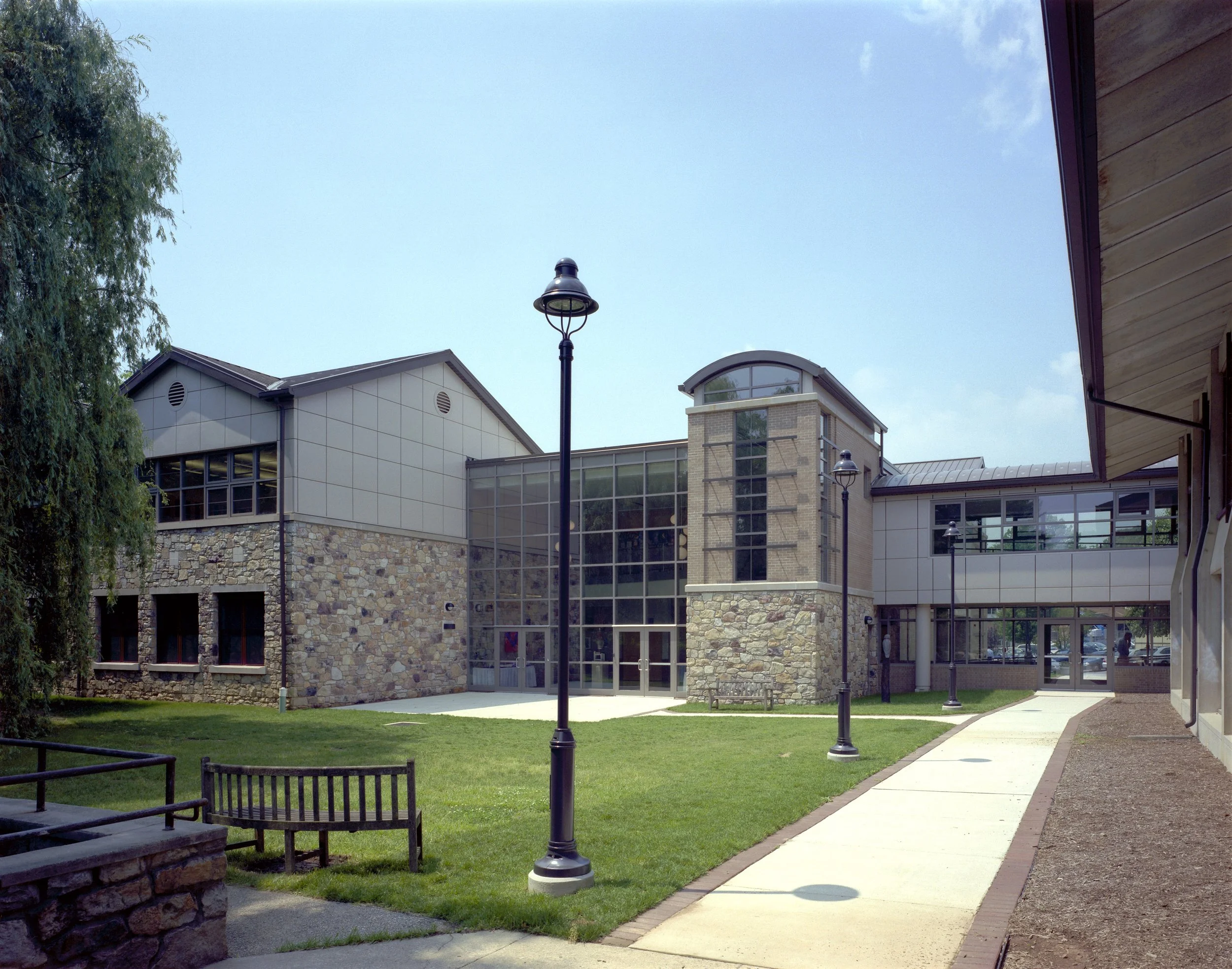
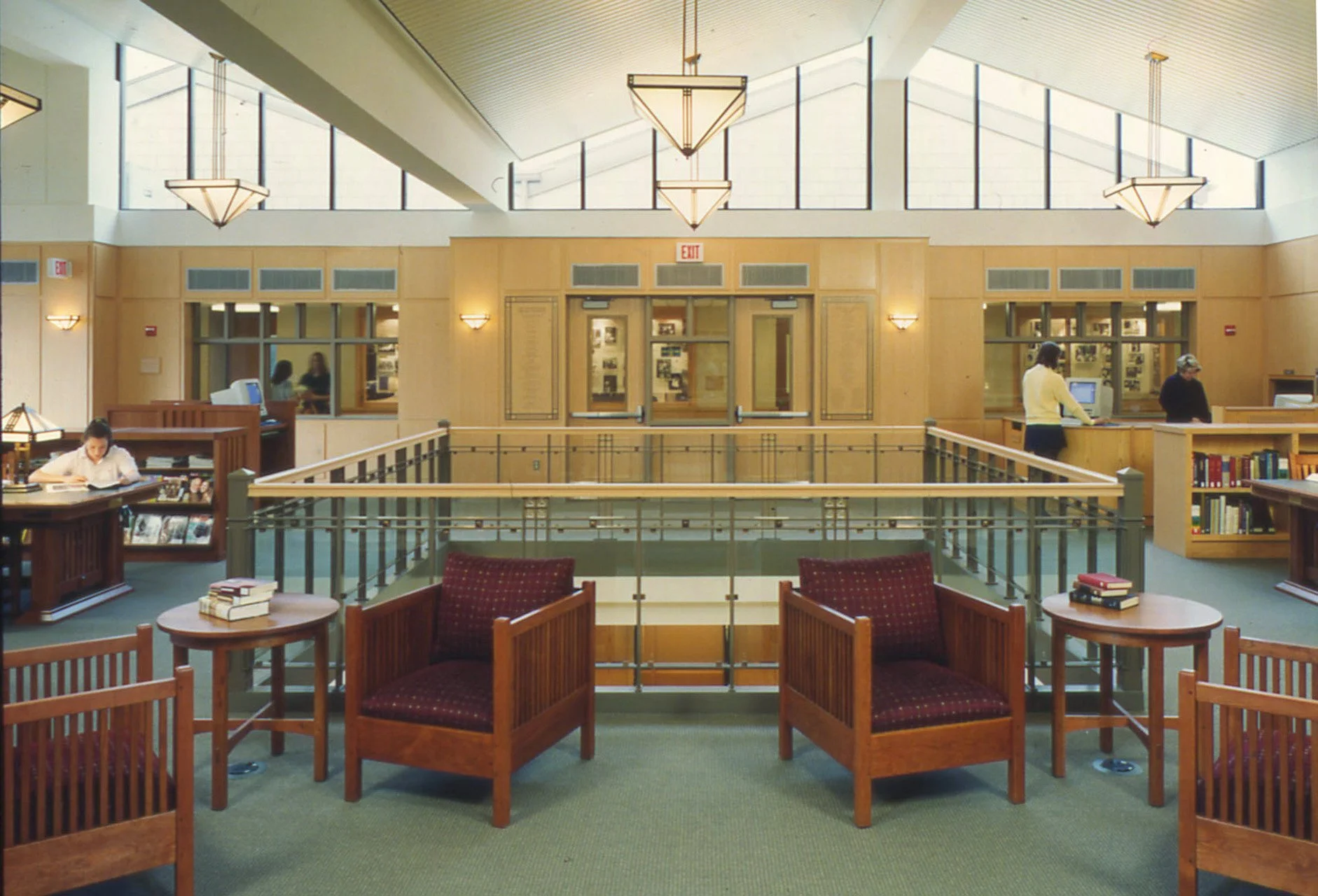
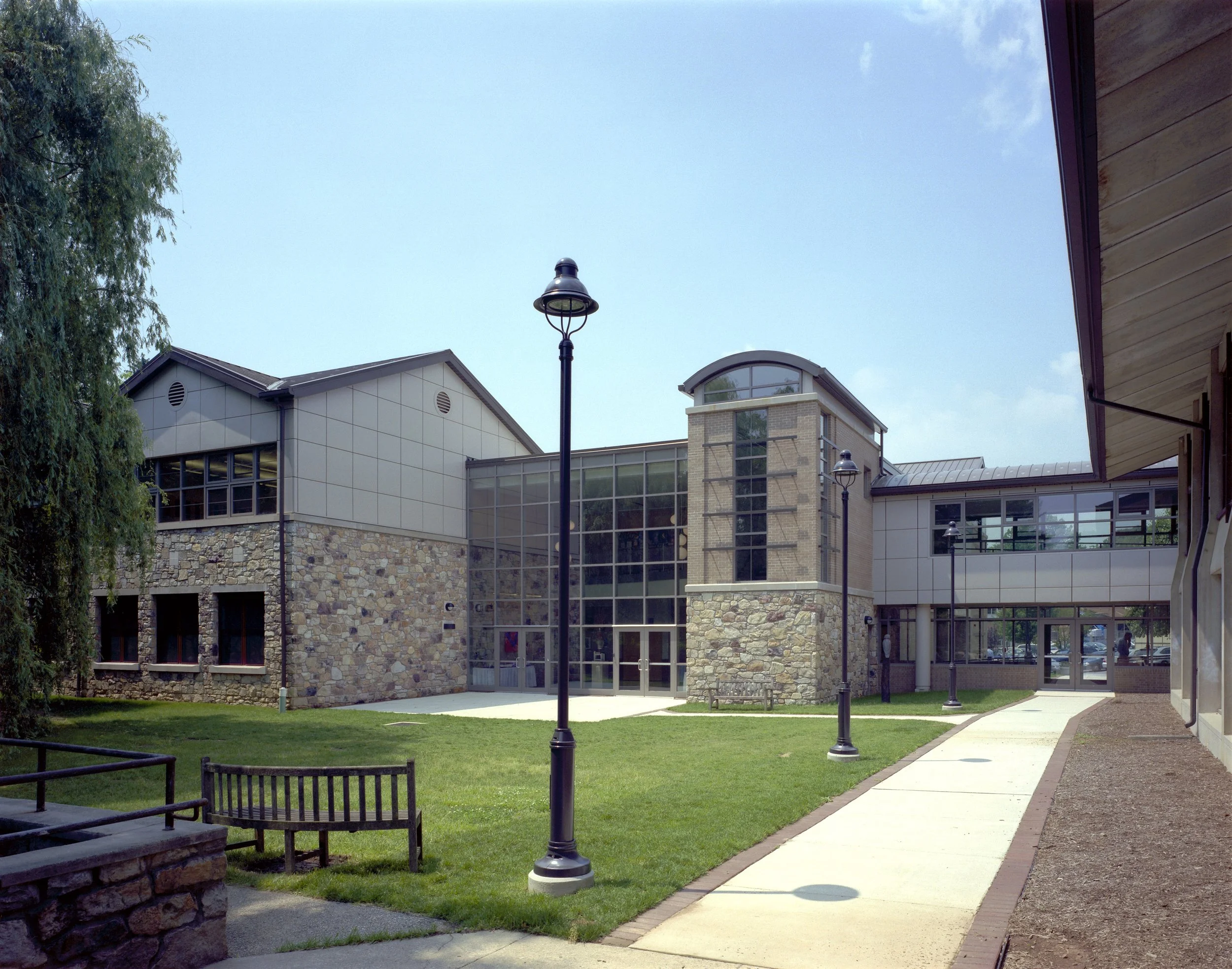
Agnes Irwin is an independent K–12 day school located on a compact campus in Rosemont. The new Arts and Science Center was conceived to provide collaborative spaces for sciences, visual arts and performing arts, and to connect the building directly to the Upper School and the transformed Moss Library through a linking bridge.
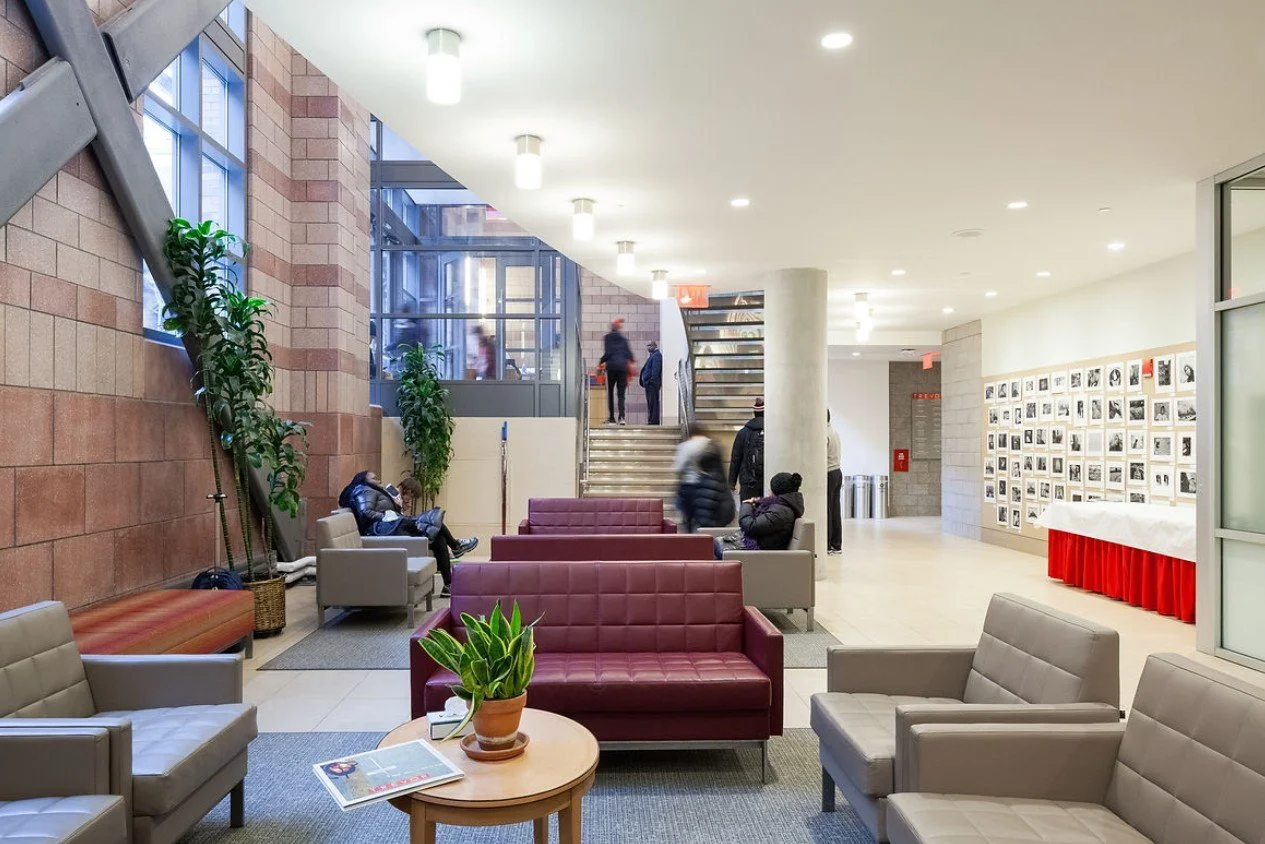
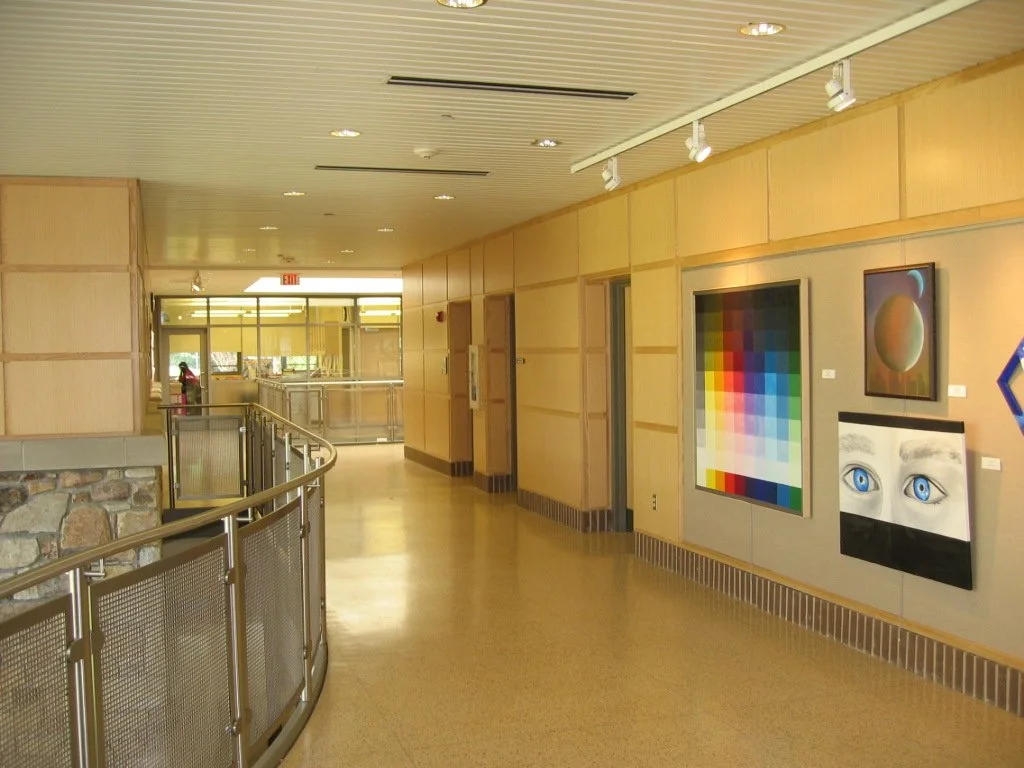
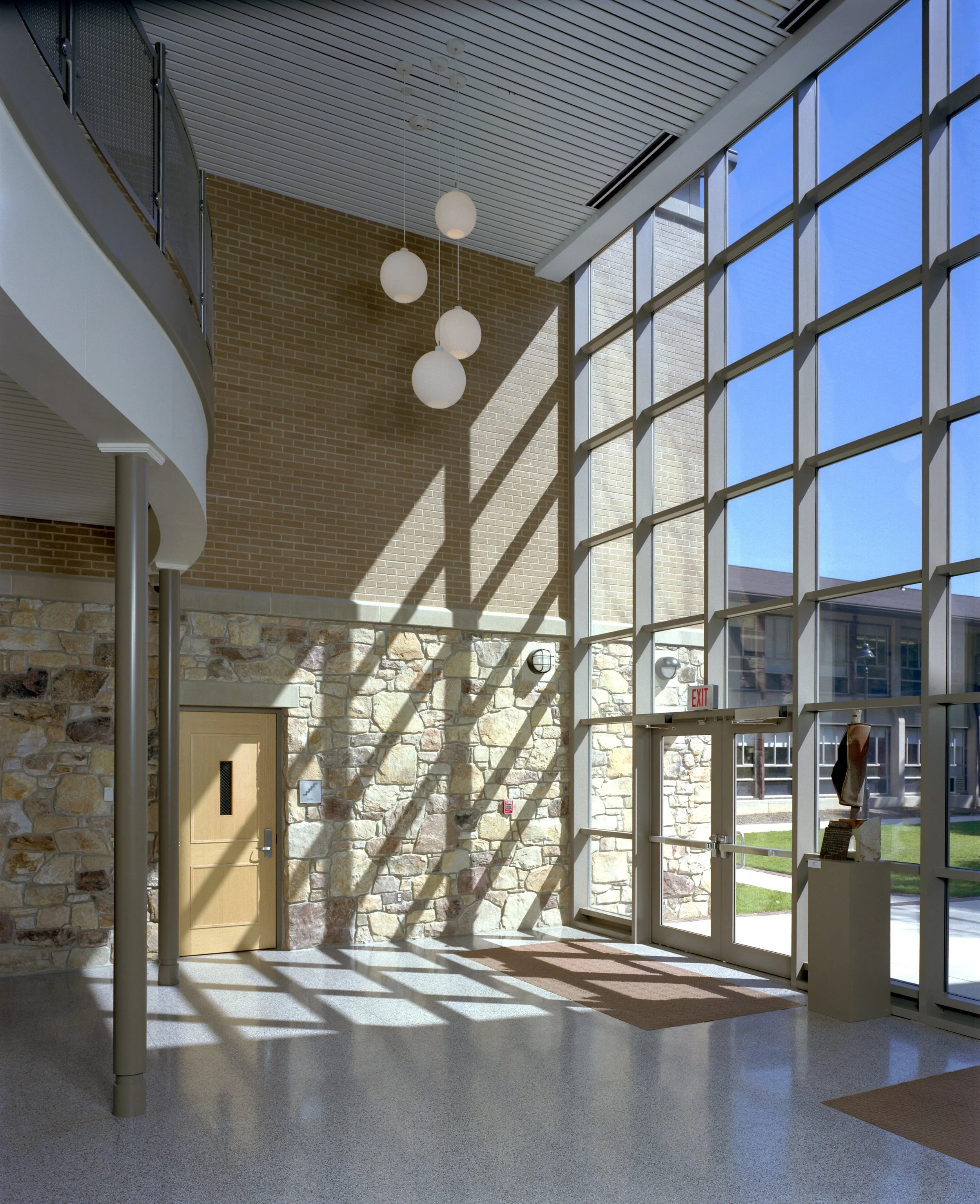
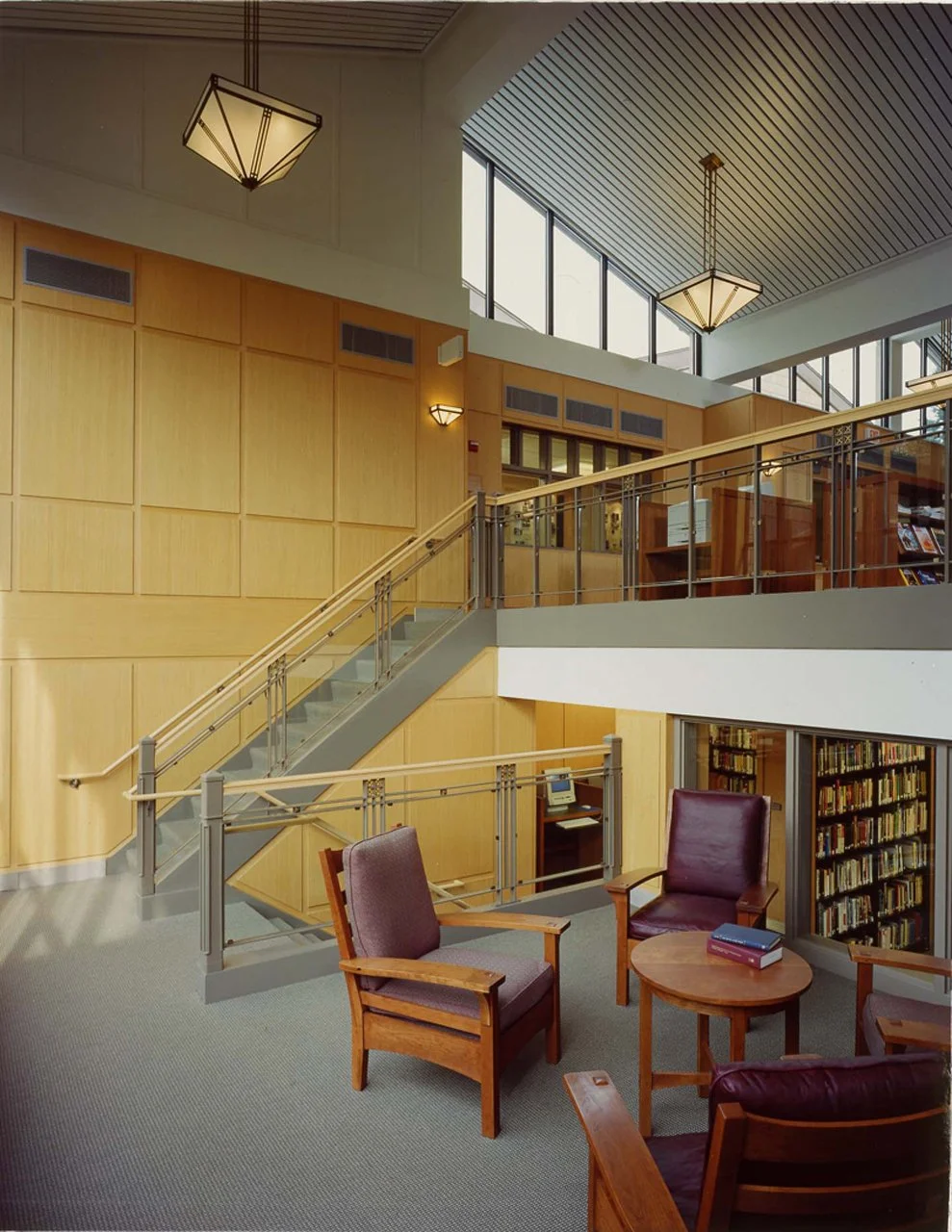
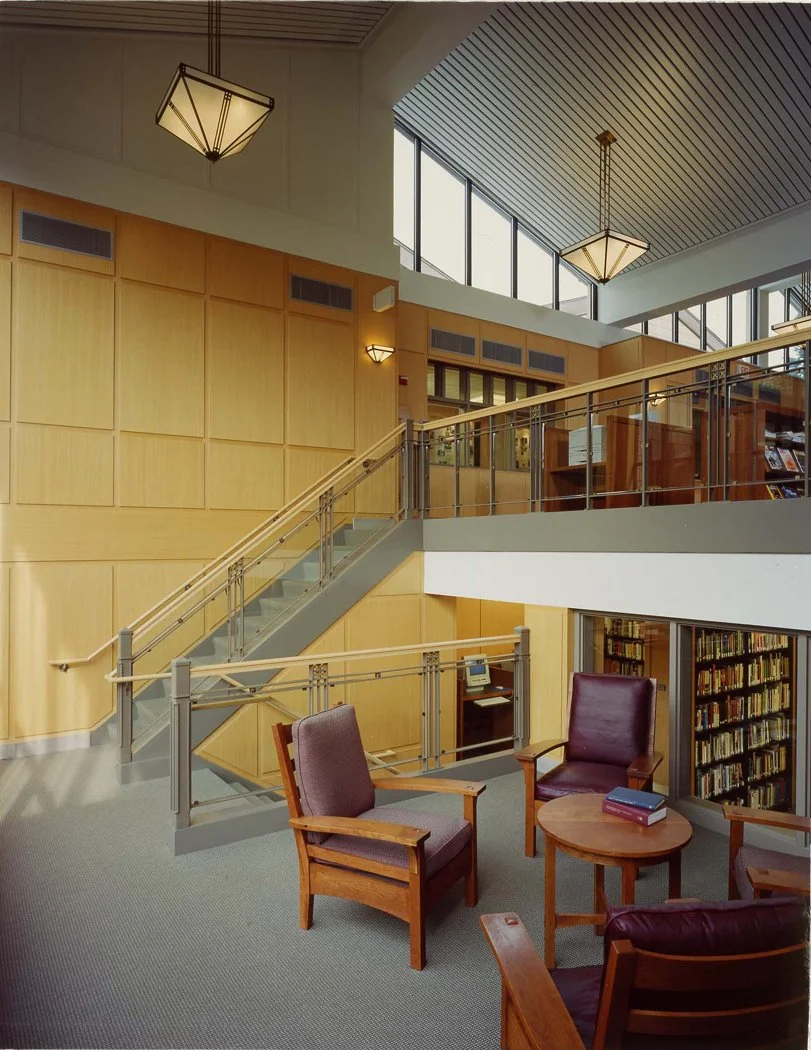
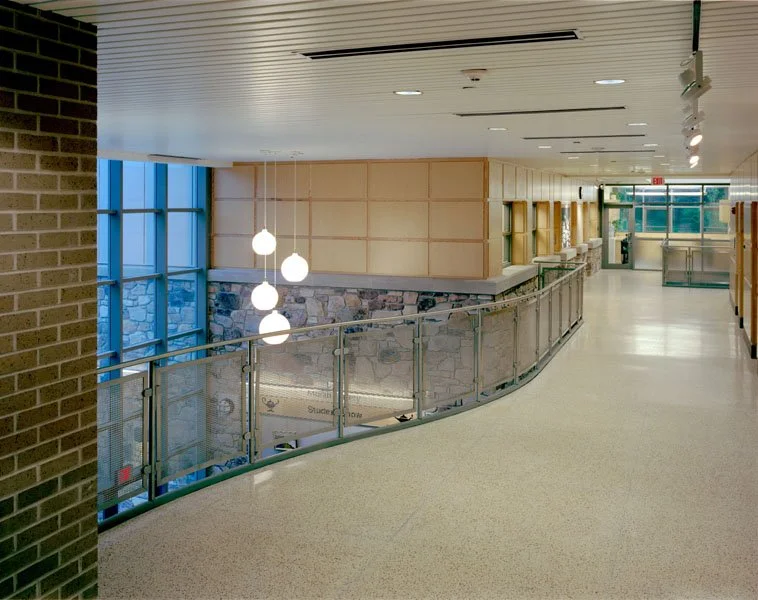
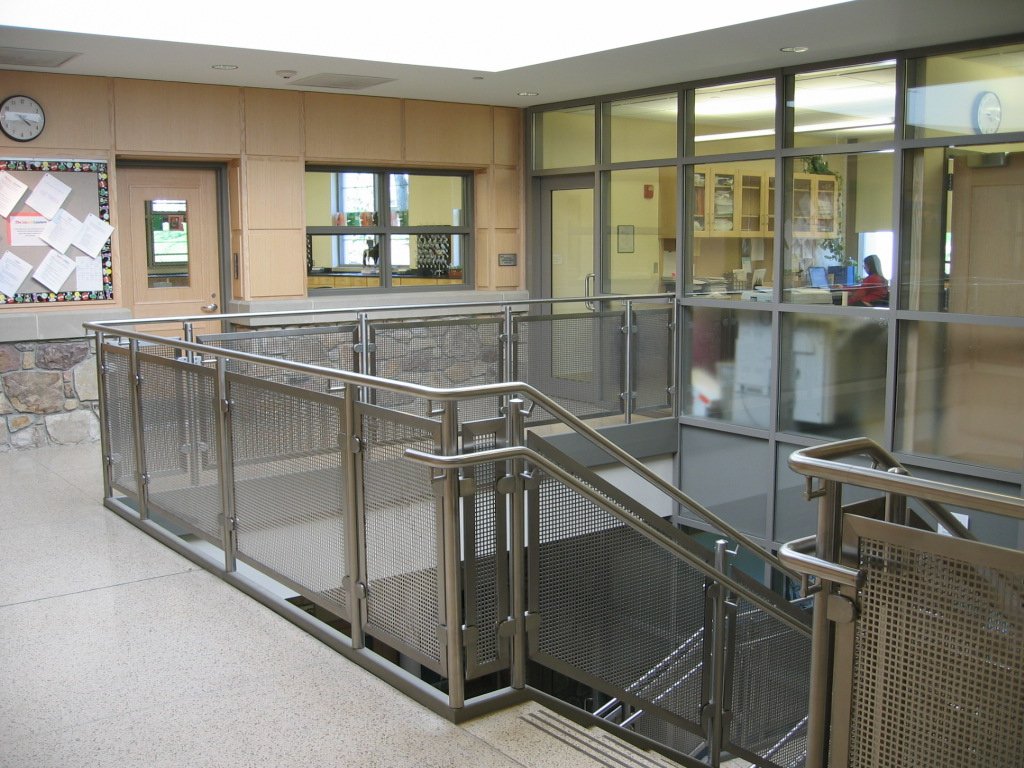
The design treats circulation as public display: a two‑story entry lobby, open stair, and well-lit corridors are arranged to showcase student work and to reveal activity within instructional spaces. Skylights, glass walls, and interior windows increase daylight penetration and create visual connections across disciplines.
project narrative
-
The school sought a compact, interdisciplinary facility that would bring sciences, visual art and performance together while fitting within a residential campus.
The brief required visible, shared spaces that encourage cross-disciplinary exchange without compromising individual studios and labs.
In response, the project needed to reconcile intensive programmatic adjacencies with clear circulation and a respectful relationship to adjacent school buildings.
-
Building on the idea of an art gallery, the concept organizes public circulation as a continuous, displayable space so that the vitality of each discipline is legible to the whole community.
Interior windows, glass walls and skylights frame activity and allow work to be seen from corridors and the two‑story lobby, reinforcing openness and shared learning. A bridging connection links the new center to the Upper School and the Moss Library.
-
The approach translates the gallery concept into material and spatial moves: a generous two‑story entry and an open stair form the project’s social spine, while corridors are detailed for display and daylight.
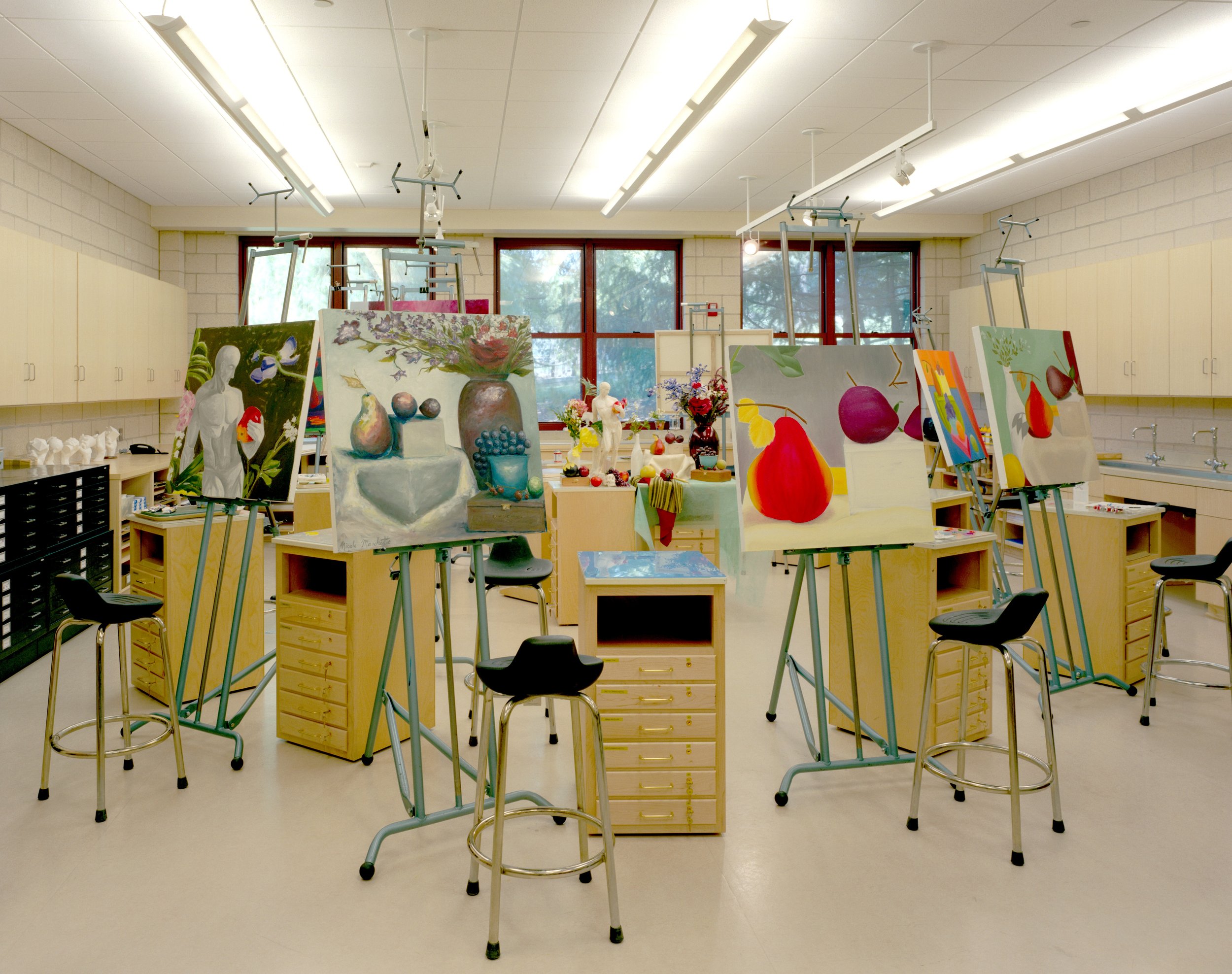
Instructional rooms are set with interior glazing toward circulation to promote visibility and supervision, and careful placement of skylights and glass walls refines light quality.
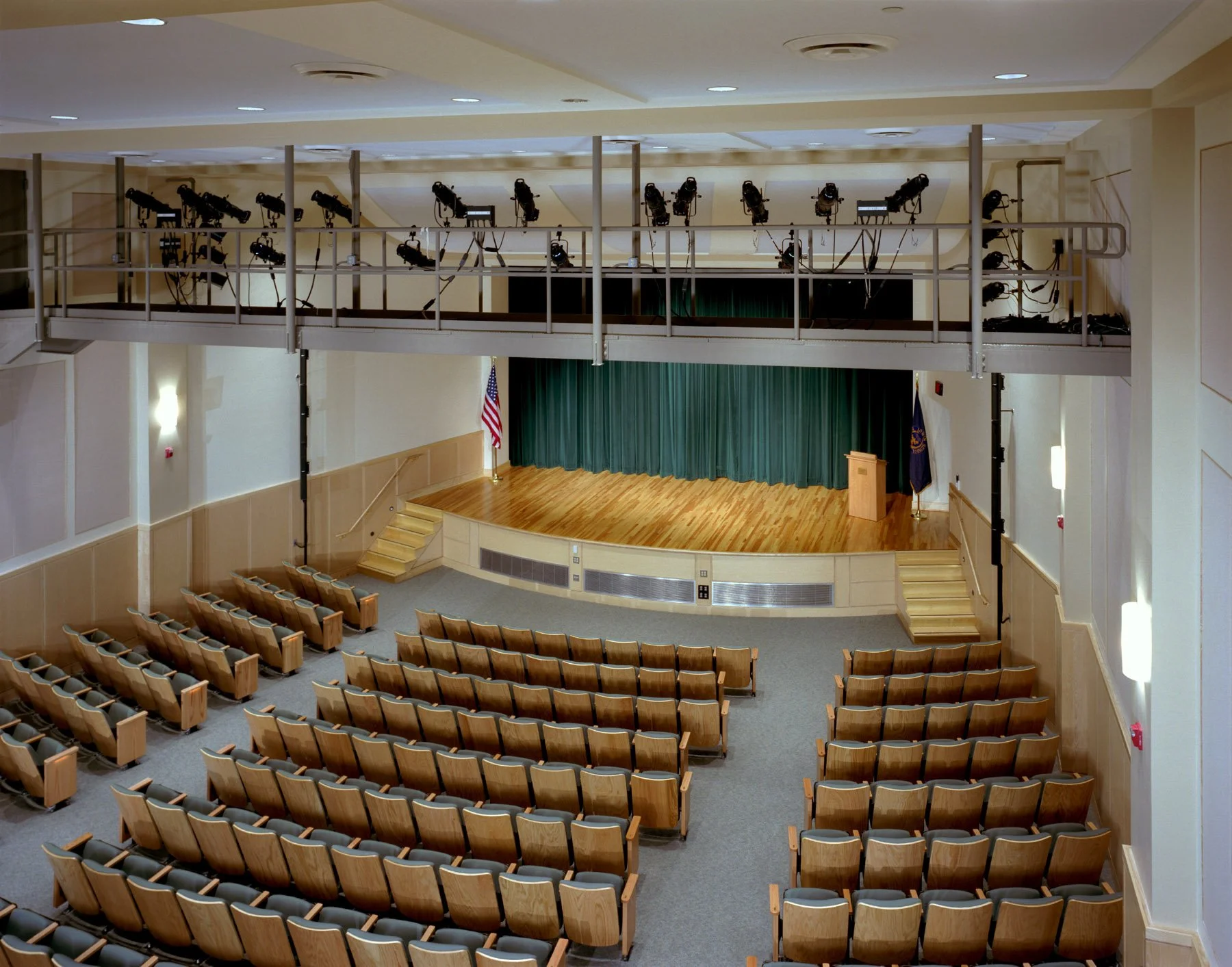
An original auditorium was reworked to serve the expanded performing arts program.
project outcome
A tall entry sequence and a central stair support intuitive movement between levels and reinforce clear circulation paths. Linear corridors with interior glazing clarify orientation by exposing adjacent activity and making routes legible.
Skylights and transparent partitions admit balanced daylight and increase visual connection between studios and corridors. Daylit interiors and extended sightlines support supervision and informal exchange without interrupting focused work.
Flexible room edges and framed viewing openings accommodate varied teaching modes and equipment needs. Durable materials and a compact plan support ongoing adaptability and routine maintenance while a covered link connects the center to adjacent school buildings.
let’s continue the conversation
Every project begins with listening. If you’re considering a new campus, building, or landscape, we’d welcome the chance to talk through your goals, challenges, and aspirations. Our team works collaboratively to shape places that feel grounded, connected, and built to serve people well over time.