greenwich library
2021
greenwich, ct
renovation, transformation, landscape
Structural: Murray Engineering
MEP: Tietjen Venegas Consulting Engineers
Site/Civil: D'Andrea
Lighting: Light Plan Design
Harvey Marshall Berling
Clevenger, Frable, LaVallee
Watsky, Spiewak, Henderson, Daedalus
Photography: Robert Mintzes
collaborators
a master plan and renovation that reconnects three buildings and prioritizes light and community.
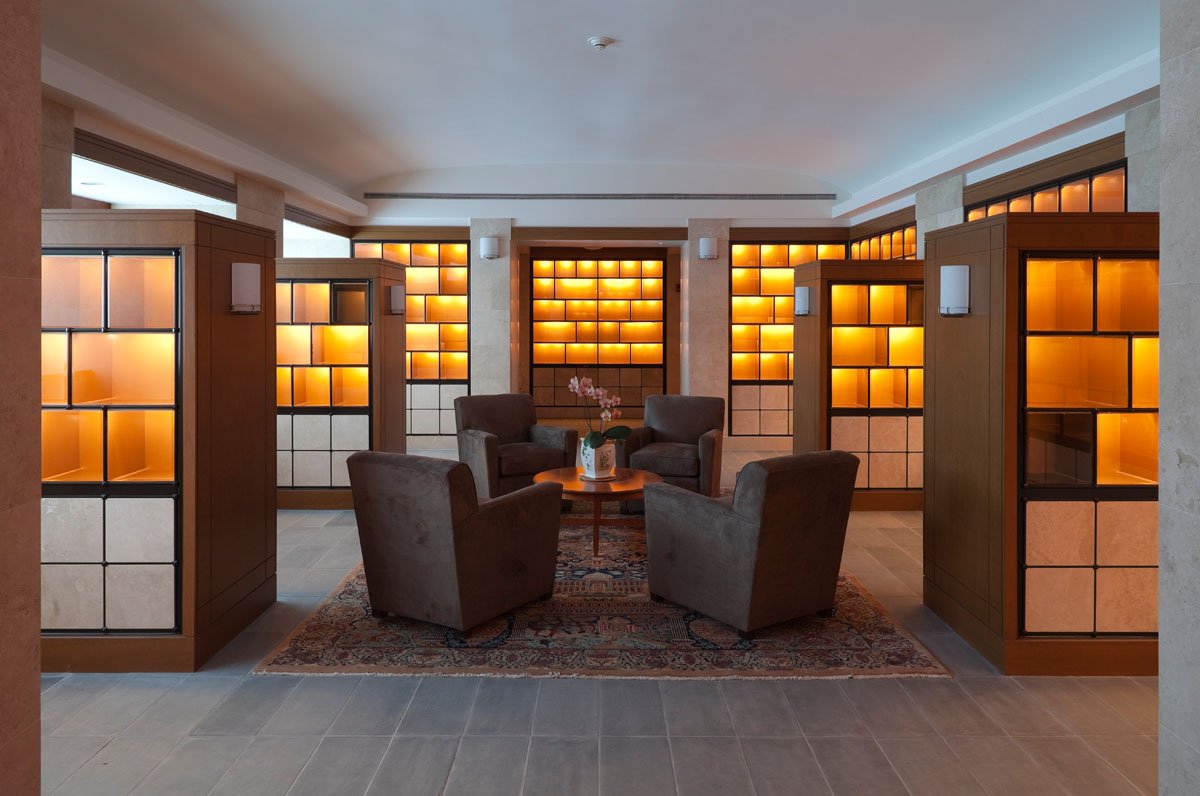
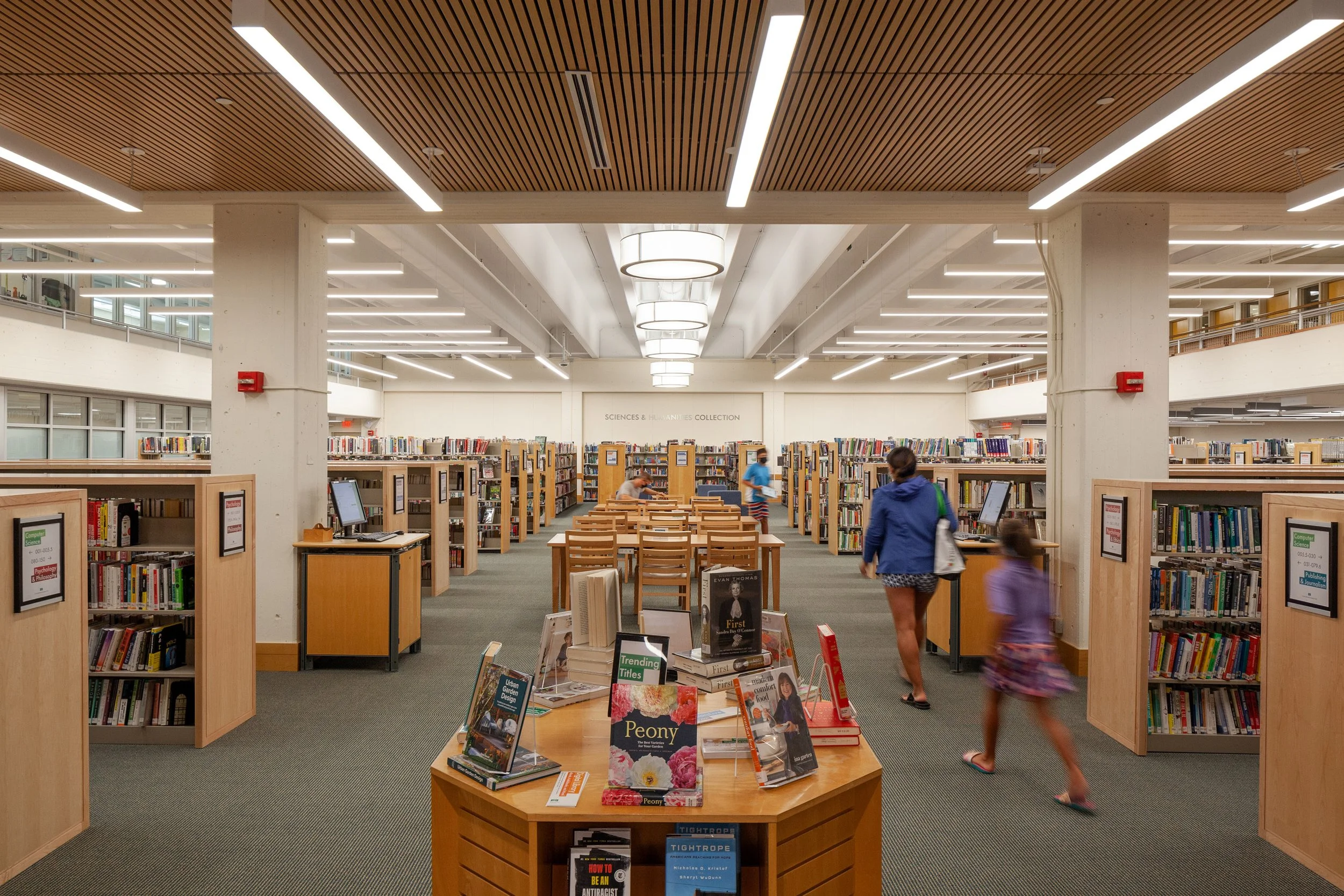
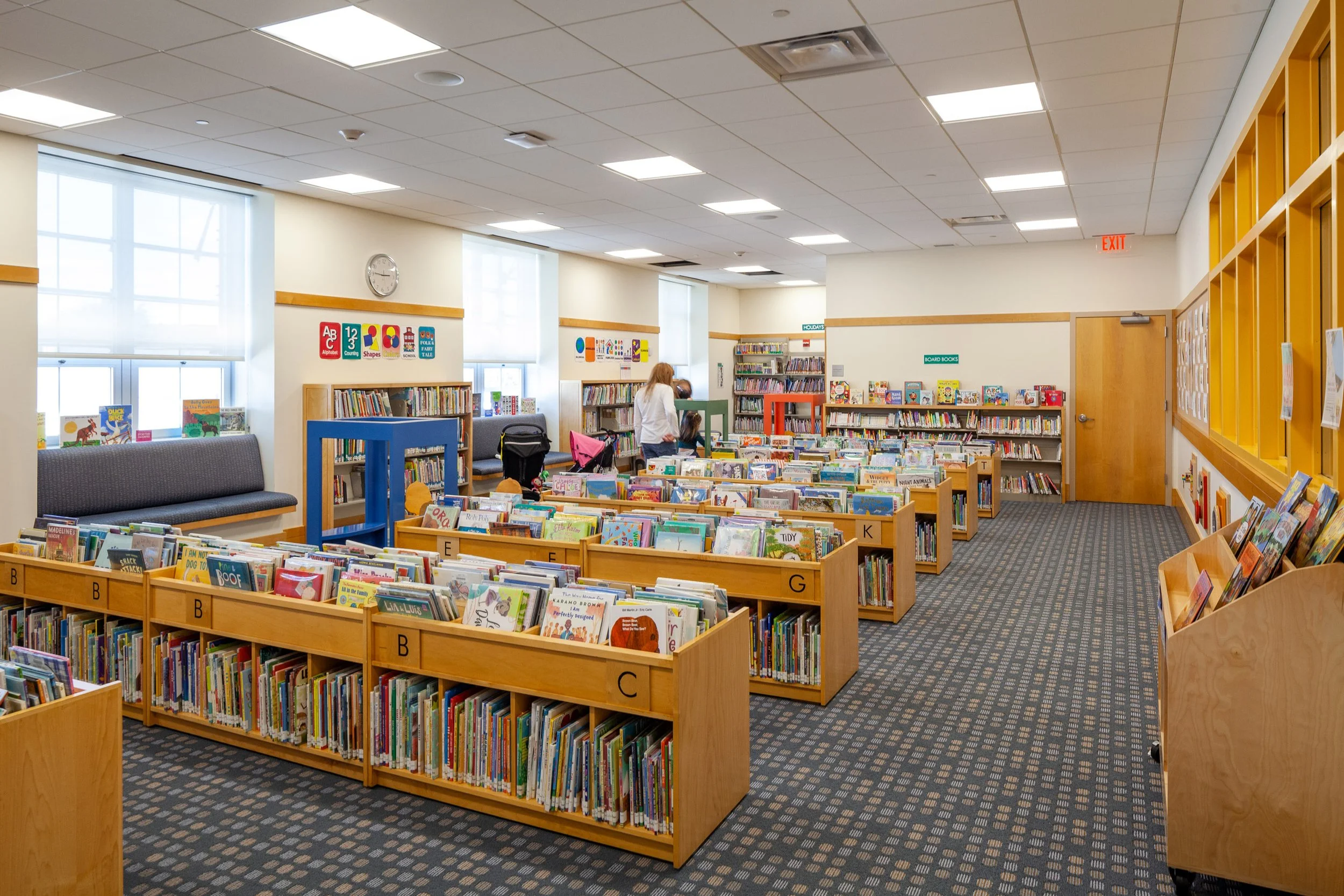
The Greenwich Library master plan rethinks a 104,000 sf main branch composed of three distinct buildings unified by a single façade. The project responds to changing public expectations by reorganizing collections, reinforcing the library as a community gathering place, and updating public spaces to support technology, learning, and flexible programming.
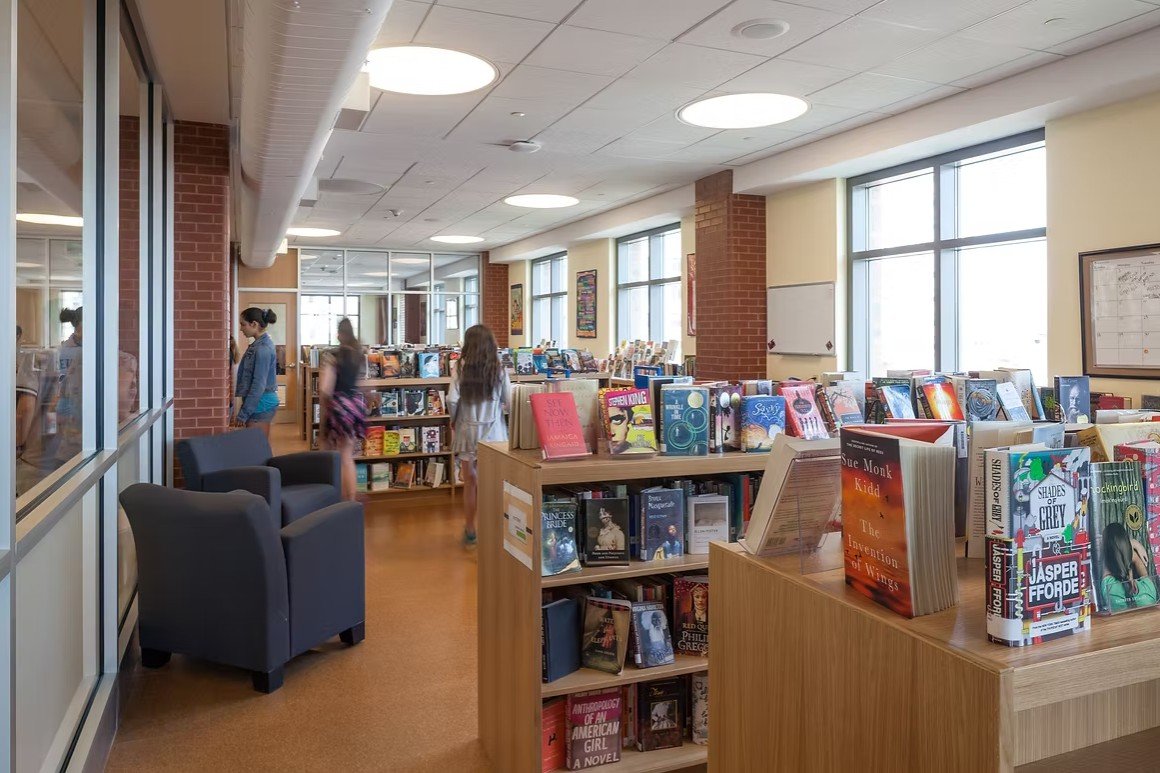
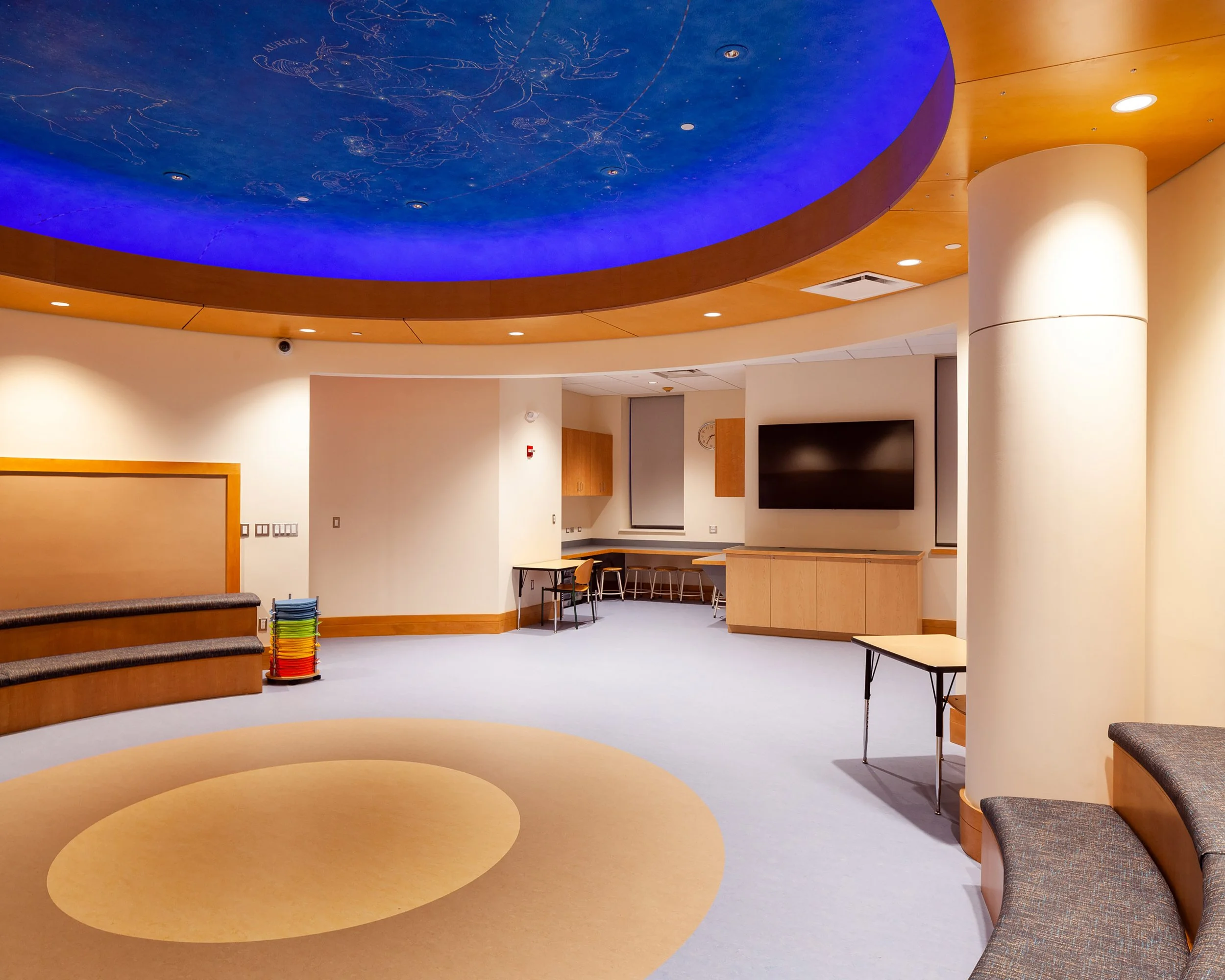
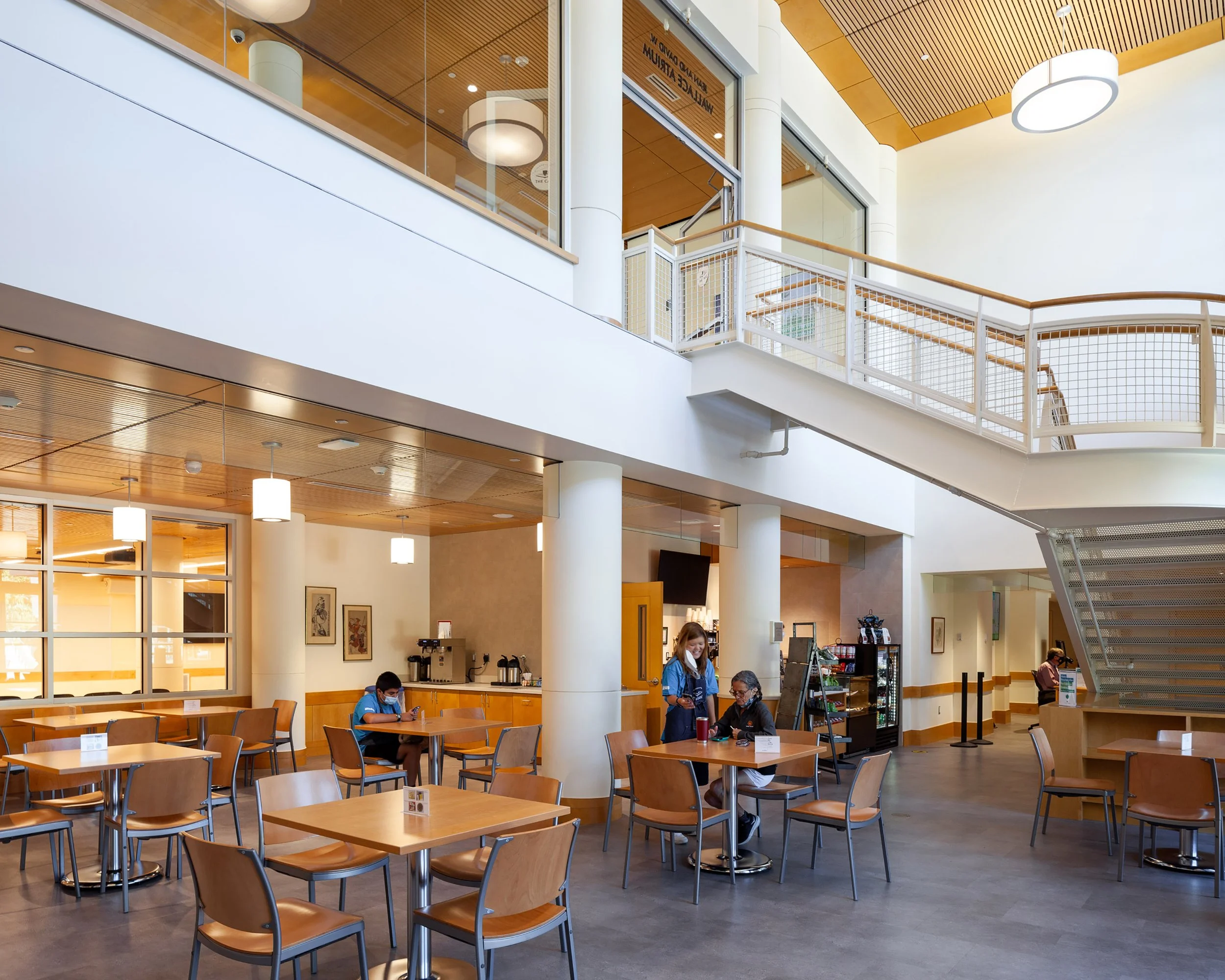
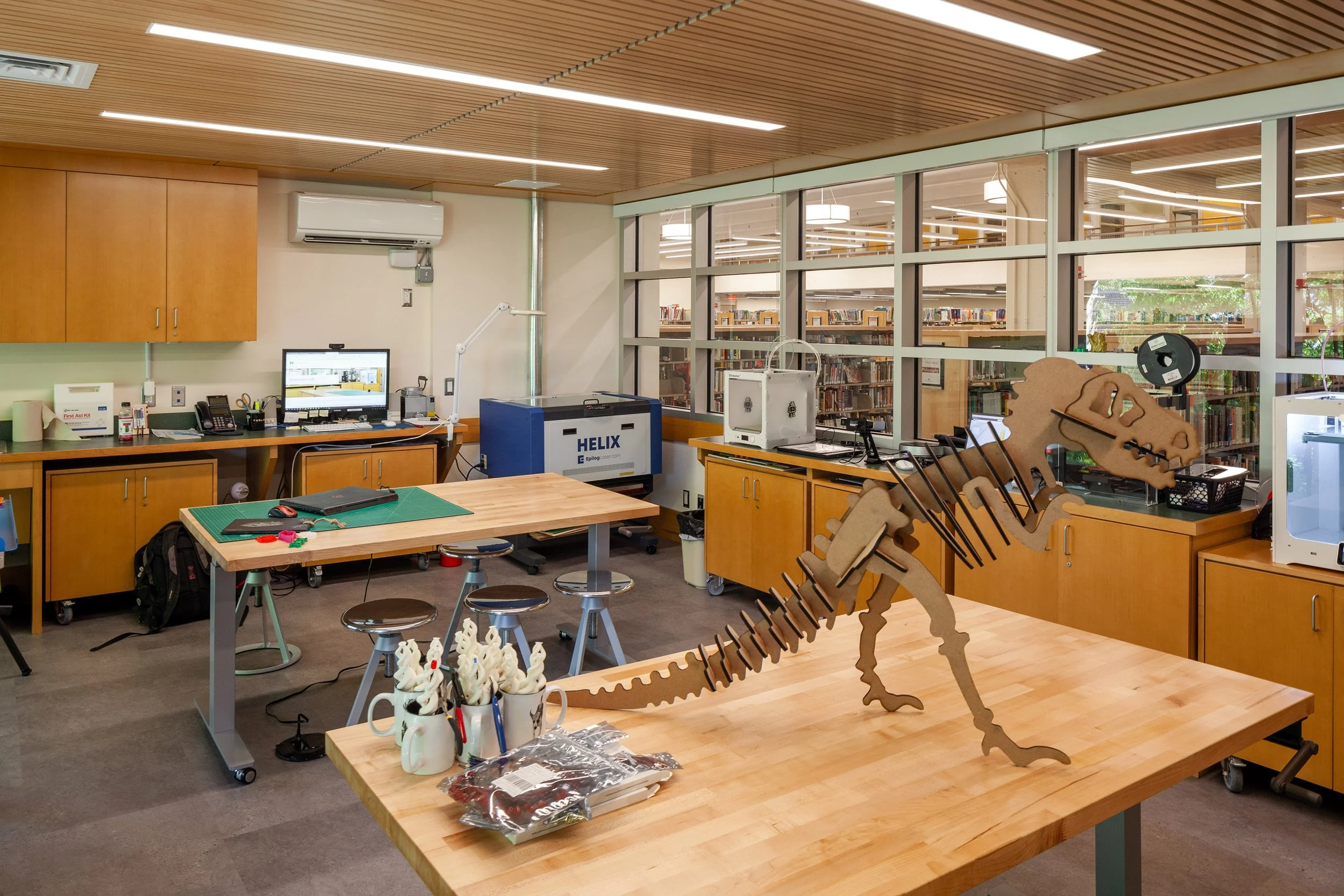
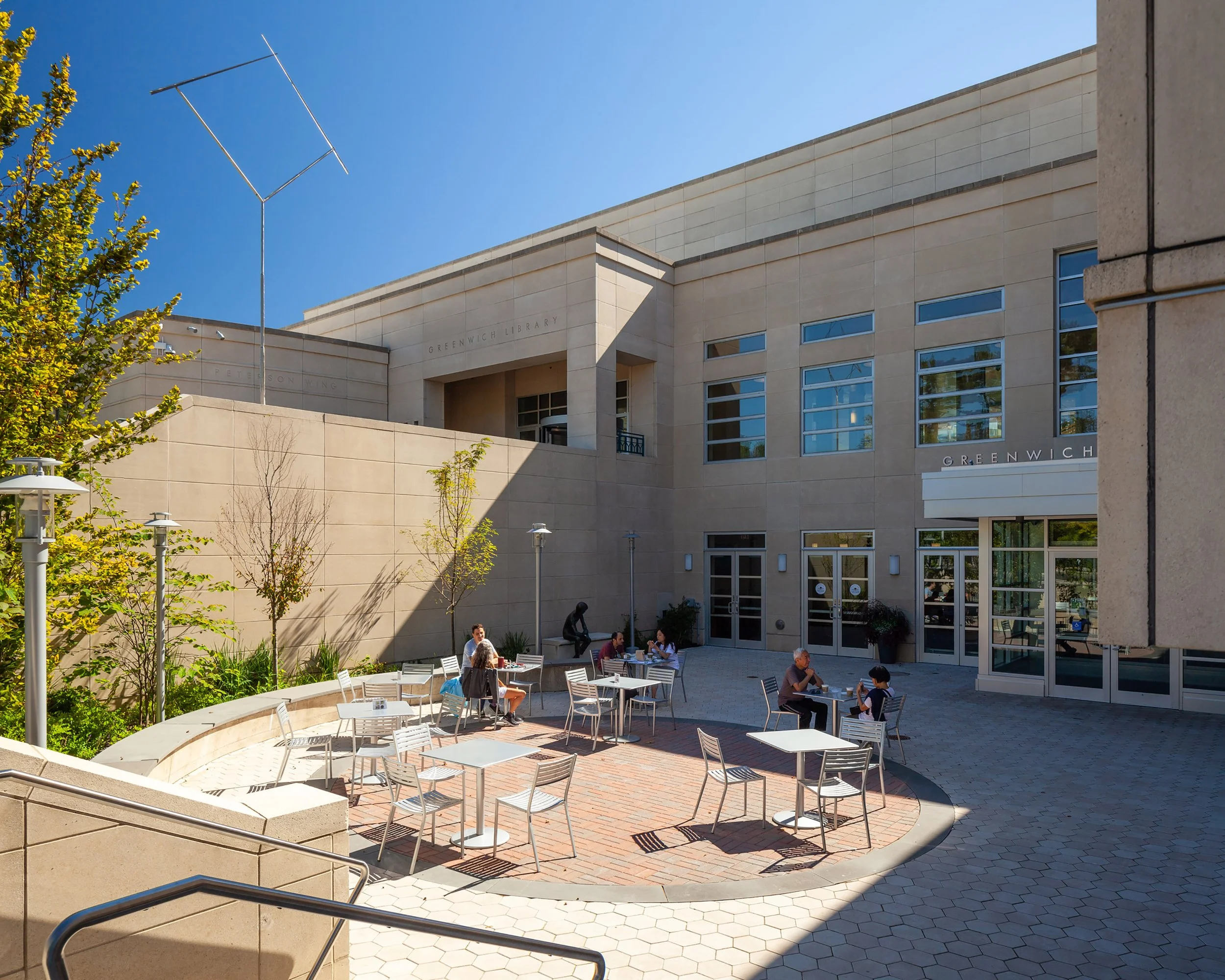
Design moves emphasize openness, transparency, and improved circulation. A portion of the first floor was removed to create a two-story, light-filled atrium and an open stair that links Main Street to the lower Cultural Commons and a redesigned Baxter Courtyard. Programmatic insertions—an Innovation Lab, teen center, and business center—are positioned to receive natural light and support varied activities.
project narrative
-
The main branch is made up of three separate buildings that read as one, and over time its internal organization no longer matched contemporary patterns of use. Patrons sought more flexible, visible, and technology-rich spaces, while the lower level felt disconnected from the primary entry and courtyard.
To address these issues the master plan prioritized clearer circulation, accessibility, and the creation of welcoming public destinations.
-
Building on the idea of a single, unified branch, the concept prioritizes visual and physical connections between levels and across the plan.
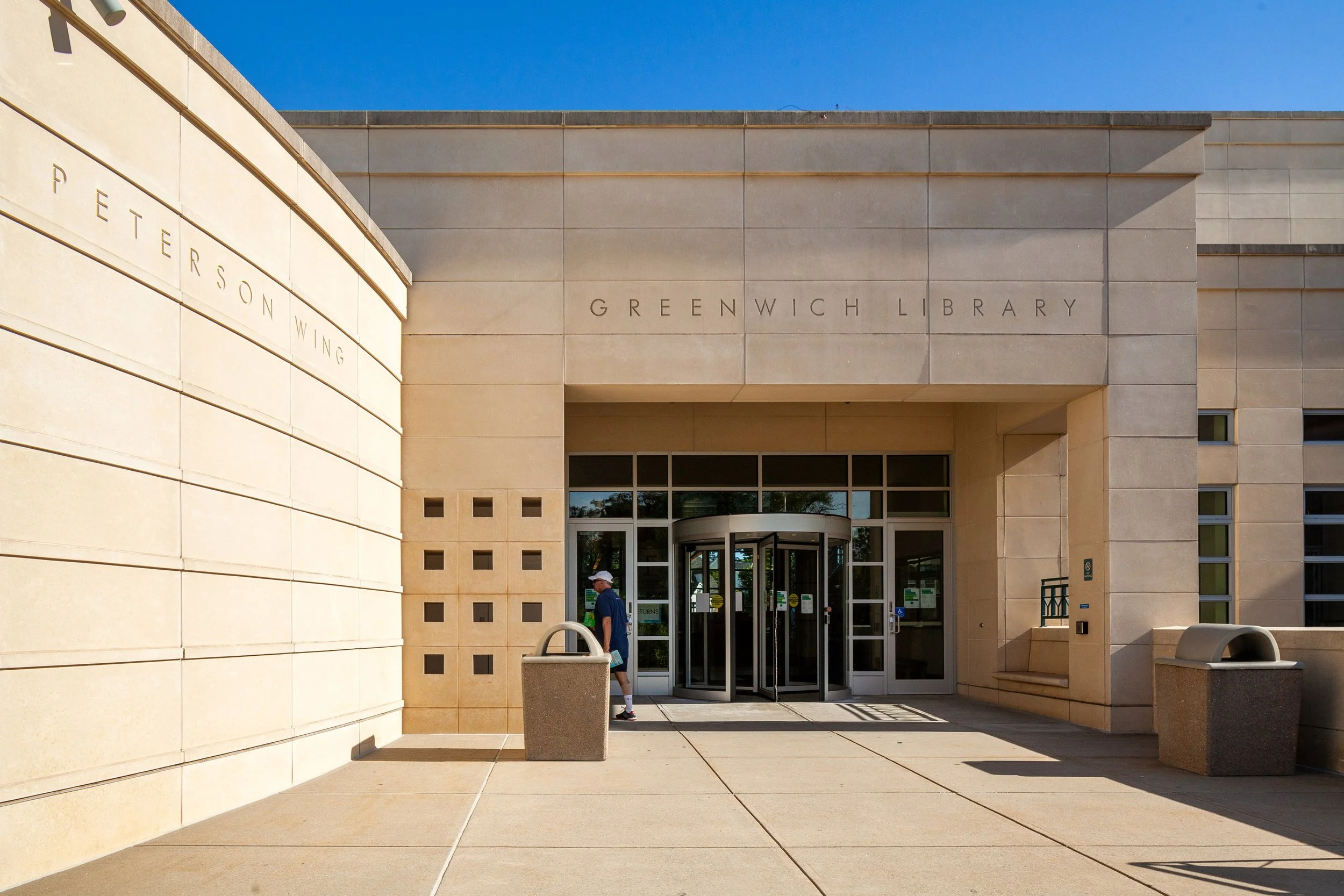
Central to this strategy was carving out a two-story atrium at the entry—“Main Street”—to introduce daylight and create a continuous path down to the Cultural Commons.
This gesture reinforces transparency, encourages incidental encounters, and organizes new program adjacencies around a legible core.
-
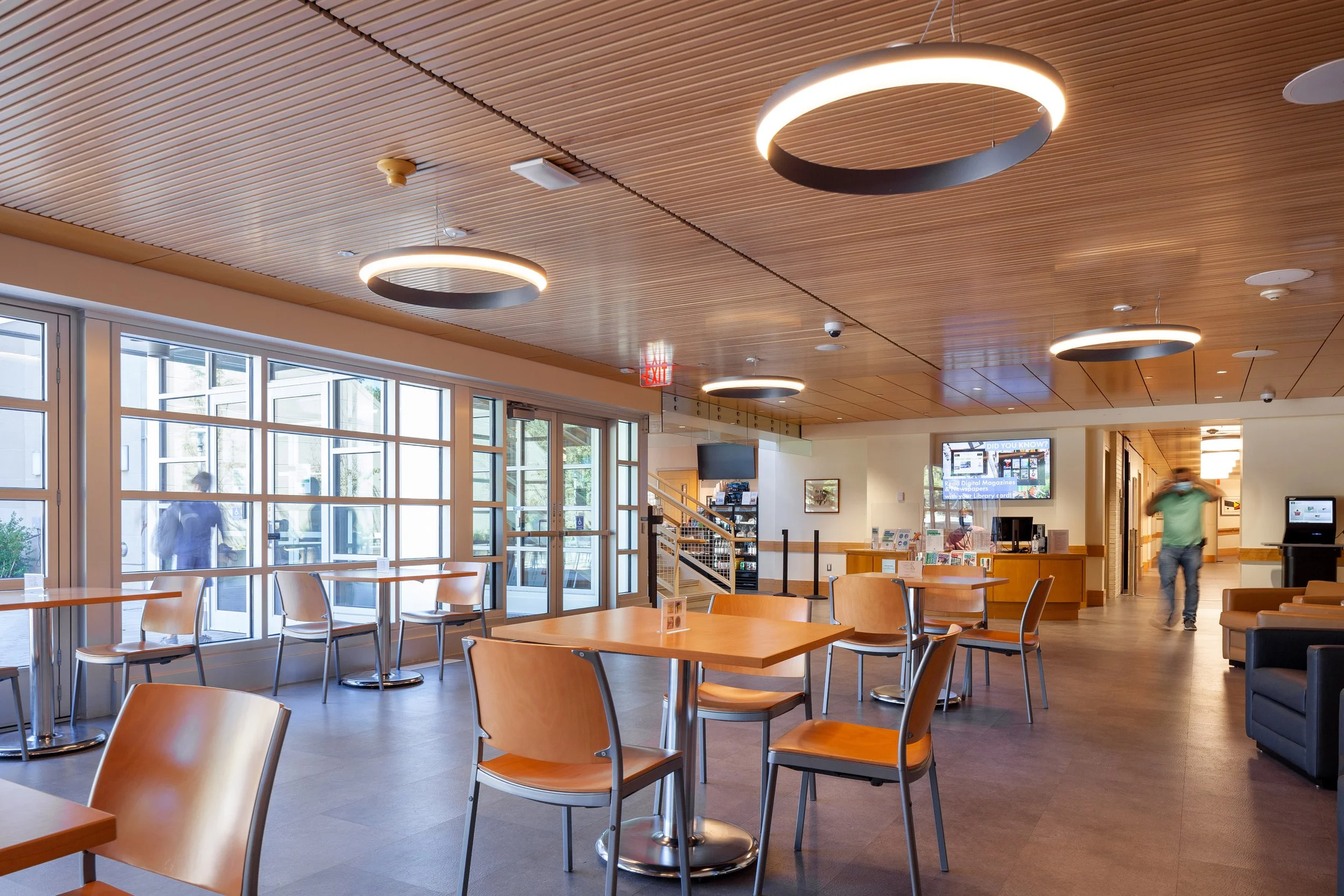
The design realizes the concept by selectively opening the first floor to form a light-filled atrium and inserting an open stair that establishes direct, intuitive movement to the lower level and courtyard cafe.
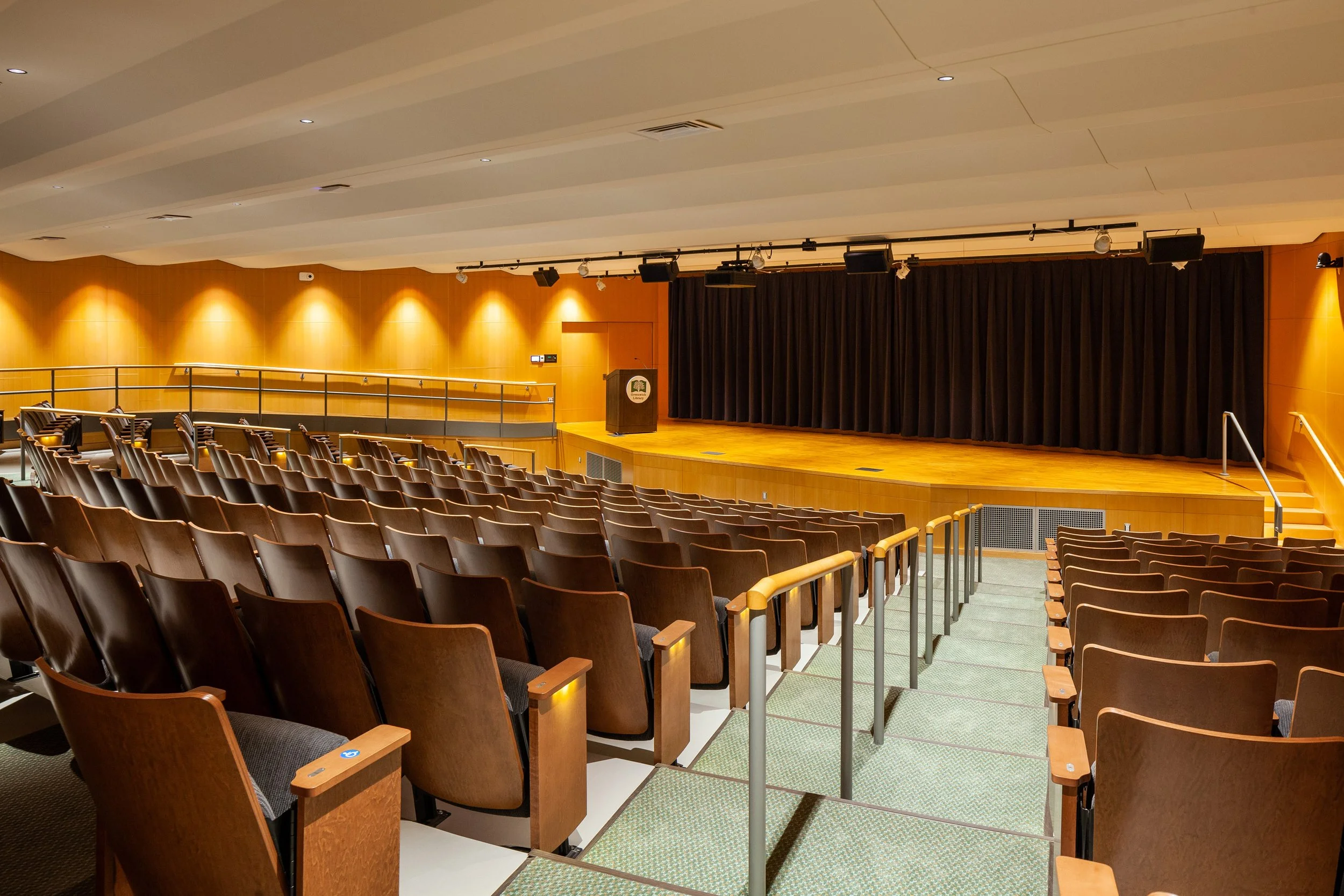
The auditorium was reconstructed for accessibility and improved sightlines, while service spaces were transformed into a technology room and large meeting spaces.
Renovations were phased to allow the library to remain in operation throughout construction.
project outcome
The entry atrium and open stair clarify vertical movement and connect Main Street with the Cultural Commons and Baxter Courtyard, making wayfinding intuitive. Circulation supports direct, accessible passage between primary destinations and reduces isolated corridors.
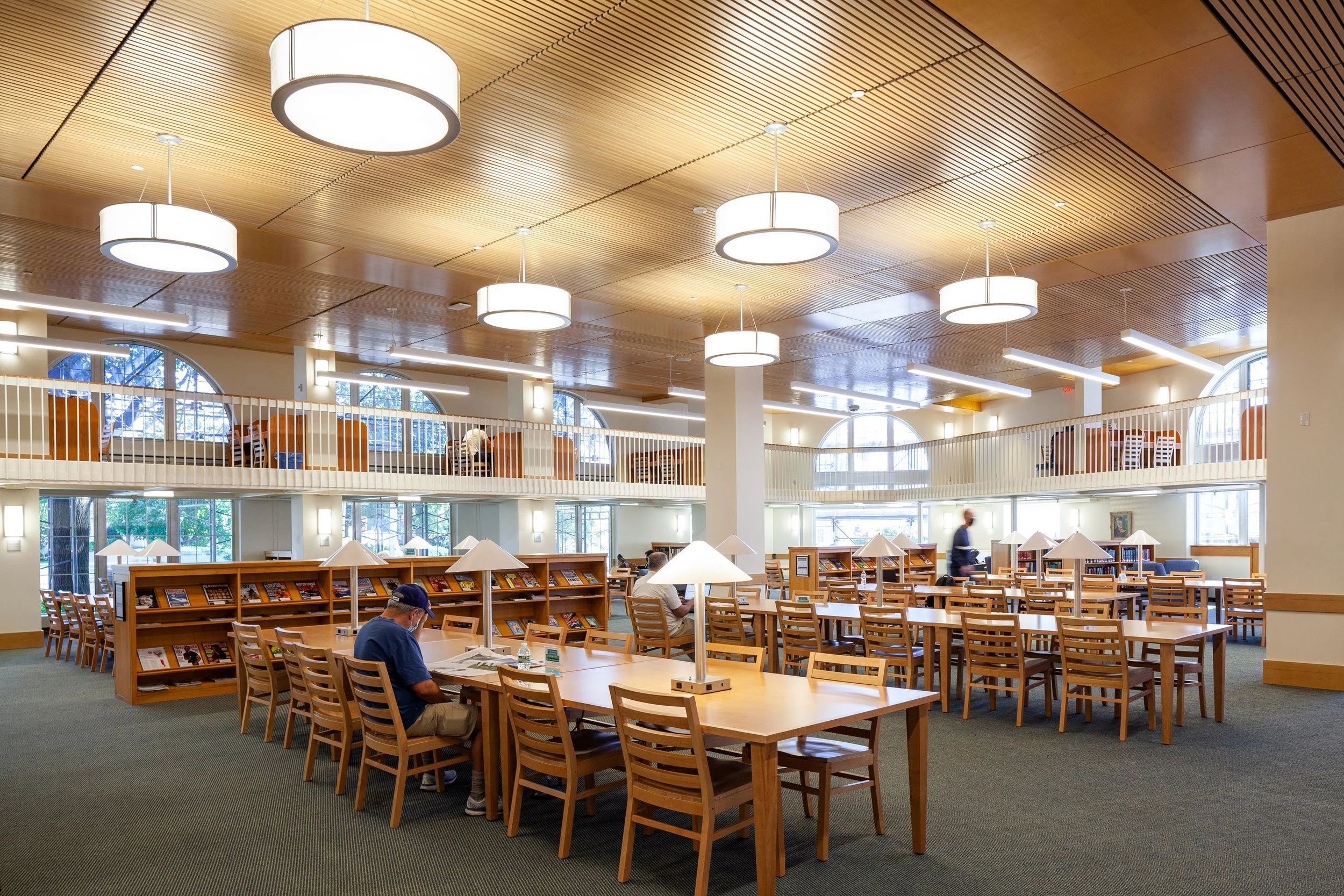
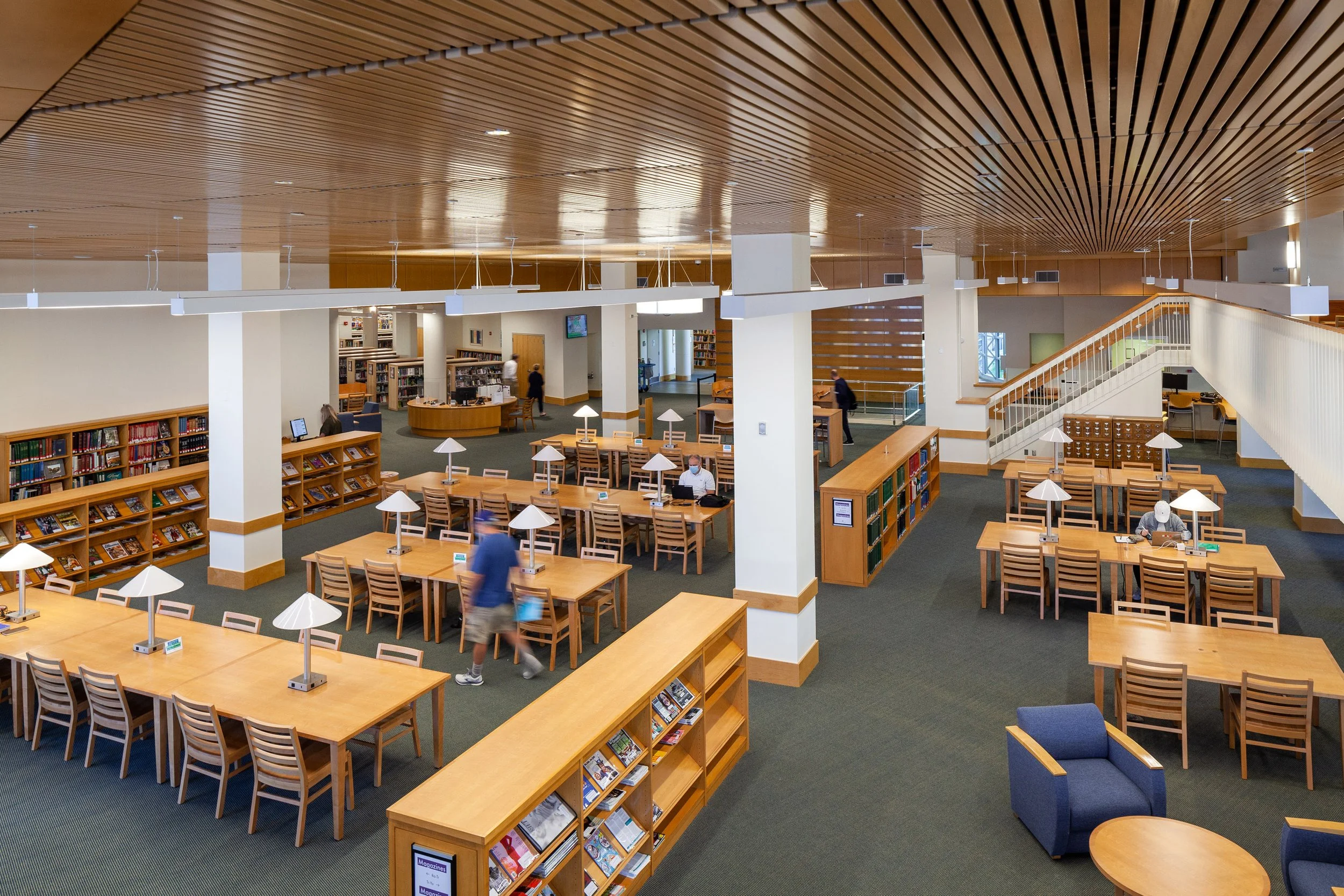
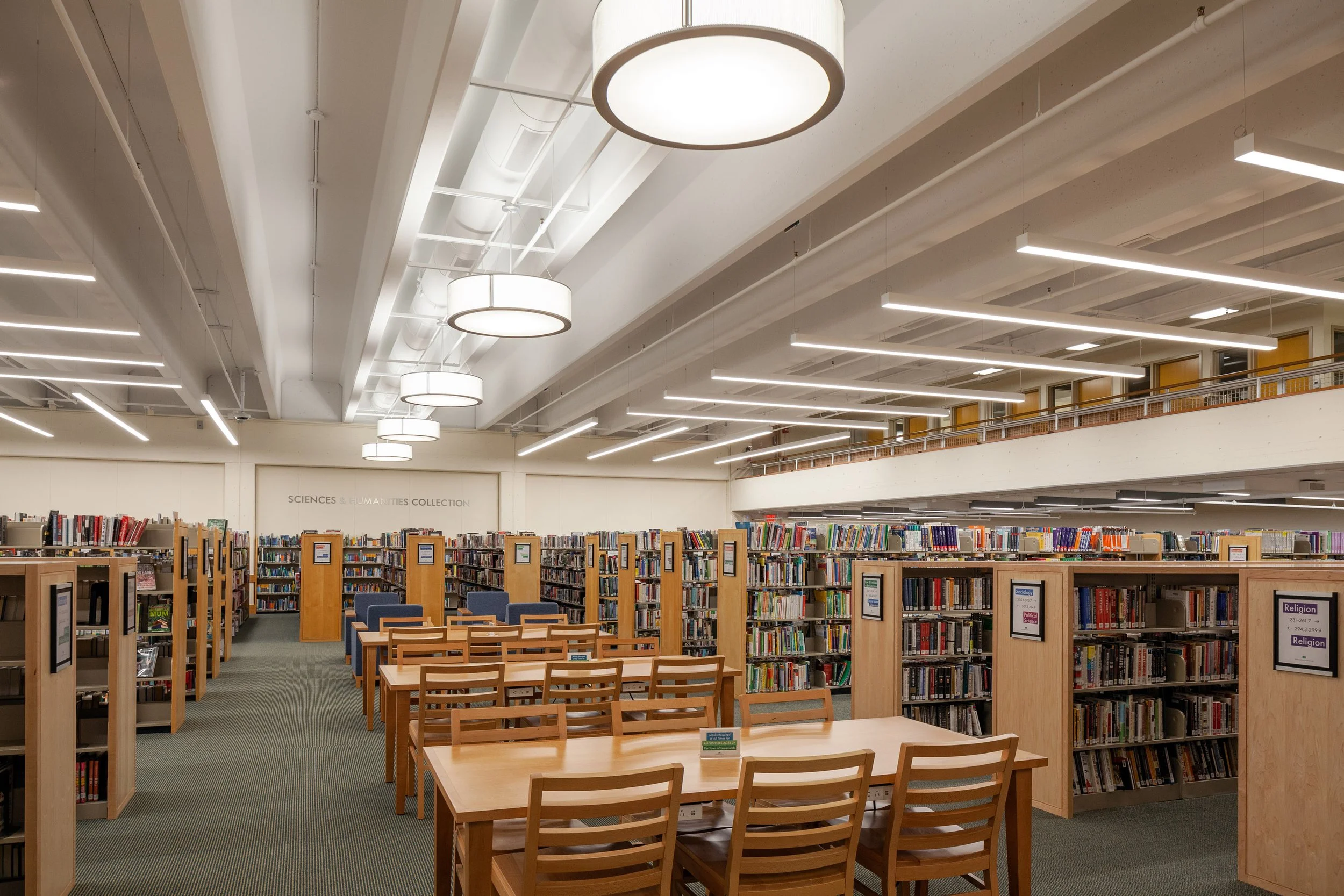
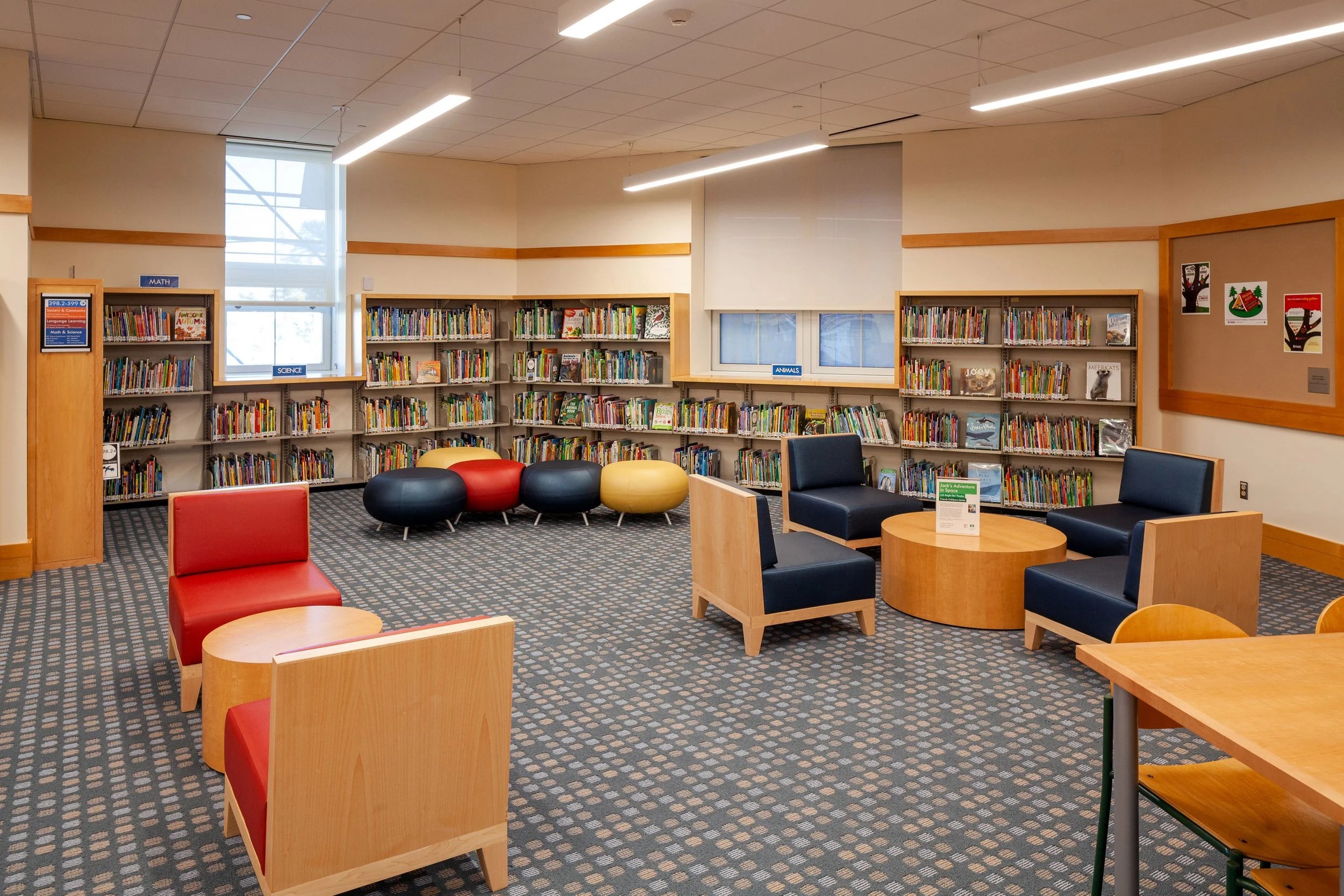
Daylight reaches interior spaces, reinforcing visibility between levels and improving passive oversight of reading areas and program rooms. Seating and collections near windows receive steady natural light while interior sightlines to the auditorium and commons stay clear.
Meeting rooms, the technology room, Innovation Lab, teen center, and business center accommodate varied activities and evolving needs, supporting both focused work and group events. Accessible routes and reworked auditorium seating reinforce everyday adaptability and comfortable use.
let’s continue the conversation
Every project begins with listening. If you’re considering a new campus, building, or landscape, we’d welcome the chance to talk through your goals, challenges, and aspirations. Our team works collaboratively to shape places that feel grounded, connected, and built to serve people well over time.