hackley school
master plan
1998-2015
tarrytown, ny
2007, American School & University
Campus Master Planning Citation
2009, AIA Westchester/Hudson Valley
Design Award
2009, American School & University
Elementary School Citation
2010, GE Edison
Award of Merit
2010, Learning by Design
Citation of Excellence
2011, AIA Westchester / Hudson Valley
Honor Award
2011, Learning by Design
Citation of Excellence
2012, American Society of Landscape Architects
Merit Award
2012, Historical Society of Tarrytown
Preservation Award
2012, AIA Connecticut
Honor Award
awards
Structural: Robert Silman Associates
MEP: Werner Tietjen
MEP: BVH
Site/Civil: McLaren Engineering Group
Site/Civil: John Meyer Consulting
Roofing: Watsky Associates
Lighting: Goldstick Lighting Design
Code: Bruce Spiewak
Architecture Preservation: Raible Associates
Other: Viridian
Other: Genesys
Other: EduTek
Other: Goldstick
collaborators
a phased master plan that restores historic quadrangles and links academic and athletic precincts.
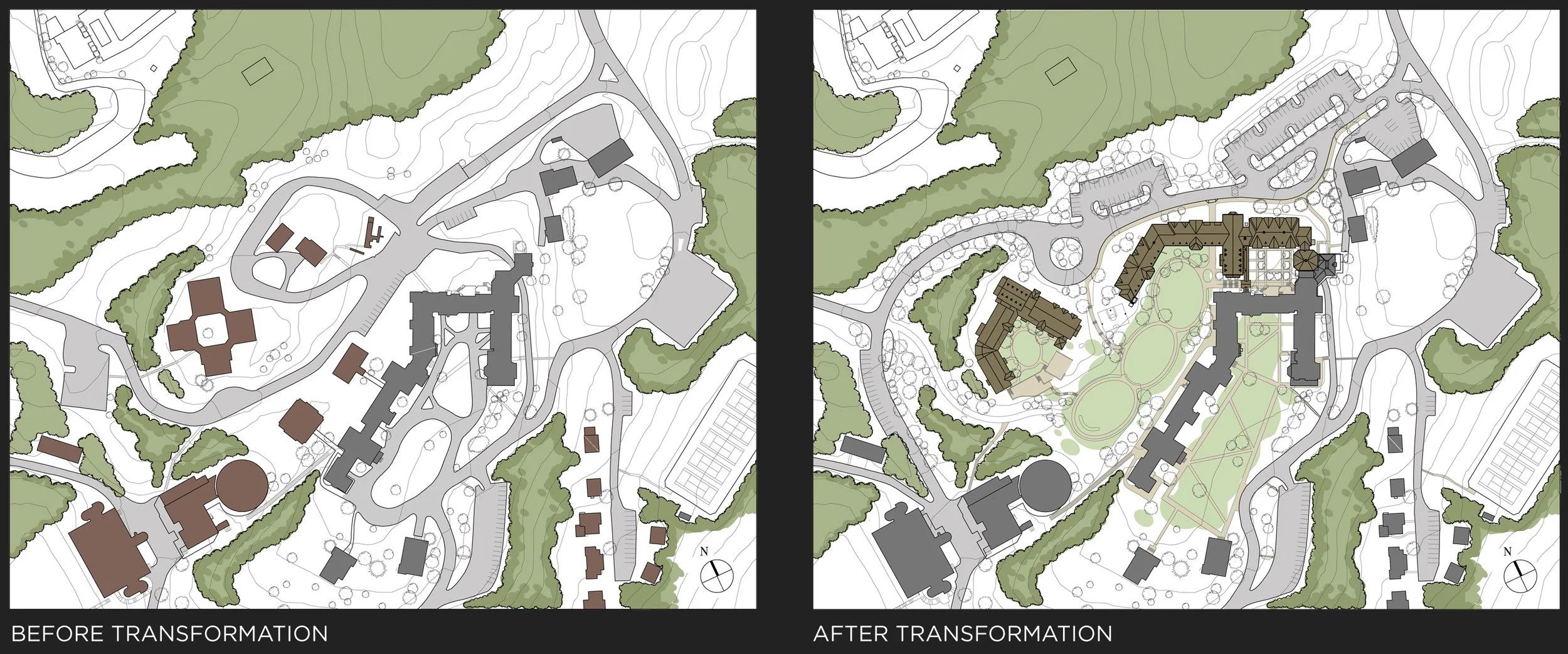
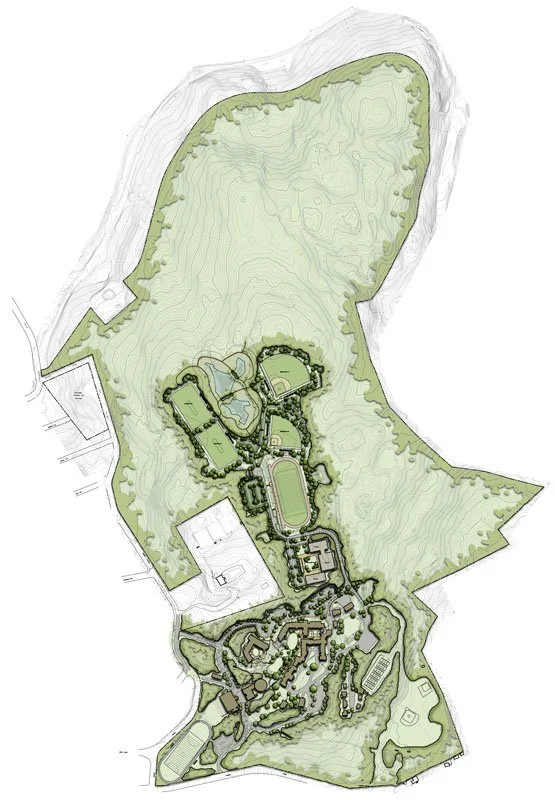
Hackley occupies a 280-acre wooded campus serving pre-K–12 students. Our 1998 master plan returned the campus to its original organizational idea by establishing four linked quadrangles and a pedestrian precinct. Implementation occurred in phases over the following decades, creating a more coherent academic core and relocating roads and parking to the campus perimeter.
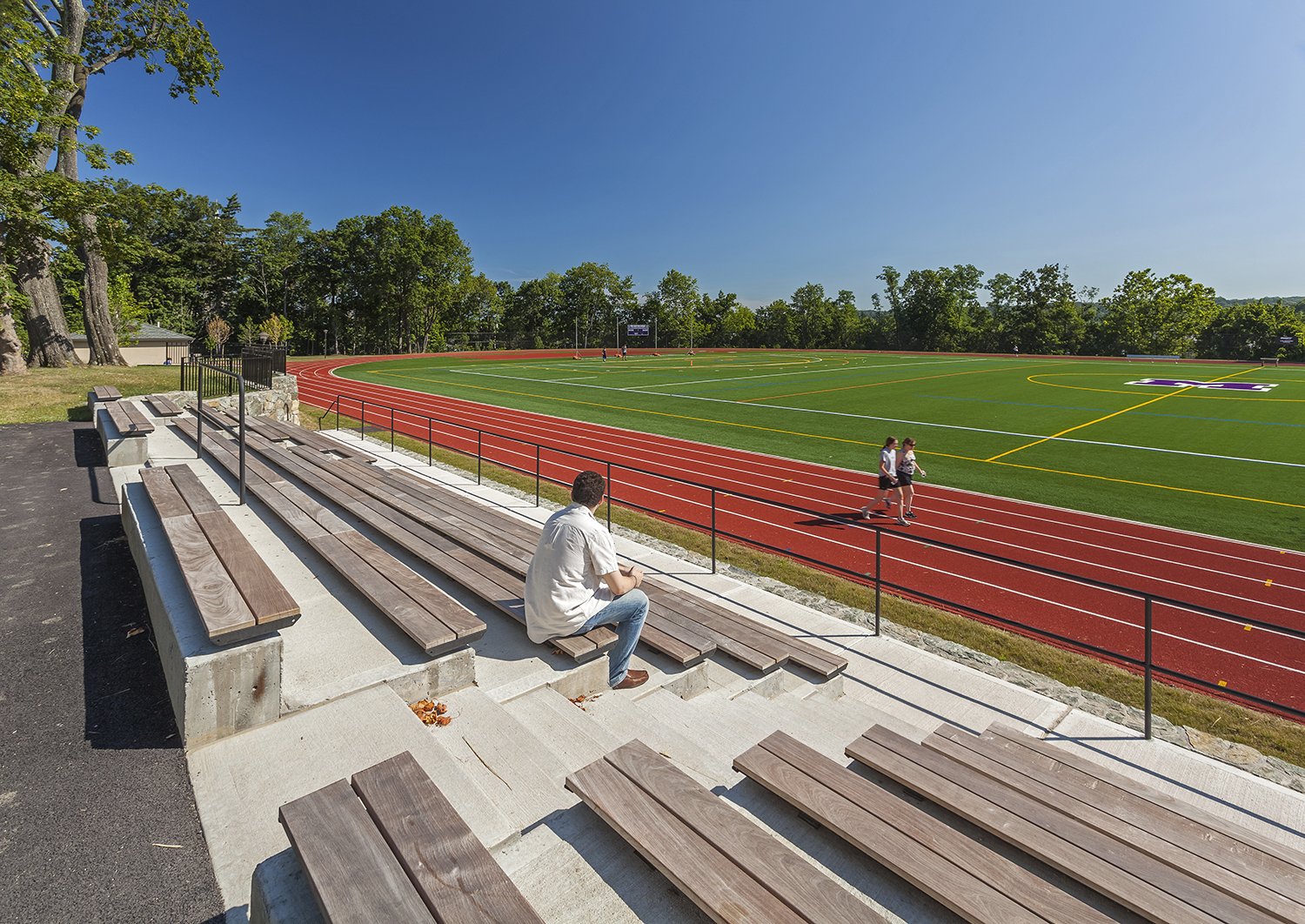
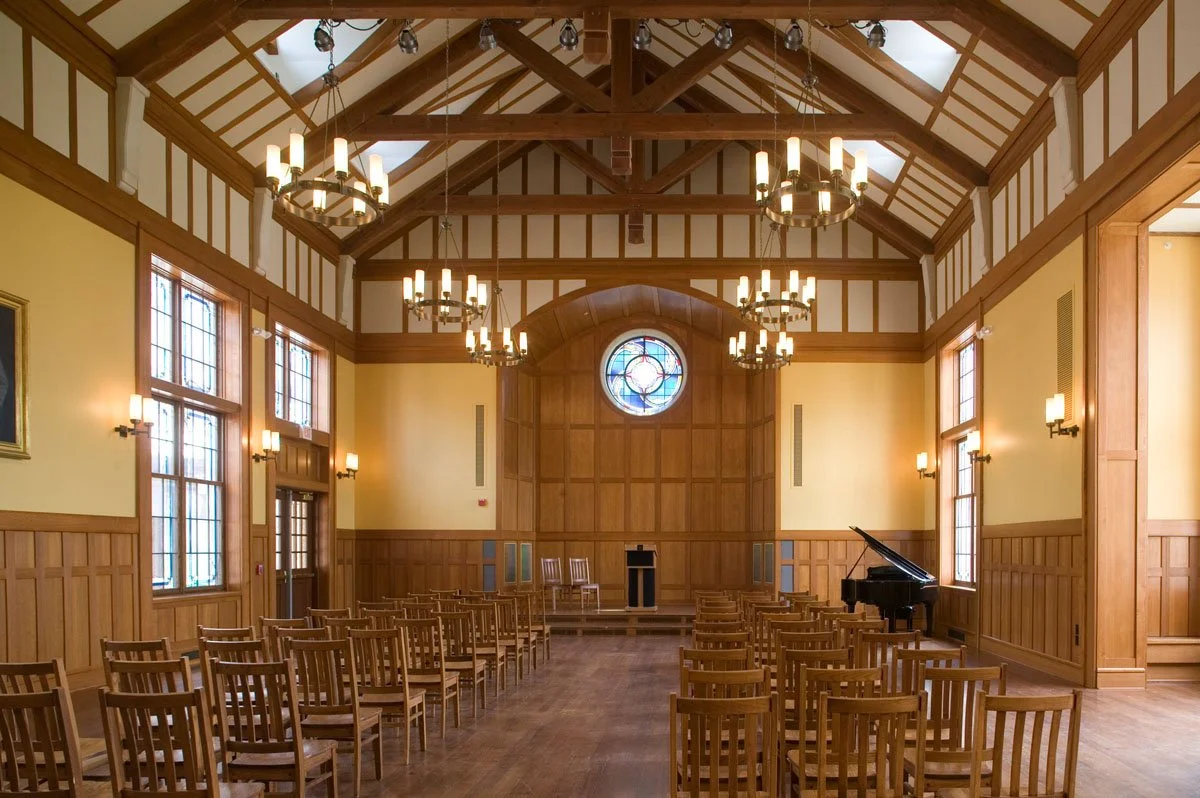
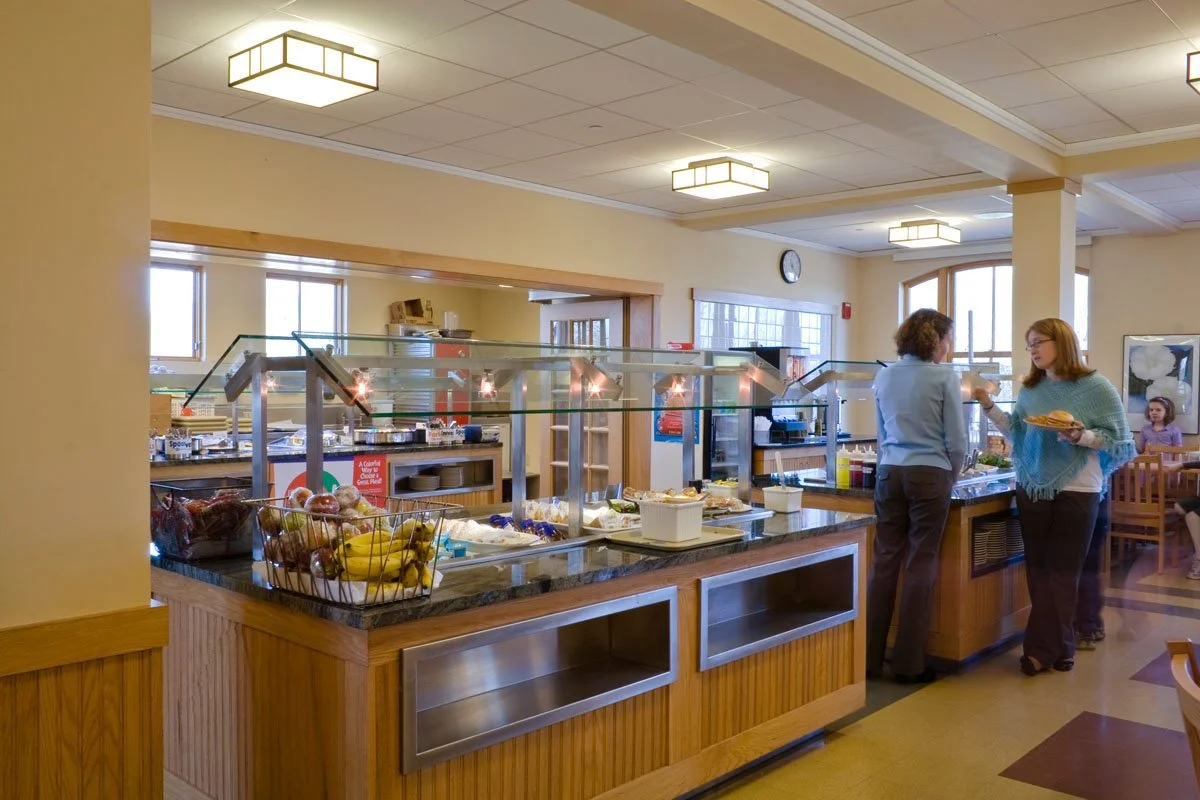
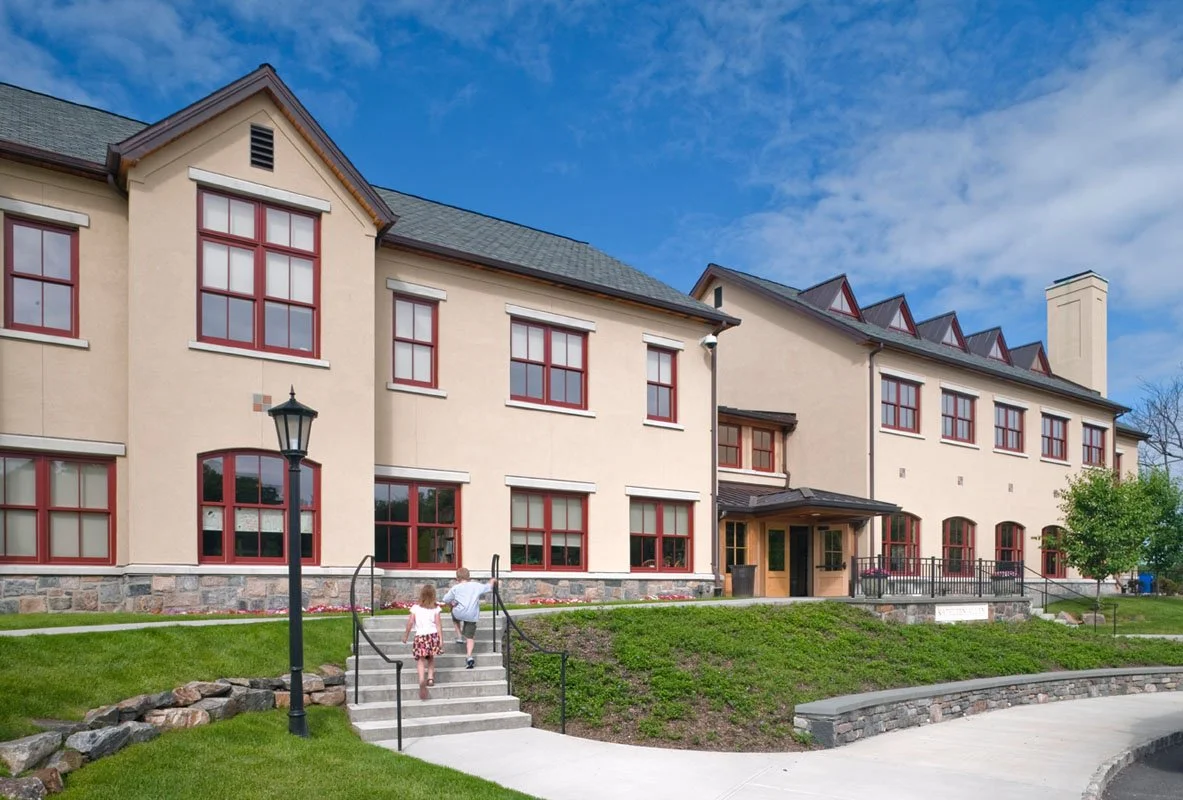
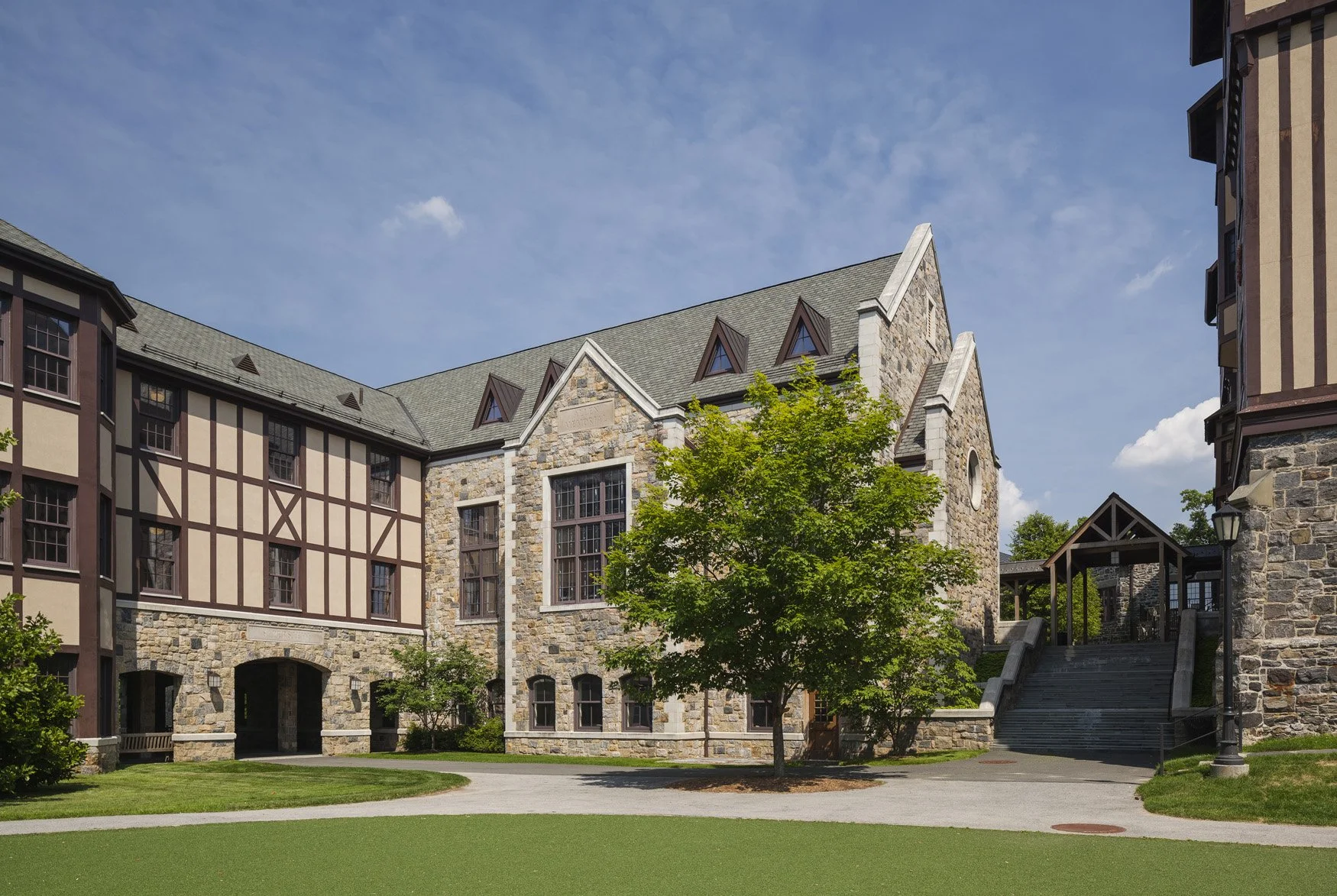
Design strategies prioritize clear circulation, visibility, and connections to landscape. New buildings were sited with single-loaded corridors facing the quads and meadow (Akin Common); older stone buildings were repaired and adapted; and athletic fields and trails were introduced to the upper precinct with sensitive, ecologically minded routing.
project narrative
-
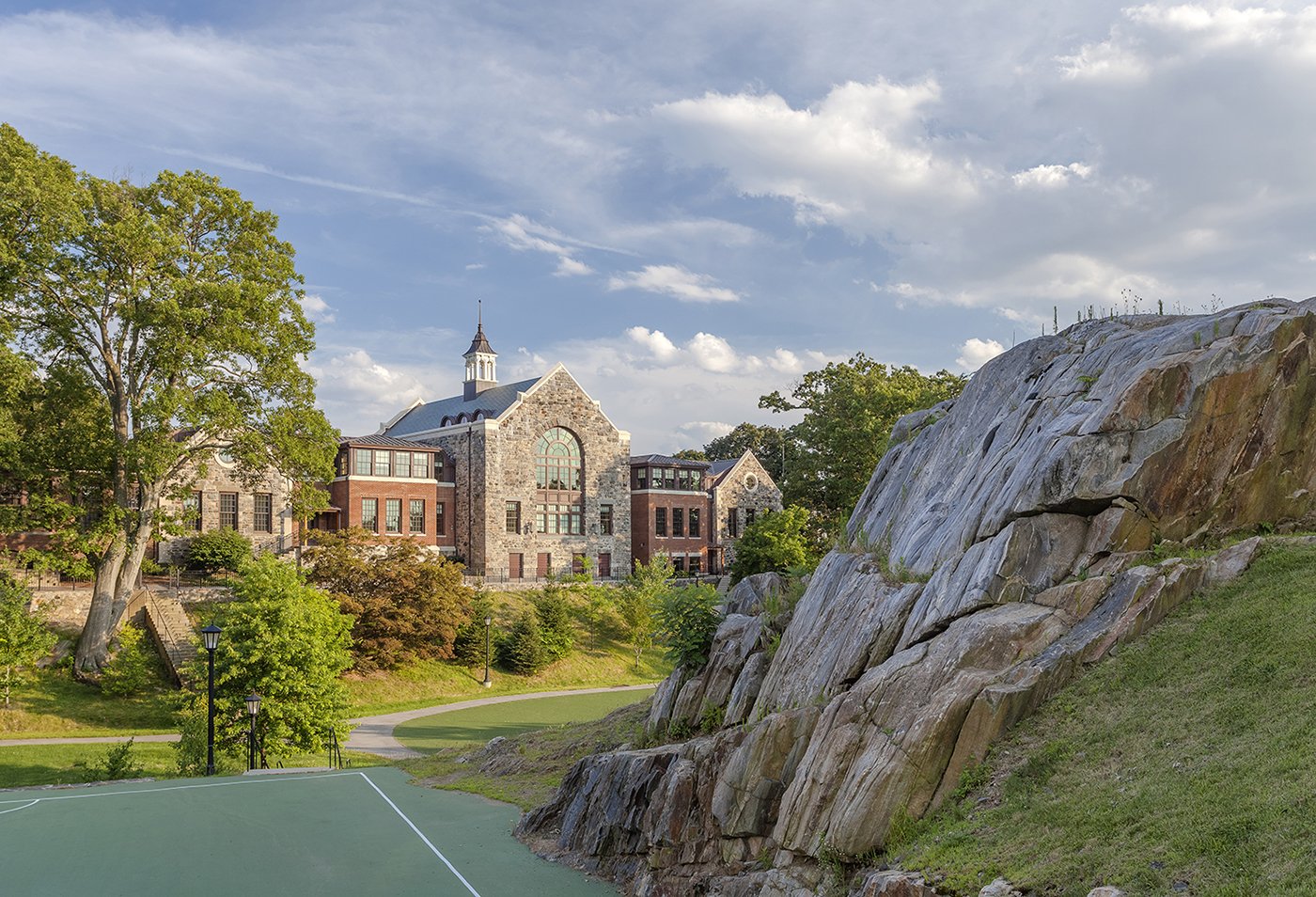
Hackley’s campus had been incrementally altered by mid-20th-century ‘object’ buildings, roads, and parking that fragmented the original quadrangle and made pedestrian movement difficult and hazardous. In addition, recently acquired land to the north presented steep slopes, wetlands, and rock outcrops that required careful ecological consideration.
To address this, the master plan sought to re-establish a coherent academic center and to introduce an athletic precinct while protecting sensitive landscapes.
-
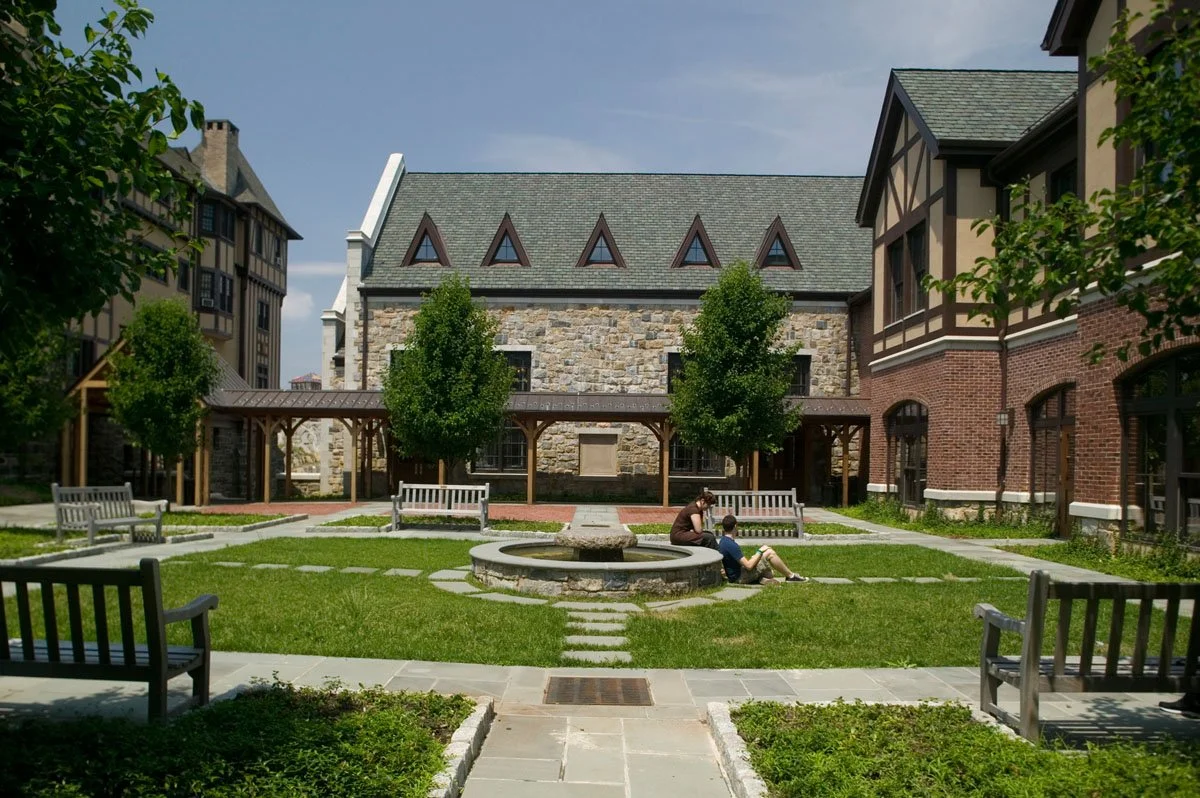
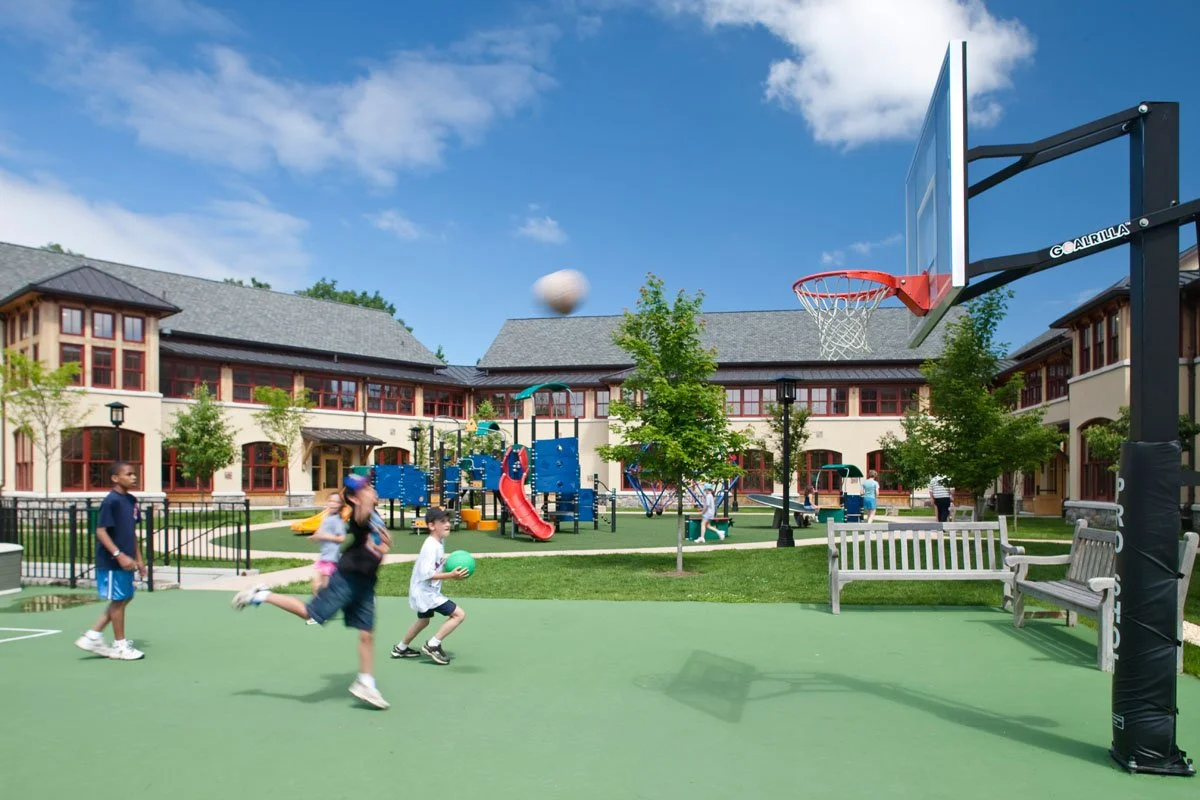
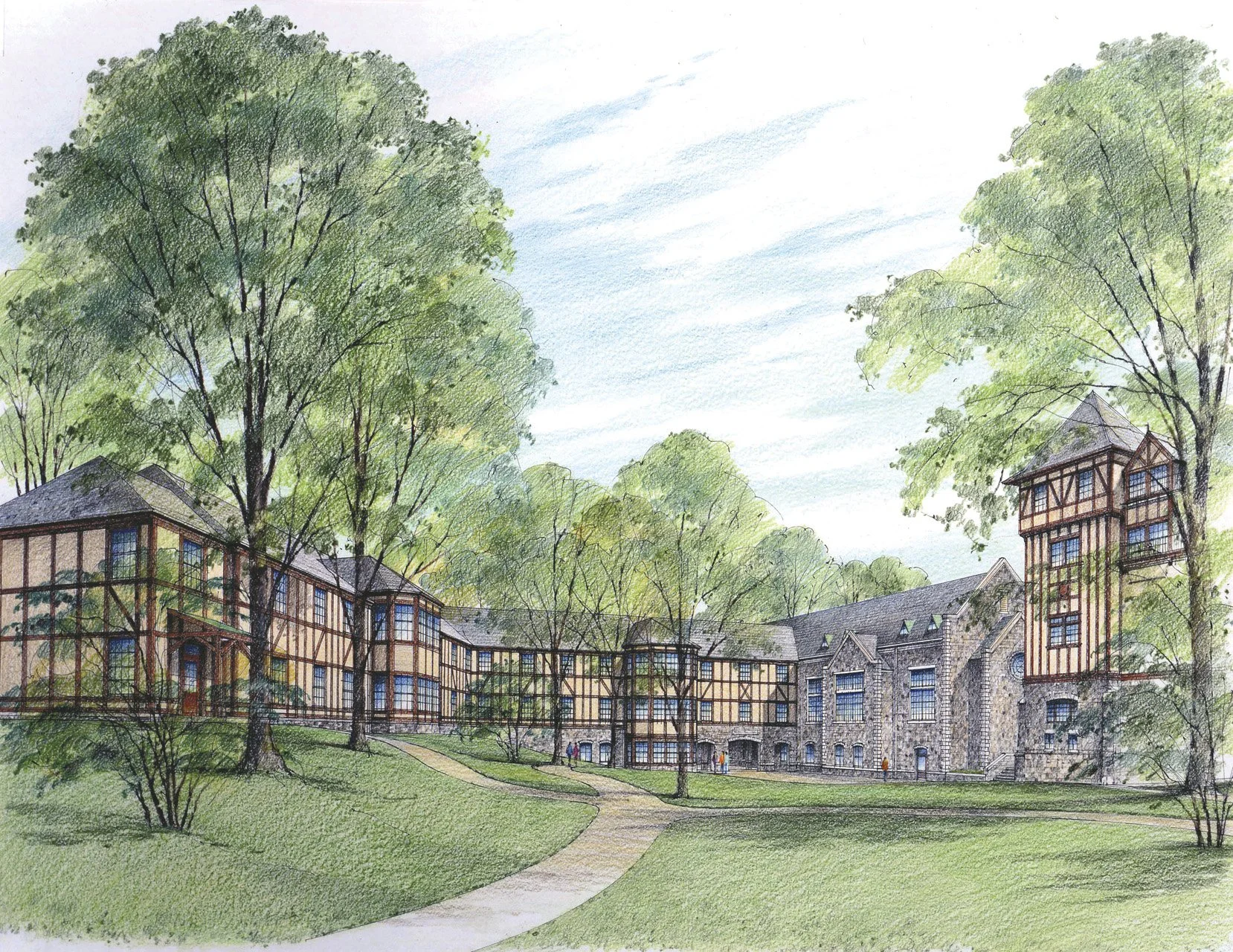
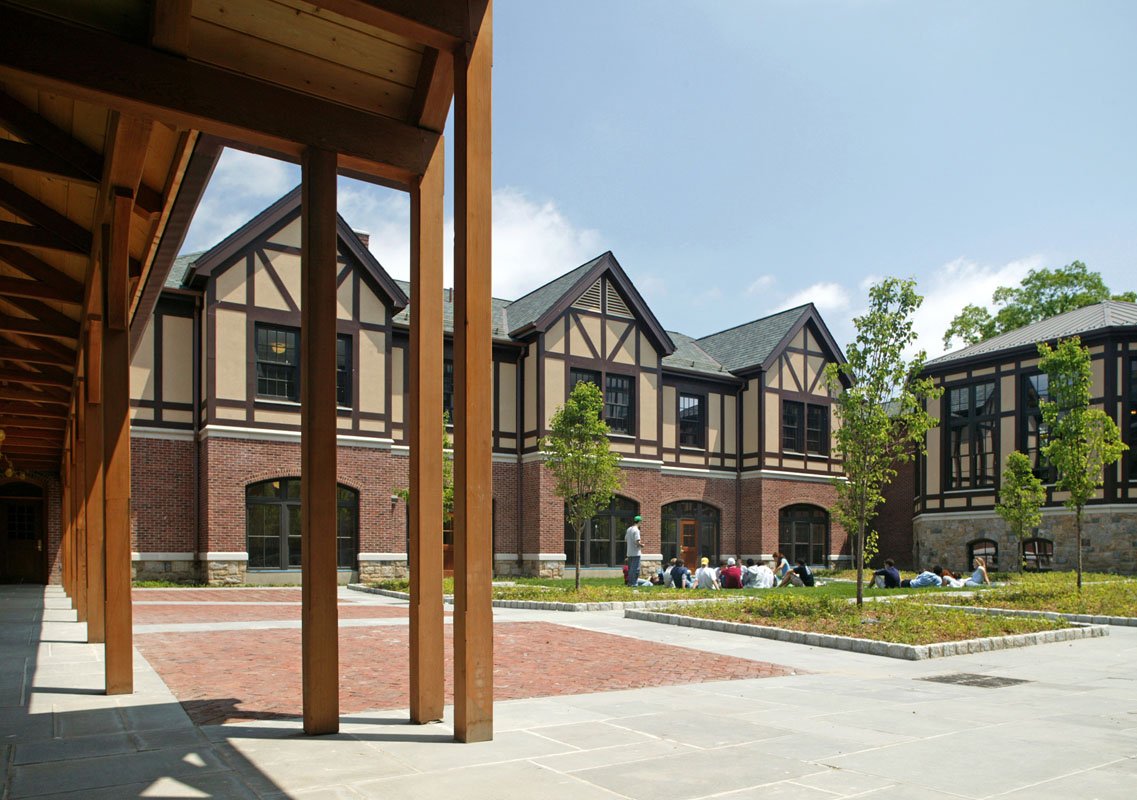
Building on the school’s original spatial logic, the concept organizes campus life around four distinct quadrangles—a cloister, a meadow (Akin Common), a south-facing courtyard and the main ceremonial quad—that together form a continuous pedestrian zone.
This idea reinforces civic edges, frames views between old and new, and connects learning spaces to outdoor life and circulation routes.
-
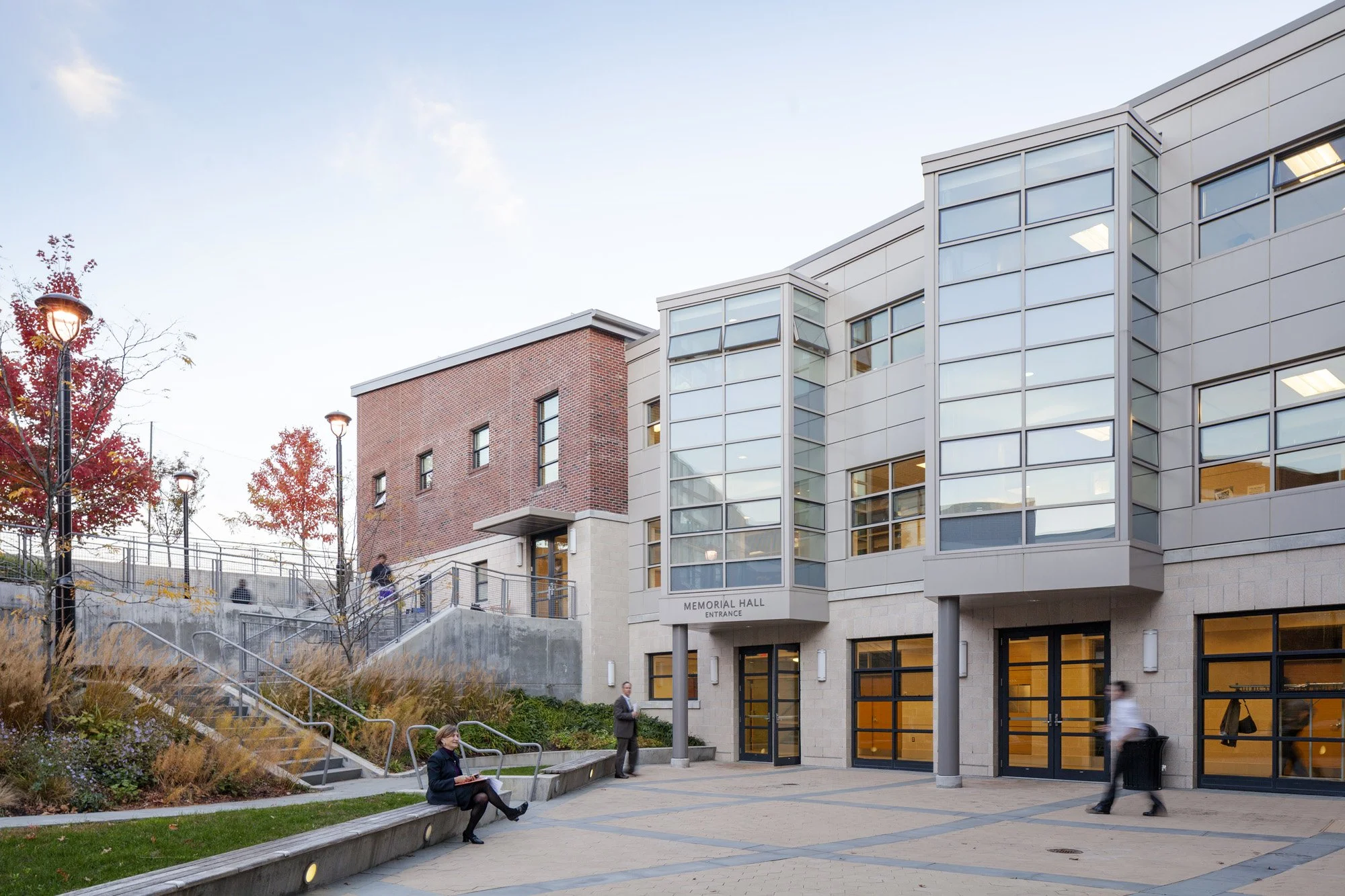
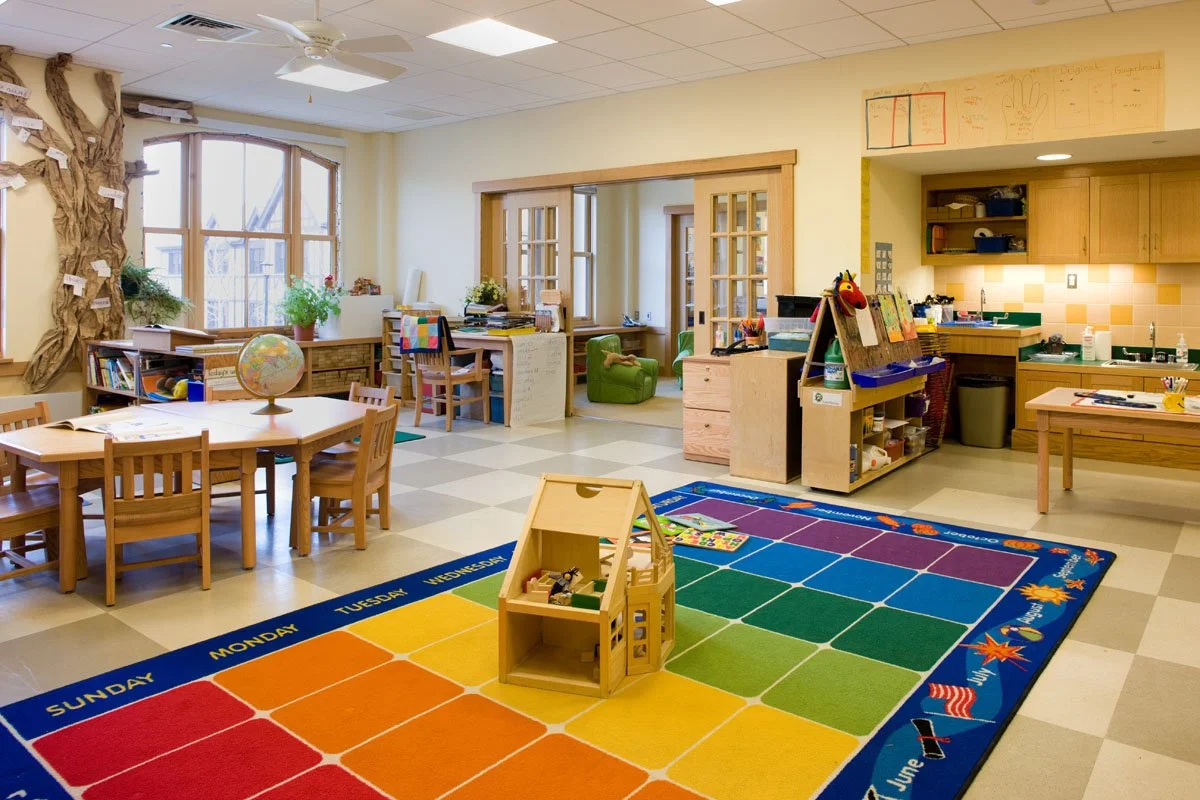
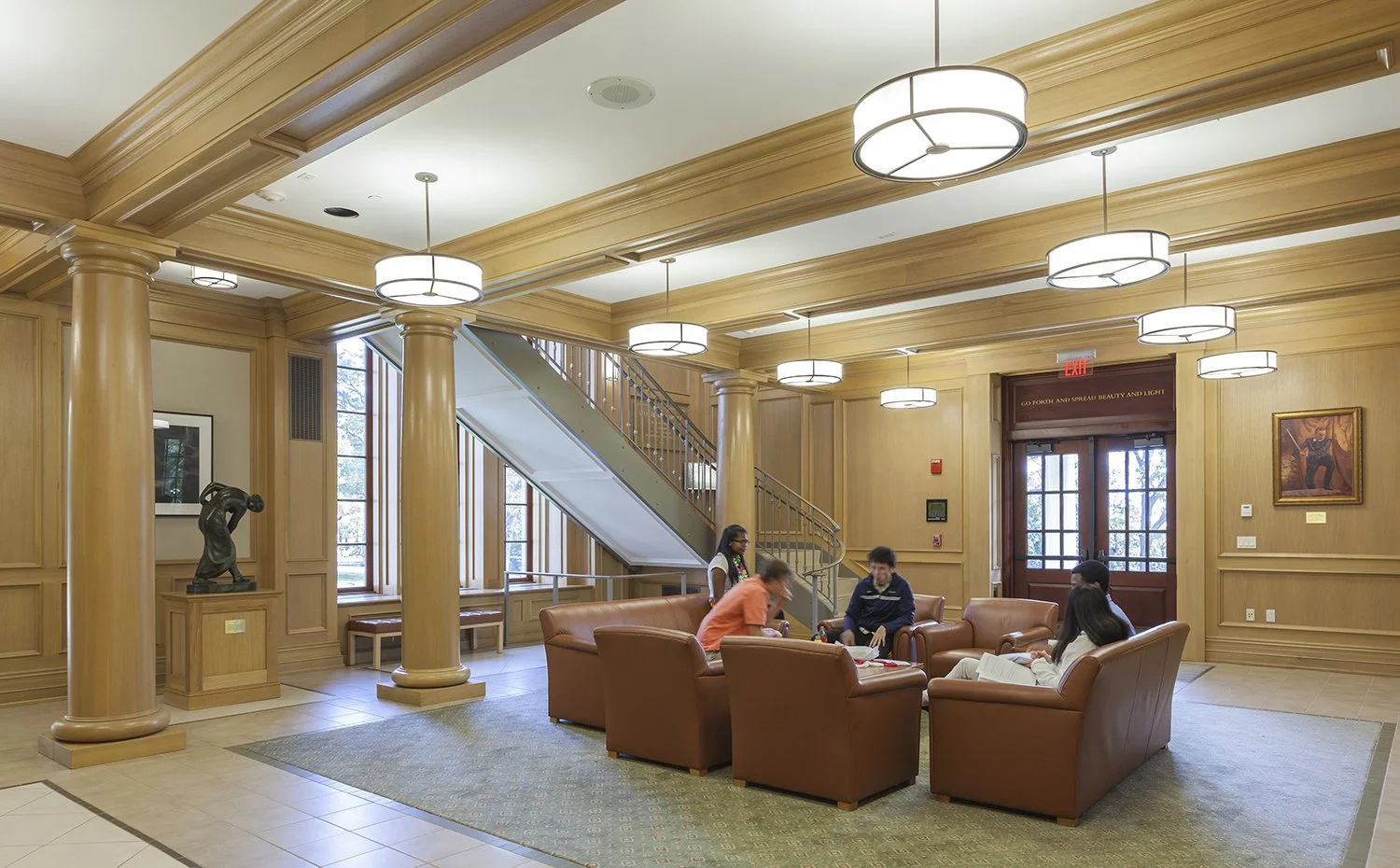
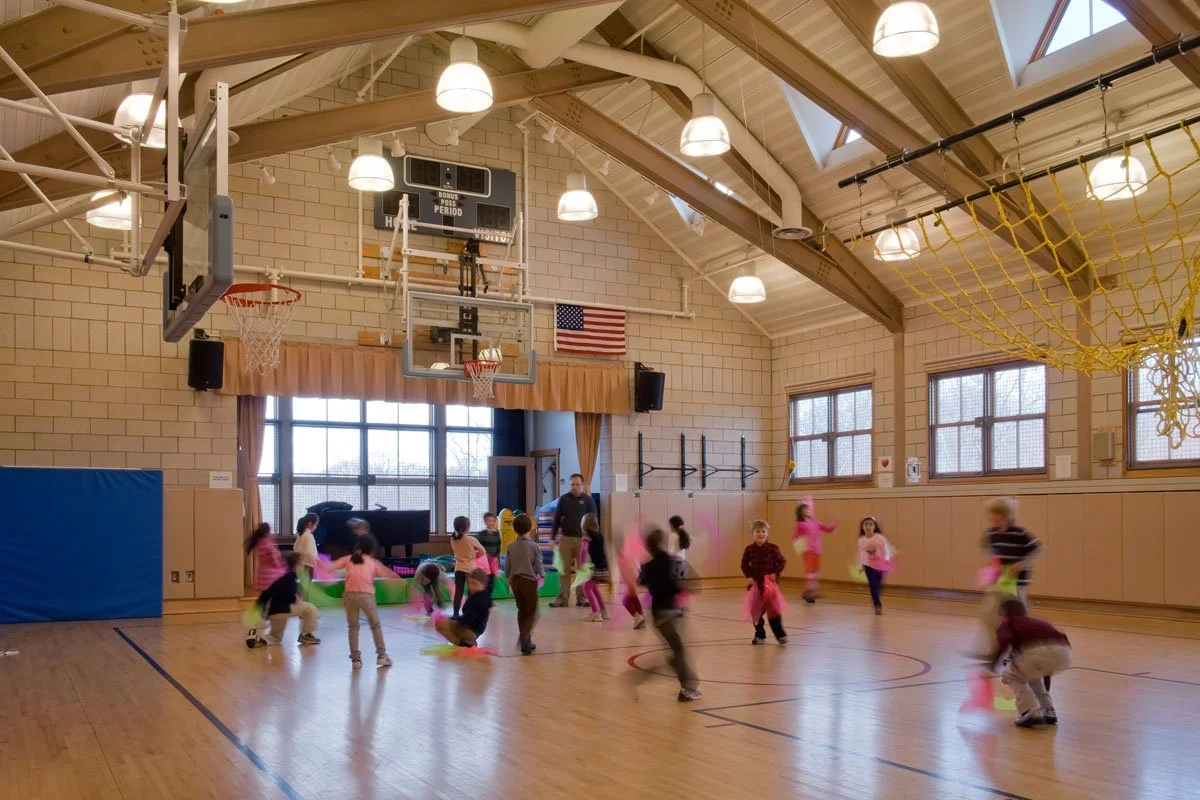
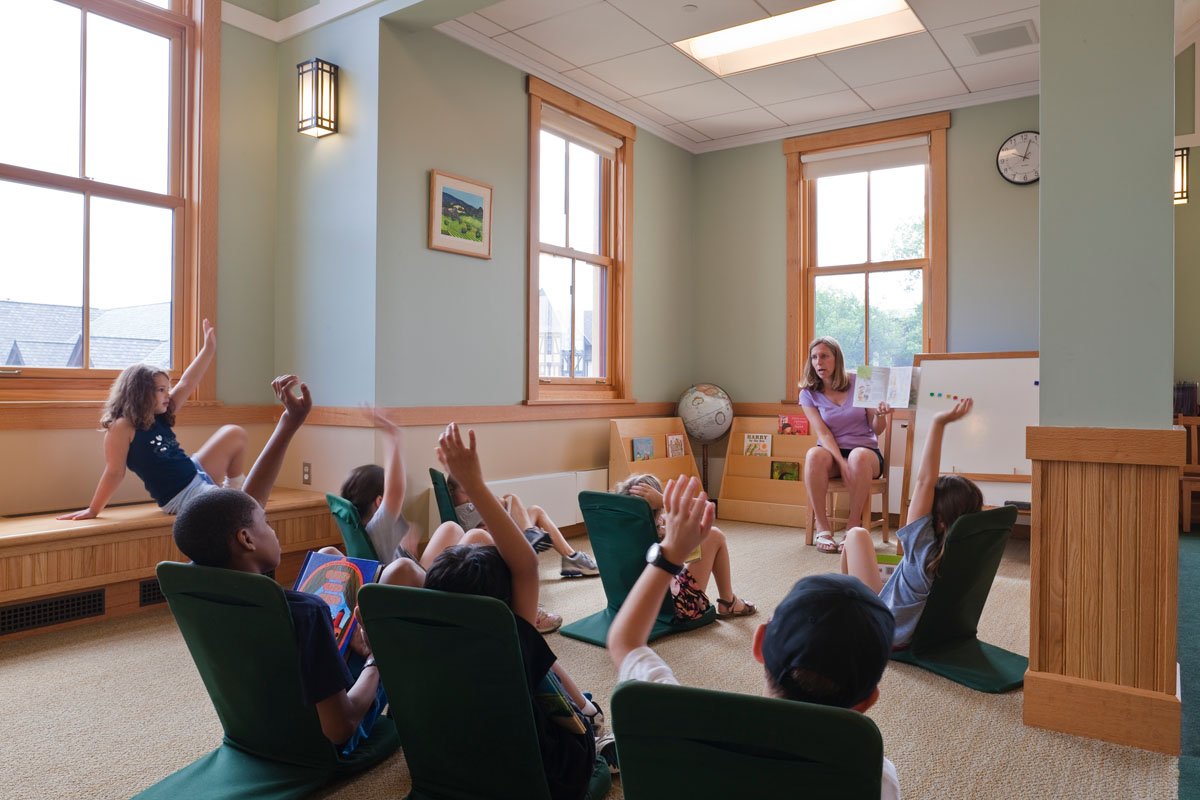
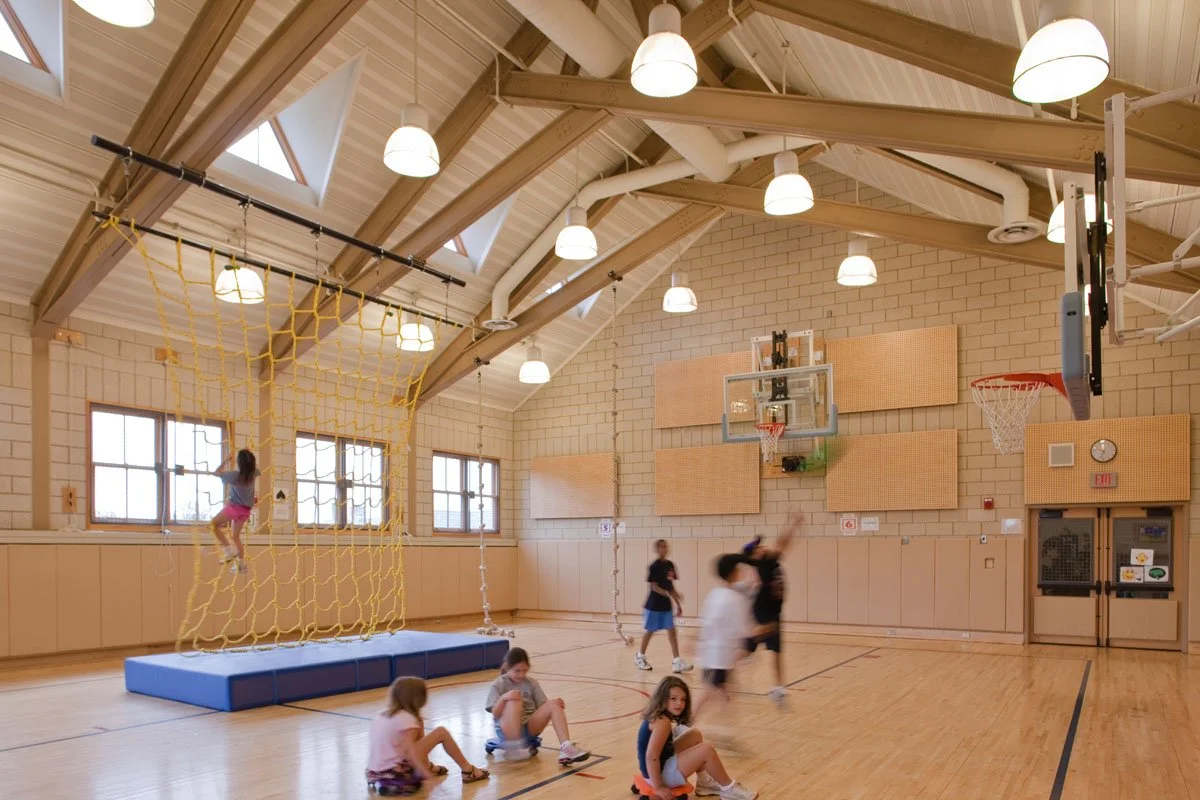
The plan removed three mid-century buildings and introduced new Middle School, Science, and Lower School buildings with single-loaded corridors that face outdoor spaces and encourage engagement.
Roads and parking were shifted to a peripheral ring road, while sensitive athletic fields, trails, and an elevated walkway were sited to minimize disturbance.
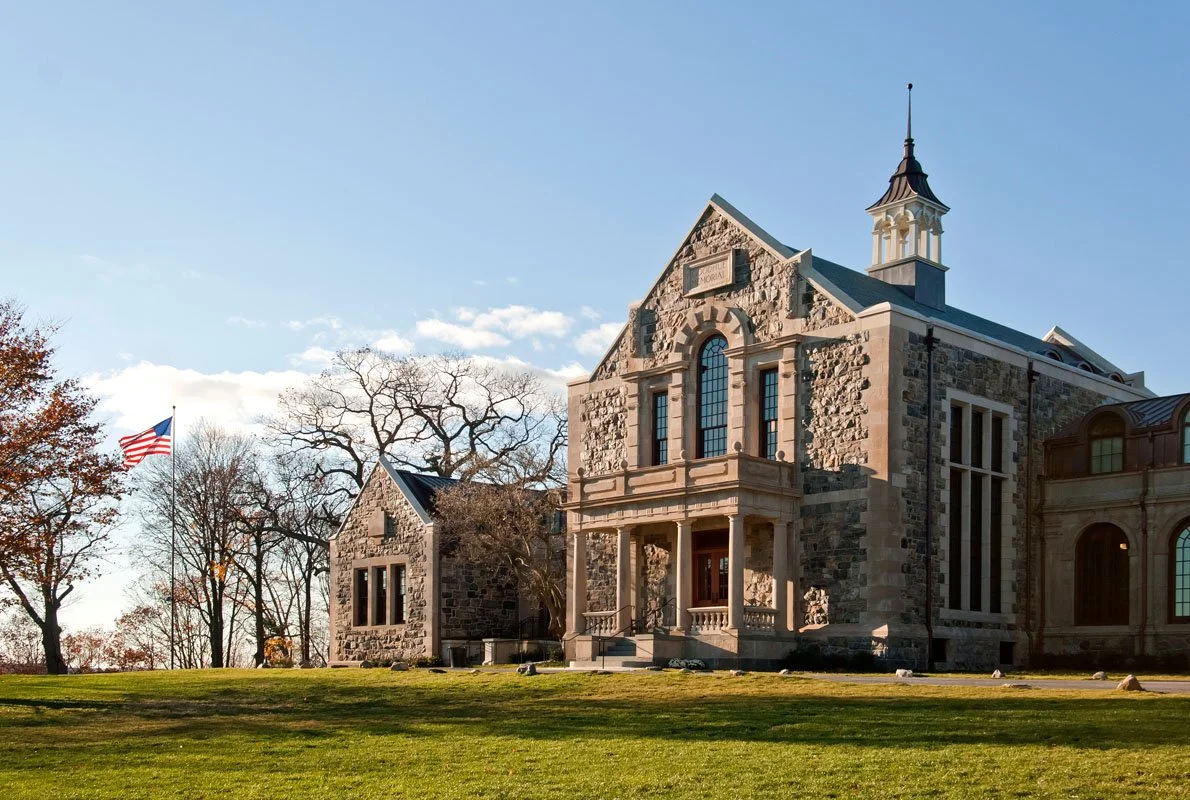
Historic buildings were carefully restored and adaptively reused, with upgraded systems and geothermal integration where implemented.
project outcome
Pedestrian movement is legible, with routes that connect a sequence of courtyards while vehicular flow is concentrated at the perimeter. Clear axes and frequent sightlines support direct movement between academic clusters and athletic precincts.
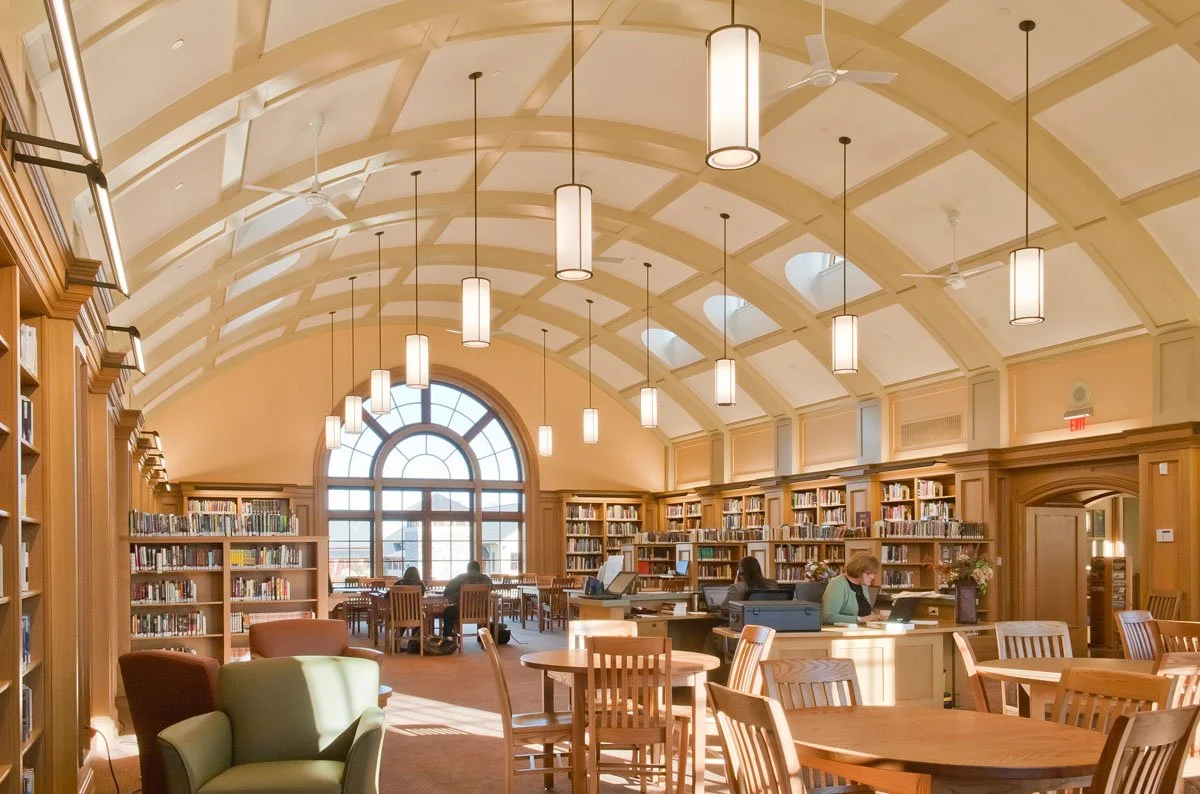
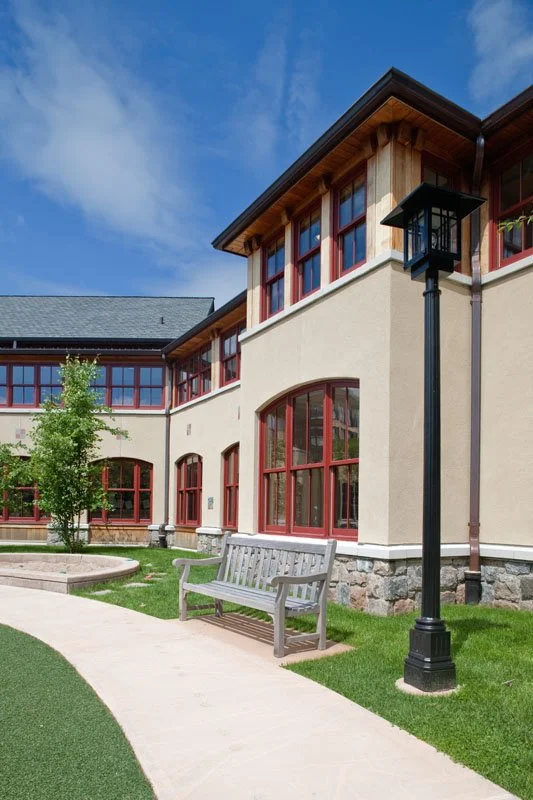
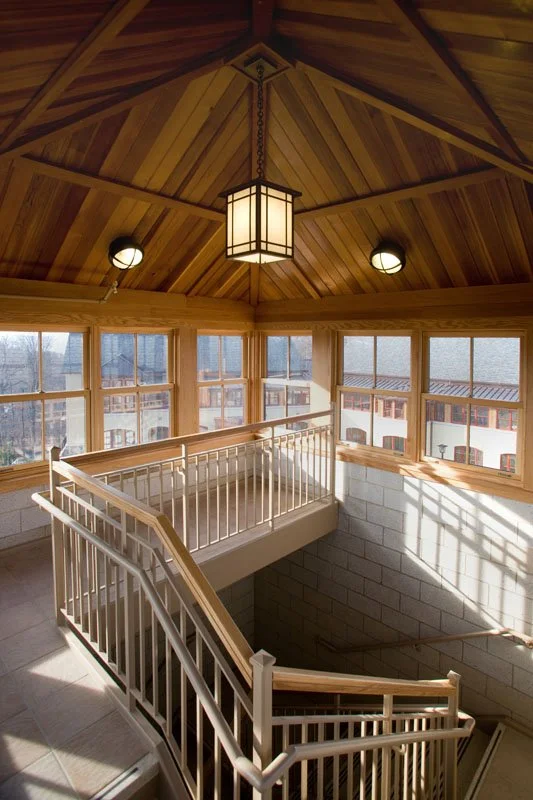
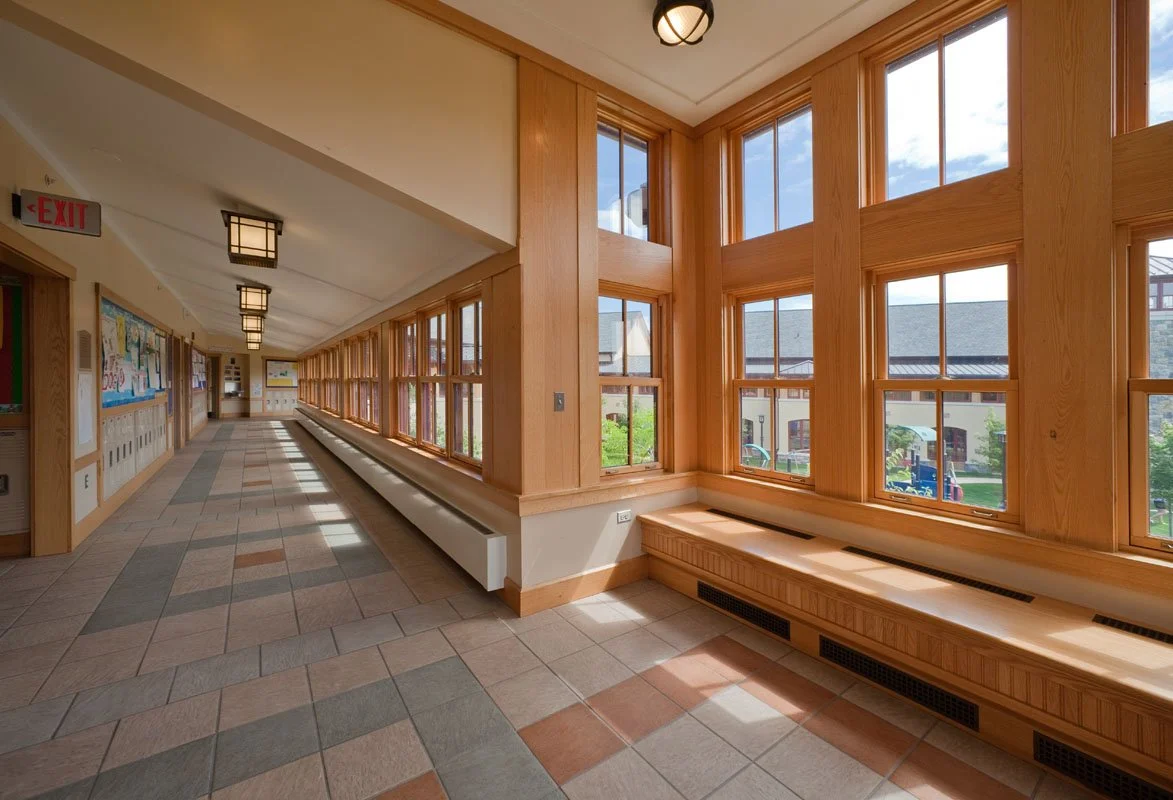
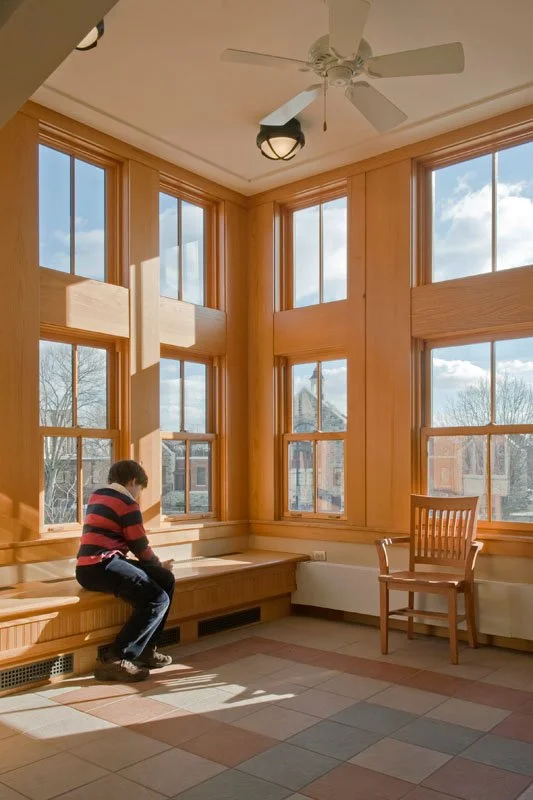
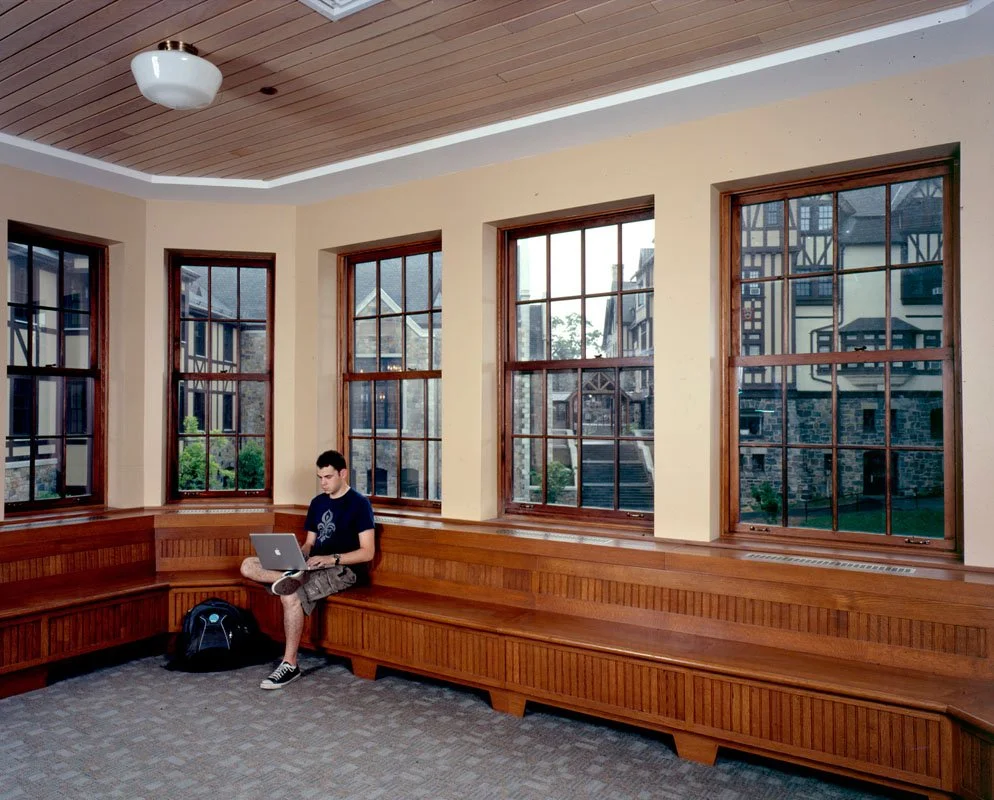
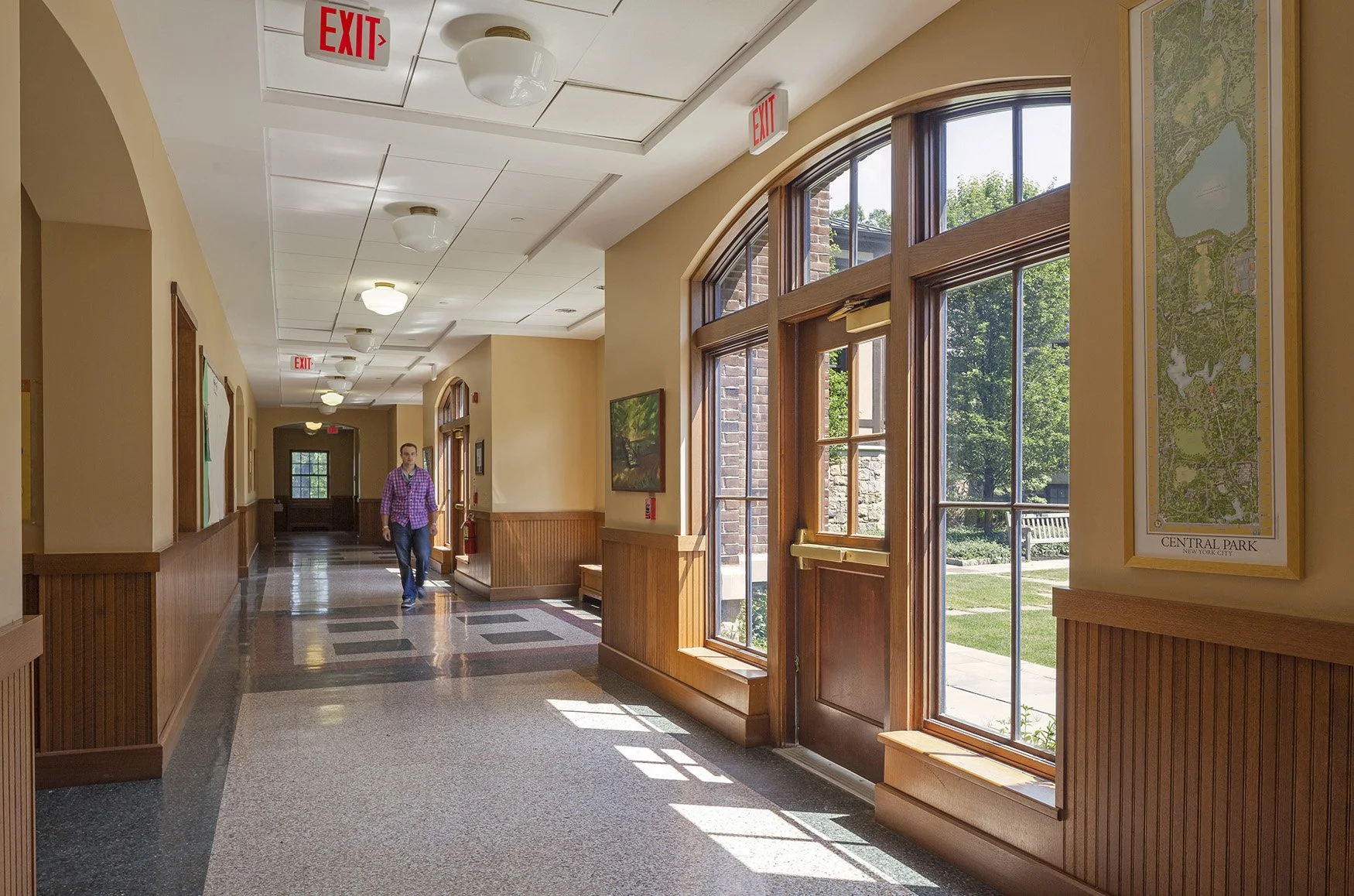
South-facing corridors and generous glazing admit steady daylight into classrooms and circulation spaces and support passive oversight of exterior play and study areas. Visual connections between interiors and the meadow clarify orientation and make wayfinding intuitive.
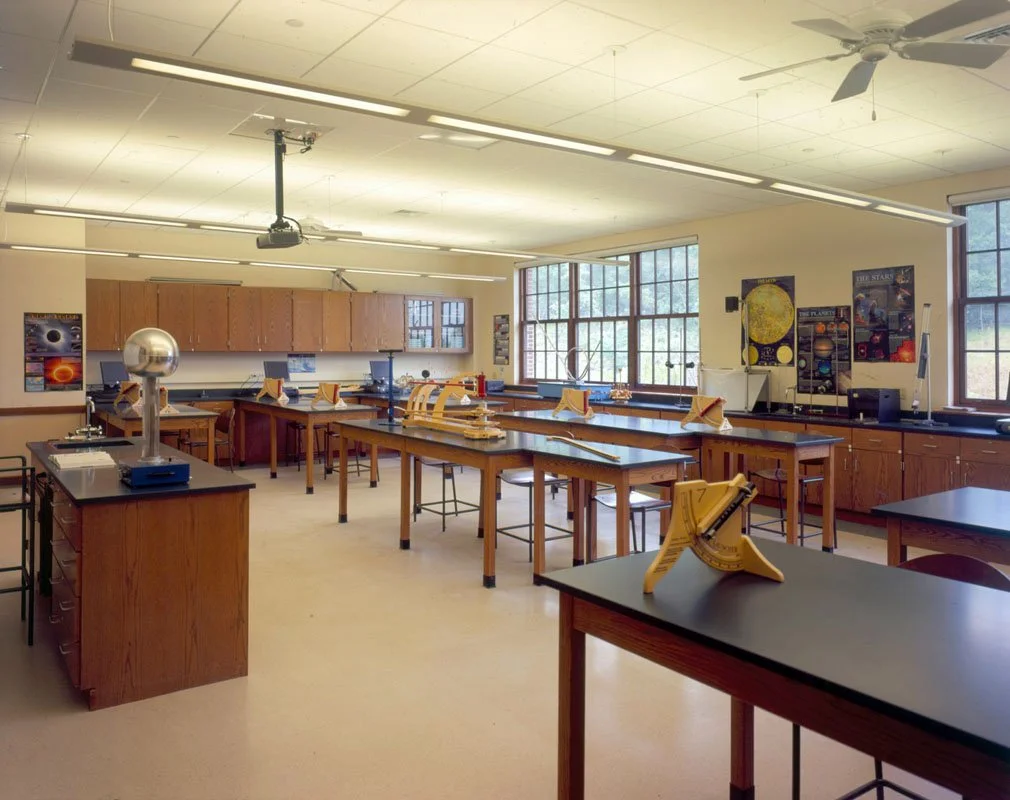
Historic masonry buildings accommodate contemporary programs through careful restoration and upgraded mechanical systems, including geothermal integration where implemented, which supports long-term performance. Flexible lab and classroom layouts accommodate shifting pedagogies and durable materials reduce maintenance needs.
let’s continue the conversation
Every project begins with listening. If you’re considering a new campus, building, or landscape, we’d welcome the chance to talk through your goals, challenges, and aspirations. Our team works collaboratively to shape places that feel grounded, connected, and built to serve people well over time.