the center
maple grove
2008
jamaica, ny
18,000 sf
new construction, transformation, landscape
2012, AIA Westchester / Hudson Valley
Citation
2008, Queens Chamber of Commerce
Excellence in Design Award
awards
Structural: Robert Silman Associates, PC
MEP: O'dea Lynch Abbatista
Site/Civil: TRC
Site/Civil: Raymond Keyes
Geotechnical: Carlin Simpson Associates
Sustainability: Sustainable Design Collaborative
Acoustic/Theatre System: Harvey Marshall Berling
Signage: C&G Partners
collaborators
a new center that reinterprets a historic boundary to connect cemetery and community.
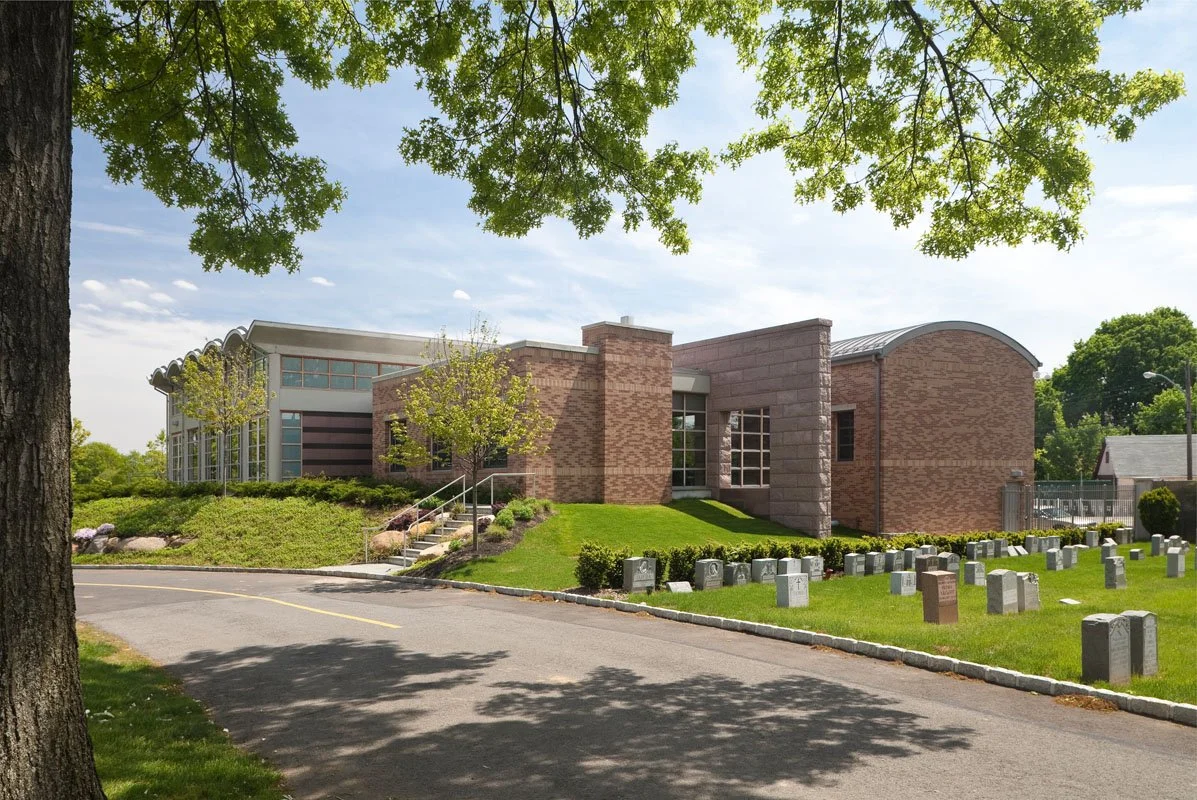
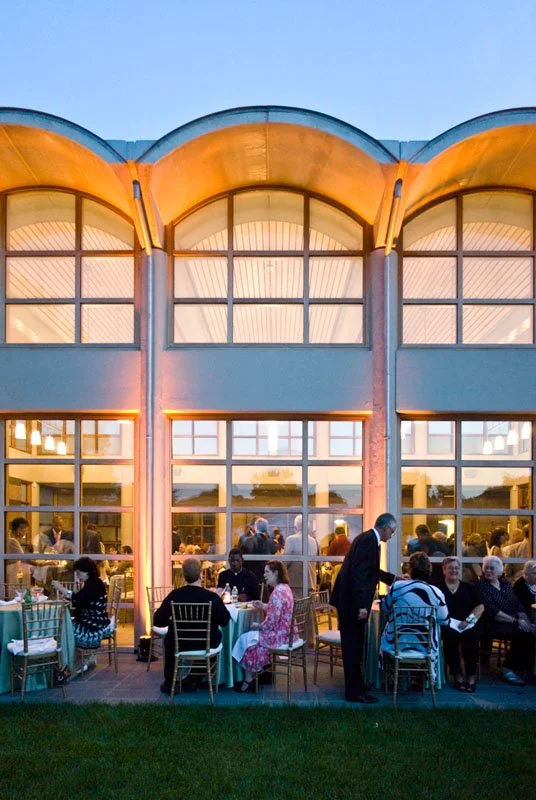
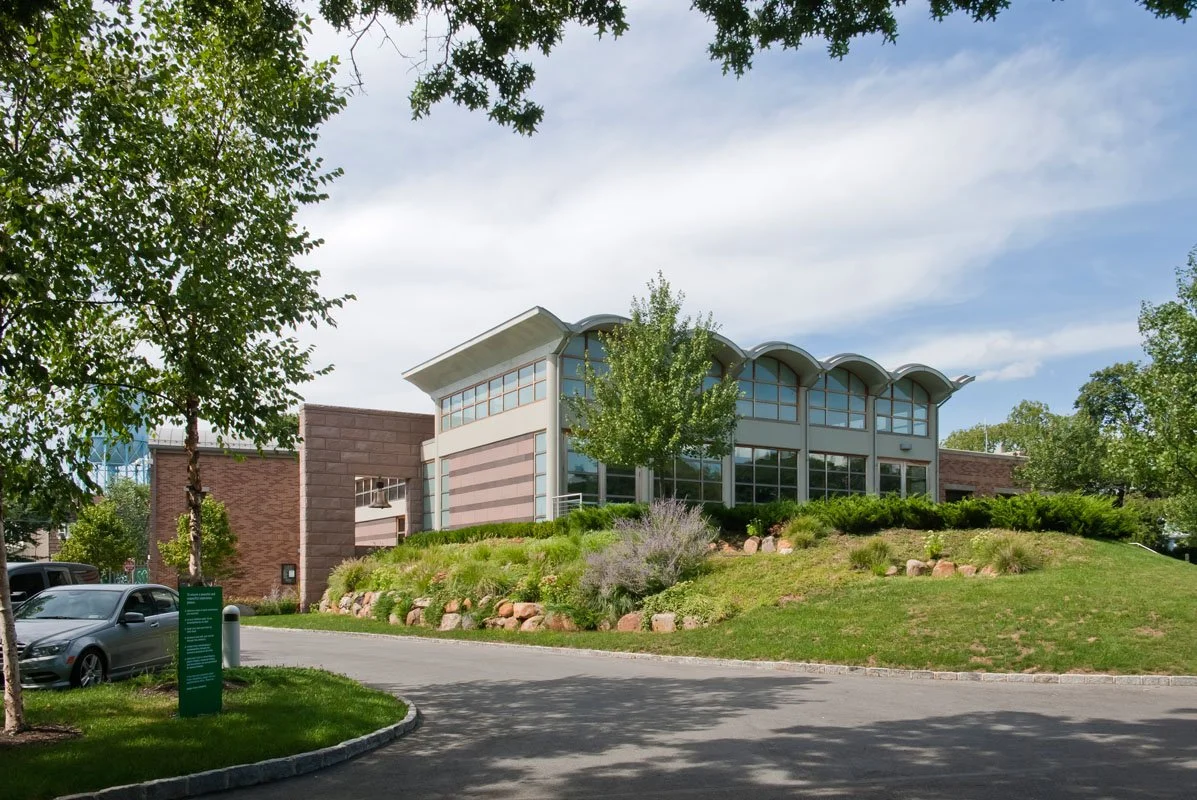
Maple Grove is a non-sectarian cemetery founded in 1875 and listed on the National Register of Historic Places. Located within a 65-acre park-like setting in Kew Gardens, Queens, the Center at Maple Grove is a new 18,000 sf facility conceived to serve the neighborhood while marking an accessible gateway into the cemetery landscape.
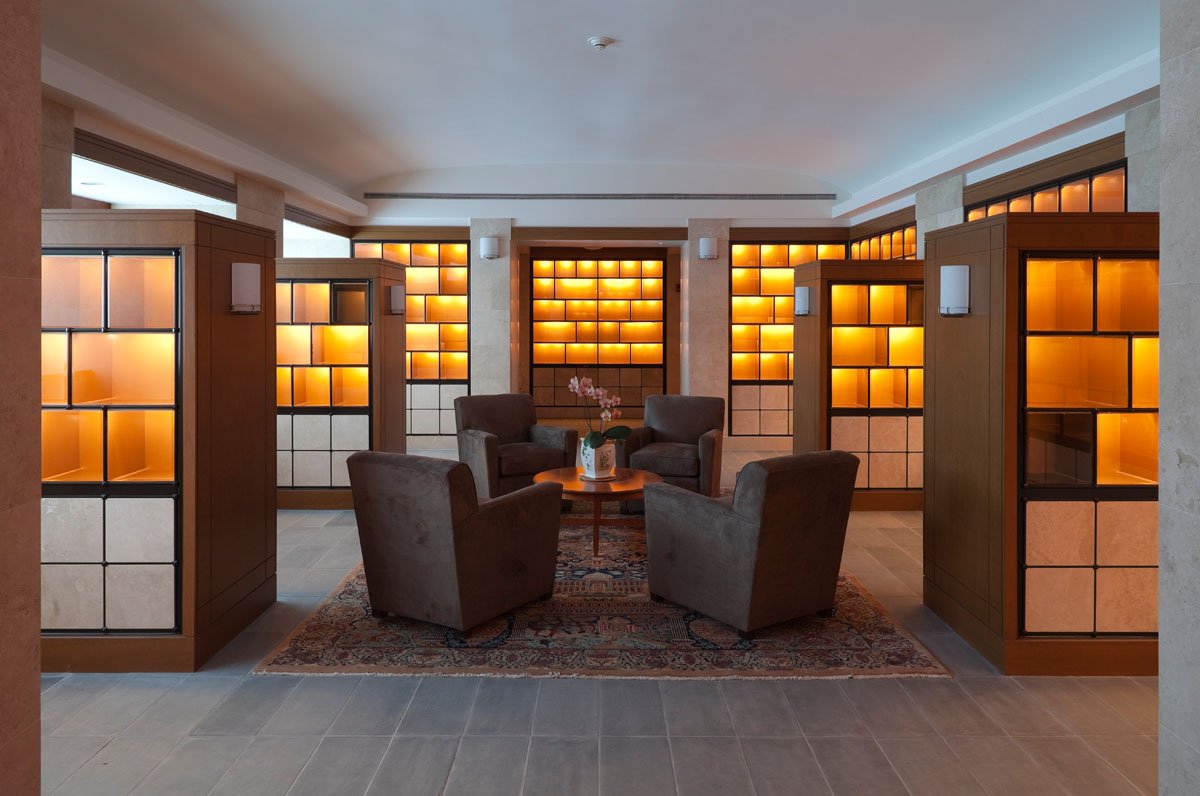
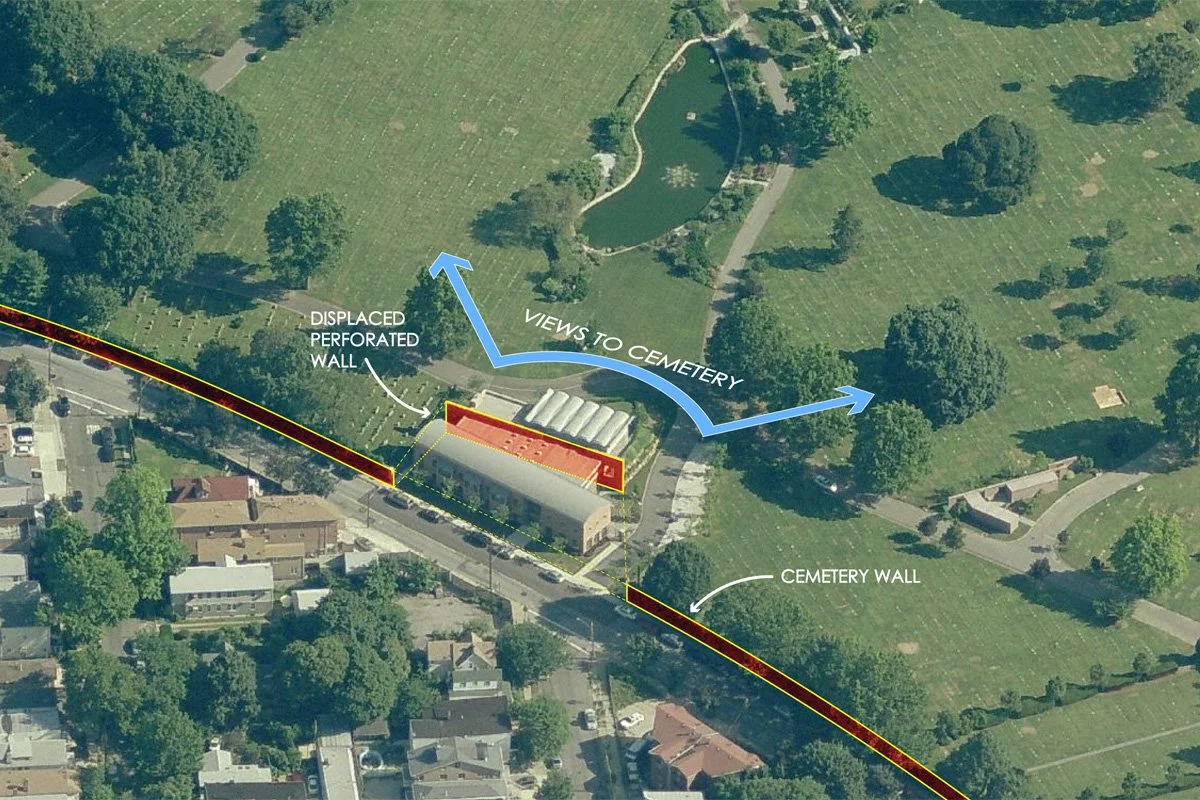
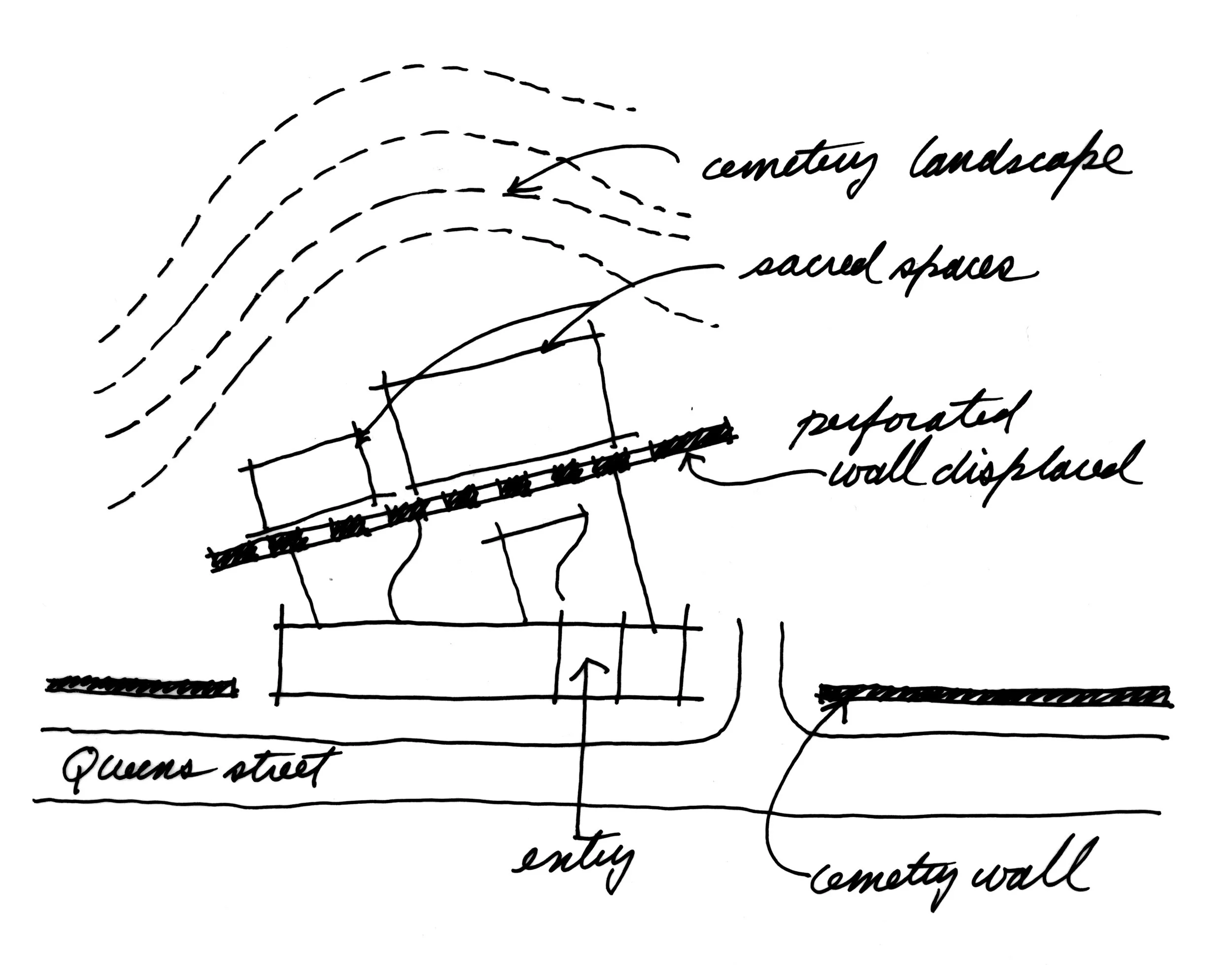
The design grew from the idea of a garden wall that both opens and defines place. By removing part of the existing masonry barrier and reworking that presence as a building armature, the project creates deliberate sightlines, thresholds, and sequence between the secular streetscape and the cemetery’s contemplative grounds.
project narrative
-
The cemetery occupies a large, historic landscape surrounded by an eight-foot masonry wall that limited visual and physical connection to the neighborhood.
The brief called for a new civic facility that would welcome the public, support diverse programmatic uses, and respect the cemetery’s character while creating a legible threshold between public and sacred realms.
-
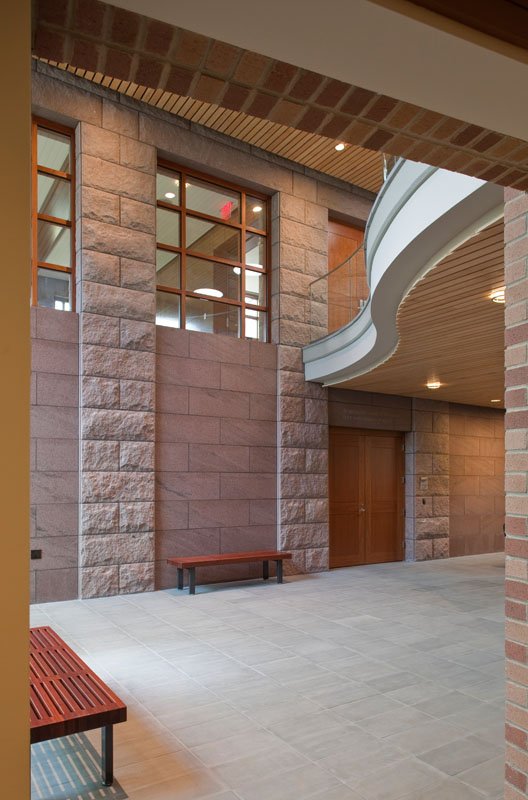
Building on the garden-wall idea, the concept treats the removed perimeter masonry as the major organizing idea inside the building.
This gesture defines a clear demarcation between the secular landscape of Kew Gardens and the cemetery’s sacred grounds, while introducing openings and interconnections that invite public engagement with the park-like setting.
-
The concept is realized through careful siting, material calibration, and spatial sequencing.
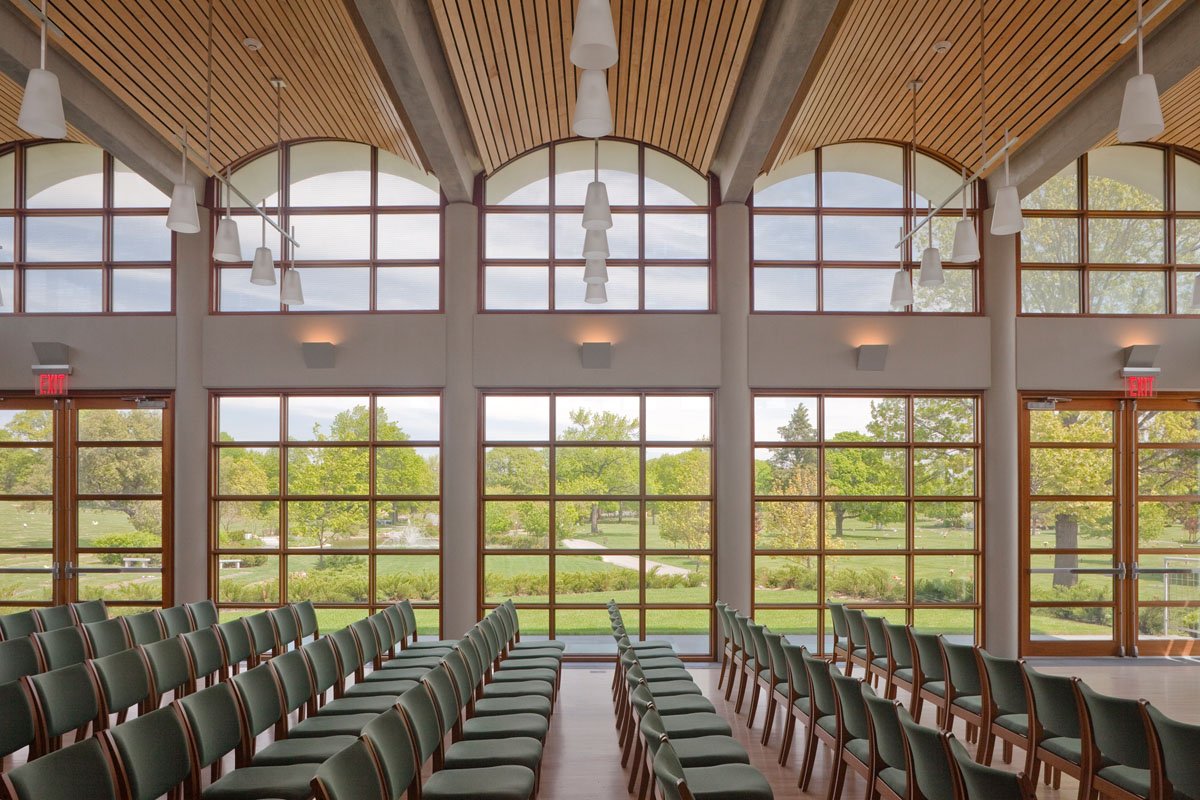
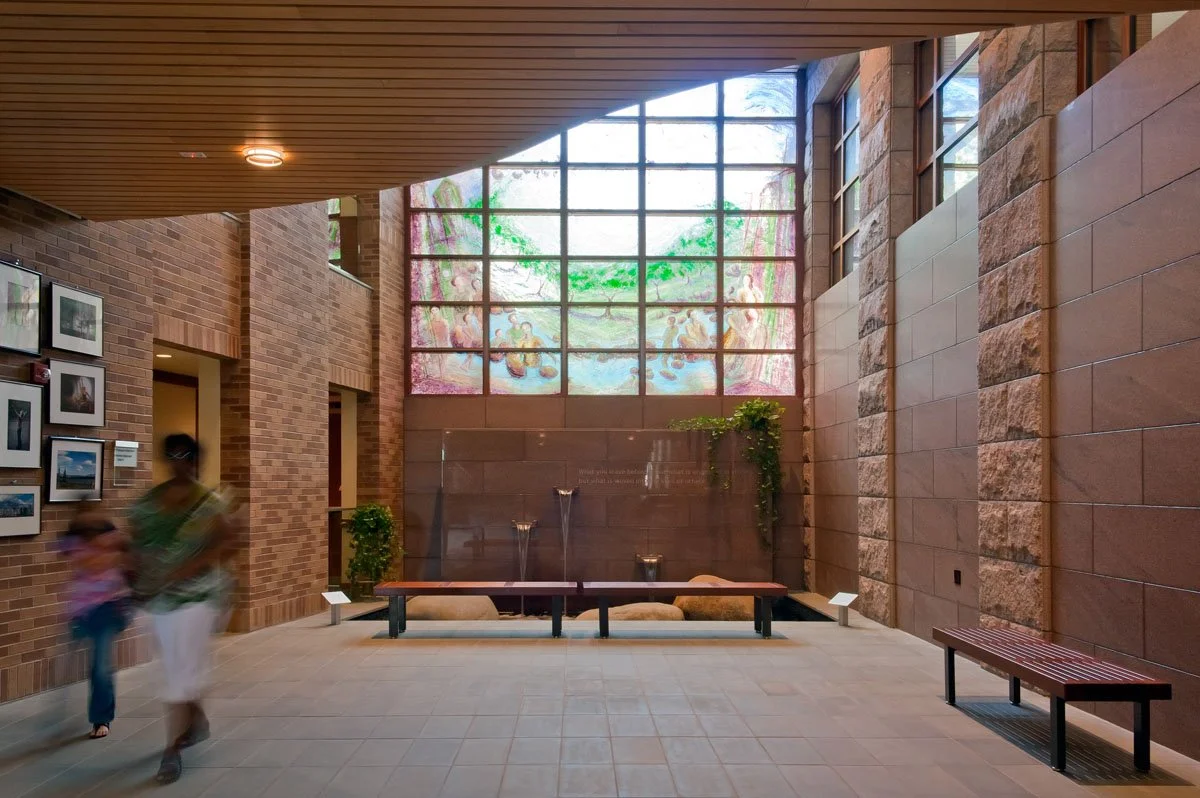
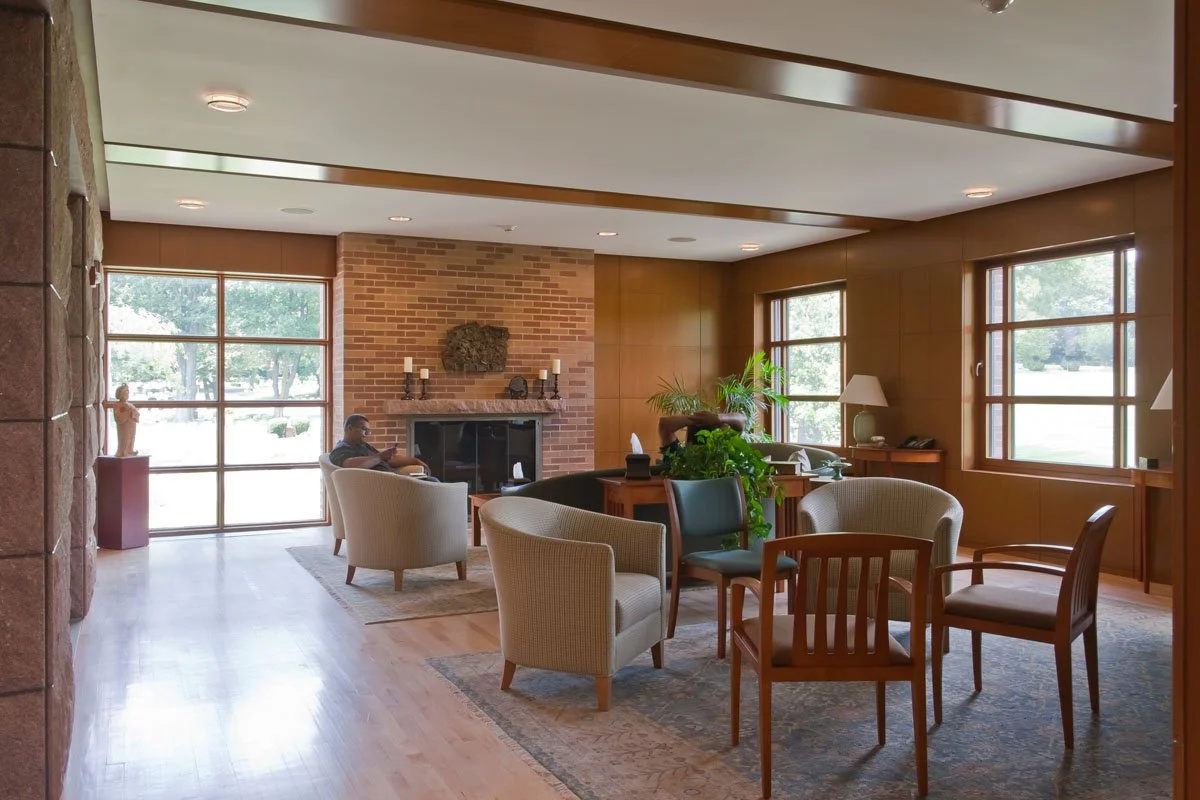
The wall is reinterpreted as an interior and exterior element that shapes circulation and frames views; landscape moves into the plan to soften transitions; interiors are arranged to support remembrance, education, and communal gatherings with a calm, restrained material palette and deliberate daylighting.
project outcome
Circulation through the center supports clear movement between neighborhood and cemetery grounds. Entrances and sequences reduce ambiguity and separate public flows from quieter, contemplative paths.
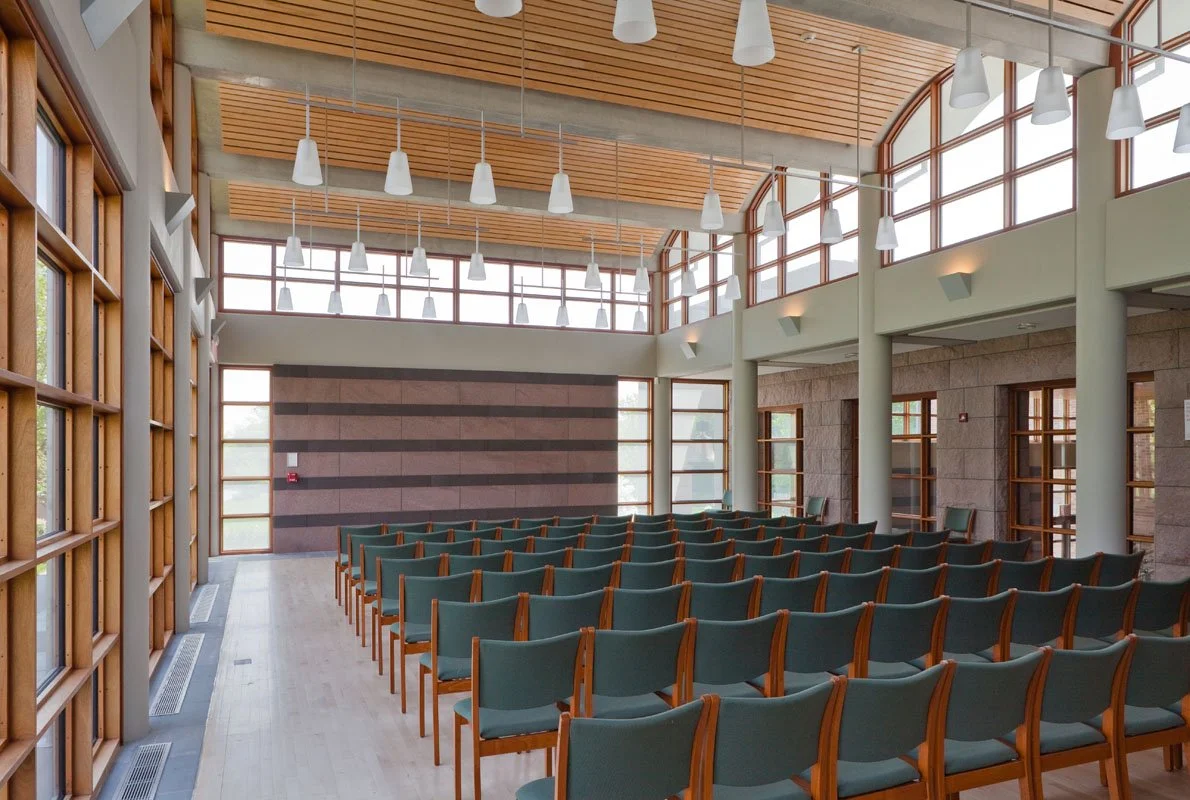
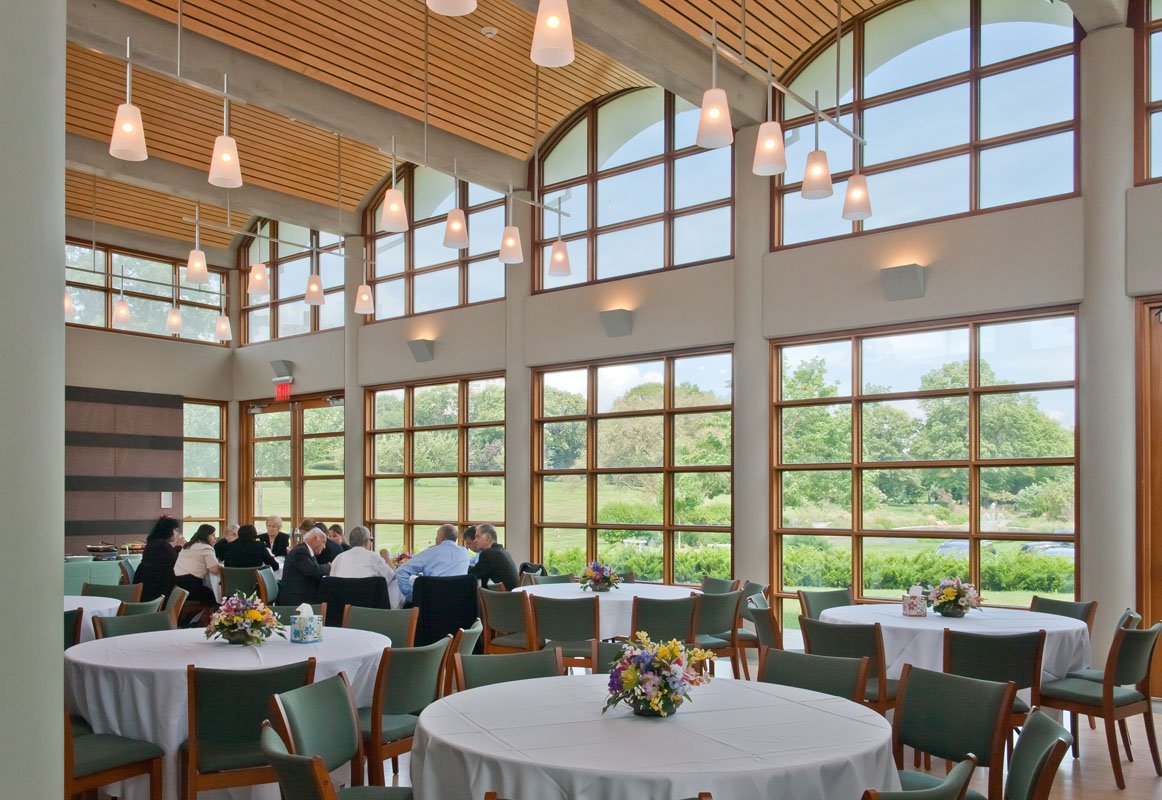
Daylight clarifies spatial hierarchy while preserving measured privacy in contemplative spaces. Strategic openings reinforce visual connection with the landscape without direct exposure.
Program spaces accommodate communal, educational, and remembrance activities with minimal overlap. Flexible adjacencies and durable finishes support adaptation and ongoing maintenance.
let’s continue the conversation
Every project begins with listening. If you’re considering a new campus, building, or landscape, we’d welcome the chance to talk through your goals, challenges, and aspirations. Our team works collaboratively to shape places that feel grounded, connected, and built to serve people well over time.