tuckahoe union free schools
2009
tuckahoe, ny
feasibility study; renovation; additions; transformation; landscape
a renovation and addition that completes circulation and renews learning spaces.
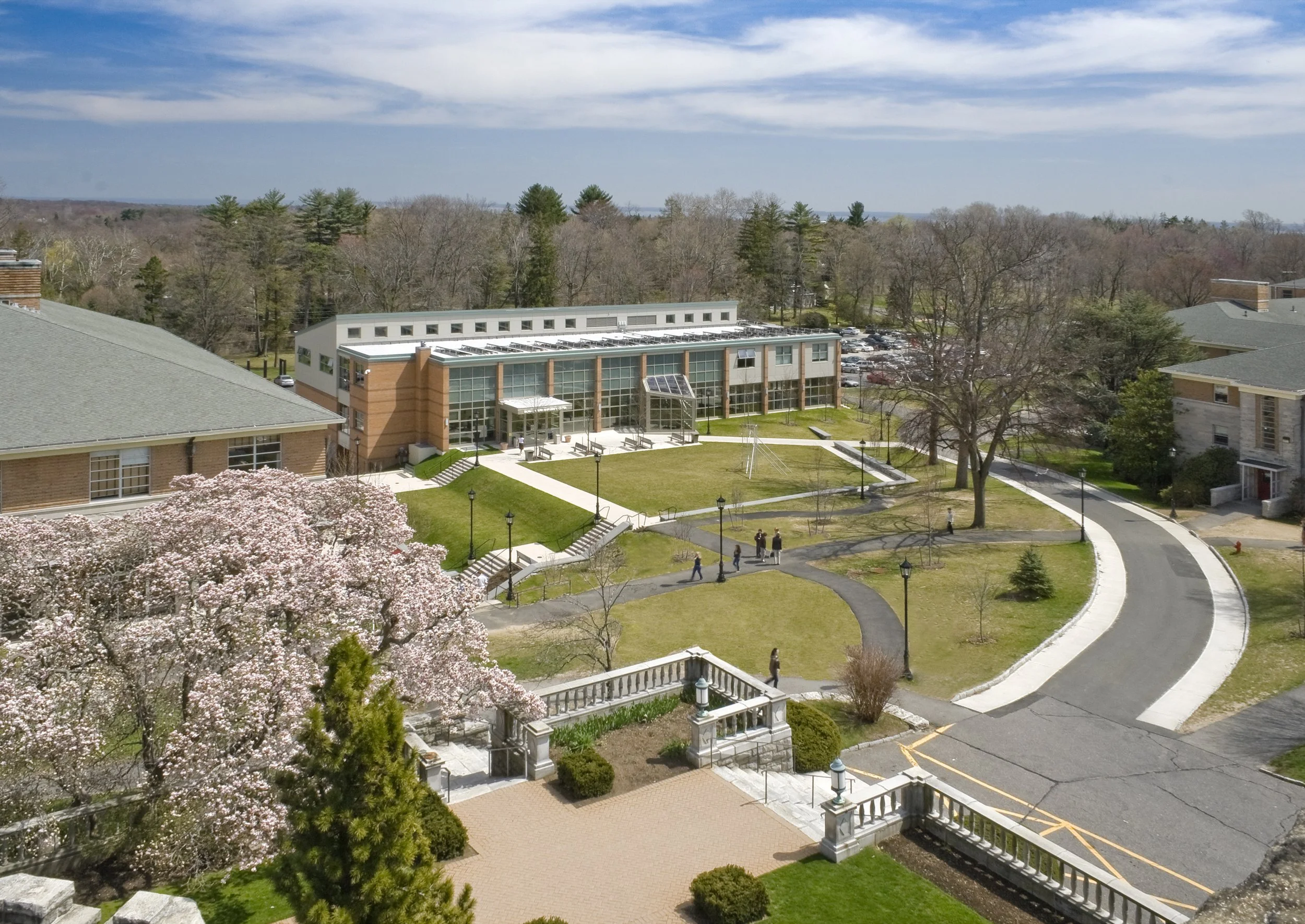
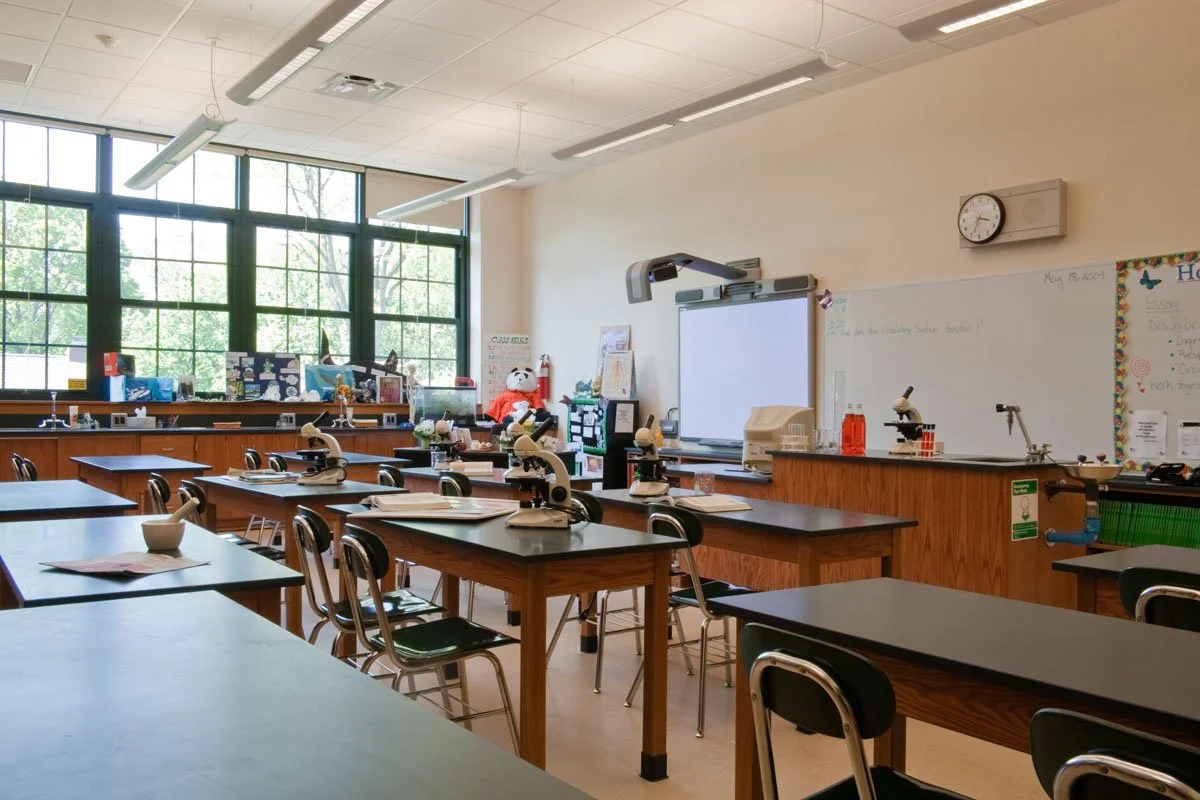
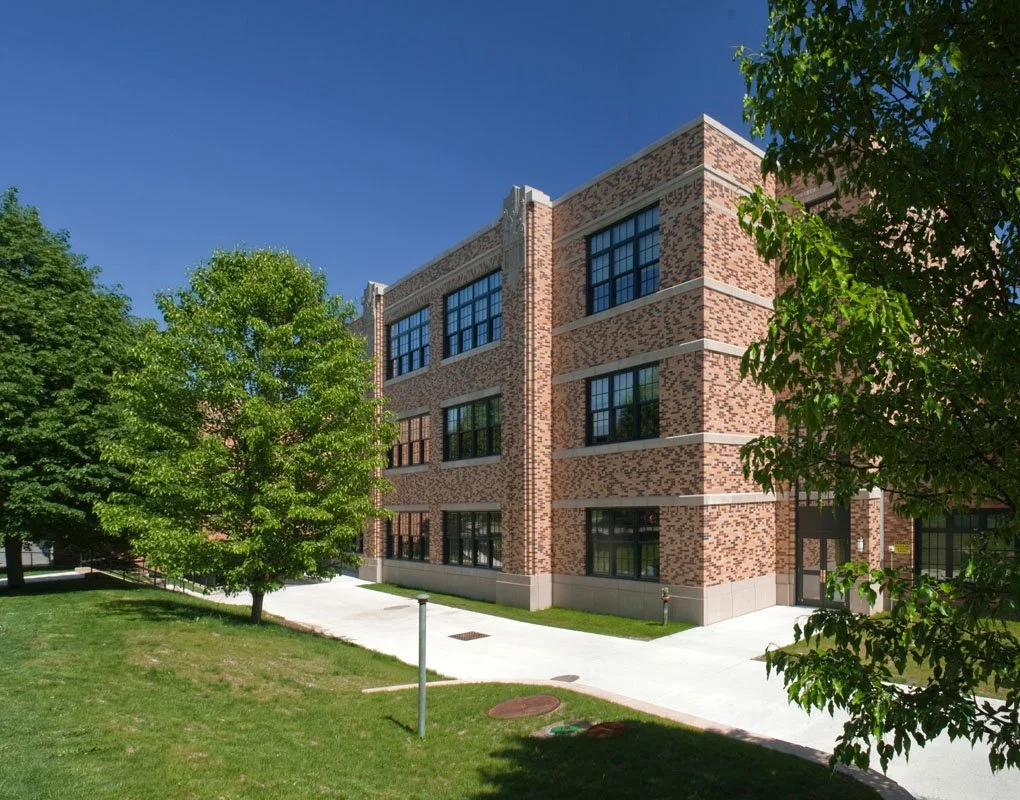
Located on a tight five-acre village site, the original middle/high school had a primary corridor with three wings that ended in dead-end circulation. Faced with enrollment and pedagogical shifts, the project reorganized program by adding a new 21,000 sf science wing and converting existing science labs to general classrooms to better support contemporary instruction.
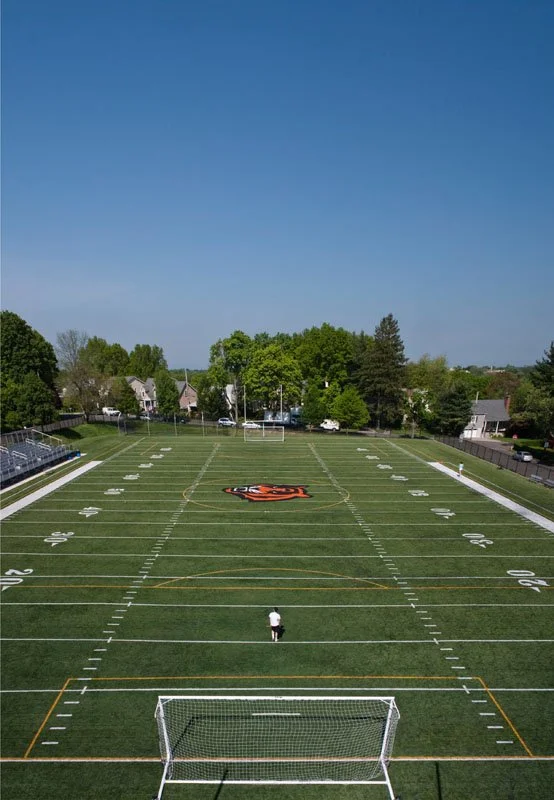
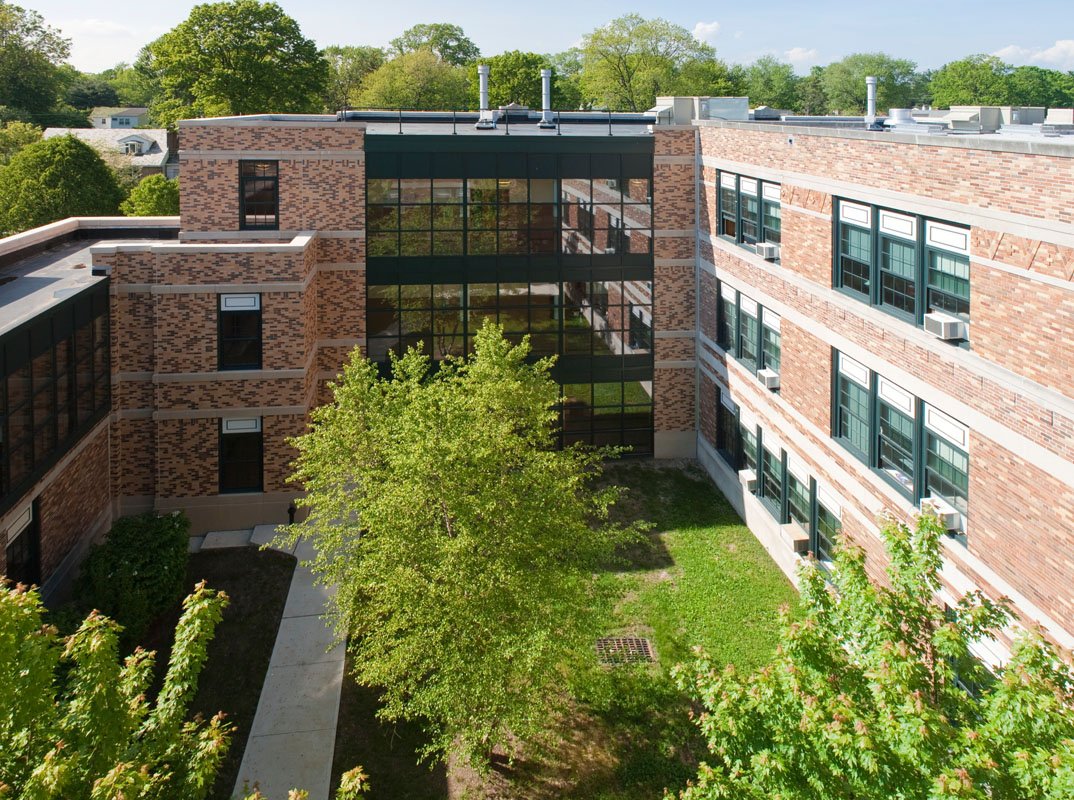
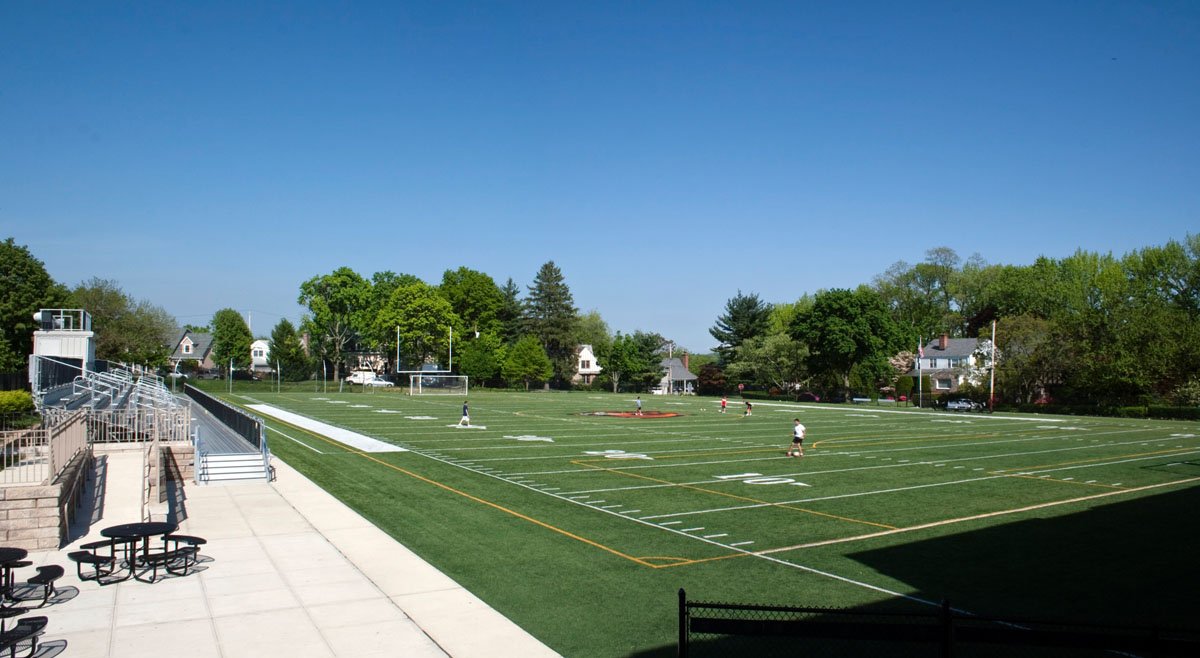
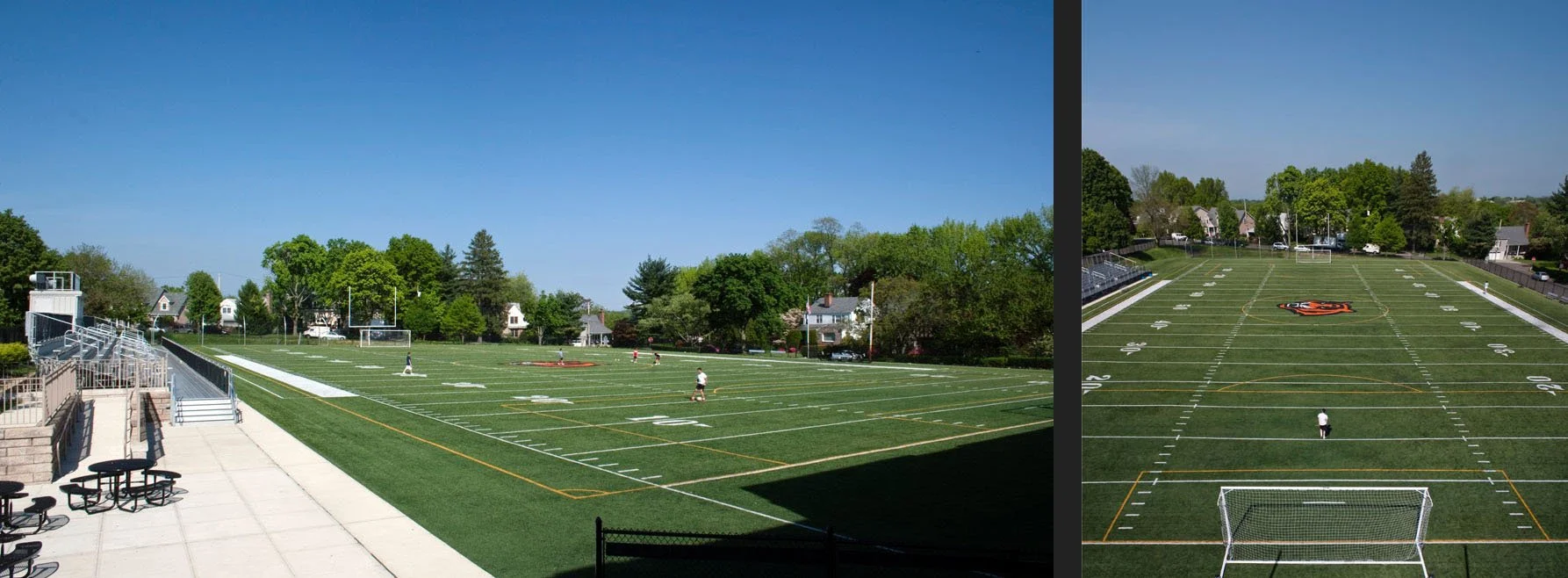
The addition is sited to attach to the existing wings, completing logical circulation and forming the northern edge of two new courtyards that reinforce community. Work also included interior renovations—library, computer rooms, fitness and locker facilities—accessibility upgrades and site improvements including a synthetic turf field.
project narrative
-
The school occupied a compact, five-acre village site where the original plan relied on a single corridor with three dead-end wings, limiting circulation and supervision.
At the same time, evolving enrollment and pedagogical needs required more flexible instructional spaces and improved accessibility.
To address these constraints the program called for a lateral addition and a reorganization that would both expand science facilities and reconnect the building.
-
Building on the original massing and material character, the concept places a new science wing along the north side to stitch together the isolated wings and complete continuous circulation.
This addition also frames two courtyards that become outdoor gathering spaces, reinforcing a renewed sense of campus community. The strategy emphasizes spatial clarity, adjacency, and continuity between new and existing fabric.
-
The design locates the 21,000 sf science wing to attach directly to the three existing wings, eliminating dead-end corridors and improving wayfinding.
Interior transformations converted outdated labs into general classrooms while programmatic moves accommodated a new six-stop elevator and renewed support spaces.
Together these decisions use careful plan-making, material continuity, and landscape interventions to support daily life and supervision on the compact site.
project outcome
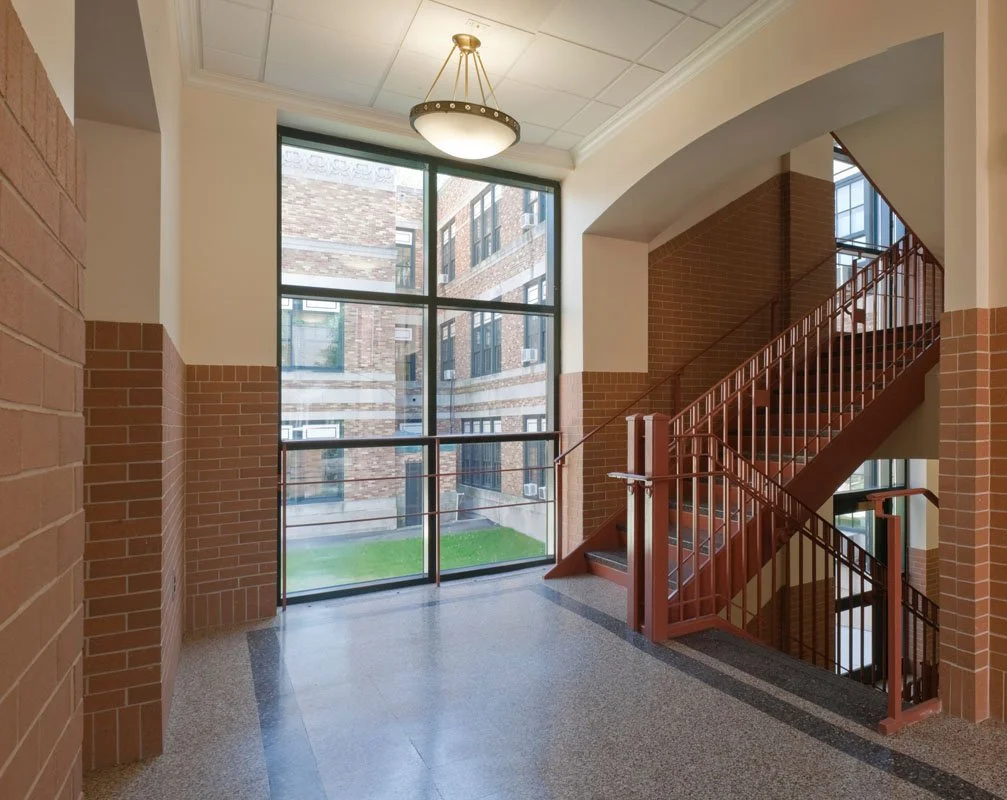
Circulation is continuous through the connected wings, replacing dead-end corridors with a lateral route that supports supervision and intuitive wayfinding. Entrances and stair halls connect program clusters and reduce cross-traffic in learning zones.
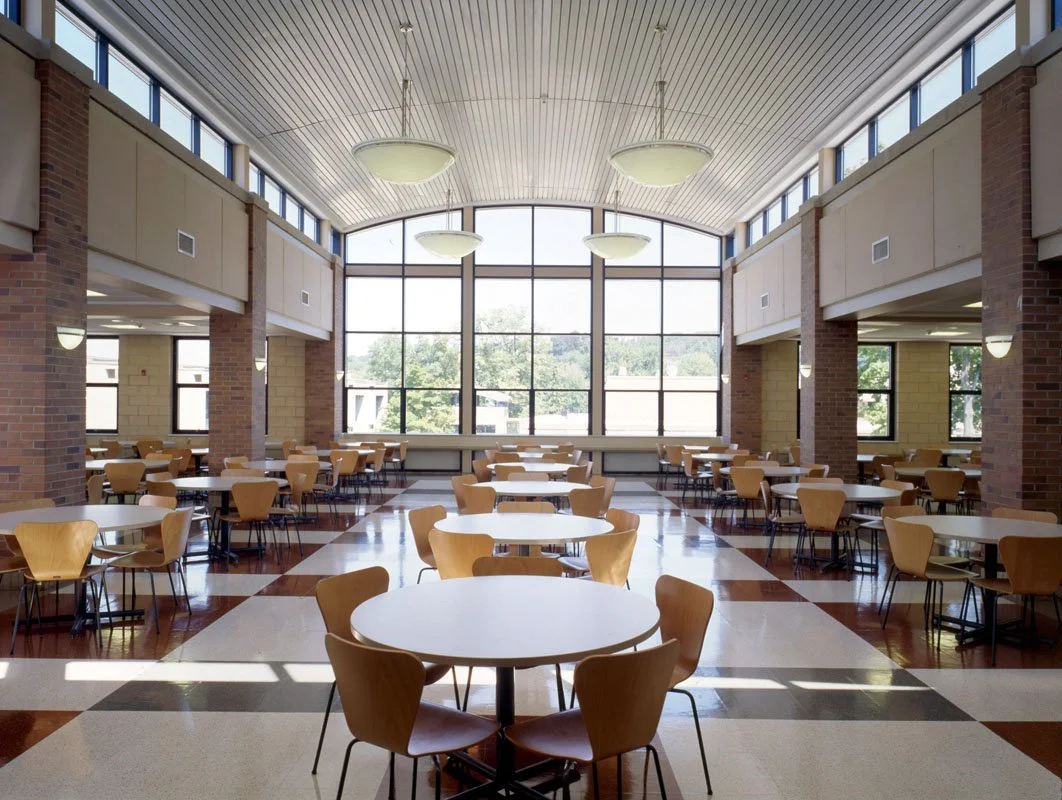
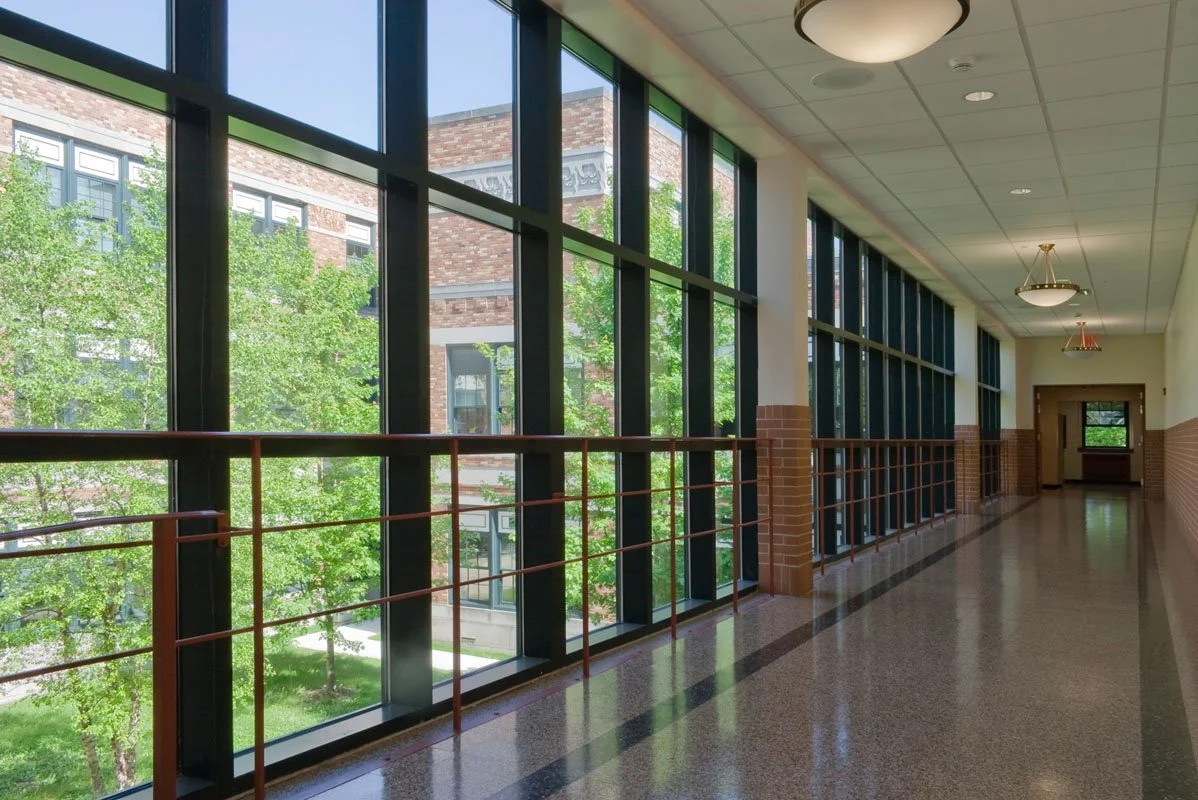
Courtyards frame outdoor gathering spaces and bring daylight and peripheral views into adjacent classrooms and circulation paths. Library and instructional rooms maintain visual connection to exterior landscape, which clarifies spatial orientation throughout the building.
Former specialized labs operate as general classrooms that accommodate a range of teaching setups and program shifts over time. Upgraded vertical circulation and renewed support spaces reinforce accessibility and make daily movement between levels and facilities more straightforward.
let’s continue the conversation
Every project begins with listening. If you’re considering a new campus, building, or landscape, we’d welcome the chance to talk through your goals, challenges, and aspirations. Our team works collaboratively to shape places that feel grounded, connected, and built to serve people well over time.