beaver brook hall
at ethel walker school
2000
simsbury, ct
40,000 sf
renovation, adaptive reuse, transformation
awards
2003, AS&U
Gold Citation Winner
2002, AS&U Educational Interiors
Gold Citation
2002, Learning by Design
Grand Prize Winner
collaborators
Project Manager: Errol Dawkins
Project Architects: Frank Craine, Ken Pojman
Landscape Architect: James Sanok
Designer: Morgana Vazquez
a dormitory reimagined as a centralized, light-filled academic center for science and art.
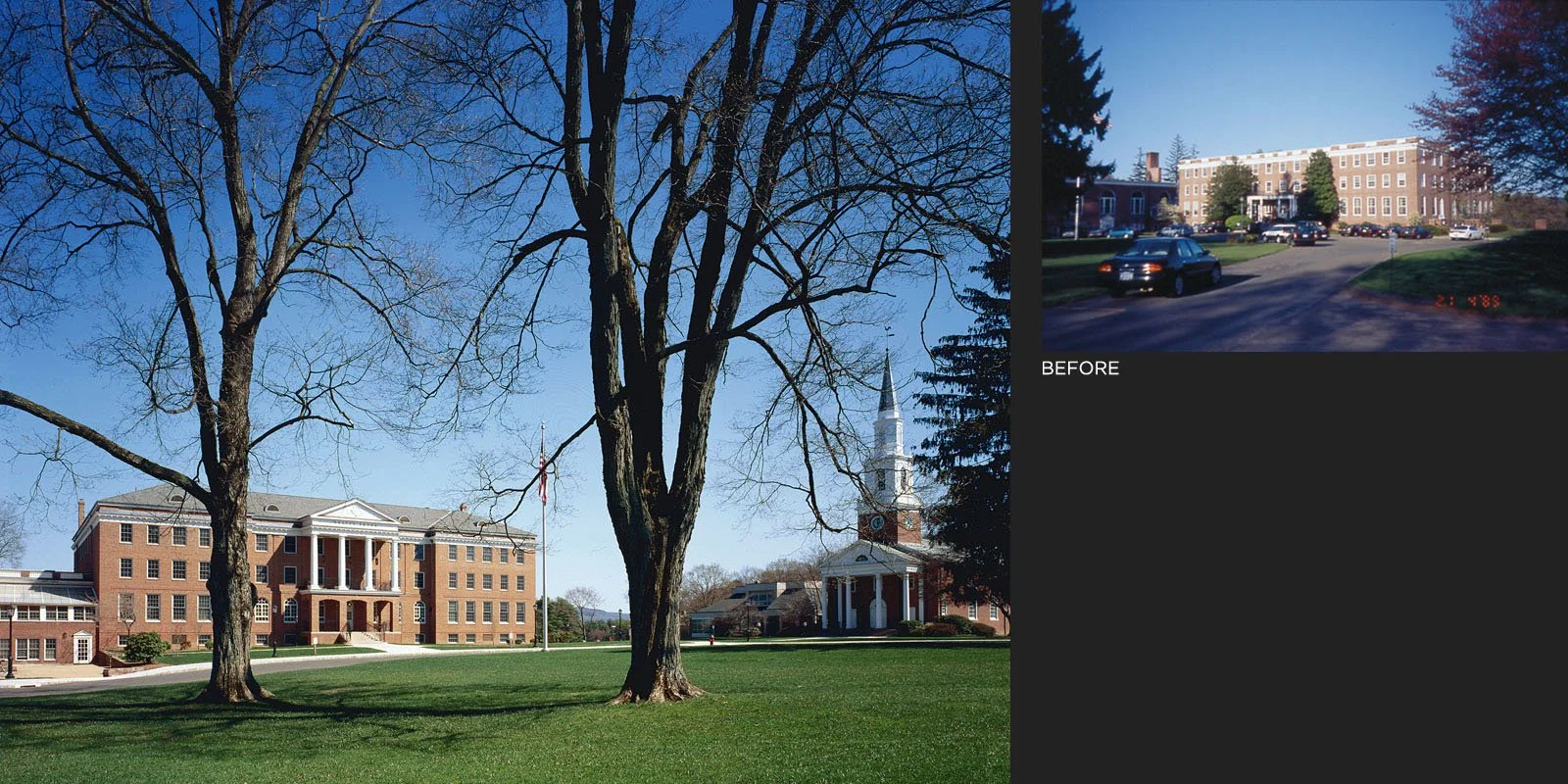
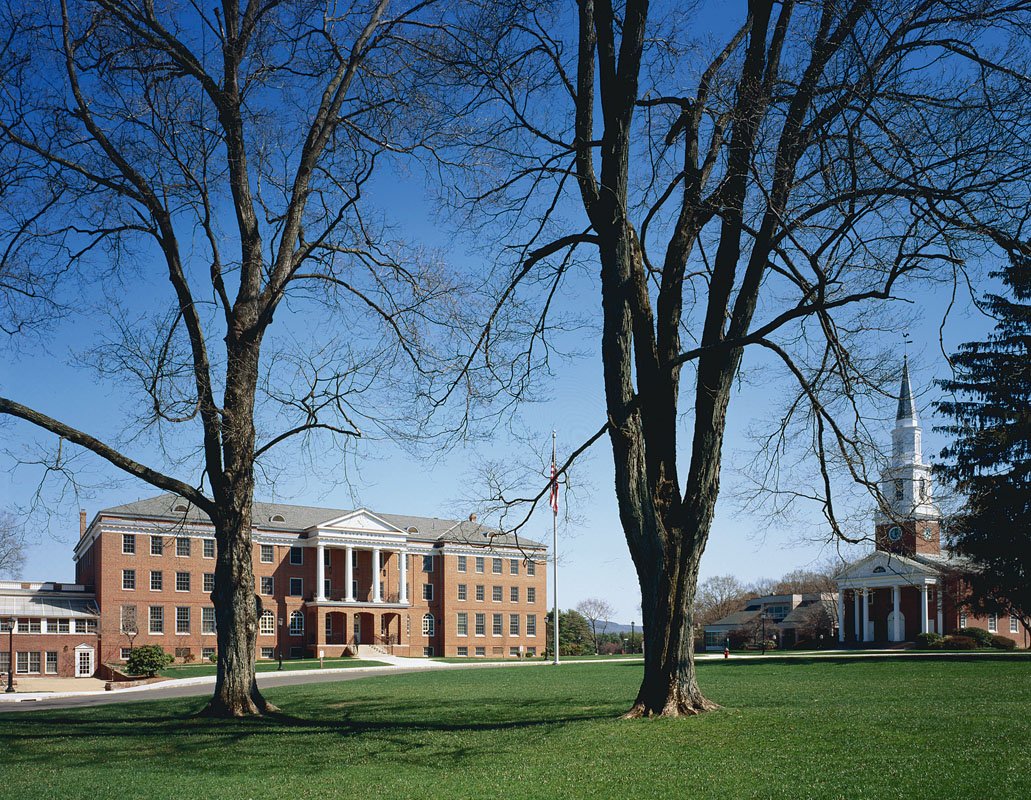
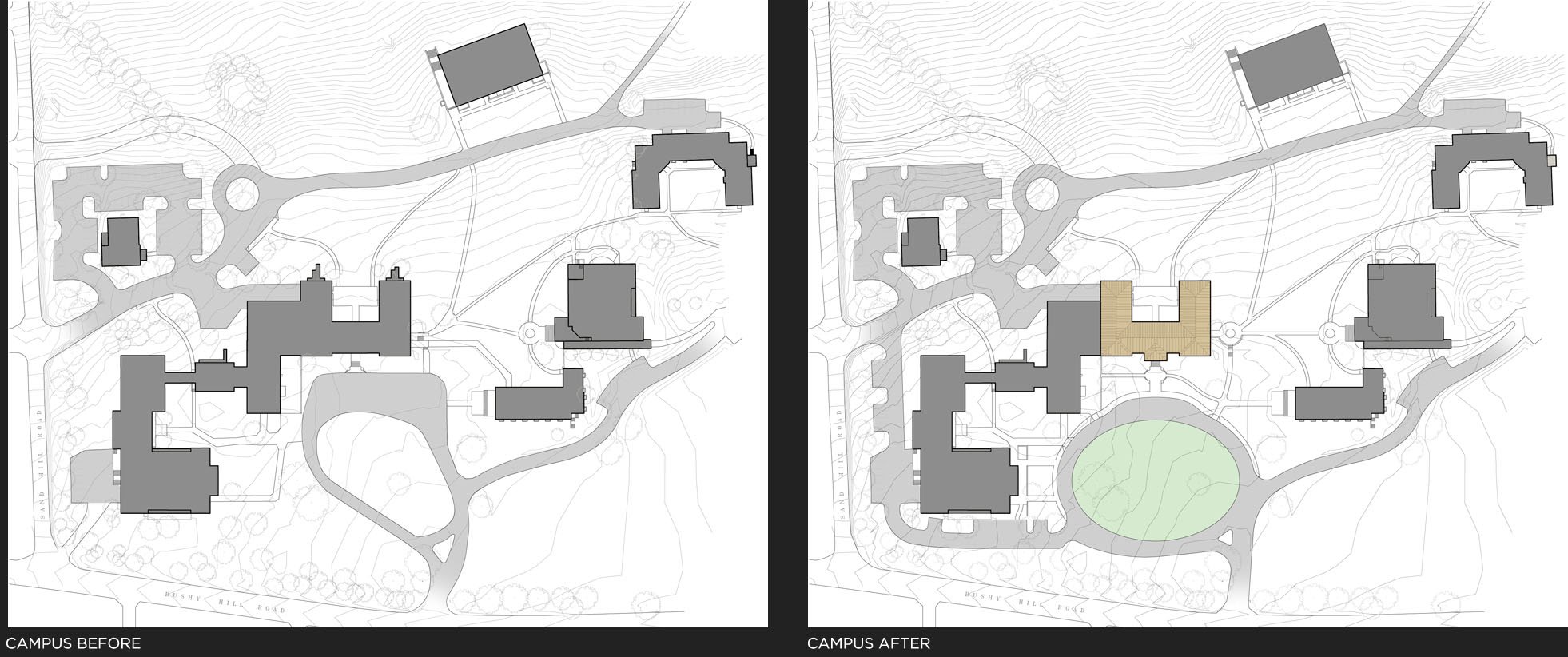
Beaver Brook Hall occupies the prominent central position on the Ethel Walker campus. Originally a 1938 dormitory, the 40,000 sf building was reconstructed to meet evolving academic needs. The client sought a new academic center that related to the flanking chapel and theater and eliminated the visitor parking at the main entry.
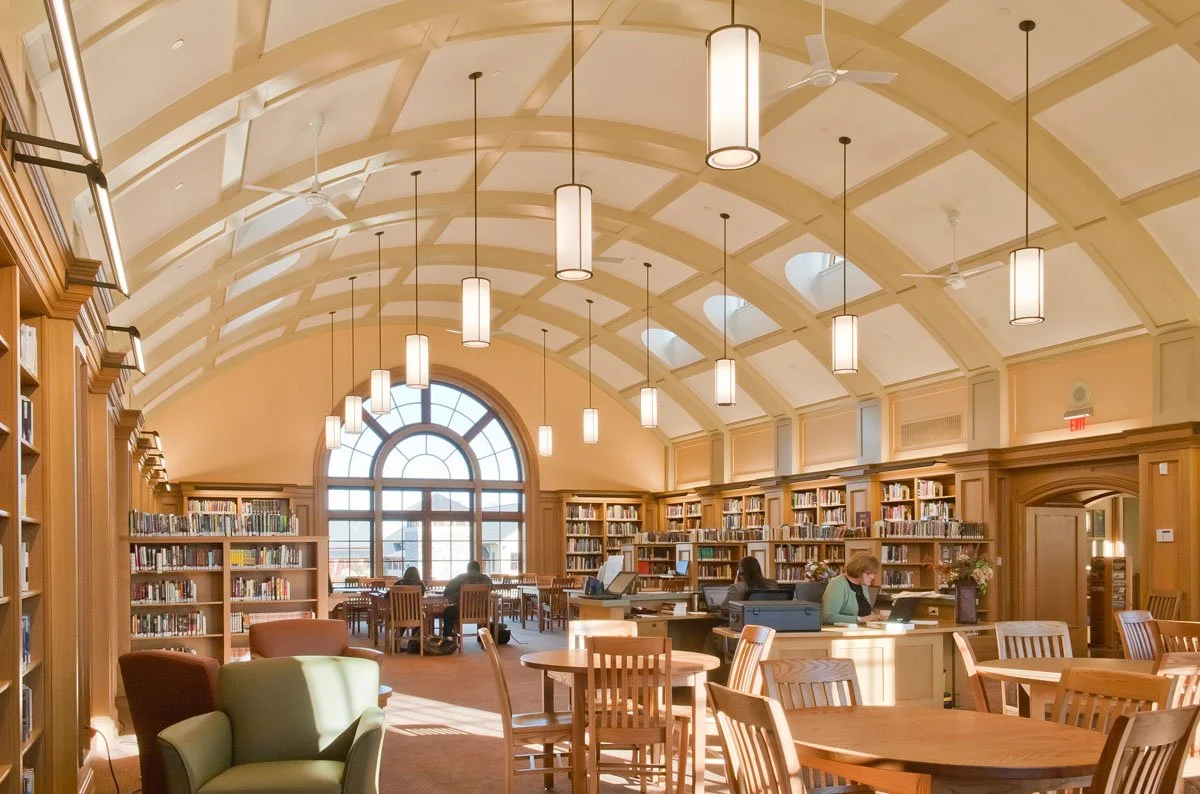
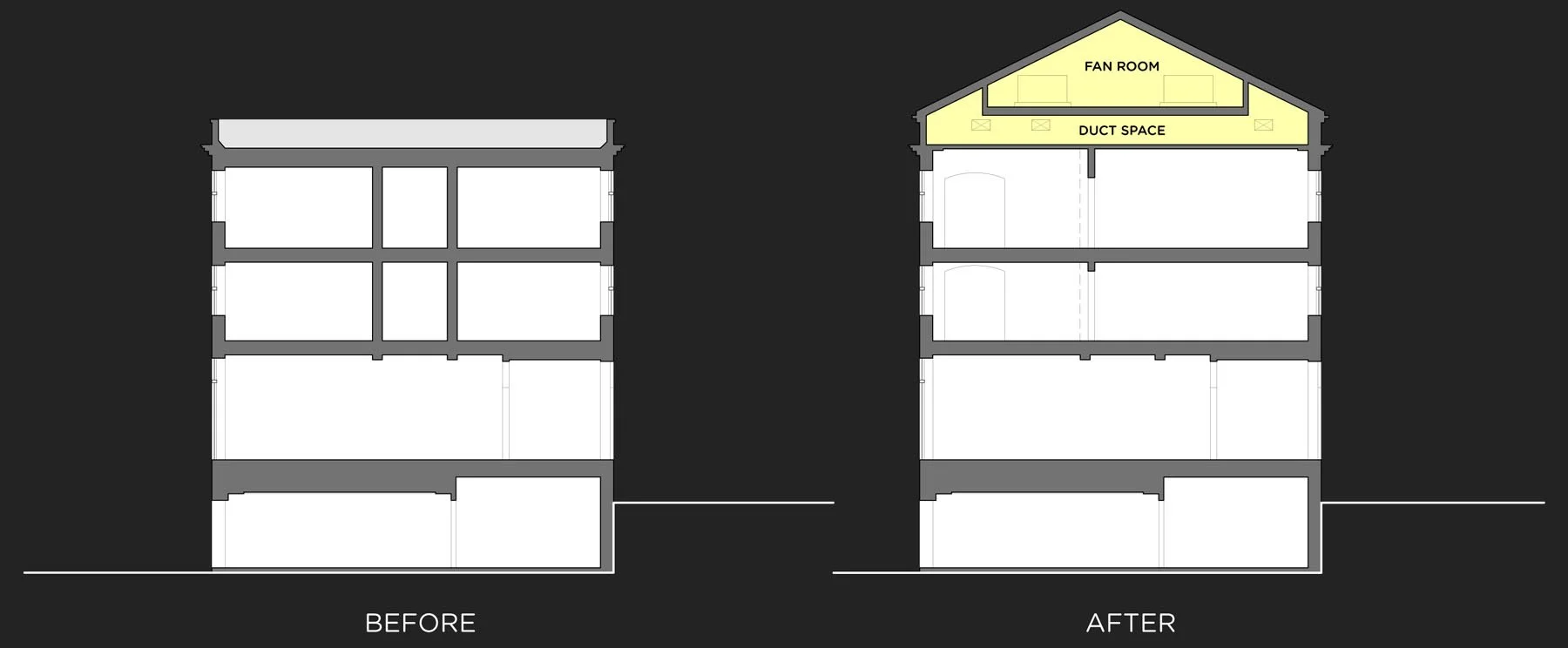
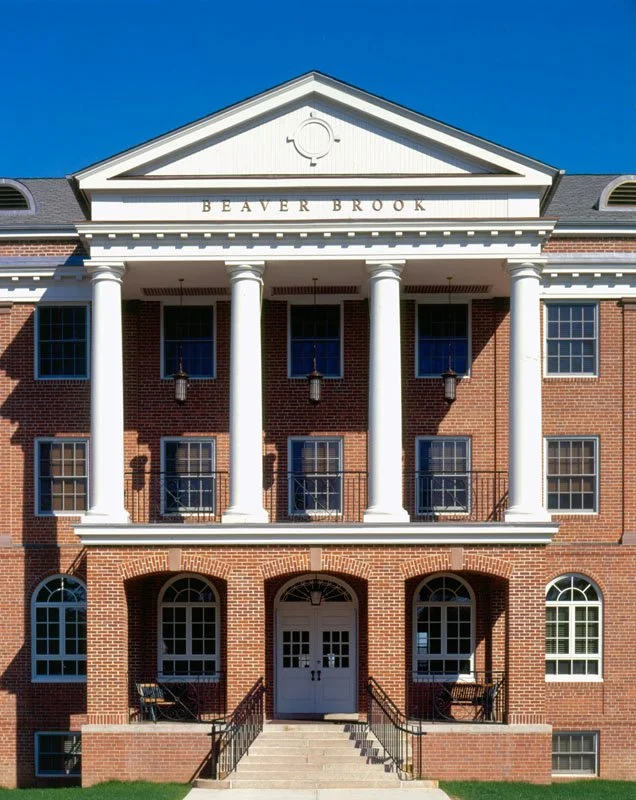
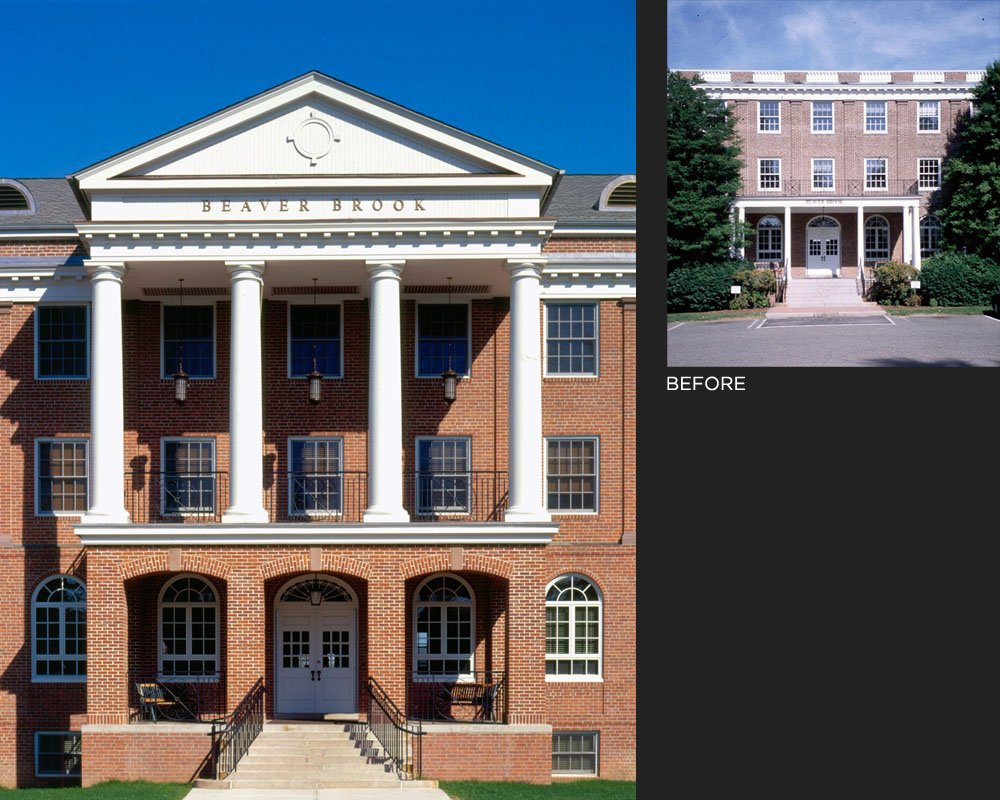
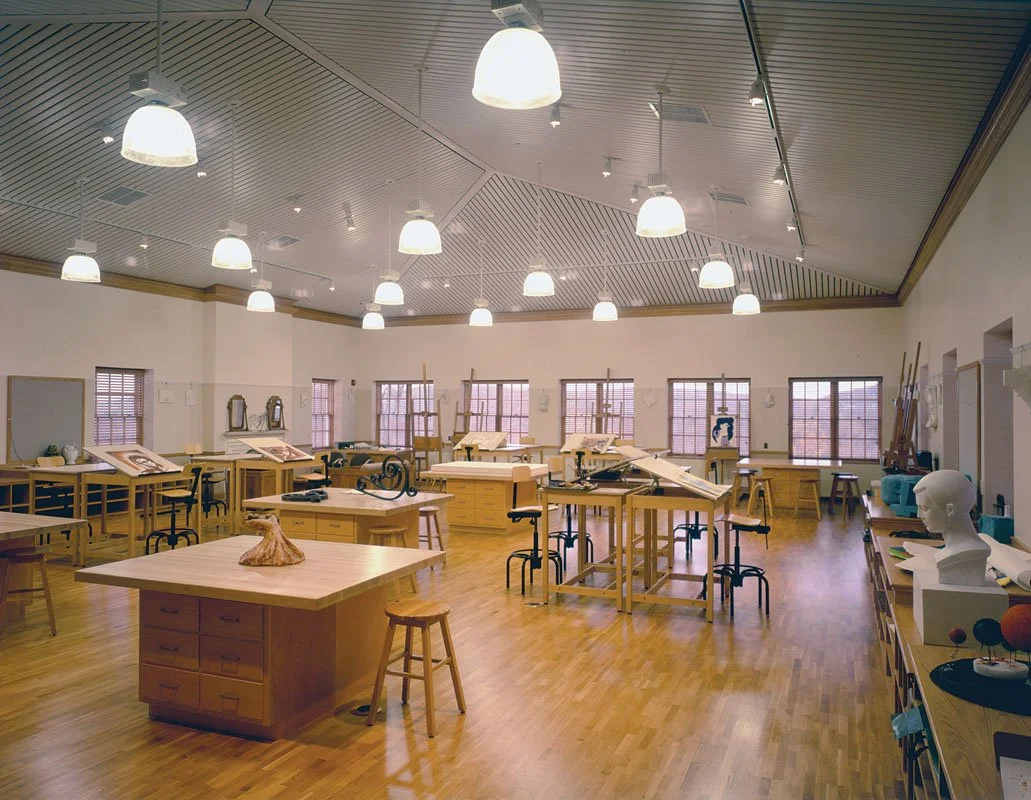
To create flexible studios and labs, the project introduces a long-span steel structure and a raised hipped roof that accommodate vaulted, column-free spaces on the upper level while fitting smaller classrooms on lower floors. New windows, a Georgian portico, and an elliptical lawn reframe the building’s exterior and campus approach.
project narrative
-
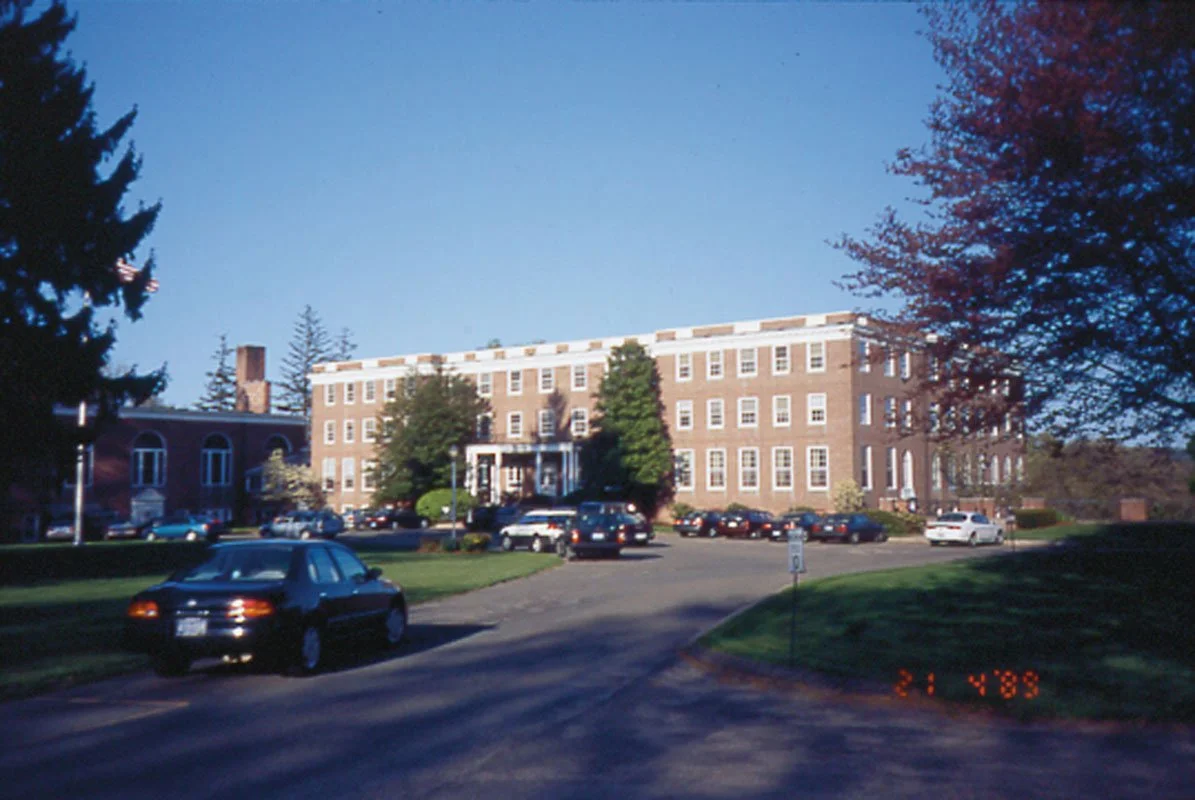
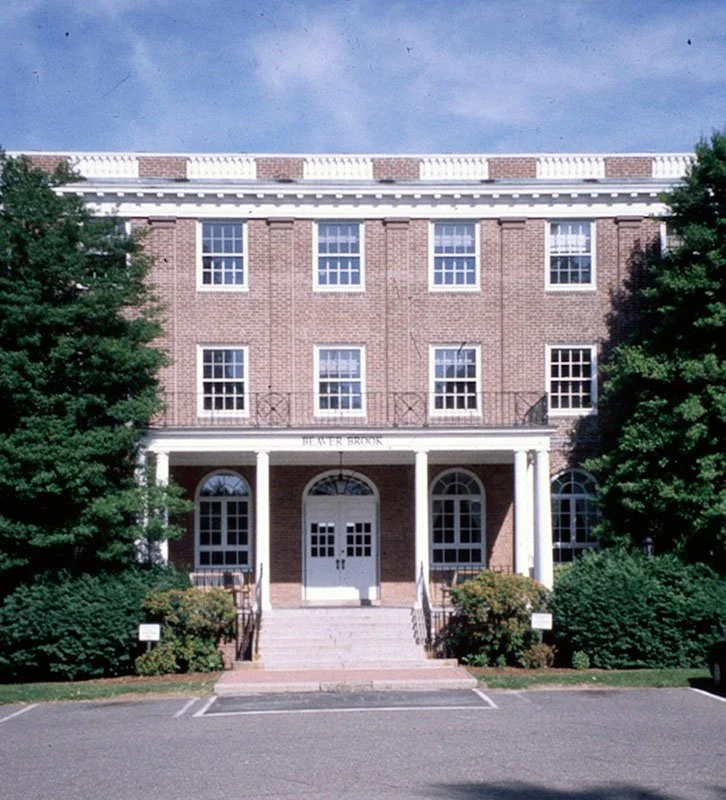
Beaver Brook stood as a somber, flat-roofed dormitory in the most visible location on campus, constrained by its original plan and an intrusive visitor parking lot at the entry.
The school wanted to convert the building into a new academic center for science, art, and student services while improving campus sequence and aligning the façade with neighboring chapel and theater.
To address this, the design required structural intervention and a redefinition of the exterior landscape.
-
The concept centers on transforming the building’s program and presence through selective demolition and the insertion of a long-span structural roof that enables large, daylit studio and laboratory spaces.
Building on the campus’s classical language, a Georgian portico and hipped roof were introduced to mediate between adjacent buildings. The front landscape was reshaped into an elliptical lawn to establish a defined civic entry and gathering space.
-
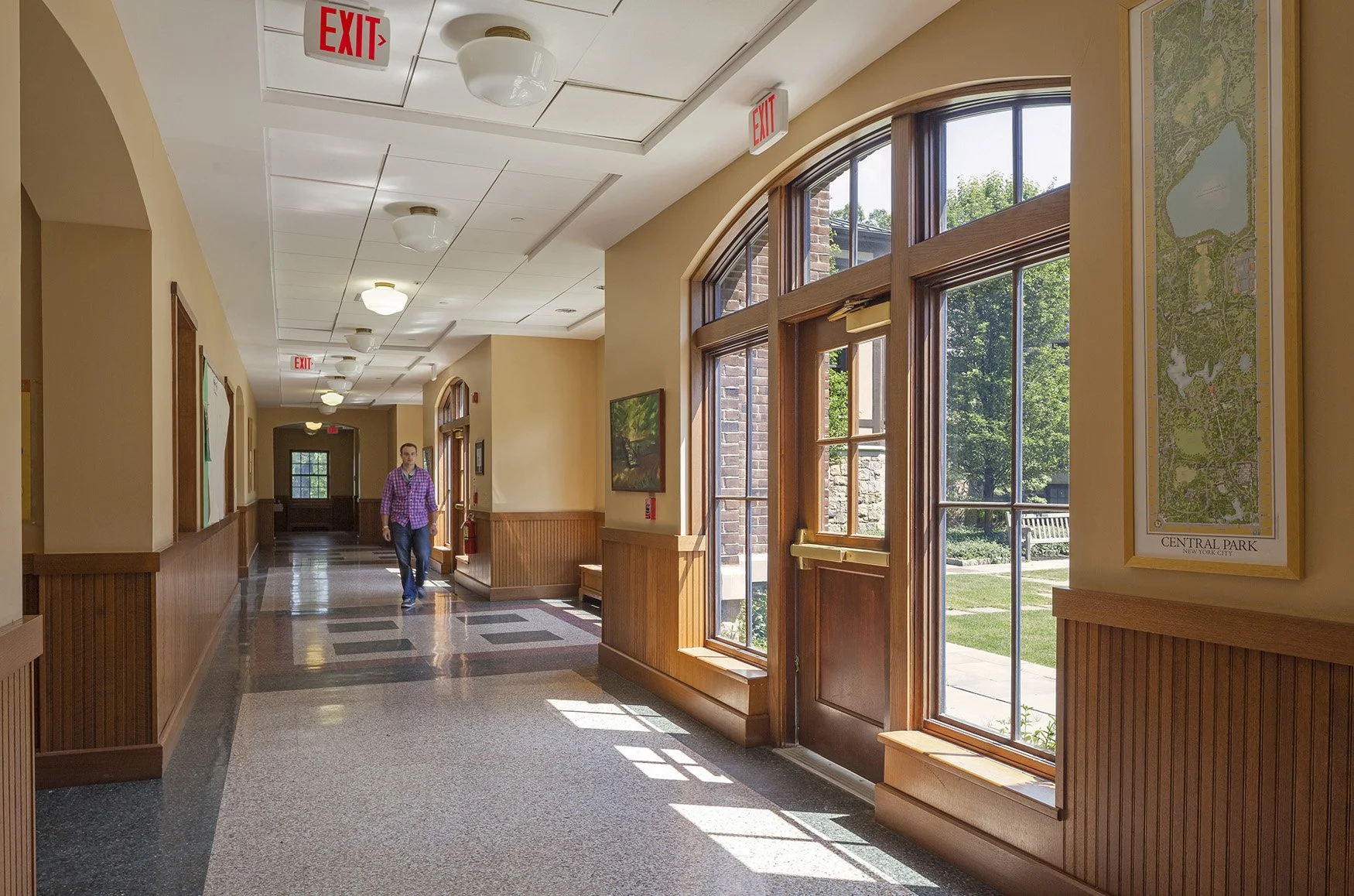
The team removed dormitory rooms on upper floors and inserted new trusses to create column-free, vaulted art studios and large science labs while adapting lower levels for classrooms, offices, and student lounges with views across campus.
Material moves — new windows, a raised hipped roof, and a classical portico — articulate the building’s new role. Replacing the parking with an elliptical lawn completed the campus sequence and entry experience.
project outcome
An open entry lawn supports legible arrival and pedestrian movement between adjacent campus buildings. Clear interior circulation clarifies access to teaching and service zones and reduces crossing paths.
Upper-level studios and labs receive even, natural light and maintain continuous sightlines that reinforce supervision and collaboration. Large unobstructed volumes and well-placed windows improve spatial orientation.
Layouts accommodate large studios, smaller classrooms, and lounges so activities coexist without interference. Open spans and modular partitions support reconfiguration and durable finishes reinforce long-term usability.
let’s continue the conversation
Every project begins with listening. If you’re considering a new campus, building, or landscape, we’d welcome the chance to talk through your goals, challenges, and aspirations. Our team works collaboratively to shape places that feel grounded, connected, and built to serve people well over time.