dobbs ferry library
2002
dobbs ferry, ny
17,000 sf
renovation, additions, historic preservation
2003, AIA Westchester/Mid-Hudson Chapter
Recognition of Architectural Excellence
awards
Structural: Silman
MEP: Lawrence Mechanical
Site/Civil: John Meyer Consulting
Estimating: M T Peters
Roofing: Watsky Associates
Technology: Edutek
CM: JMOA
Code: Spiewak
collaborators
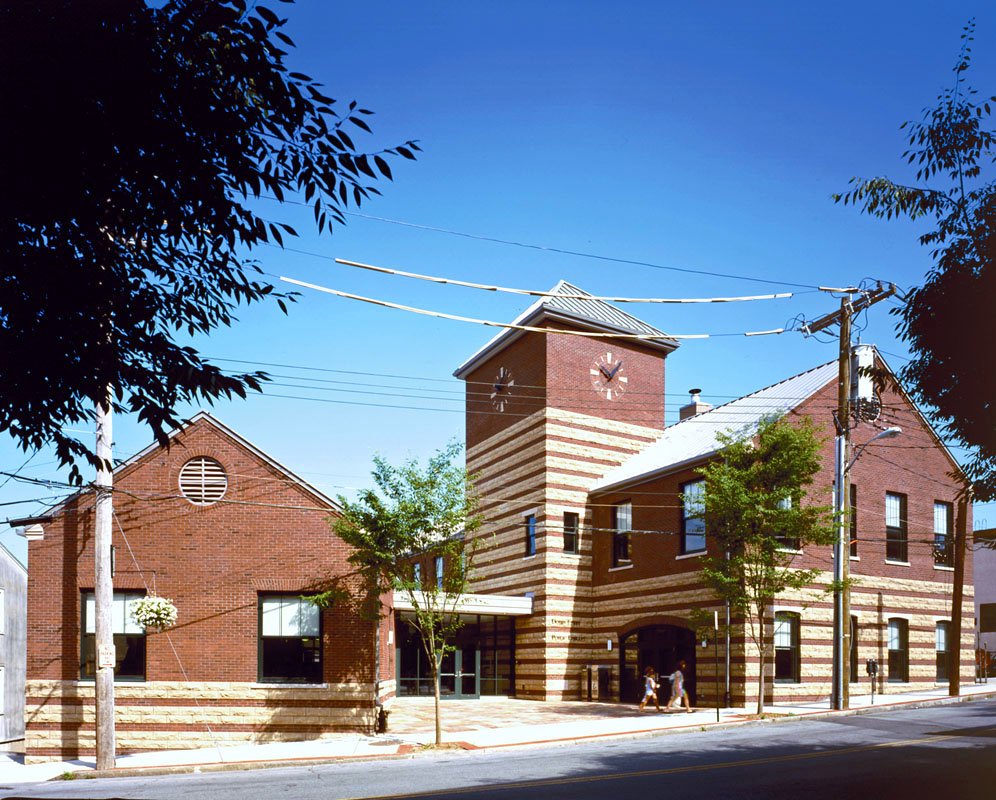
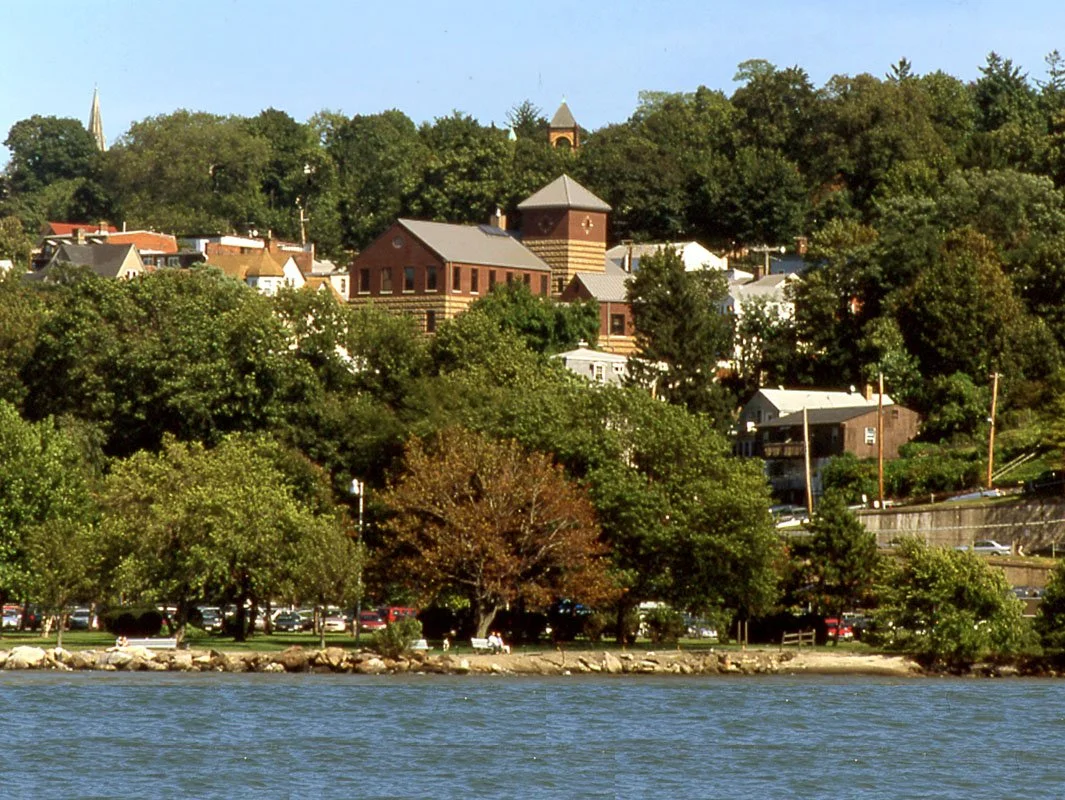
a gabled, village-scaled library that frames a courtyard and hudson views.
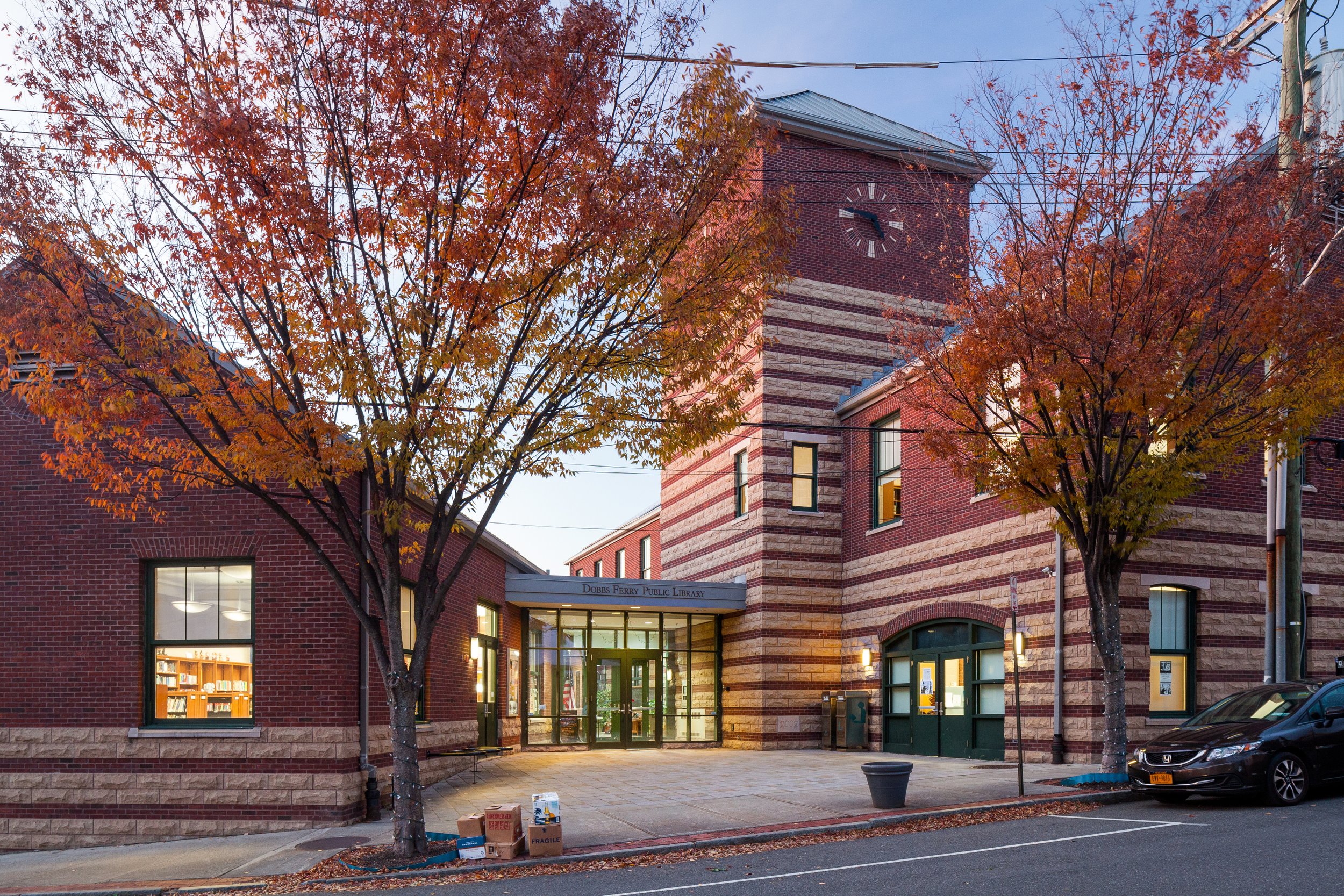
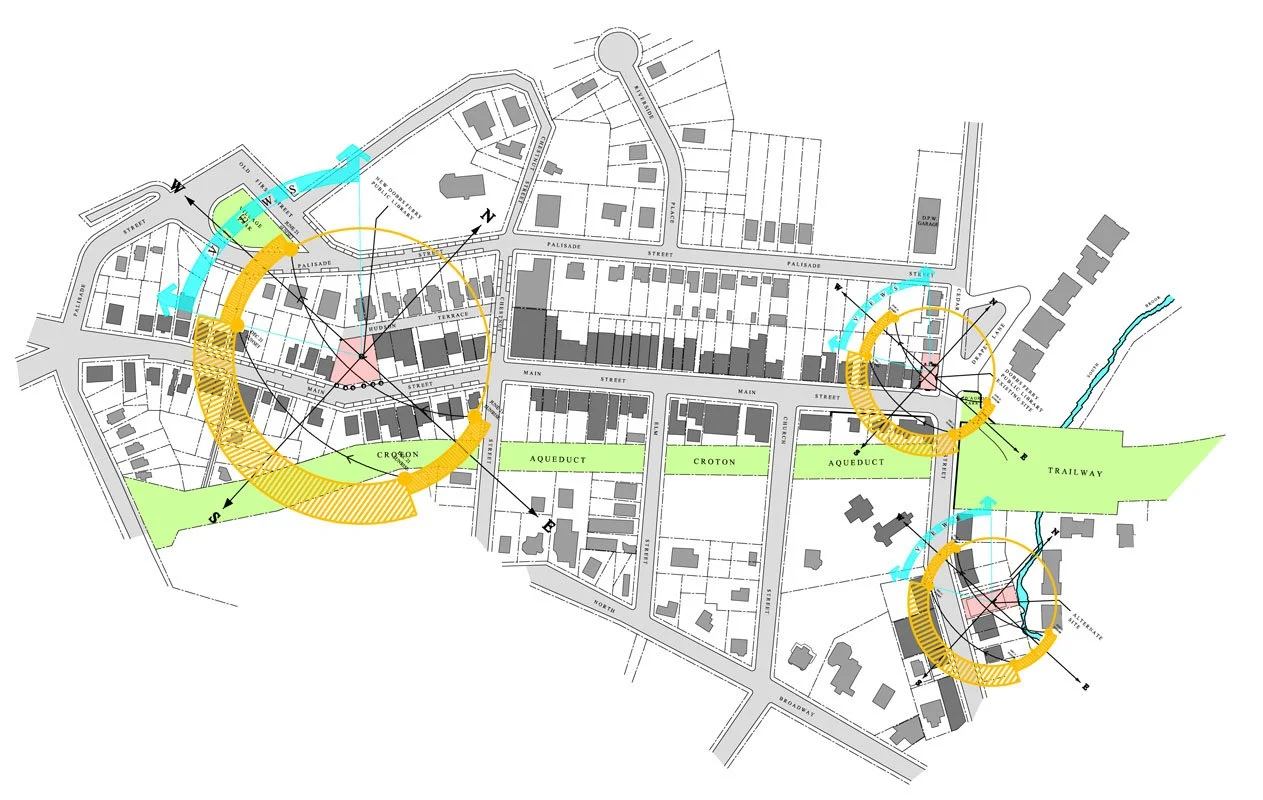
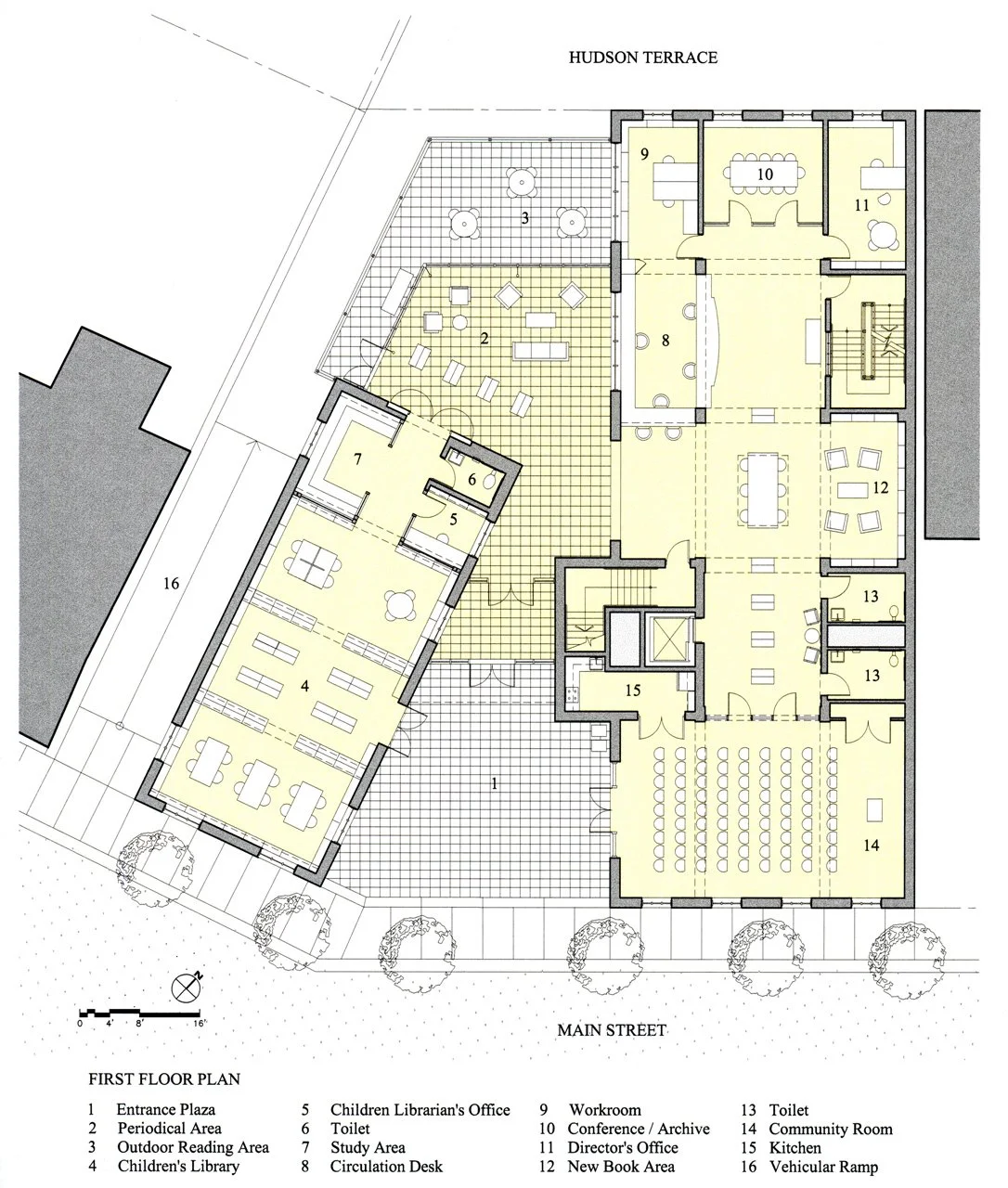
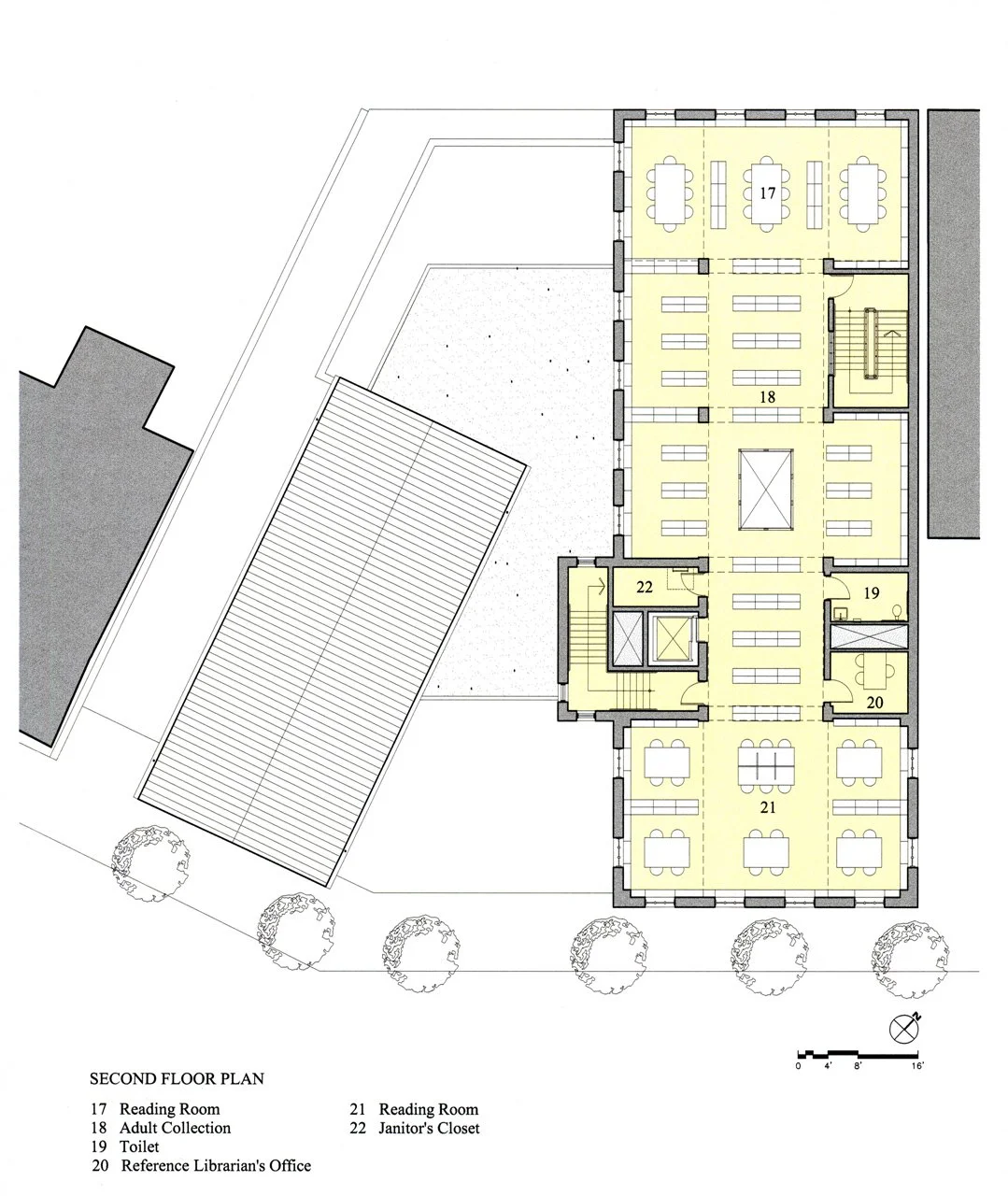
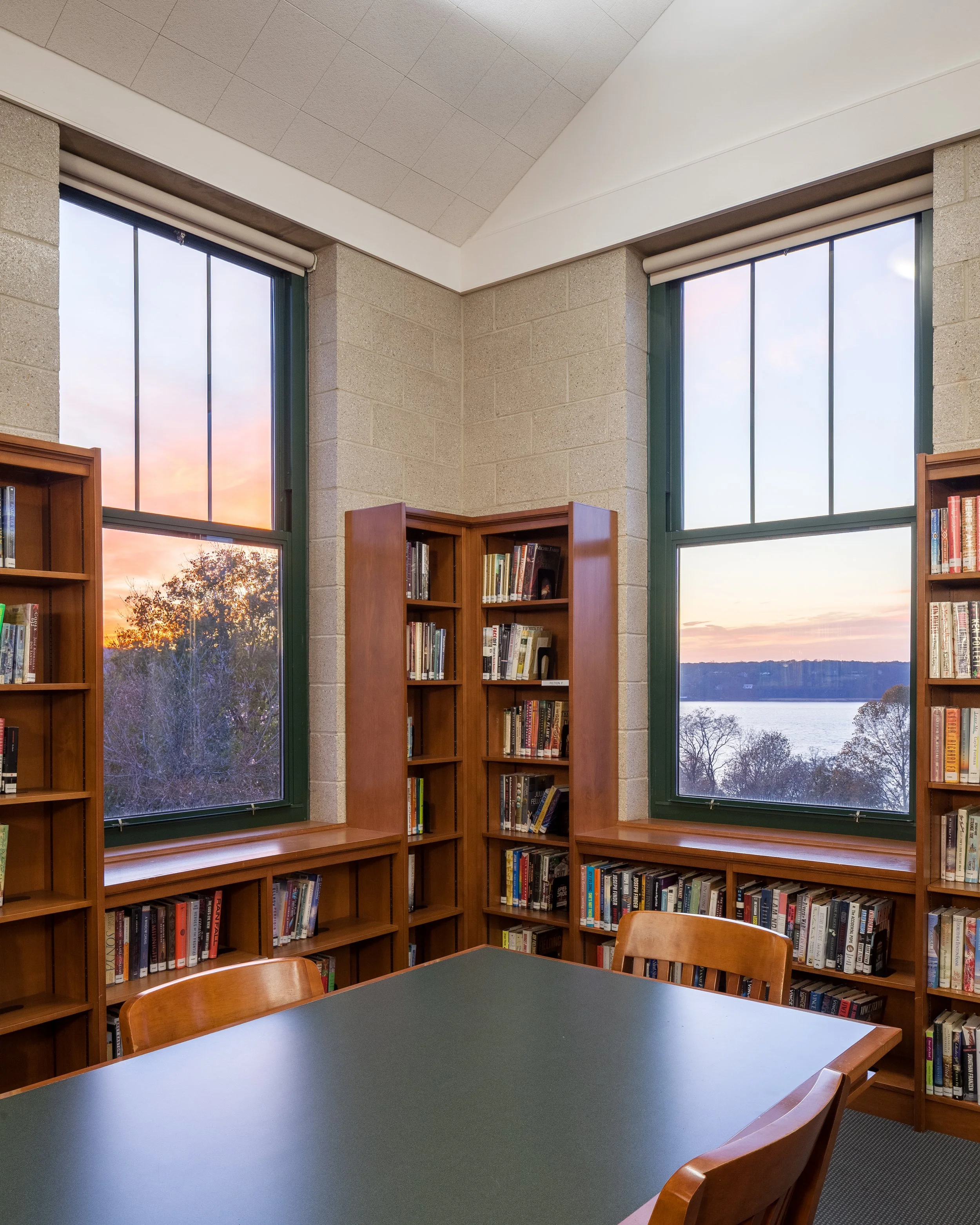
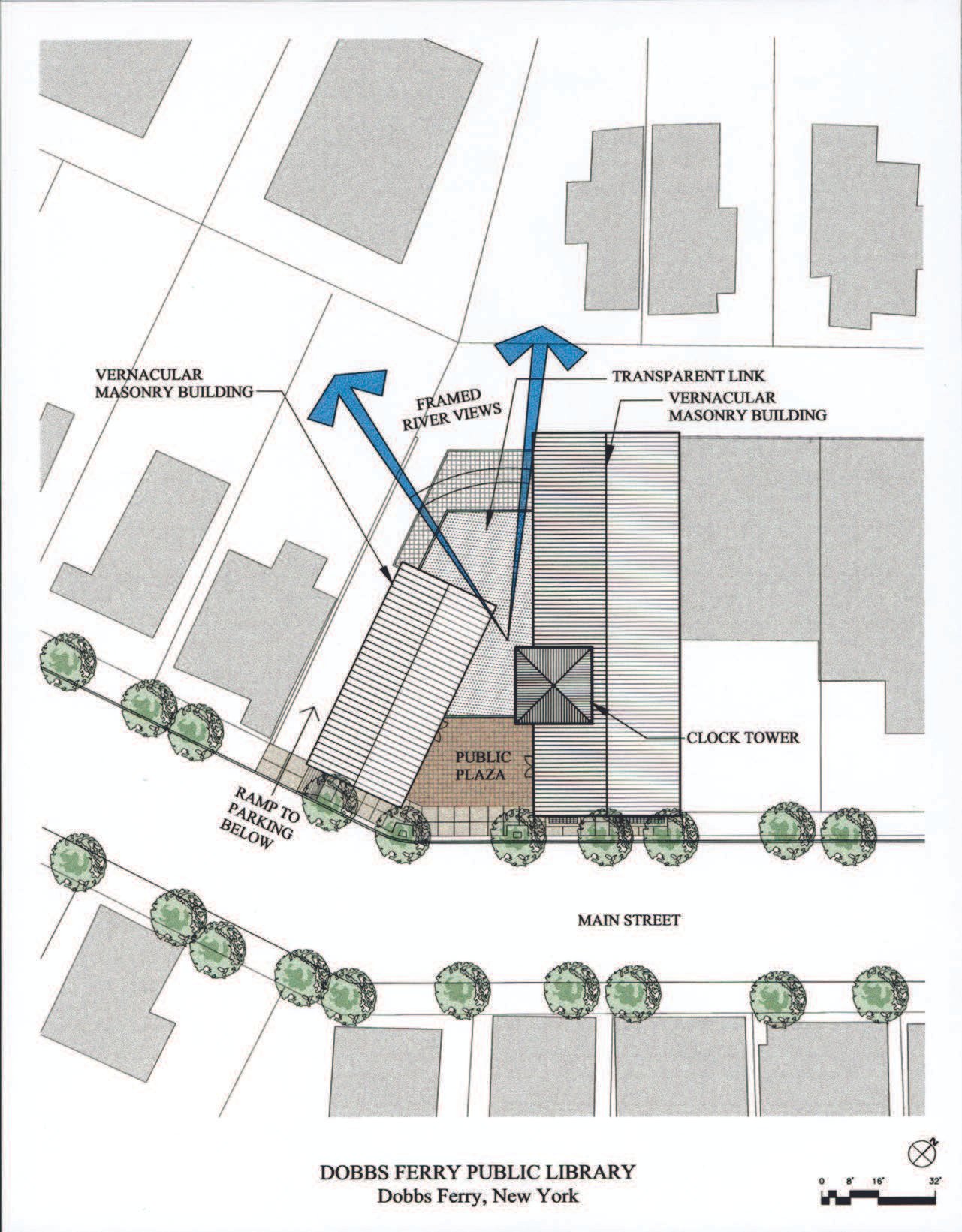
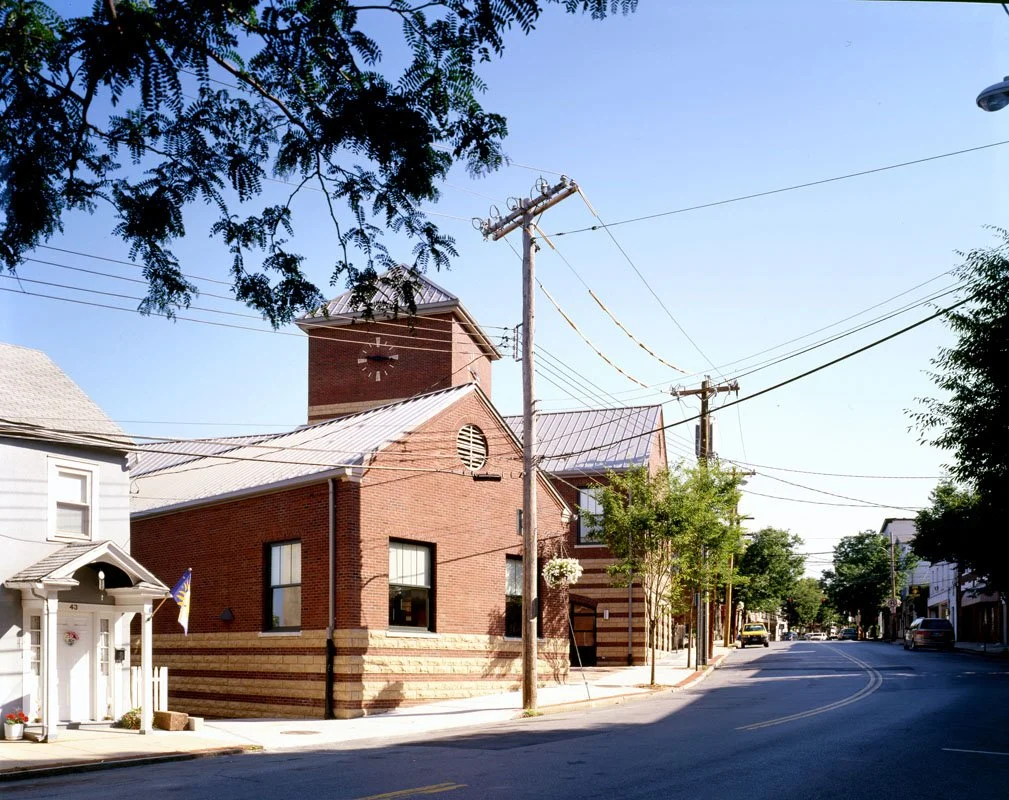
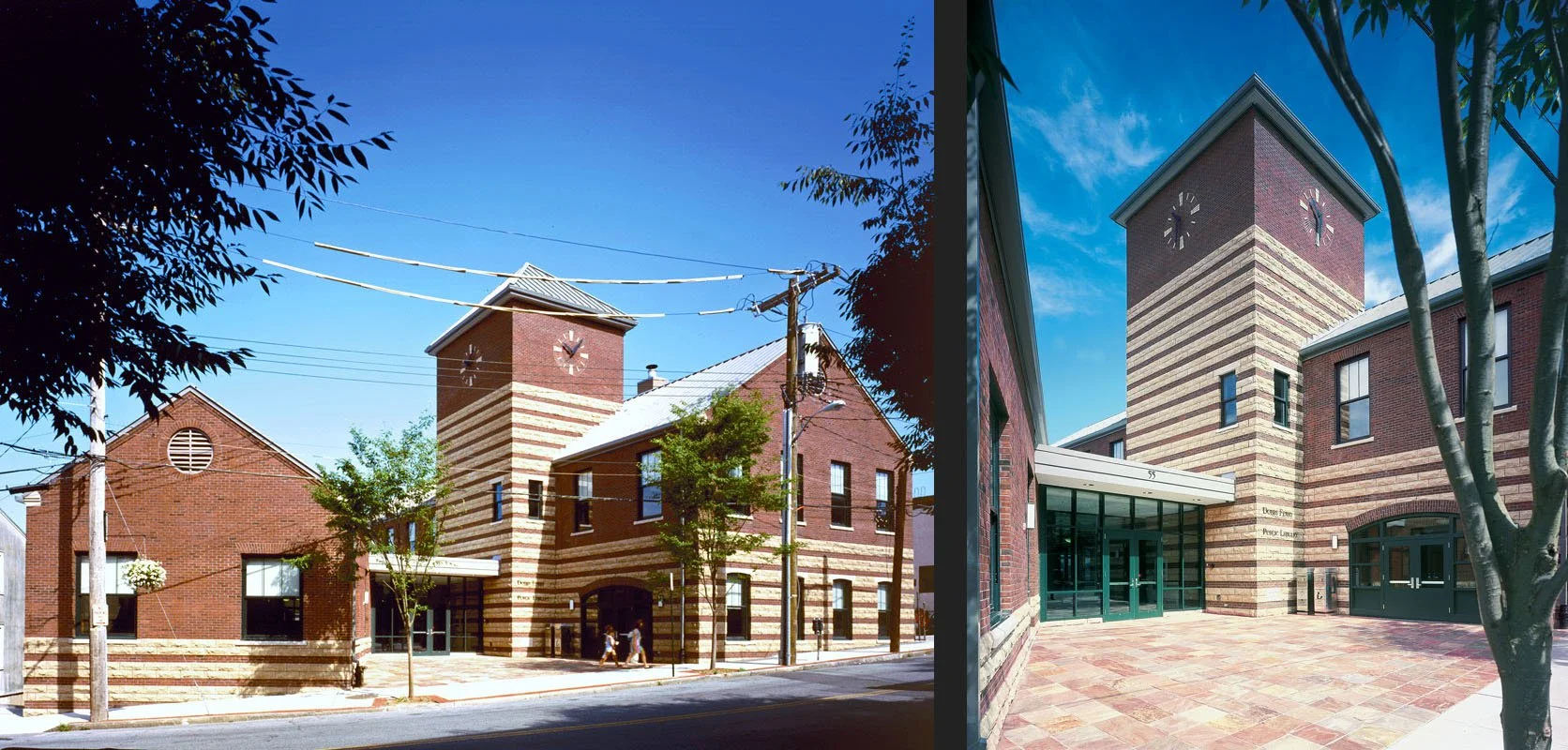
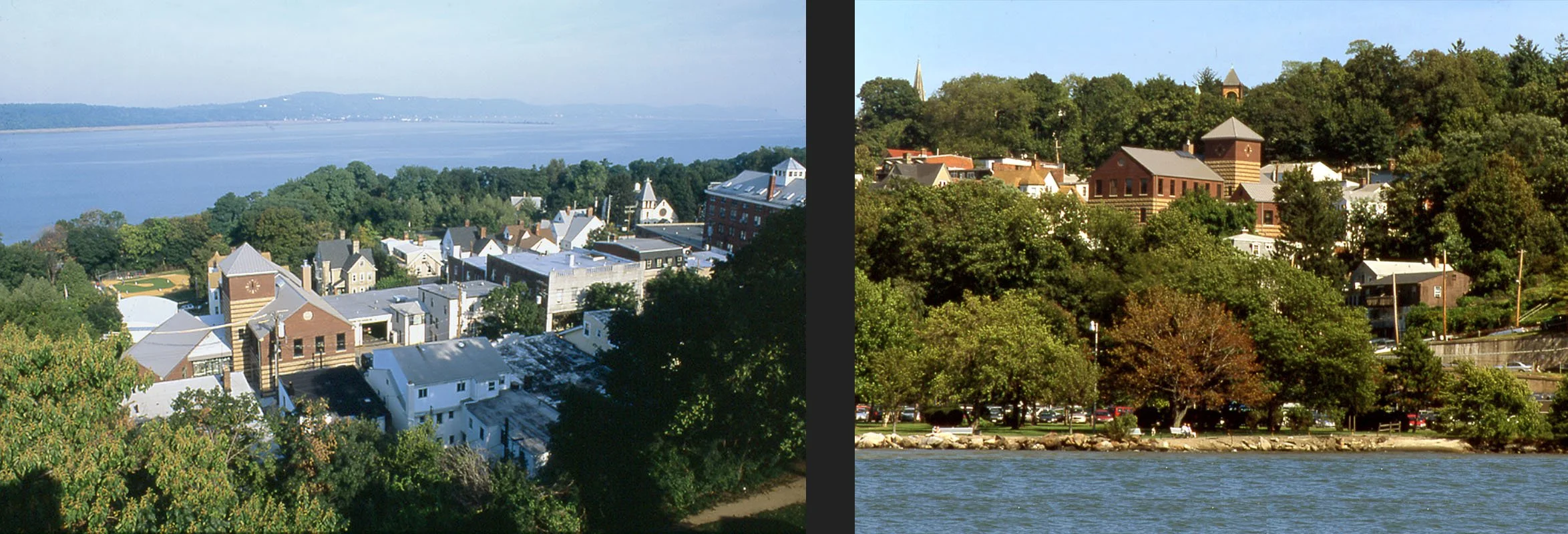
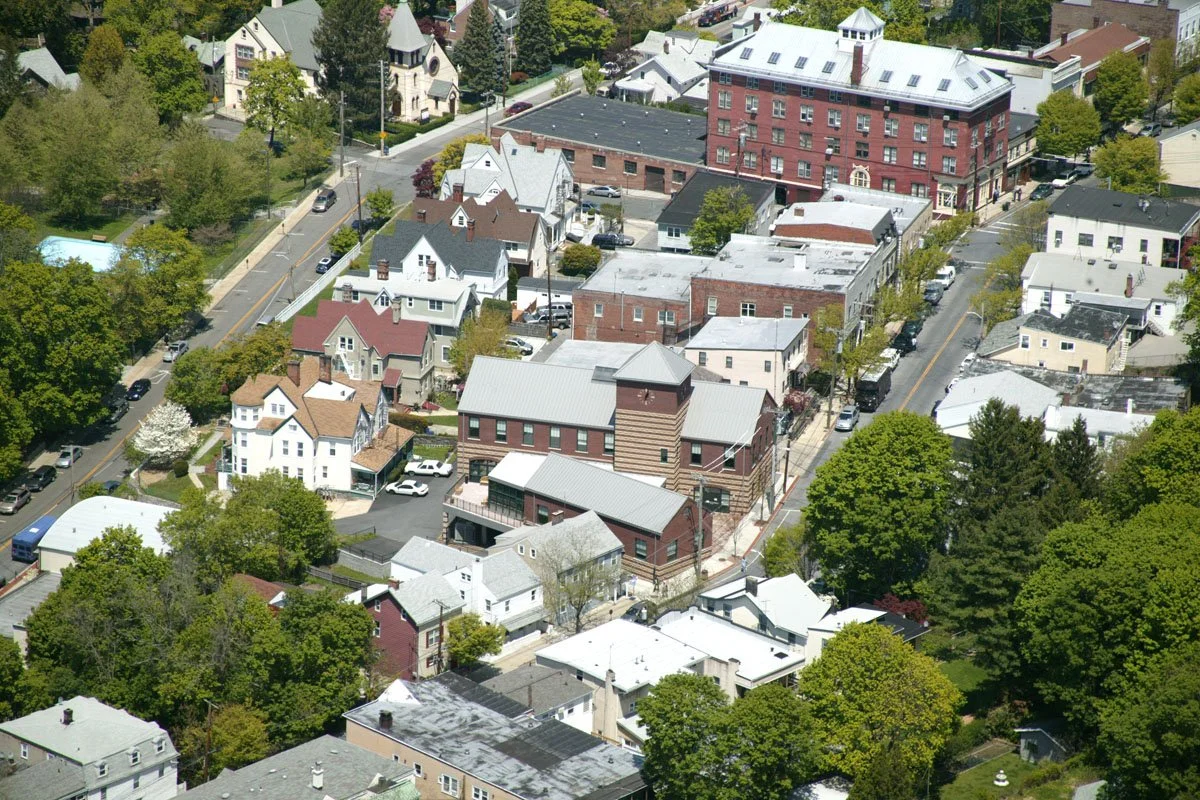
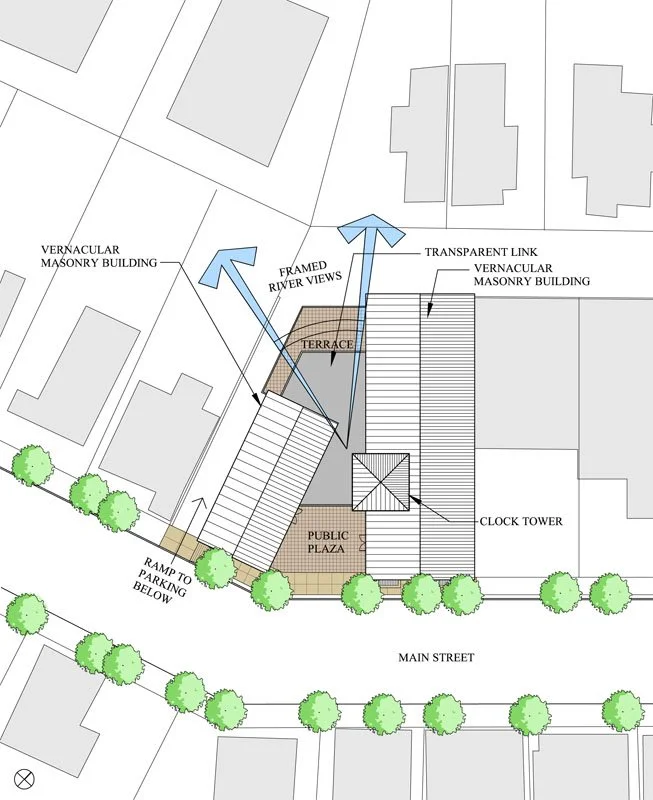
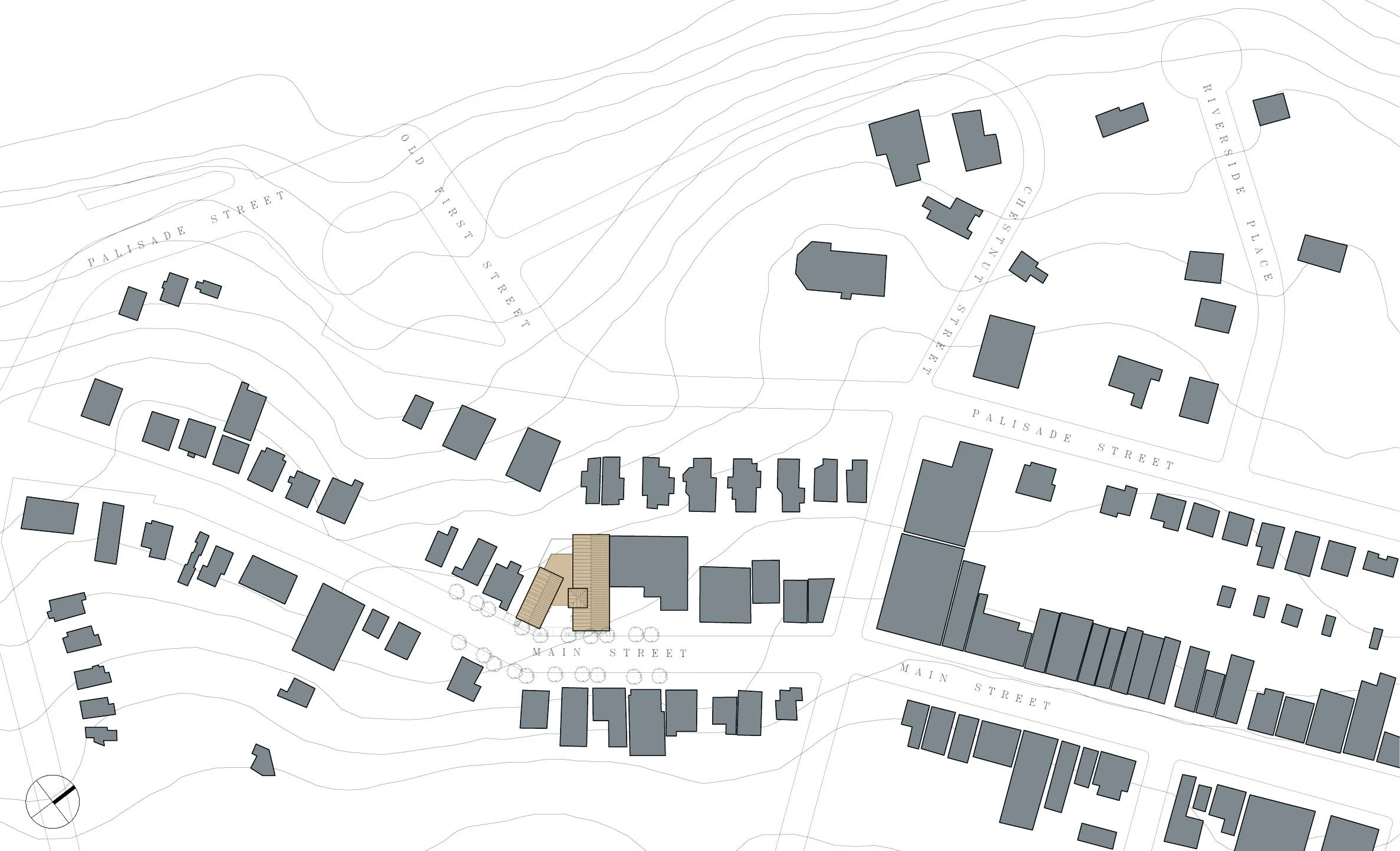
Sited at the southern end of Main Street to capture views to the Hudson, the project replaces an undersized house-library with a new building organized to serve distinct community programs. Two rectangular wings accommodate adult and community uses and a separate children's wing, while a central pavilion organizes arrival and circulation.
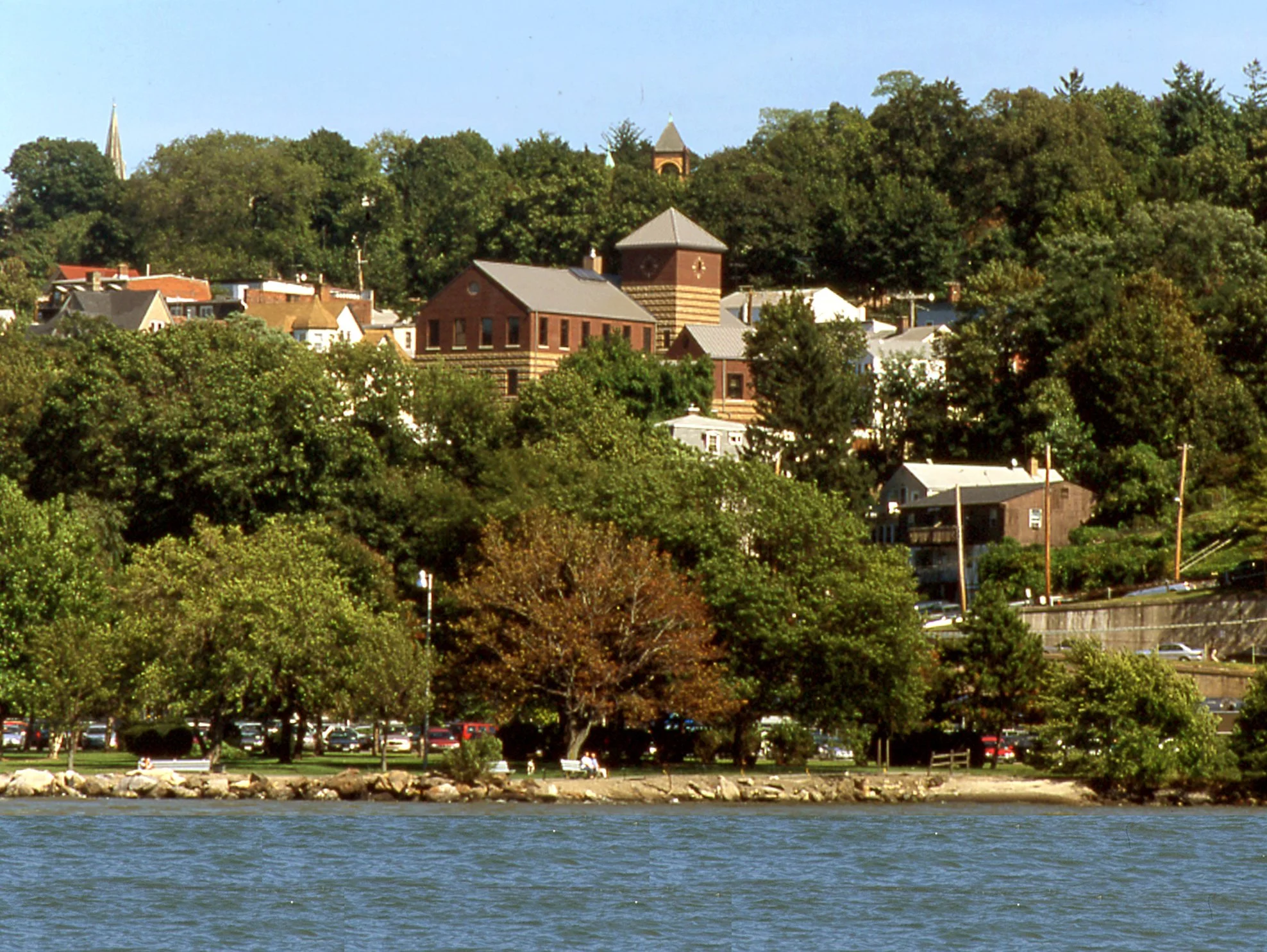
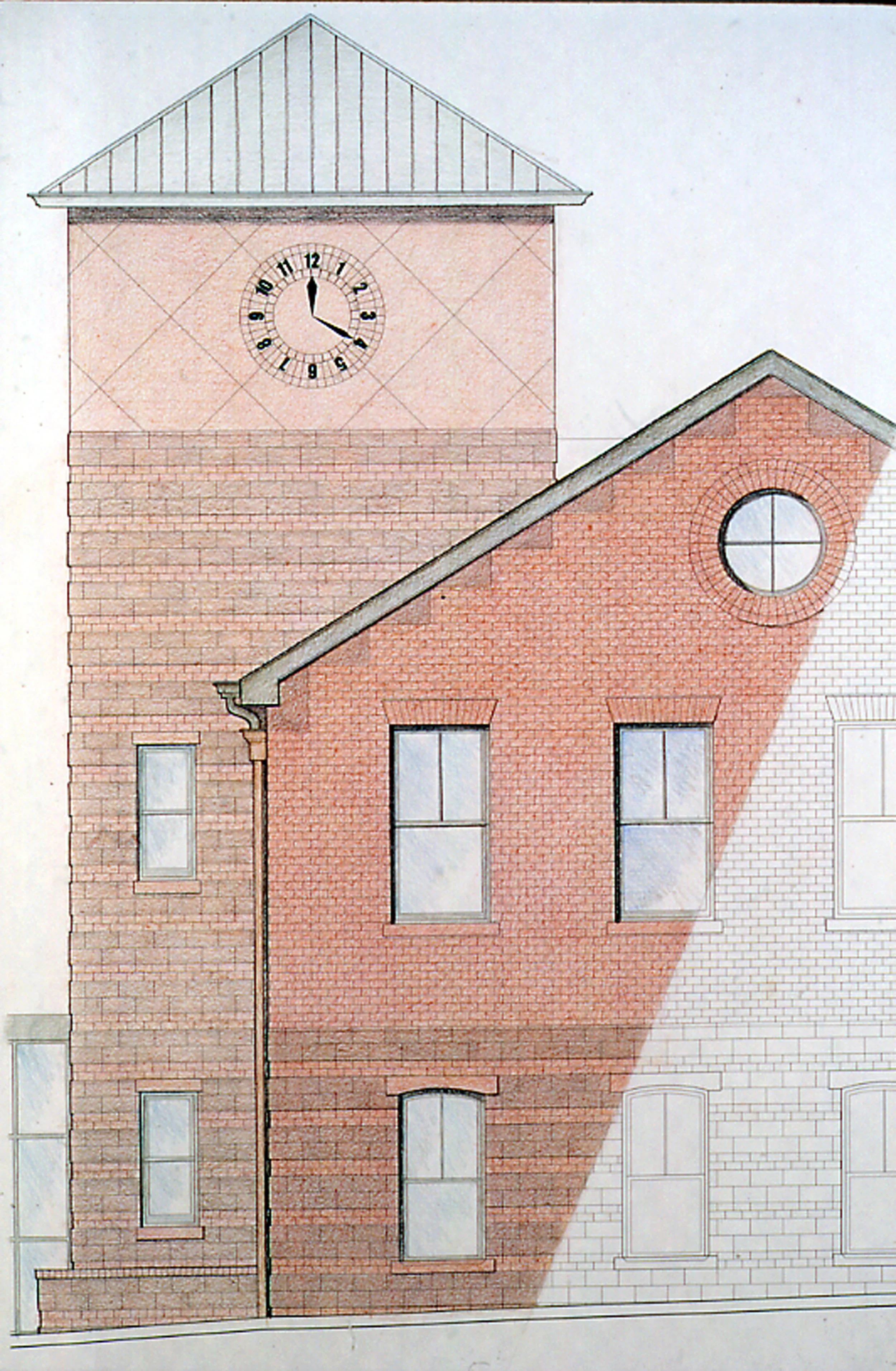
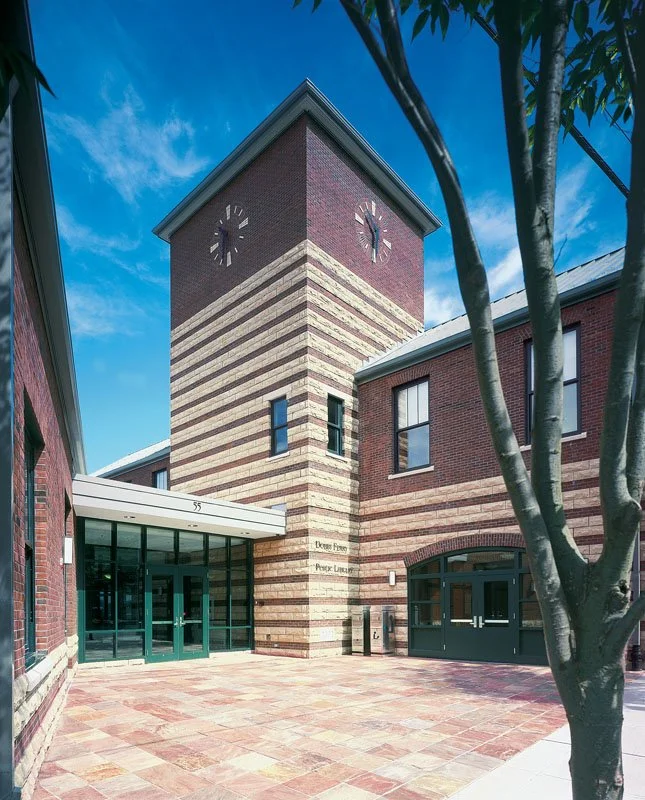
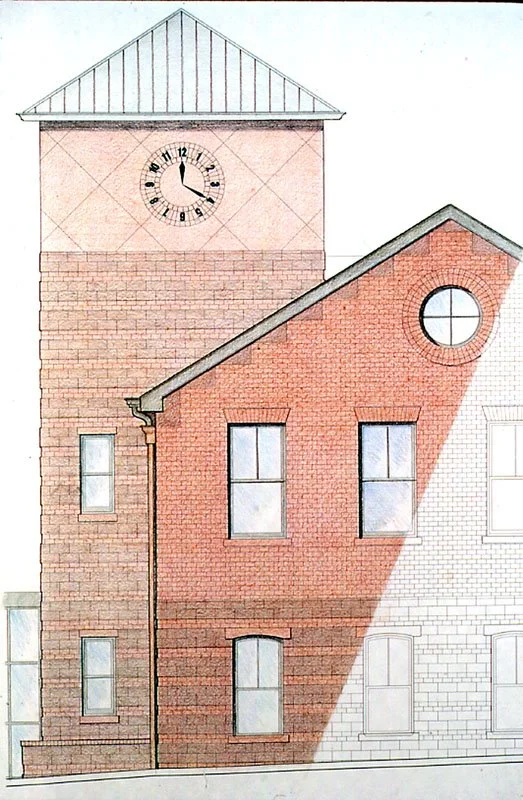
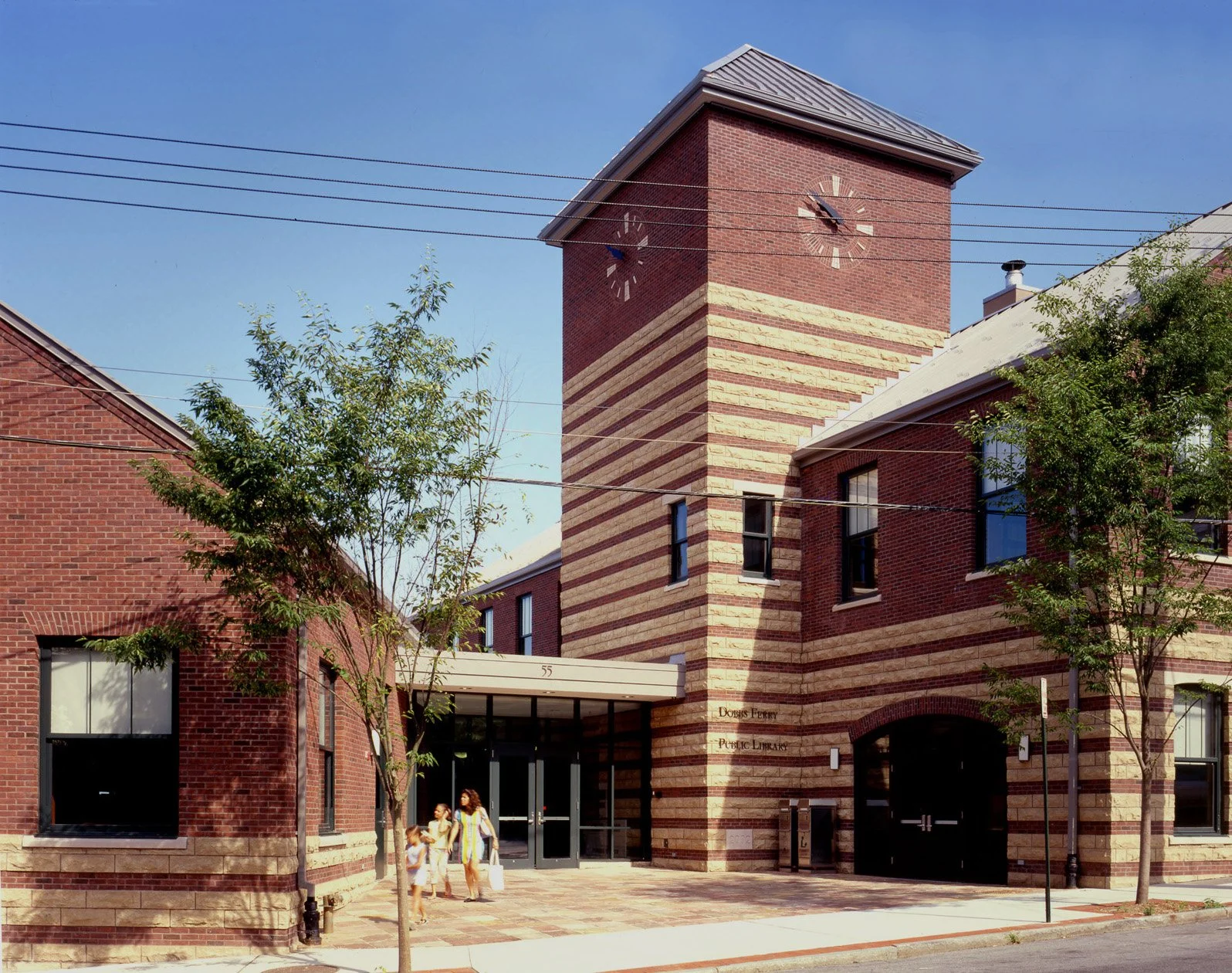
The design pairs two gabled volumes with a flat-roofed entry pavilion to create a sheltered exterior courtyard and a terrace overlooking the river. Materials and a clocktower element were chosen to relate to the village's important civic buildings, allowing the library to fit the local fabric while opening to the broader Hudson River landscape.
project narrative
-
The library had outgrown a small, two-story house in the village center and required a site and organization that could expand program while honoring the town’s civic character and river setting.
An intensive study identified a compact lot at the end of Main Street, presenting the challenge of inserting a larger public building into a narrow, established streetscape while preserving views and village scale.
-
The concept arranges program as two distinct gabled wings linked by a low, transparent pavilion that mediates between interior activity and exterior space.
Building on civic precedents, the gables and a modest tower gesture reference the village's towers, while the pavilion frames a courtyard and a terrace that orient the building toward the Hudson and reinforce legibility.
-
The design is realized through clear programmatic separation and material choices that echo nearby civic buildings.
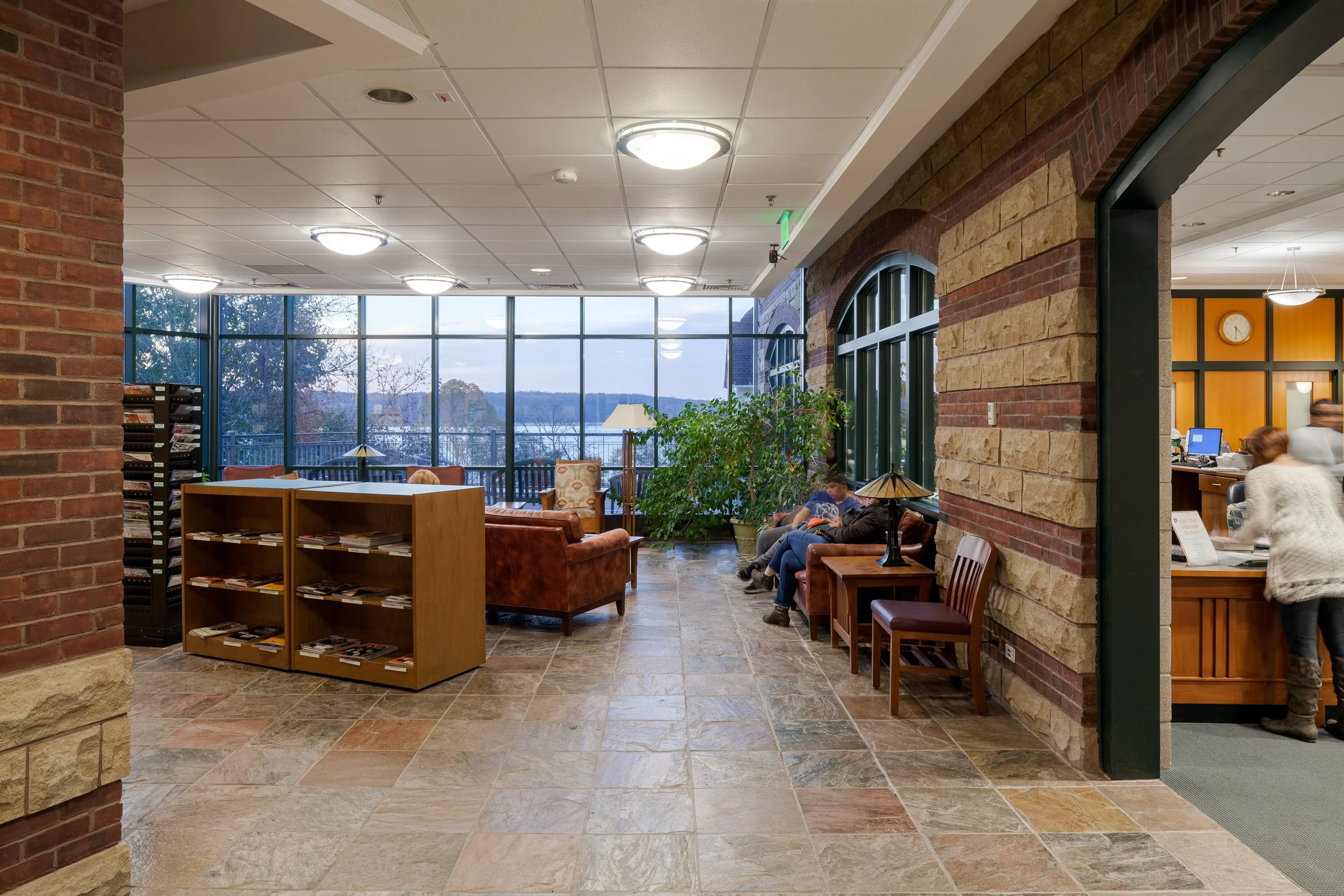
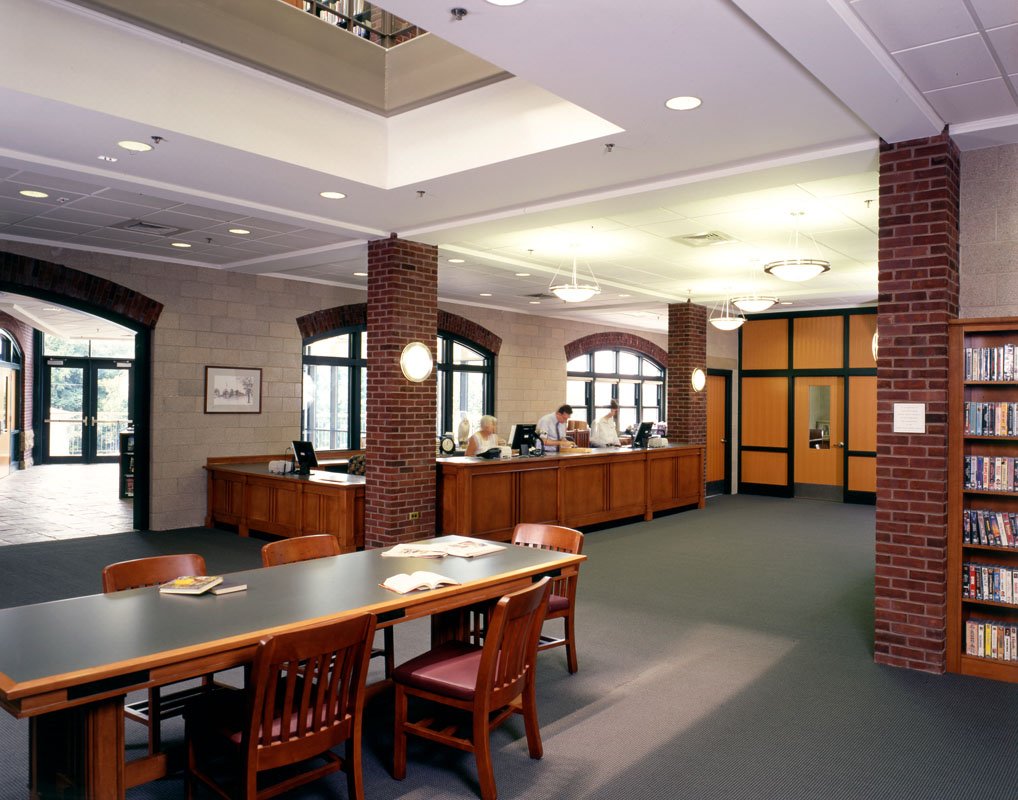
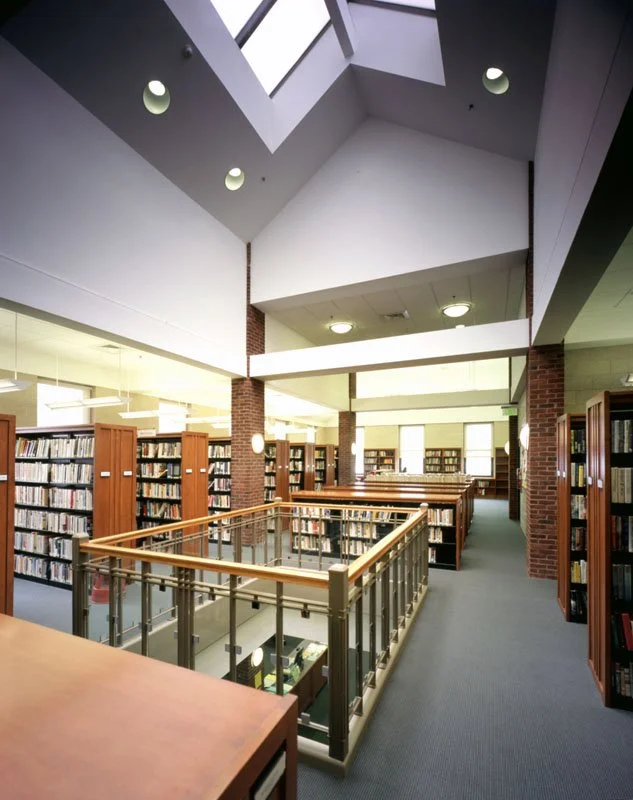
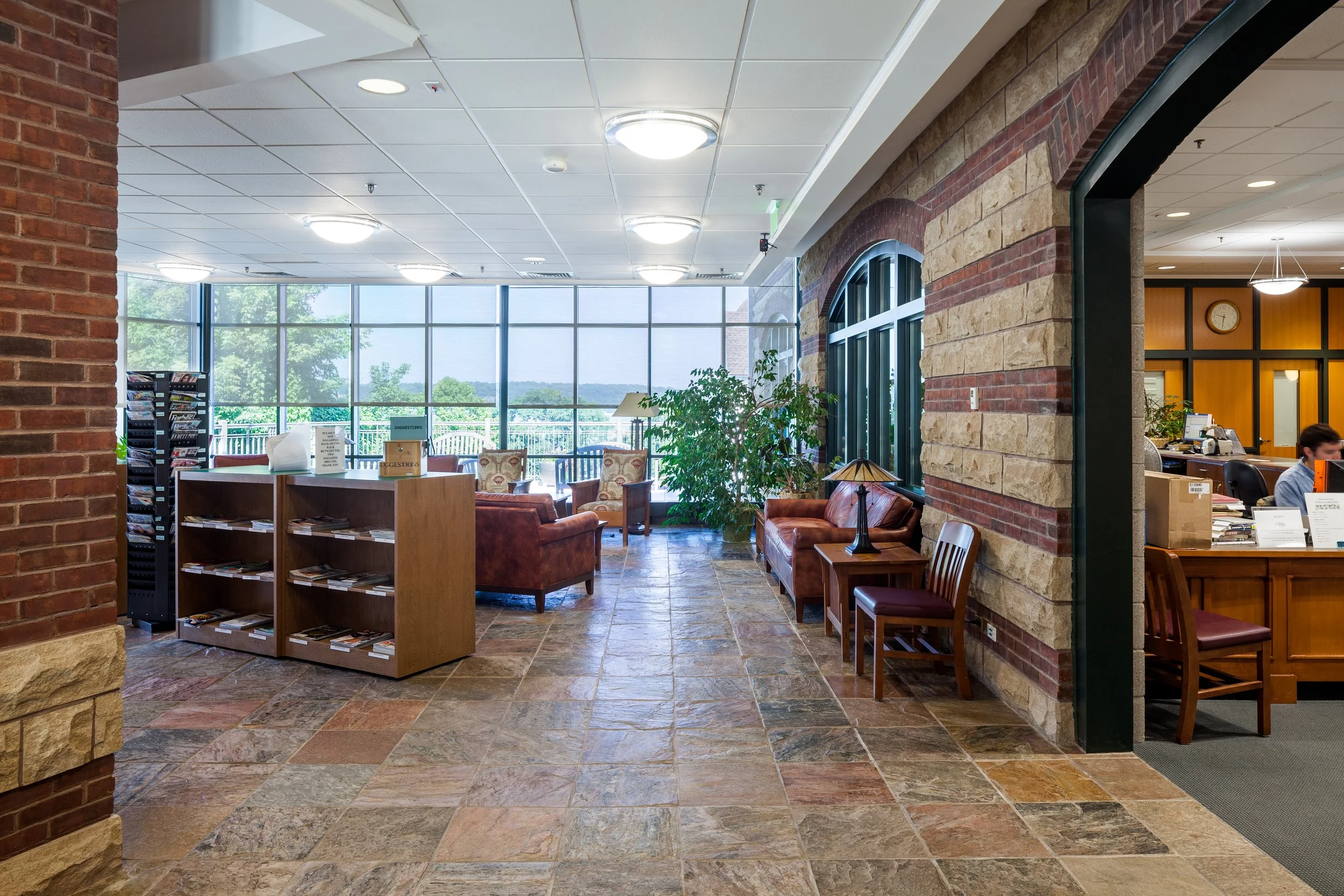
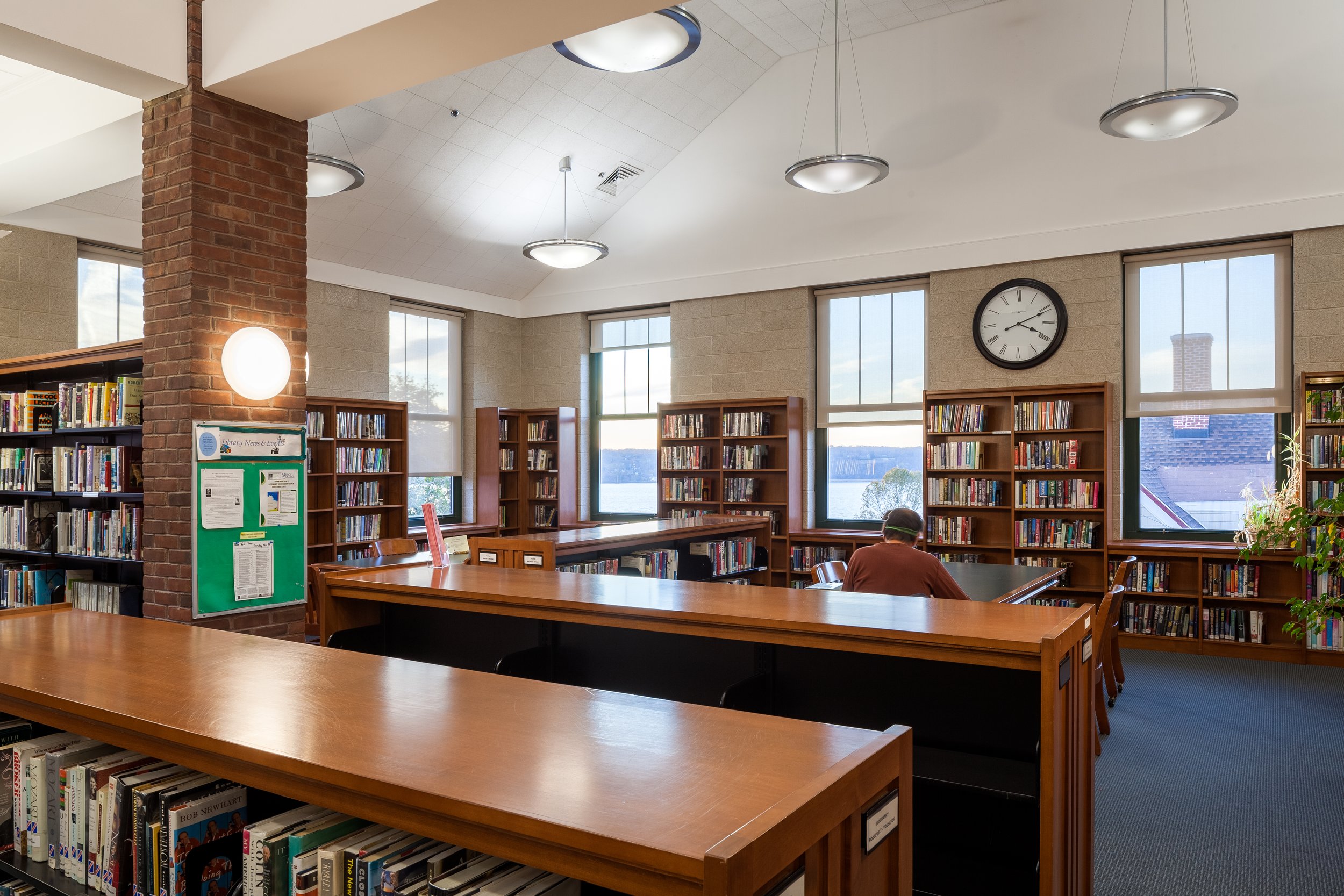
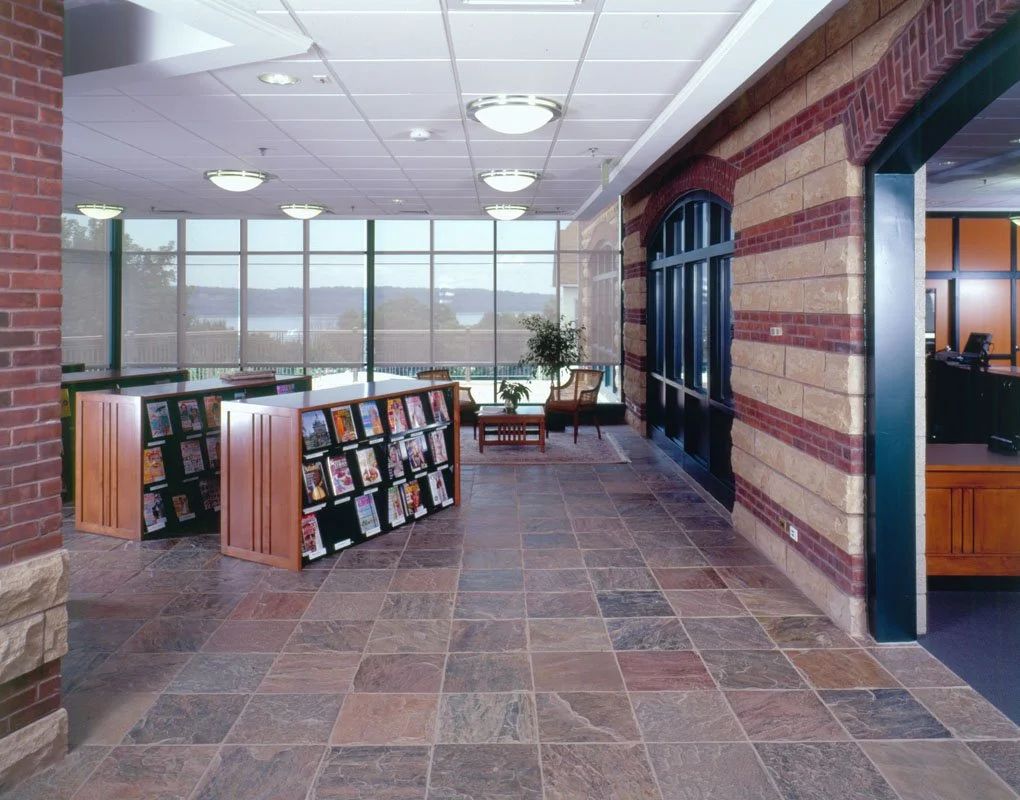
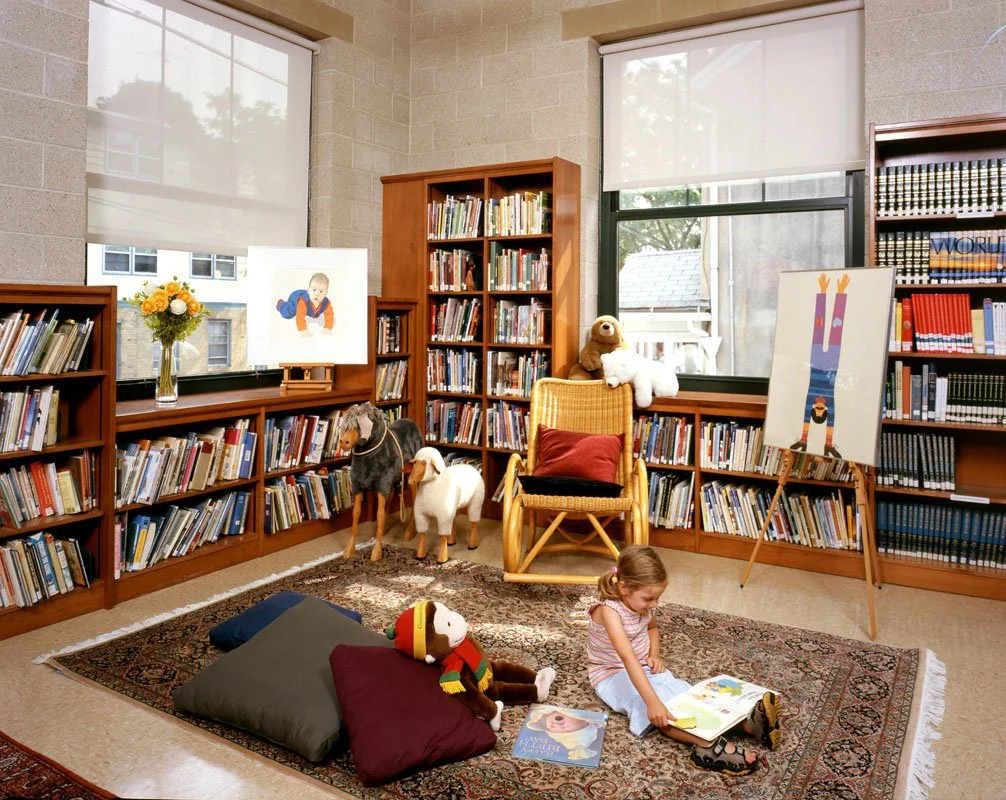
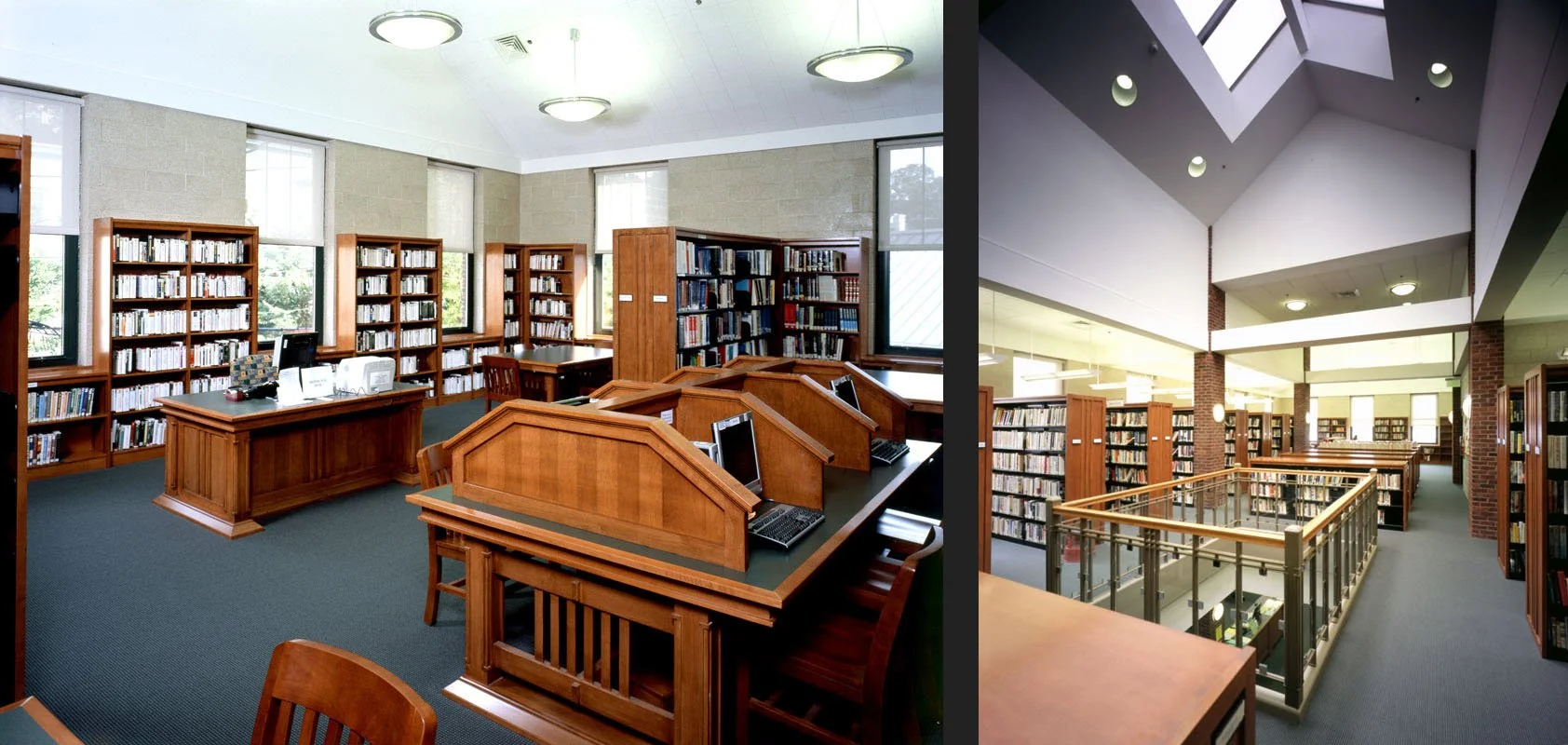
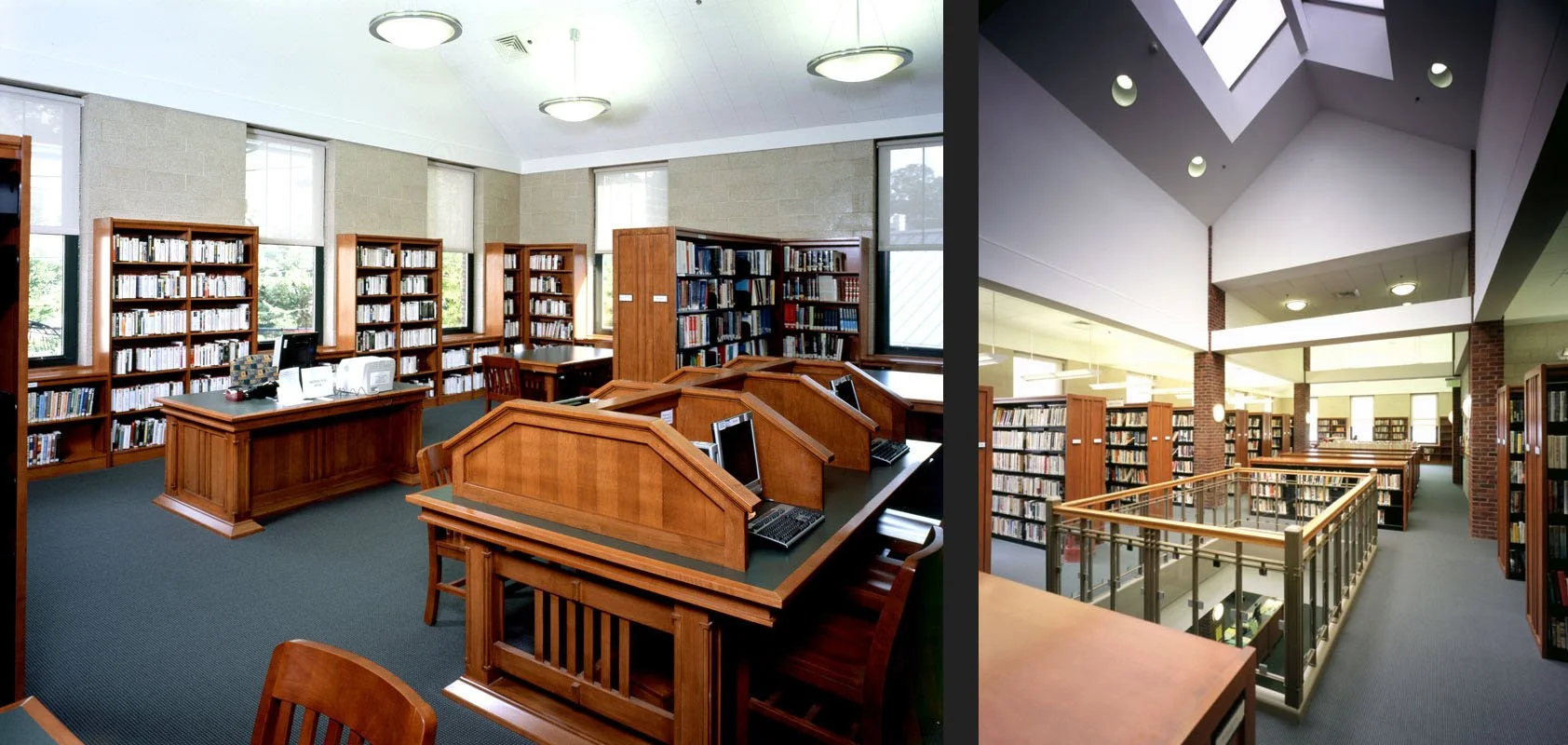
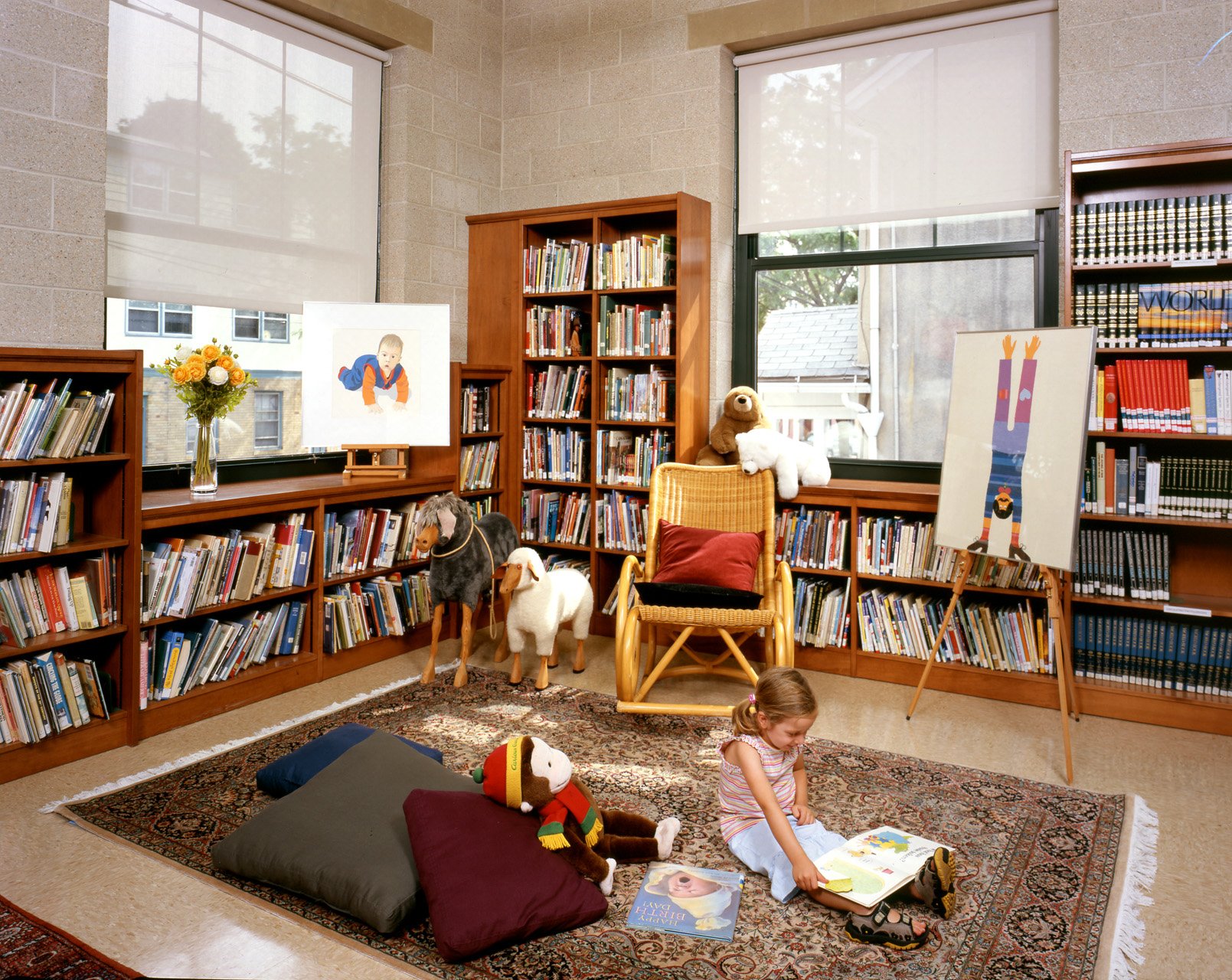
The larger wing contains community and adult library spaces across two levels, the smaller wing houses children's functions, and the connecting pavilion serves as entry and periodical room, opening directly to the terrace and courtyard to enhance arrival and social use.
project outcome
A compact sequence from street to pavilion to wings supports clear movement and wayfinding. Circulation paths run along the pavilion axis and connect main program areas, reducing cross-traffic and reinforcing visual orientation.
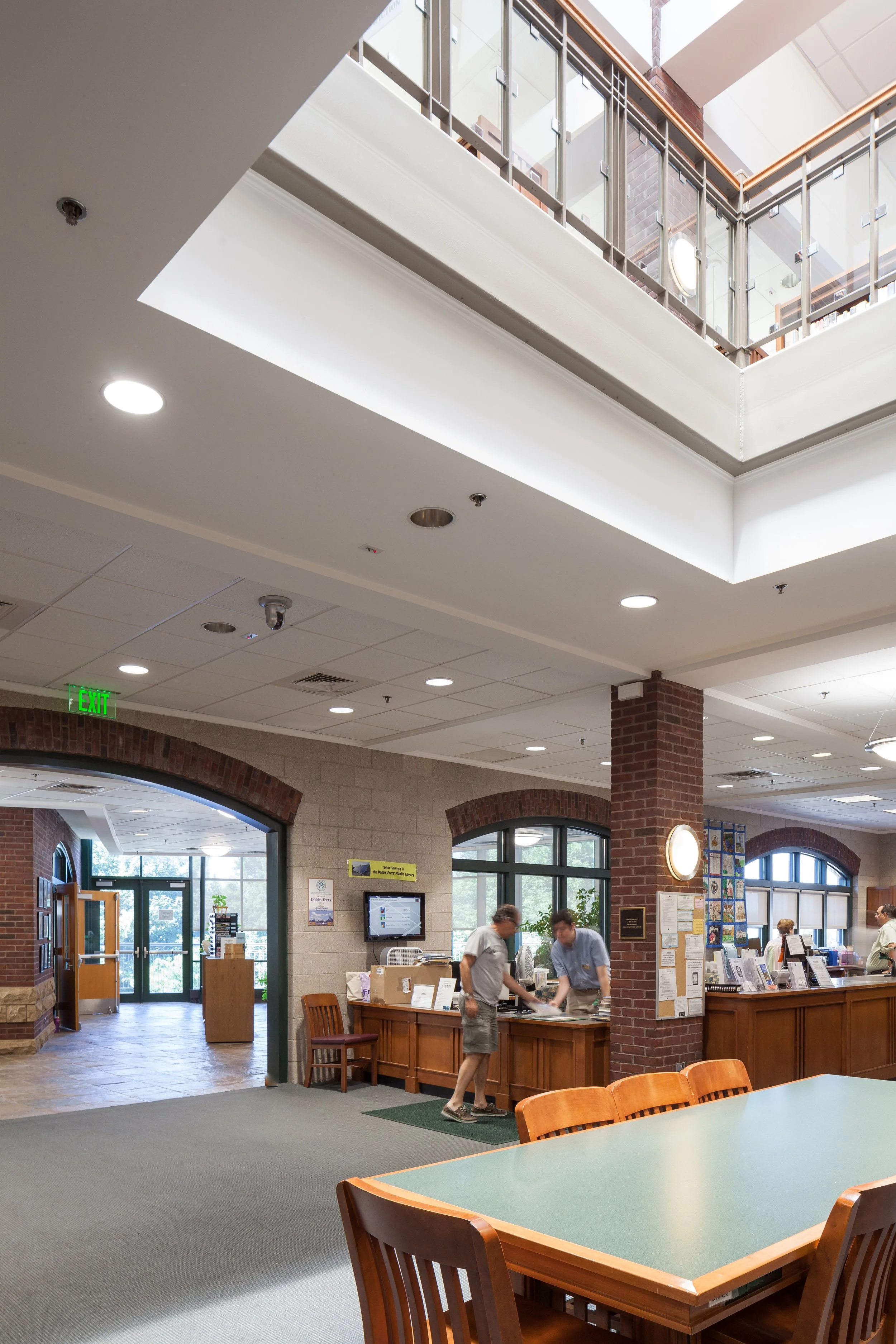
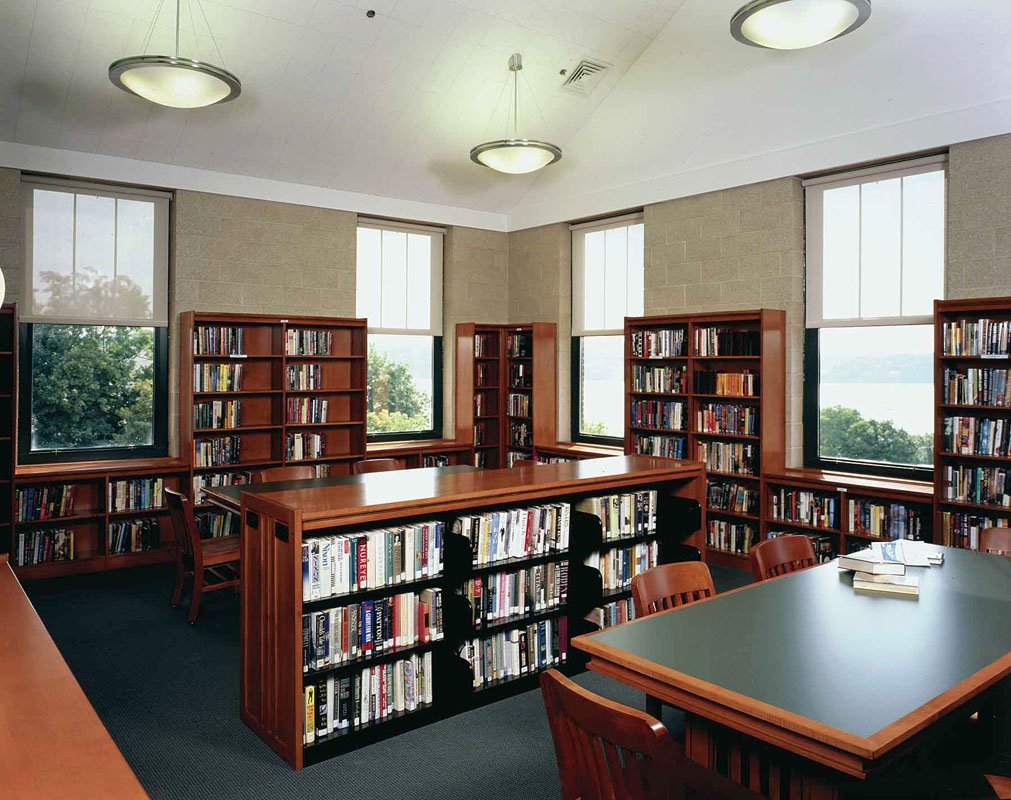
Daylight penetrates deep into public rooms through generous openings and the low pavilion, enhancing visibility between reading areas and the courtyard. Varying ceiling heights clarify spatial hierarchy and make transitions between community, adult, and children’s areas legible.
Separated wings and a central connector accommodate simultaneous activities and changing use patterns while minimizing acoustic overlap. Simple structural bays and clearly articulated zones support straightforward maintenance and long-term adaptability.
let’s continue the conversation
Every project begins with listening. If you’re considering a new campus, building, or landscape, we’d welcome the chance to talk through your goals, challenges, and aspirations. Our team works collaboratively to shape places that feel grounded, connected, and built to serve people well over time.