irvington union free schools
2003
irvington, ny
39 acres
campus planning, master plan, new construction and renovation; visual and performing arts; arts and athletics center
collaborators
Project Manager: Sandra Mintzes
Project Architect: Errol Dawkins
Landscape Architect: Robert Reiter
Designer: Diane Abate
Designer: Danny Lam
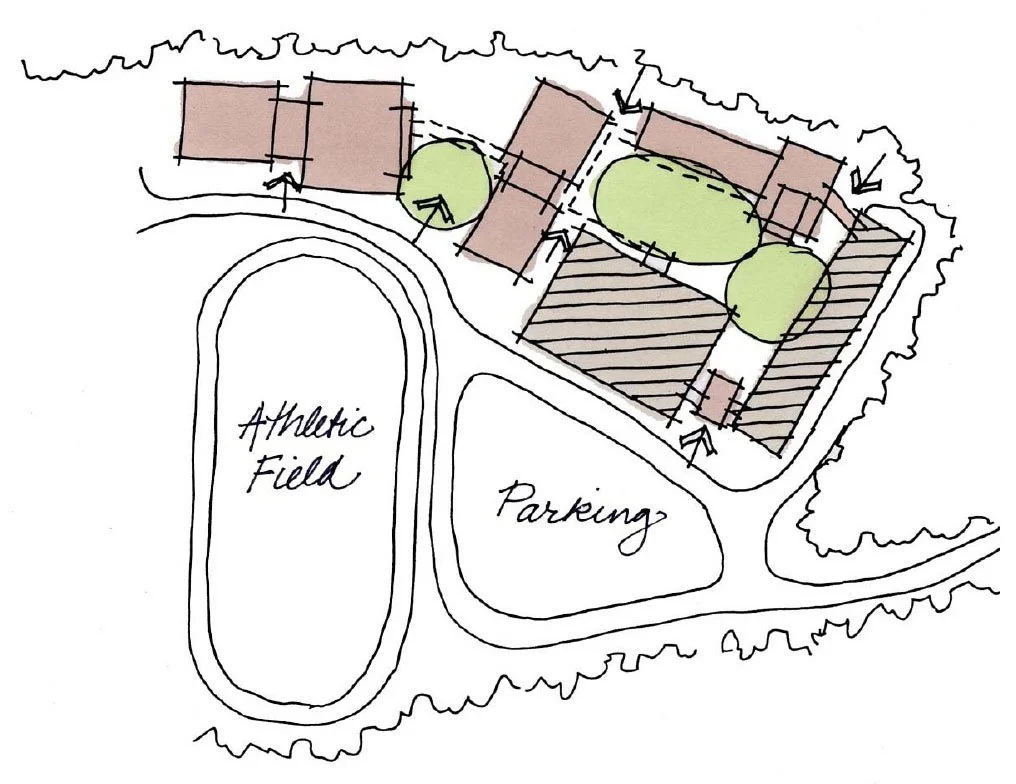
a community campus that arranges new and renovated buildings around interconnected quadrangles.
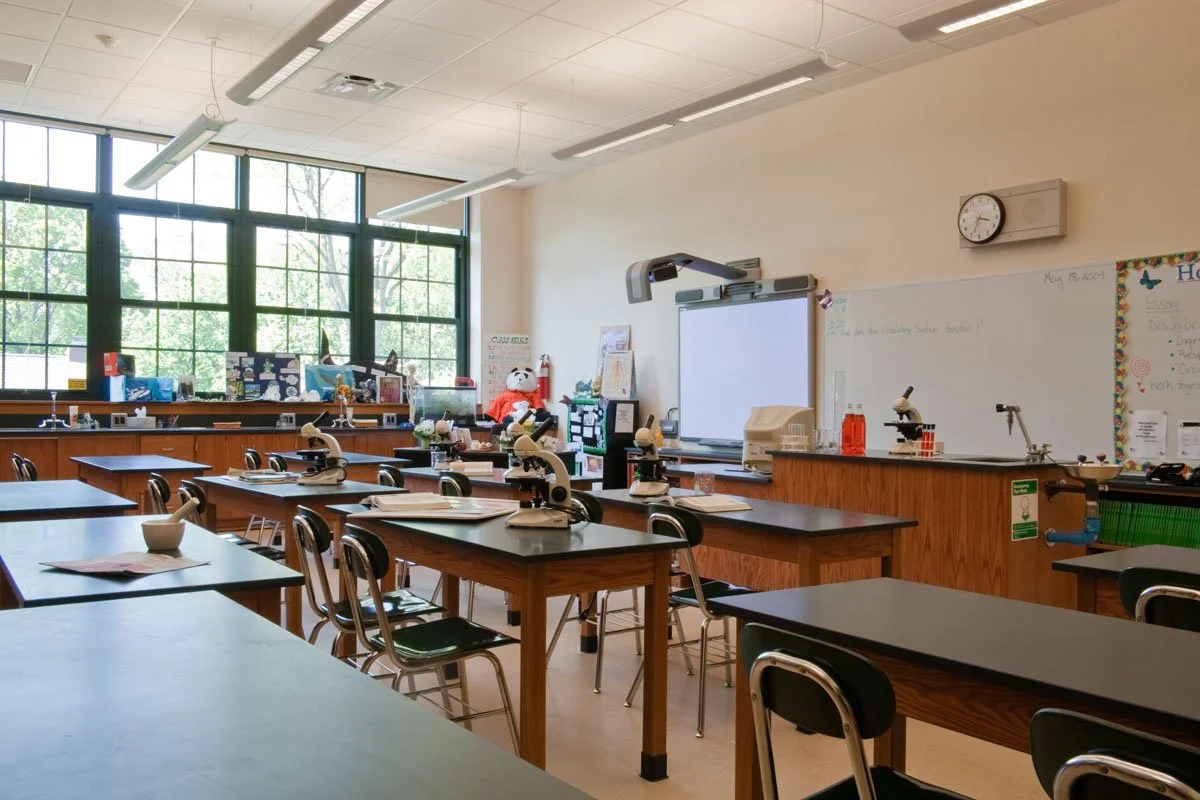
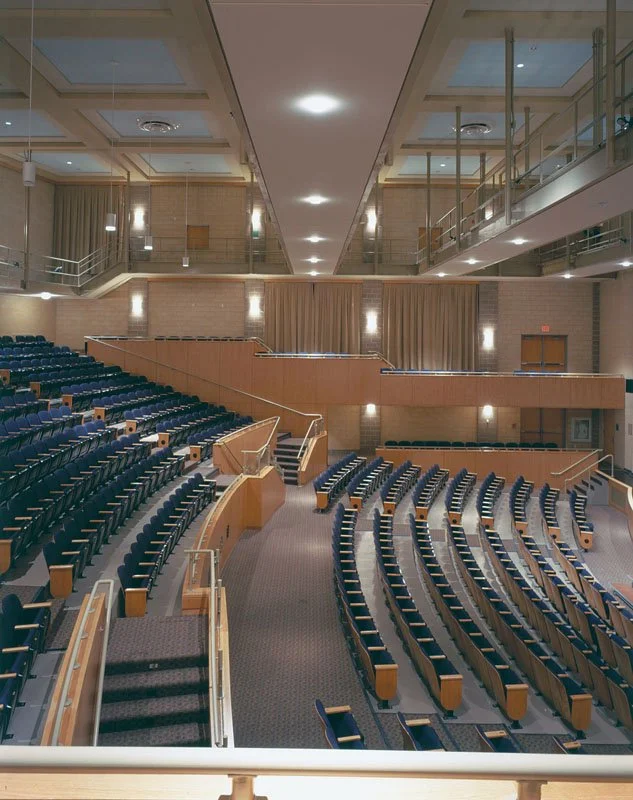
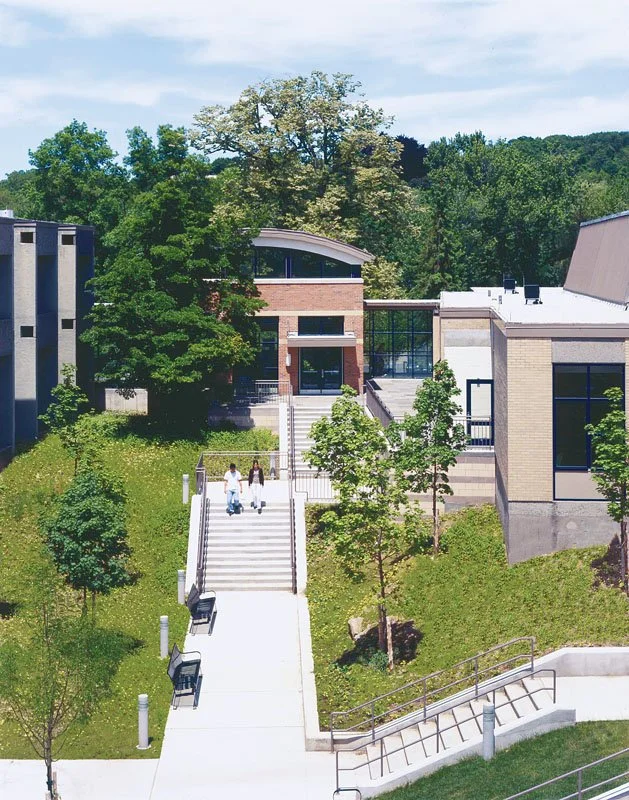
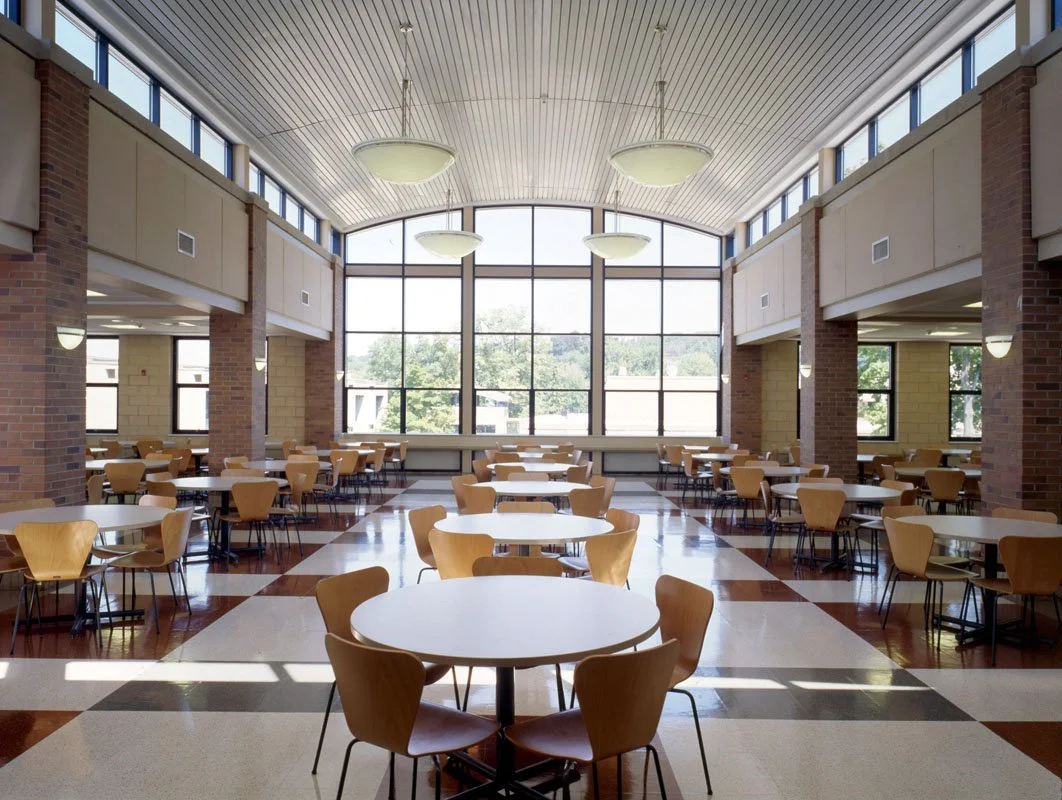
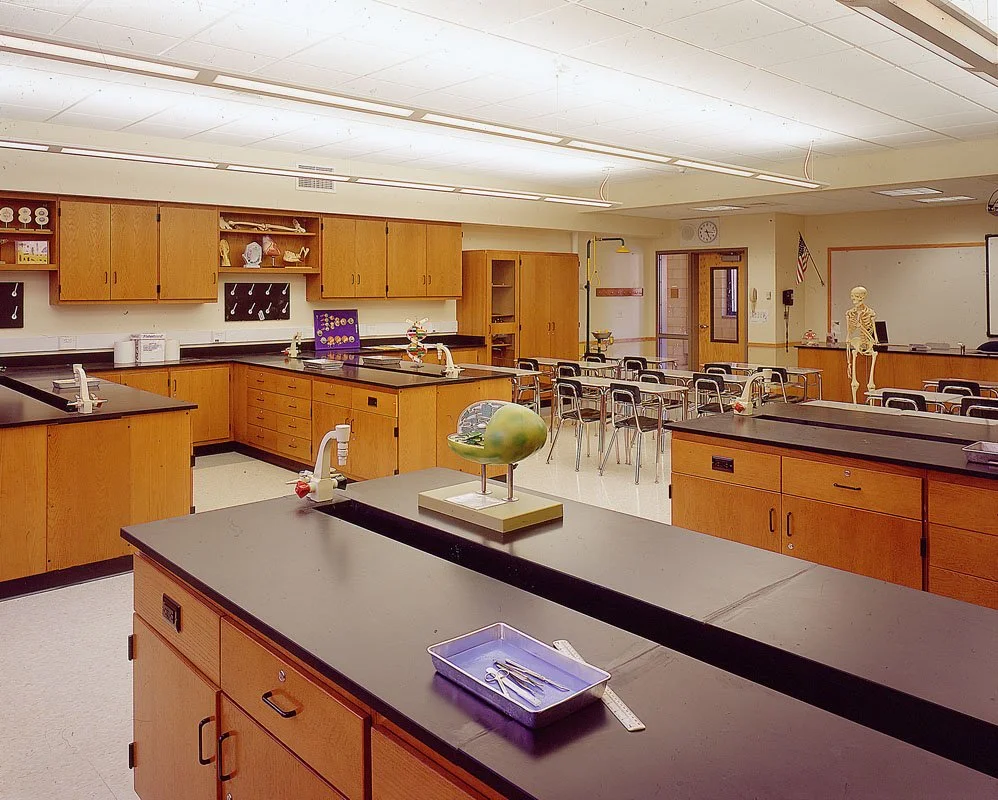
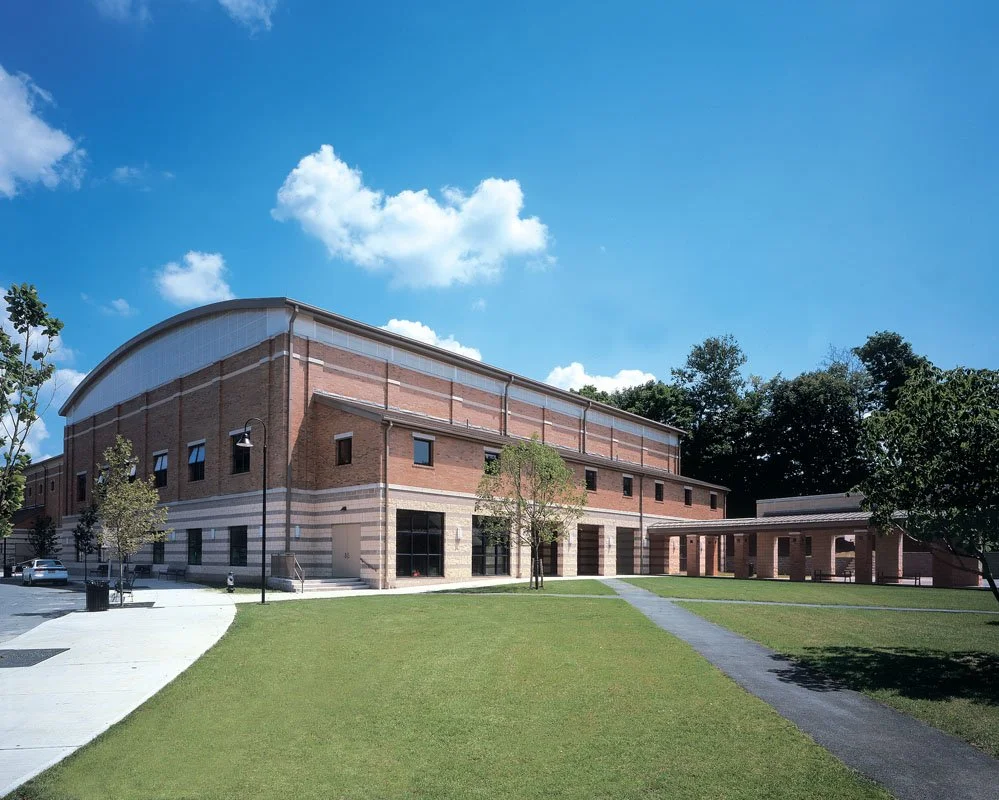
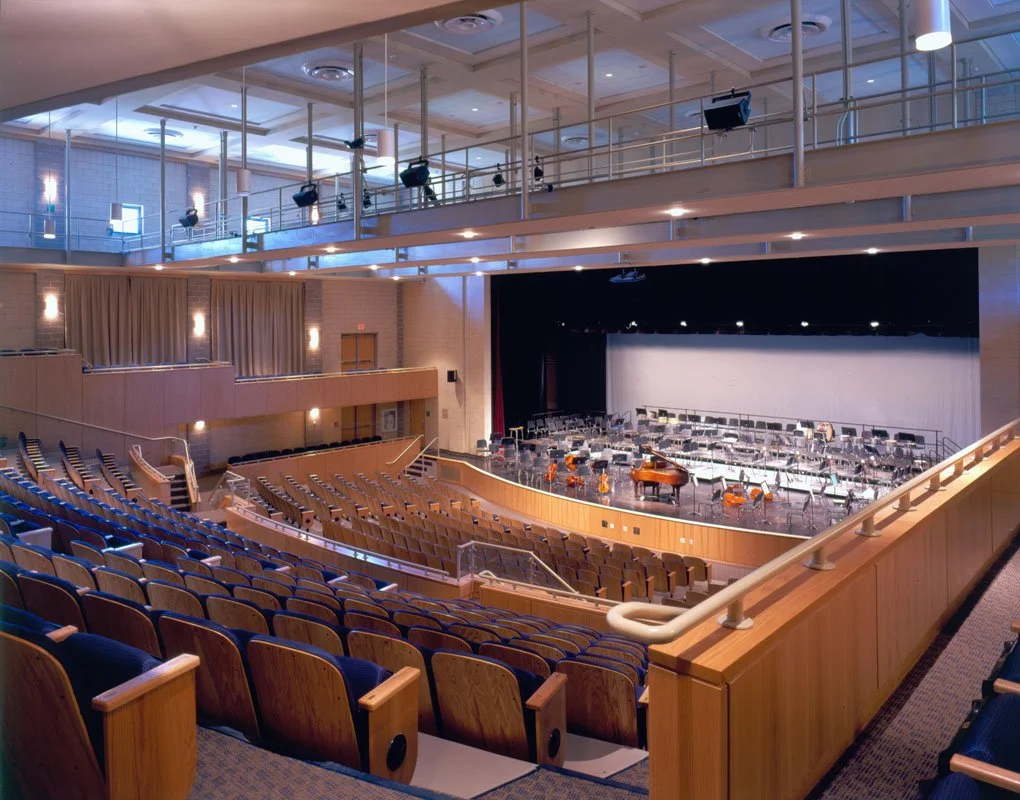
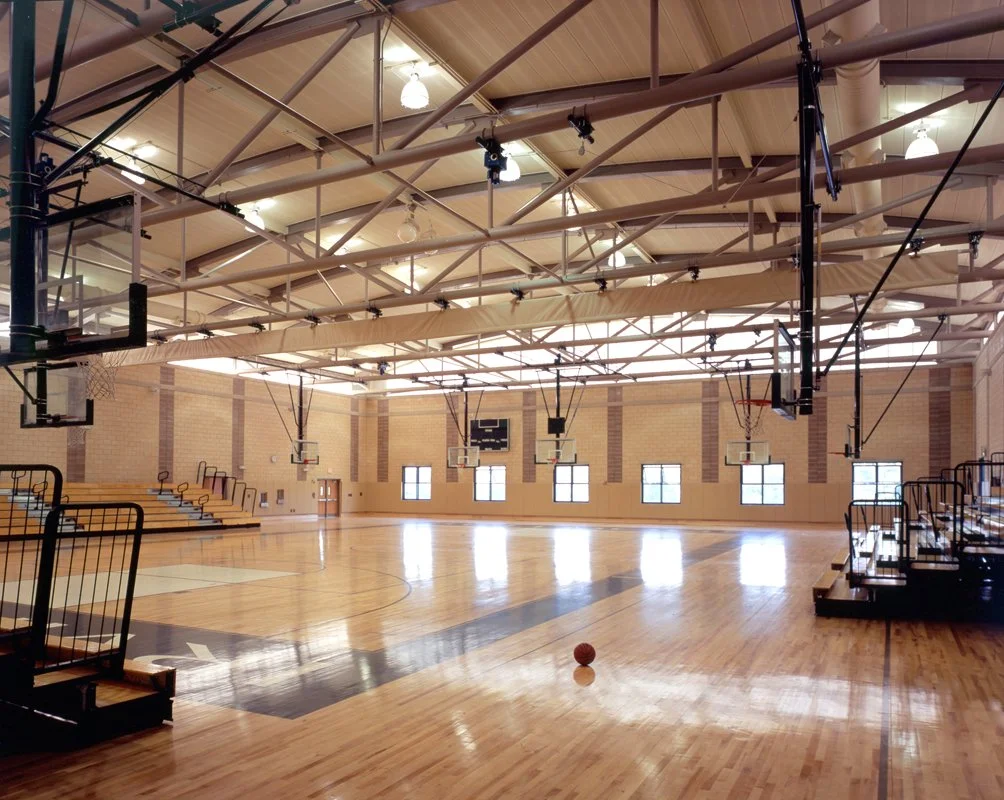
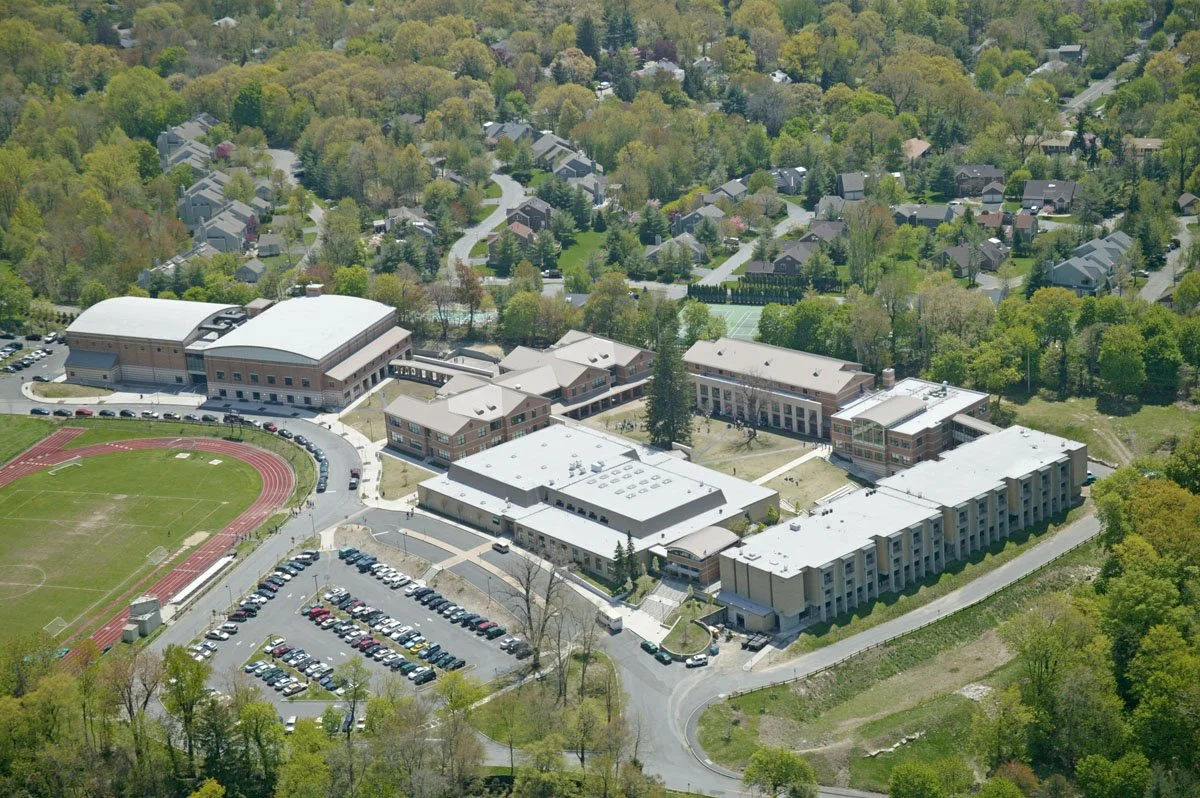
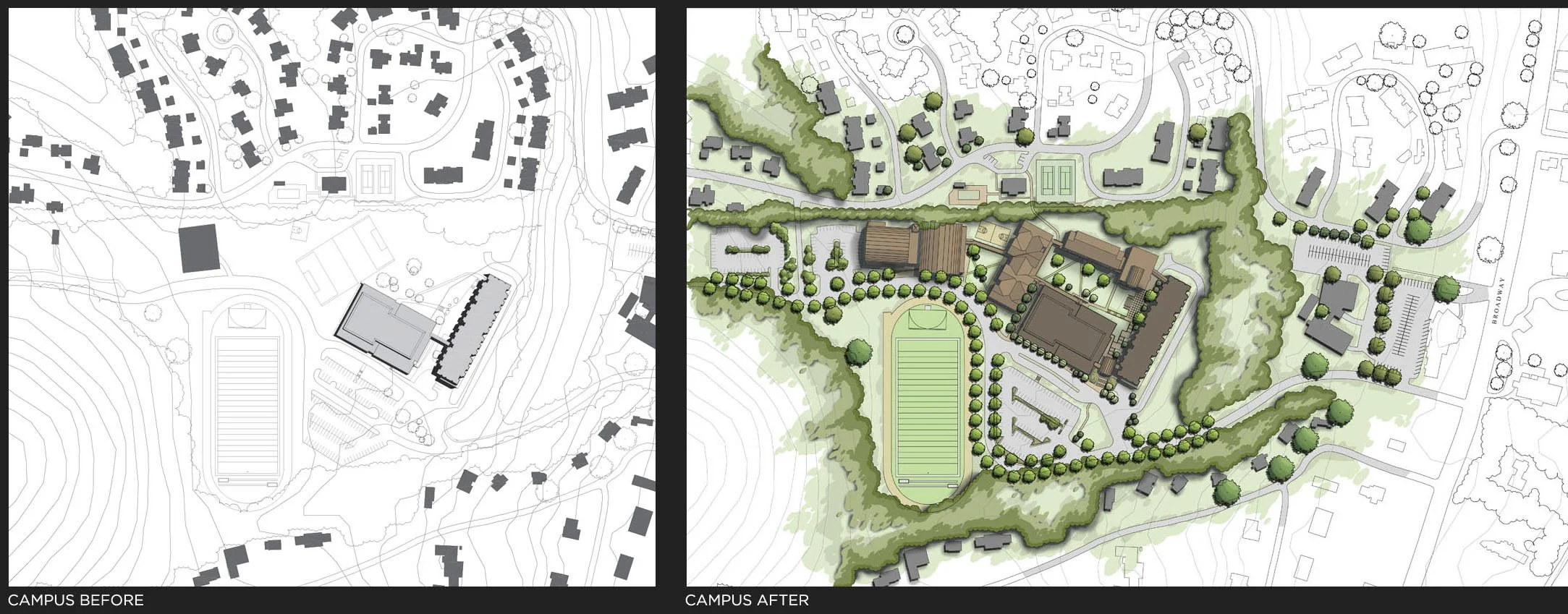
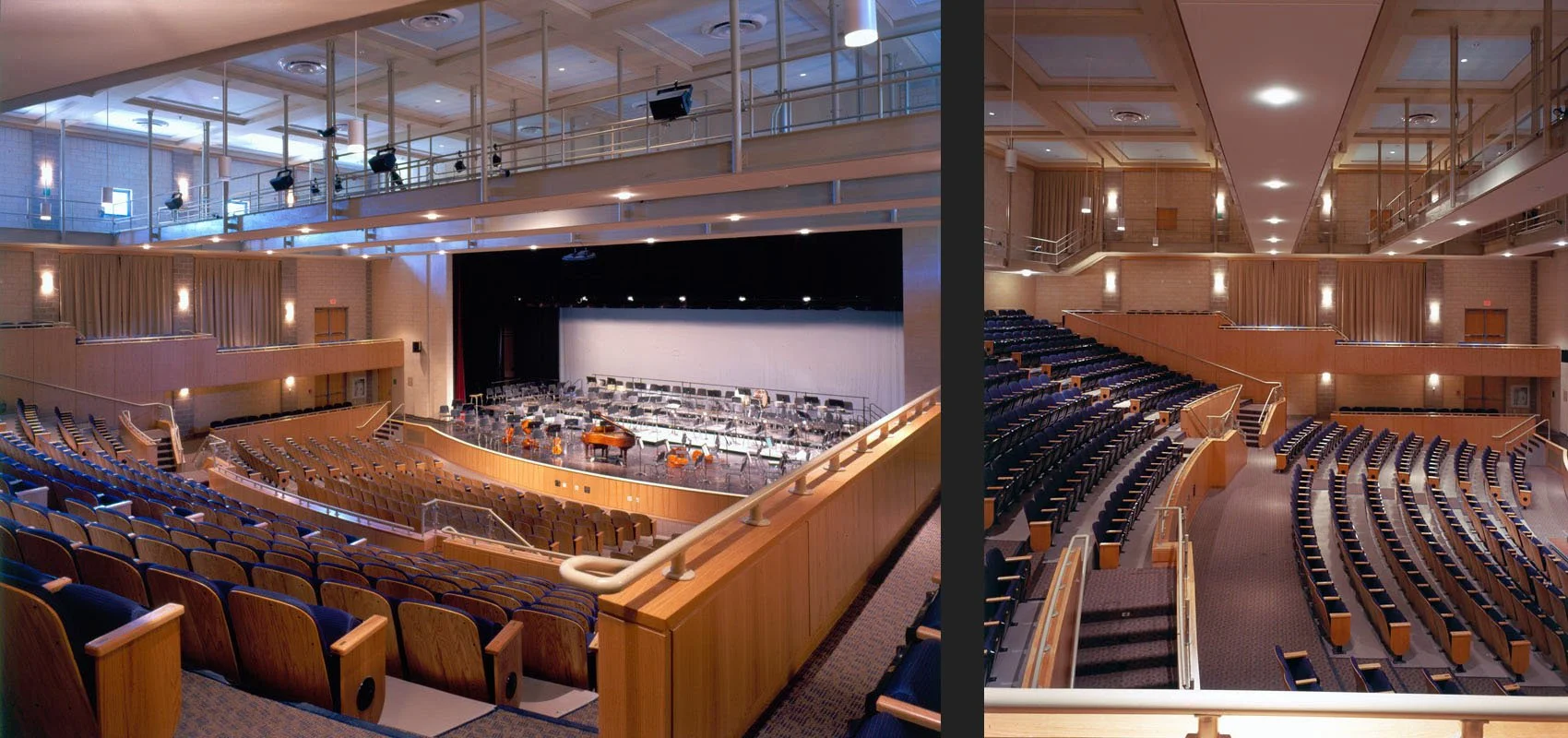
On a sloping, thirty-nine-acre site the work consolidated middle- and high-school programs into a single community campus. Through phased bonds the District added a new middle school, theater, gymnasium, and a cafeteria/music/science building while expanding and renovating the existing high school to support both school and community use.
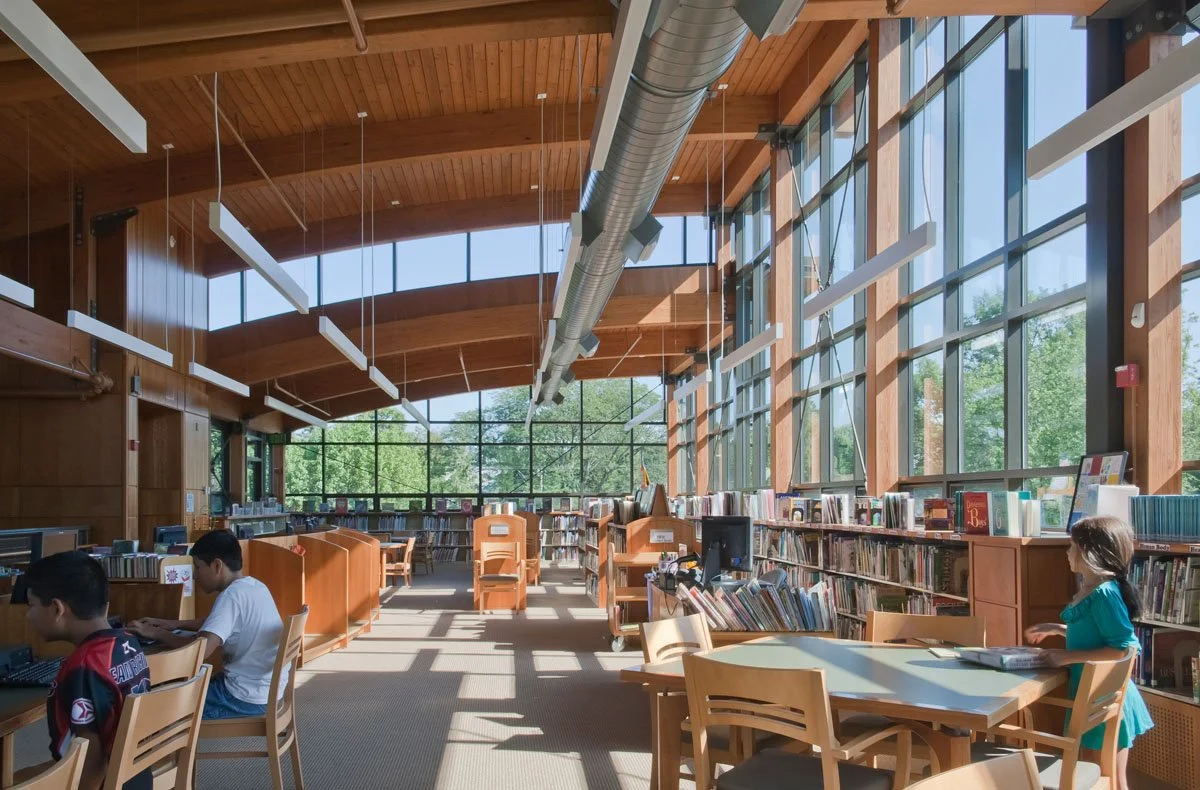
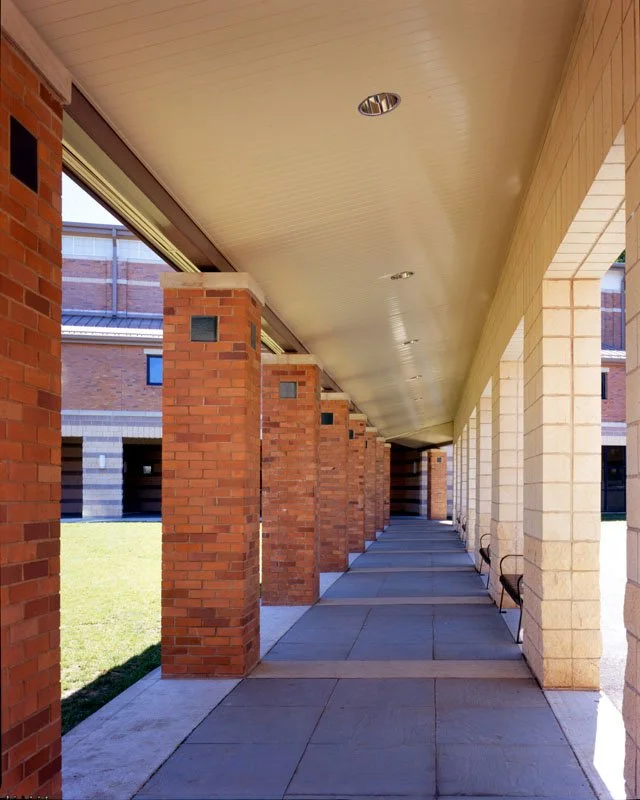
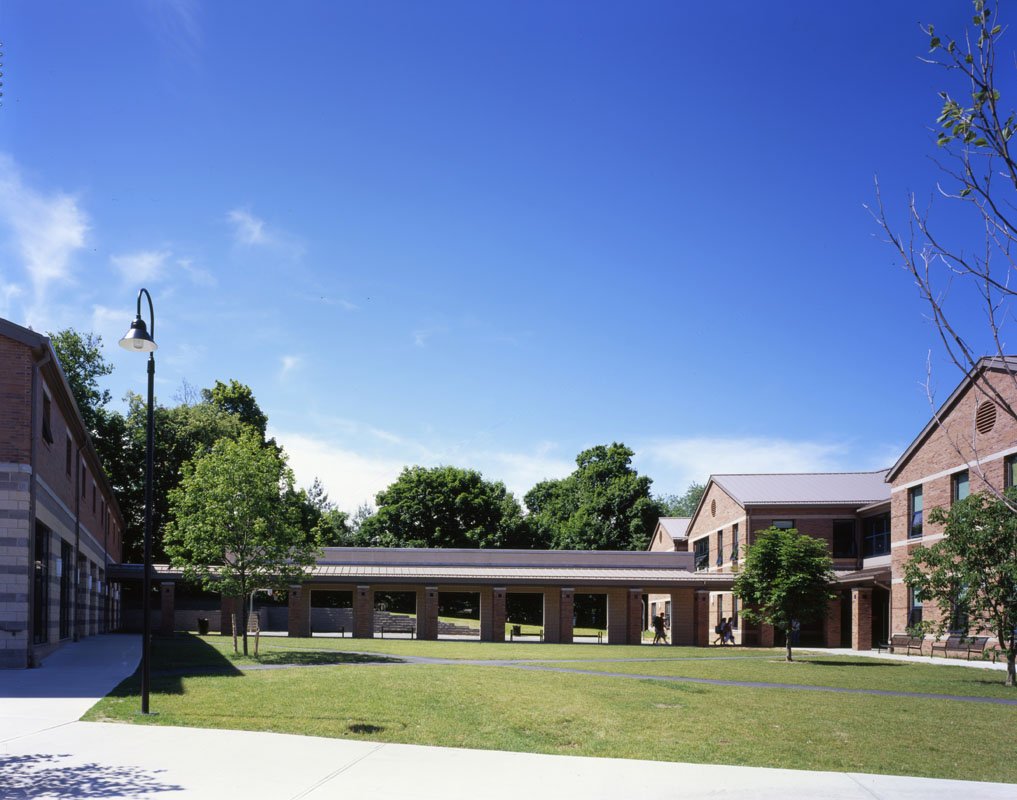
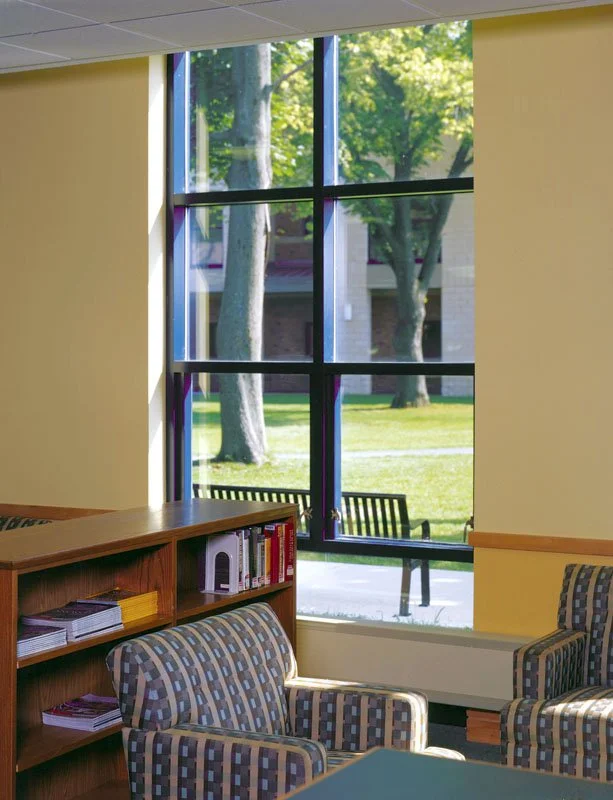
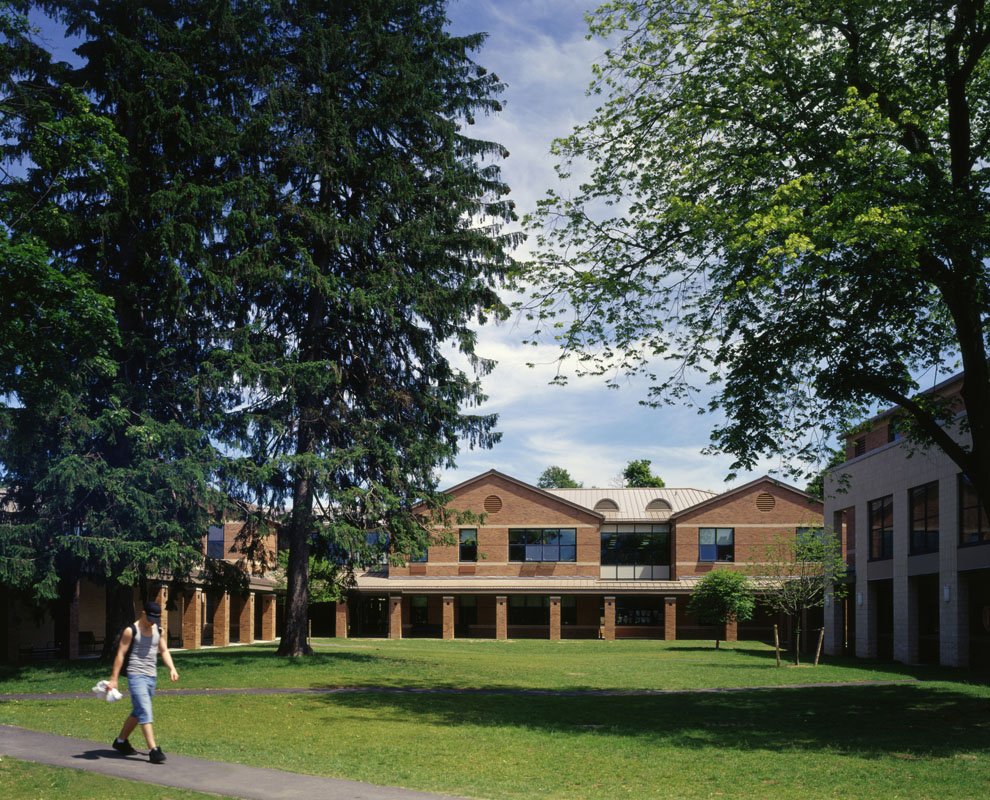
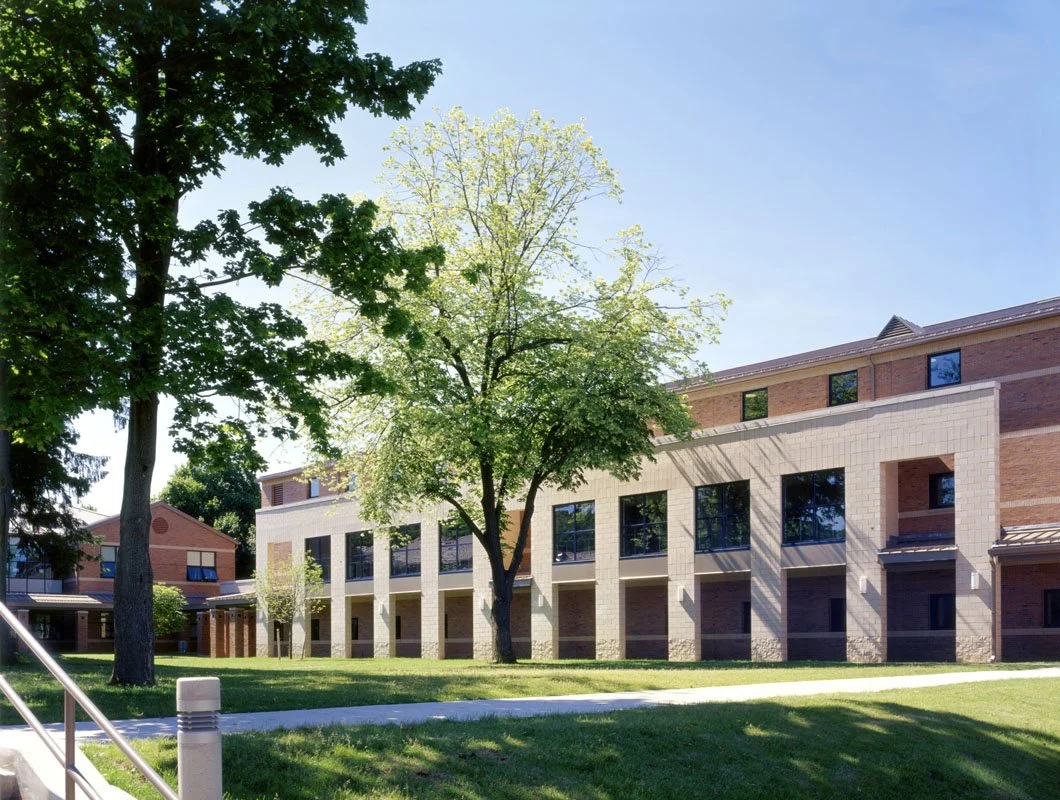
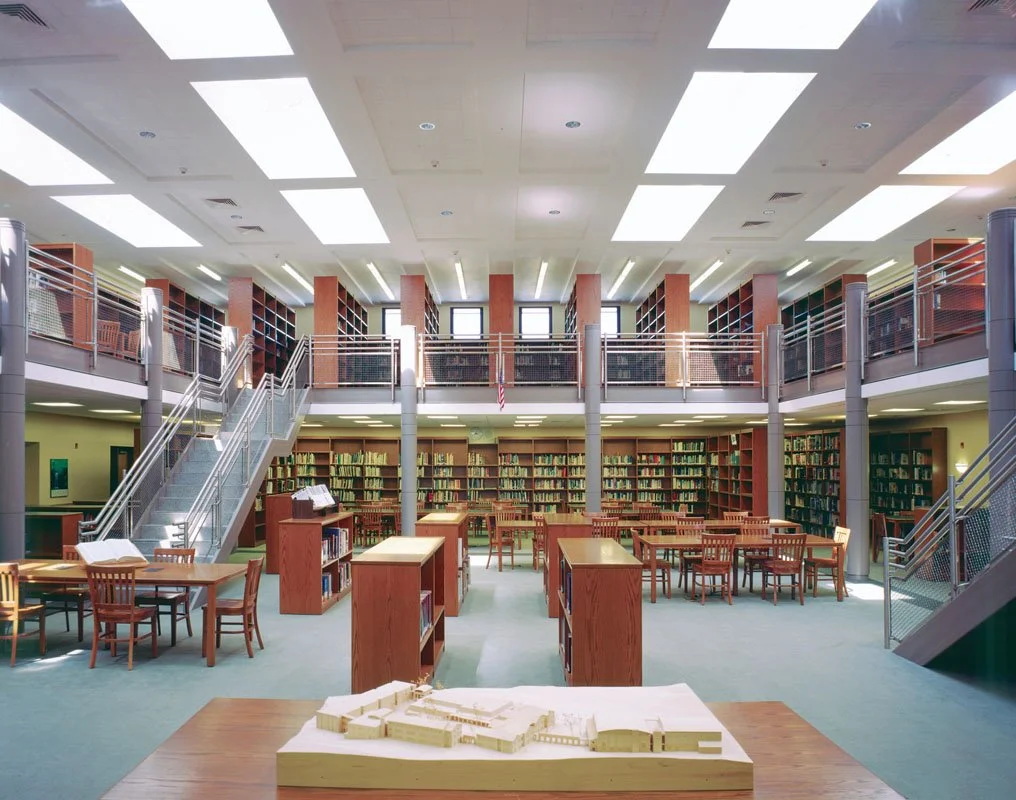
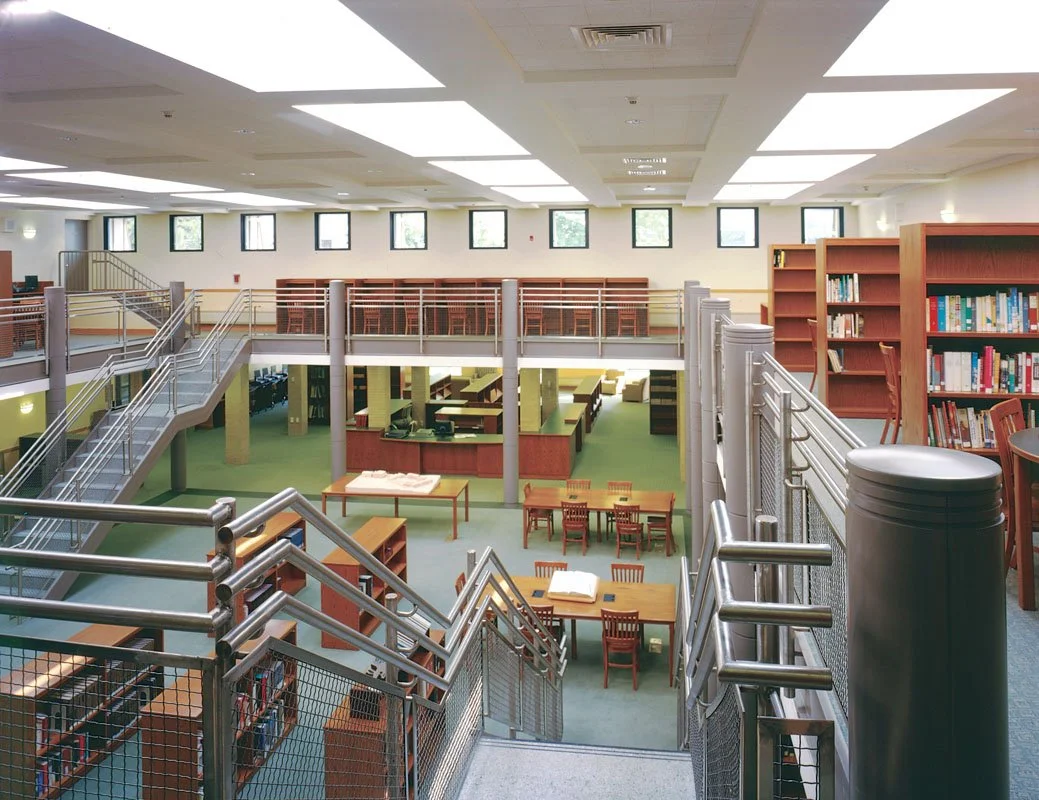
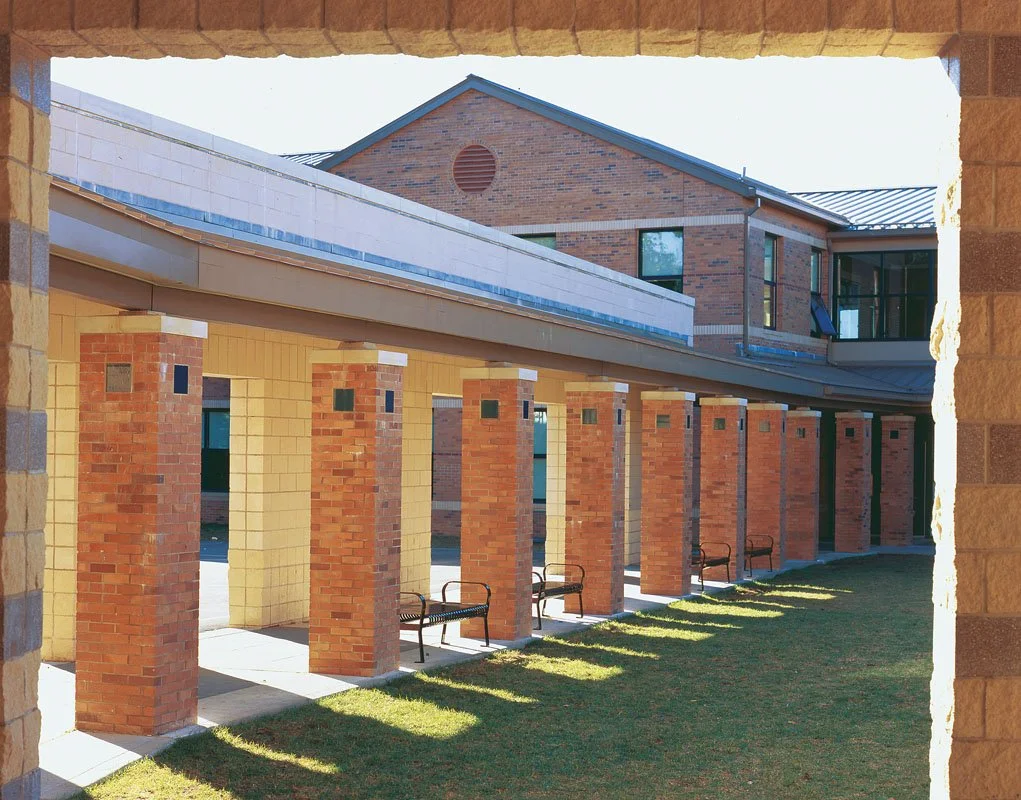
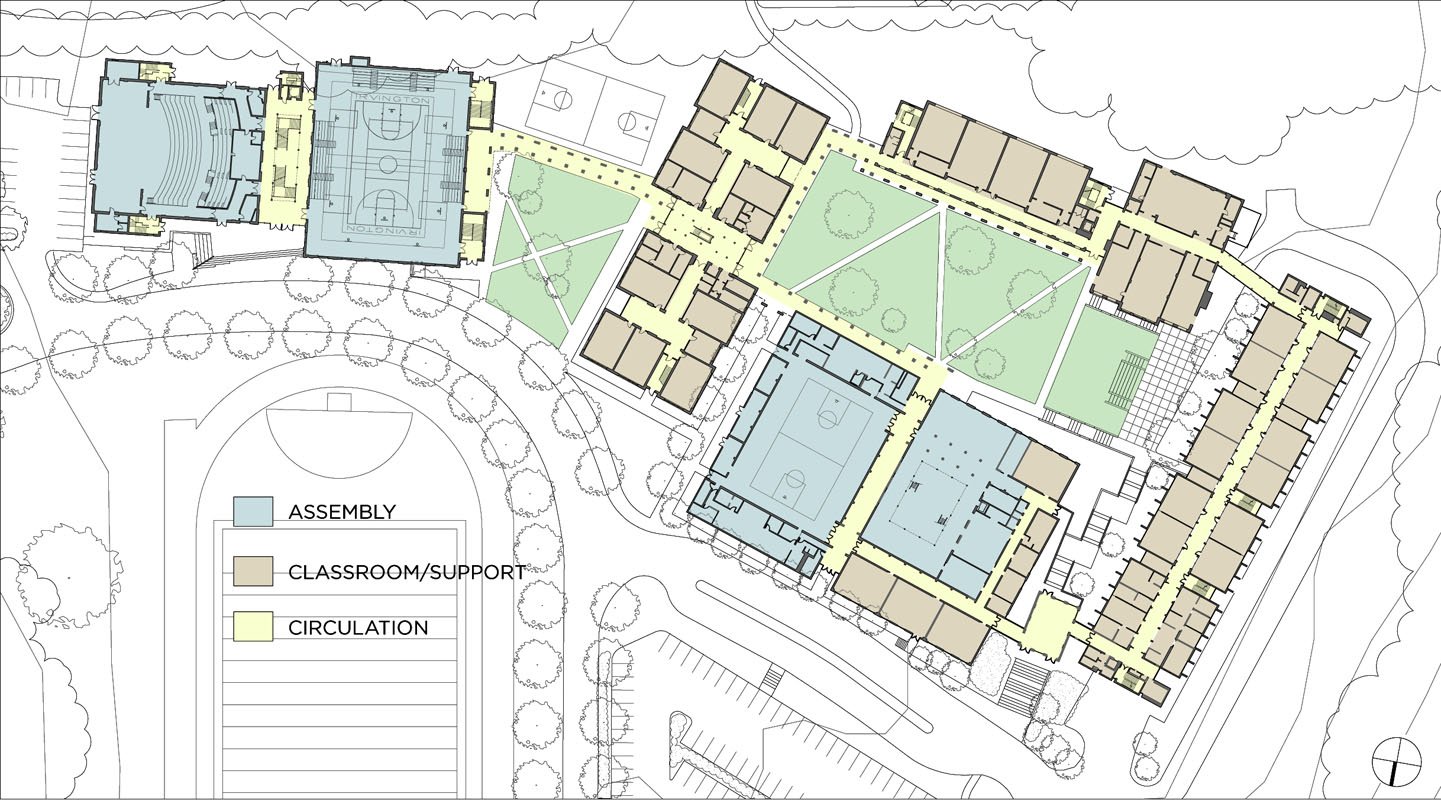
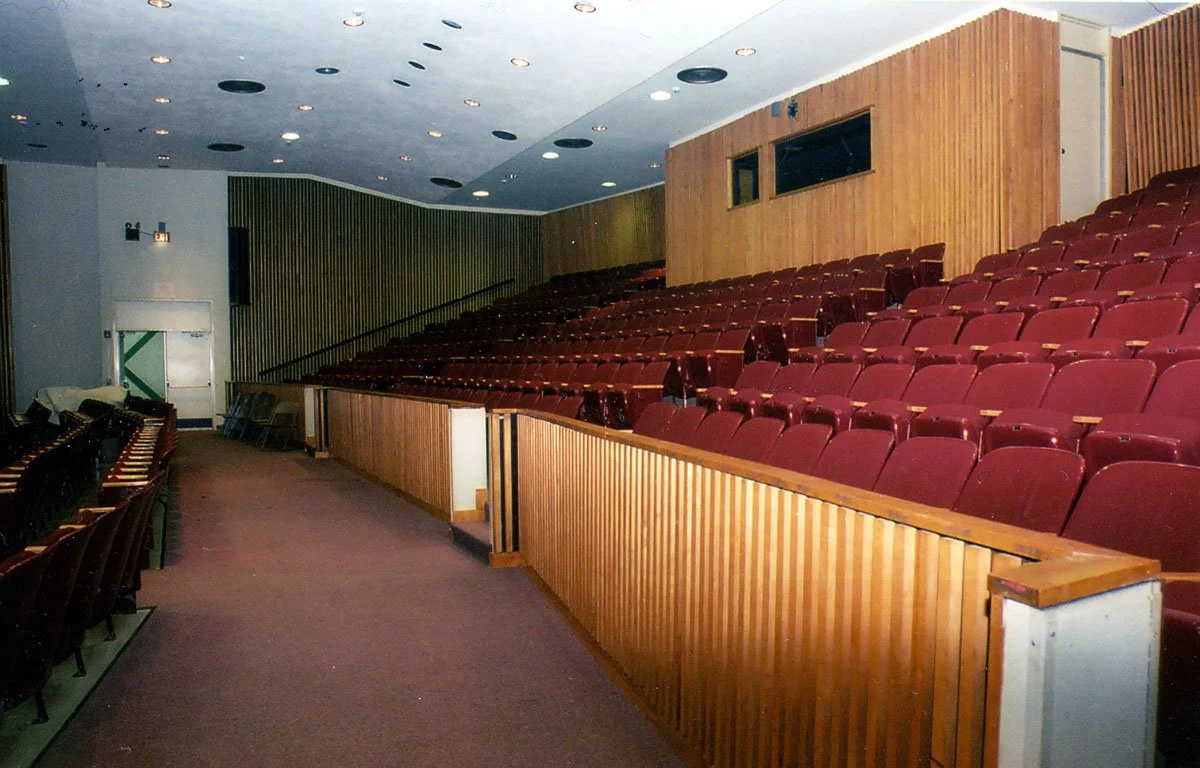
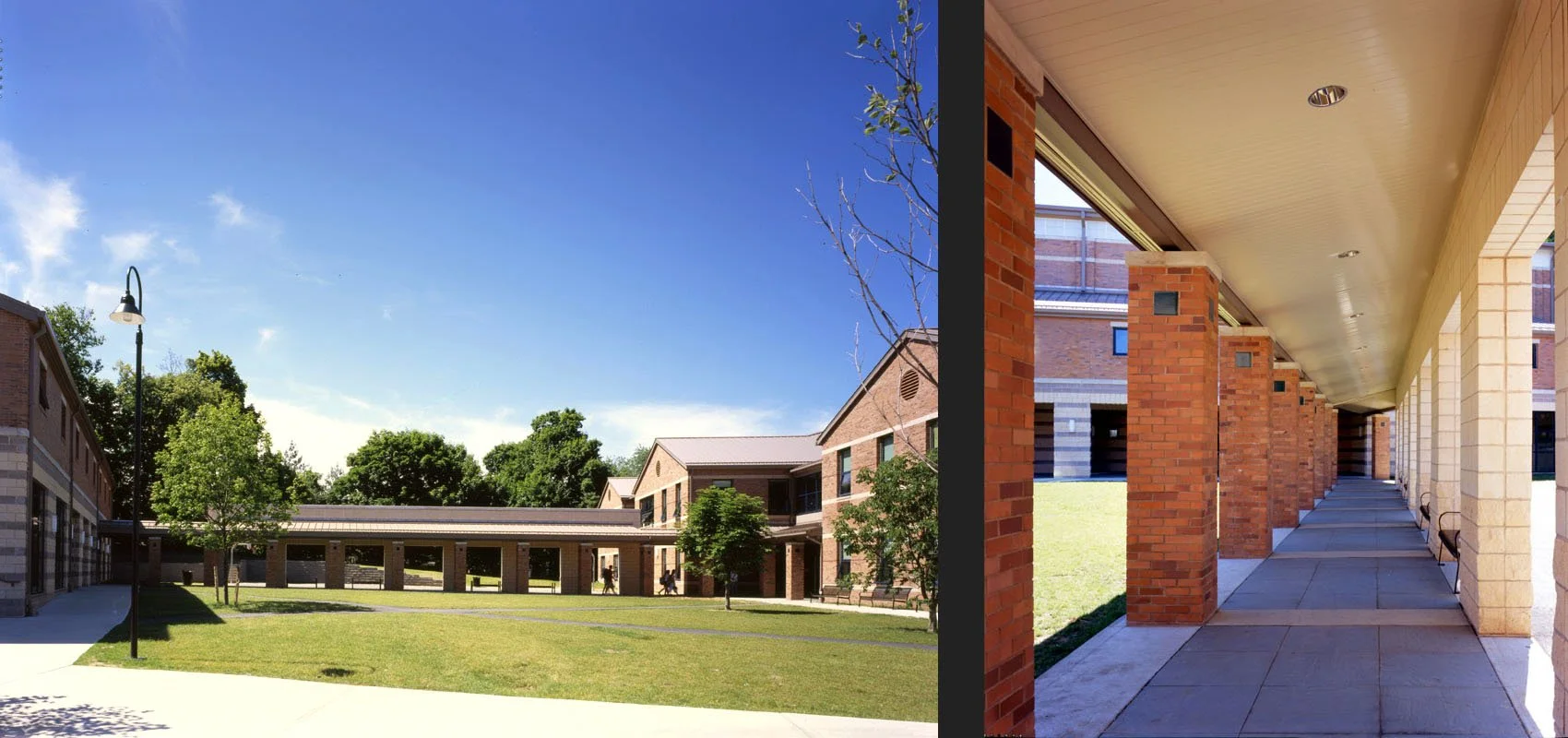
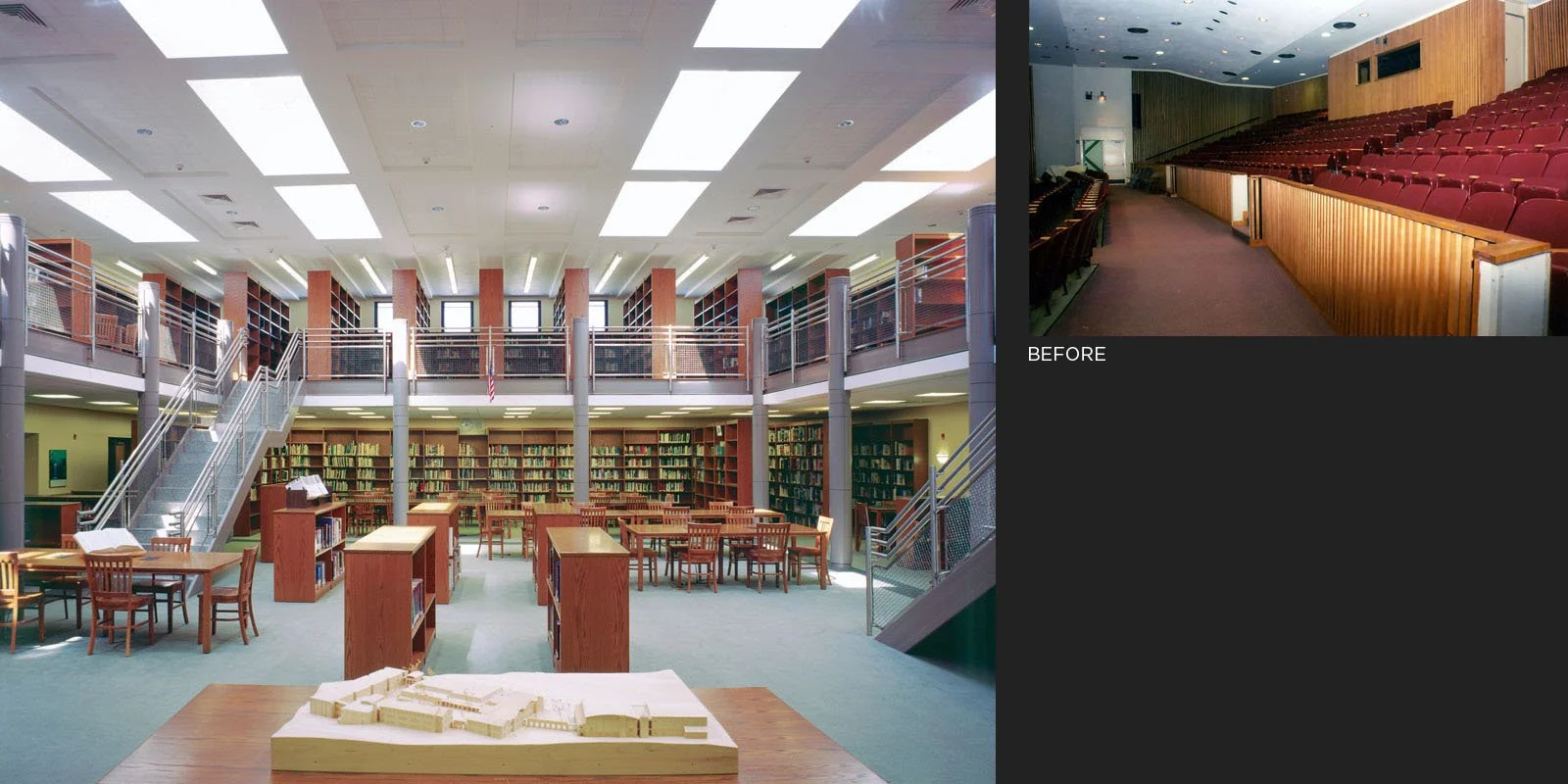
Buildings are sited to form three connected quadrangles framed by covered colonnades, with circulation and major commons oriented toward these outdoor rooms. Single-loaded corridors, shared facilities, and strategic reuse—most notably converting an auditorium into a two-story library—strengthen identity and cross-school connectivity.
project narrative
-
The District needed to accommodate rapid enrollment growth and to create a single campus that preserved separate identities for middle and high school students.
The sloping, thirty-nine-acre site and an existing 90,000 sf L-shaped high school required a comprehensive plan that could add capacity while maintaining intimate, supervised environments for younger students.
In response, the master plan balanced expansion, renovation, and shared facilities to serve both school and community functions.
-
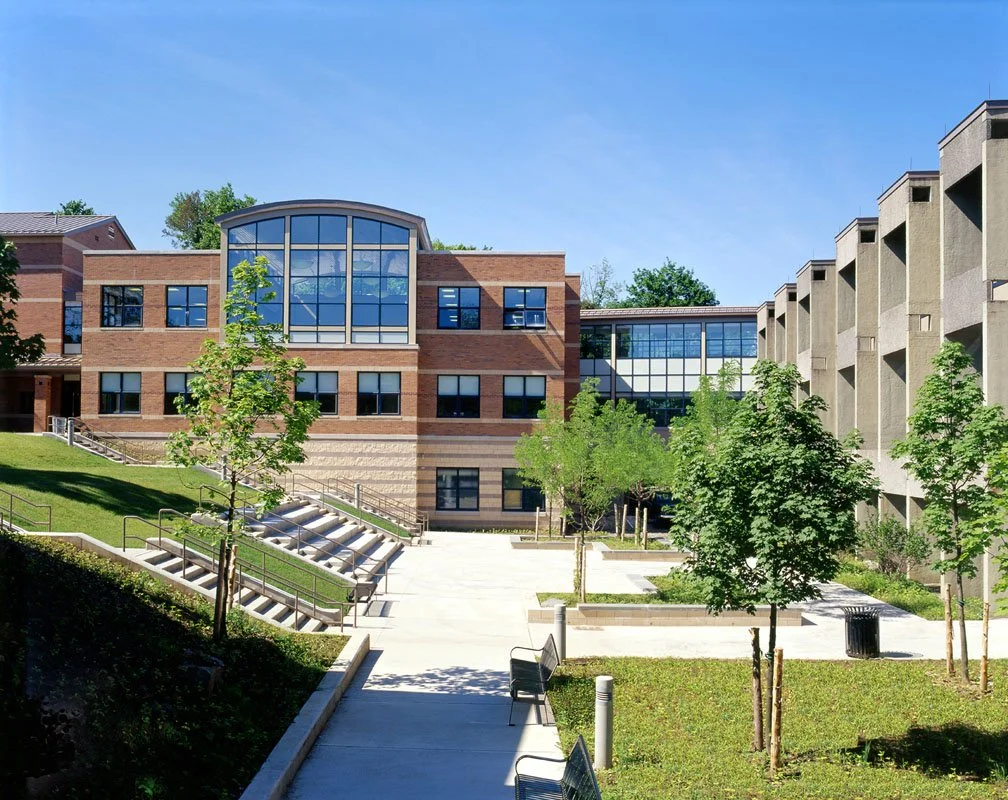
The design organizes the campus around three interconnected quadrangles that function like outdoor agoras, concentrating social life and entry sequences.
Major commons and circulation face these exterior rooms to enhance visibility, wayfinding, and interaction.
Building on that order, the plan allows distinct middle- and high-school identities while enabling shared access to theaters, labs, and the library.
-
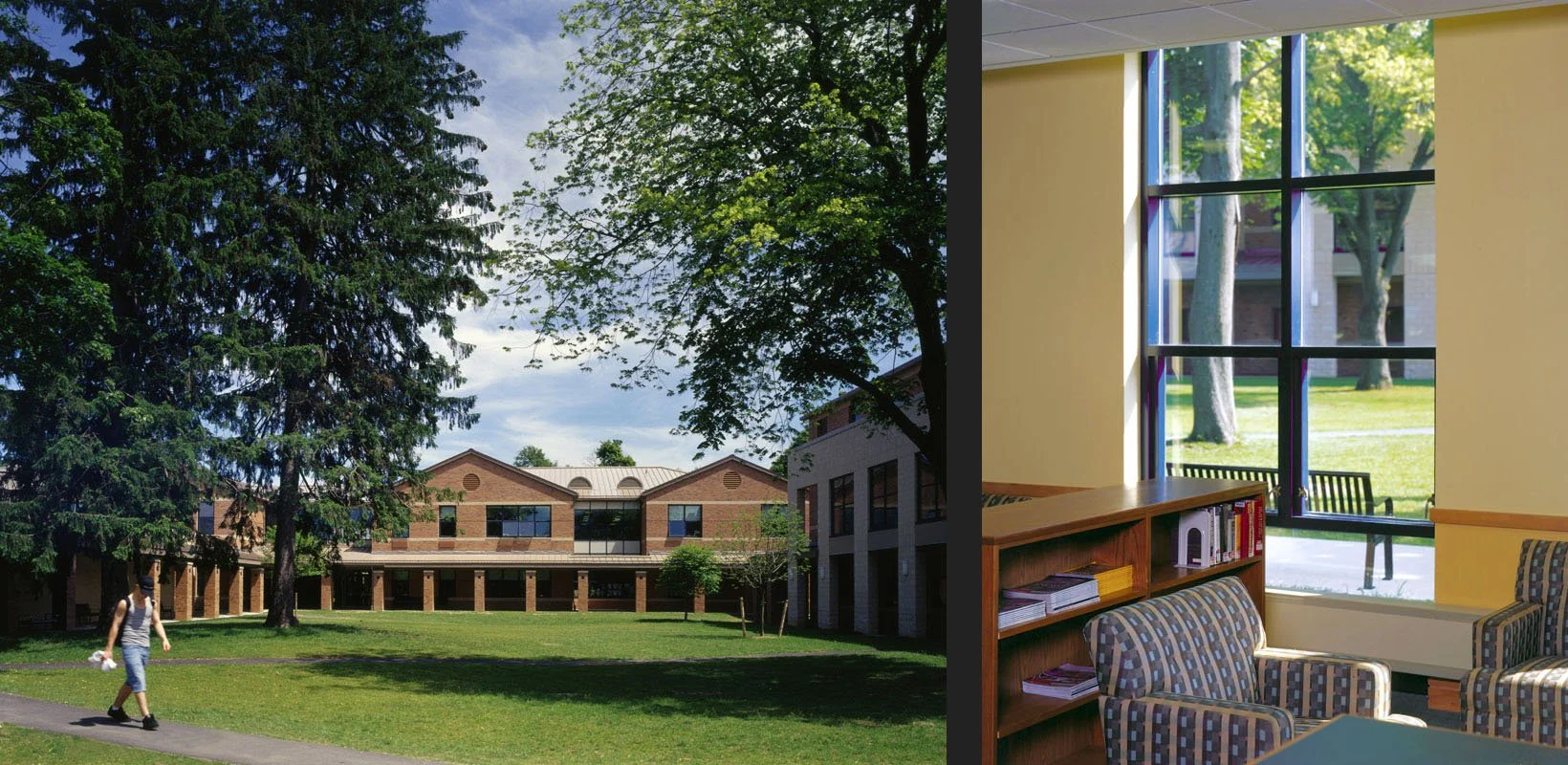
New buildings were sited to form the quadrangles and are linked by covered colonnades that allow sheltered movement between programs.
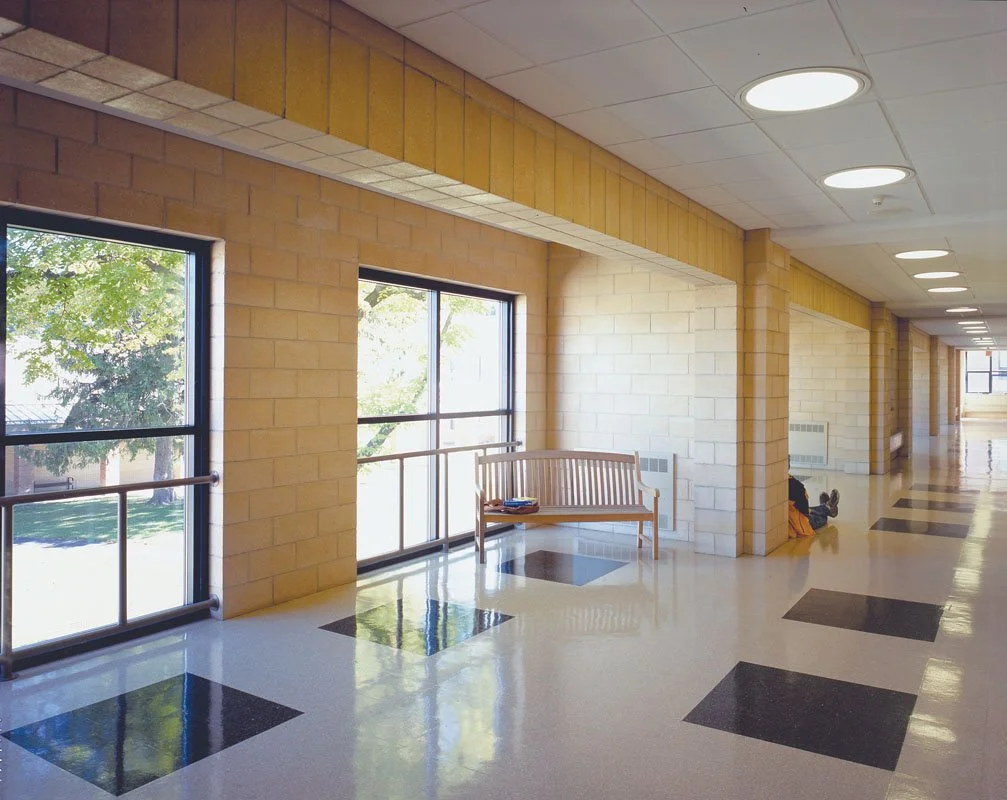
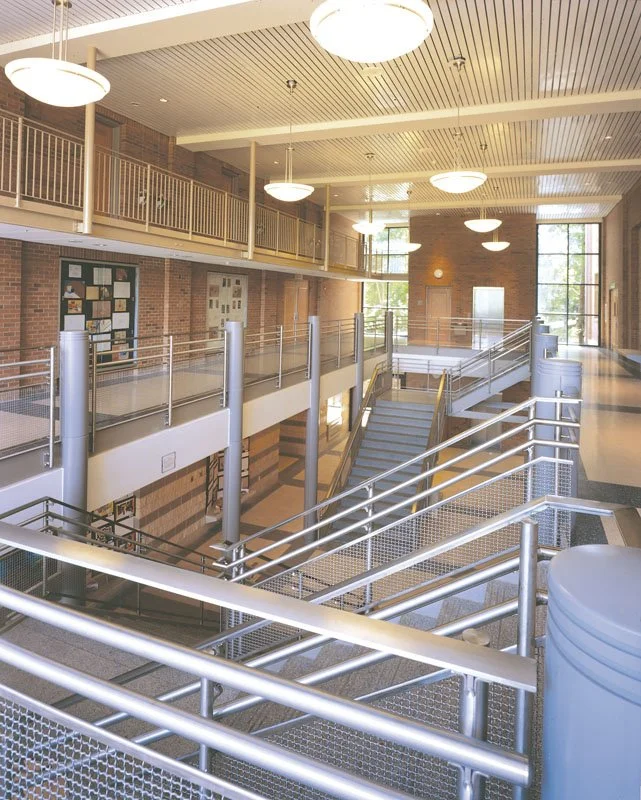
Interior strategies such as single-loaded corridors adjacent to the quadrangles preserve daylight and sightlines, while converting the existing auditorium into a two-story library reinforces shared academic use.
Systems were centralized with a boiler plant and shared cooling to efficiently serve the expanded campus.
project outcome
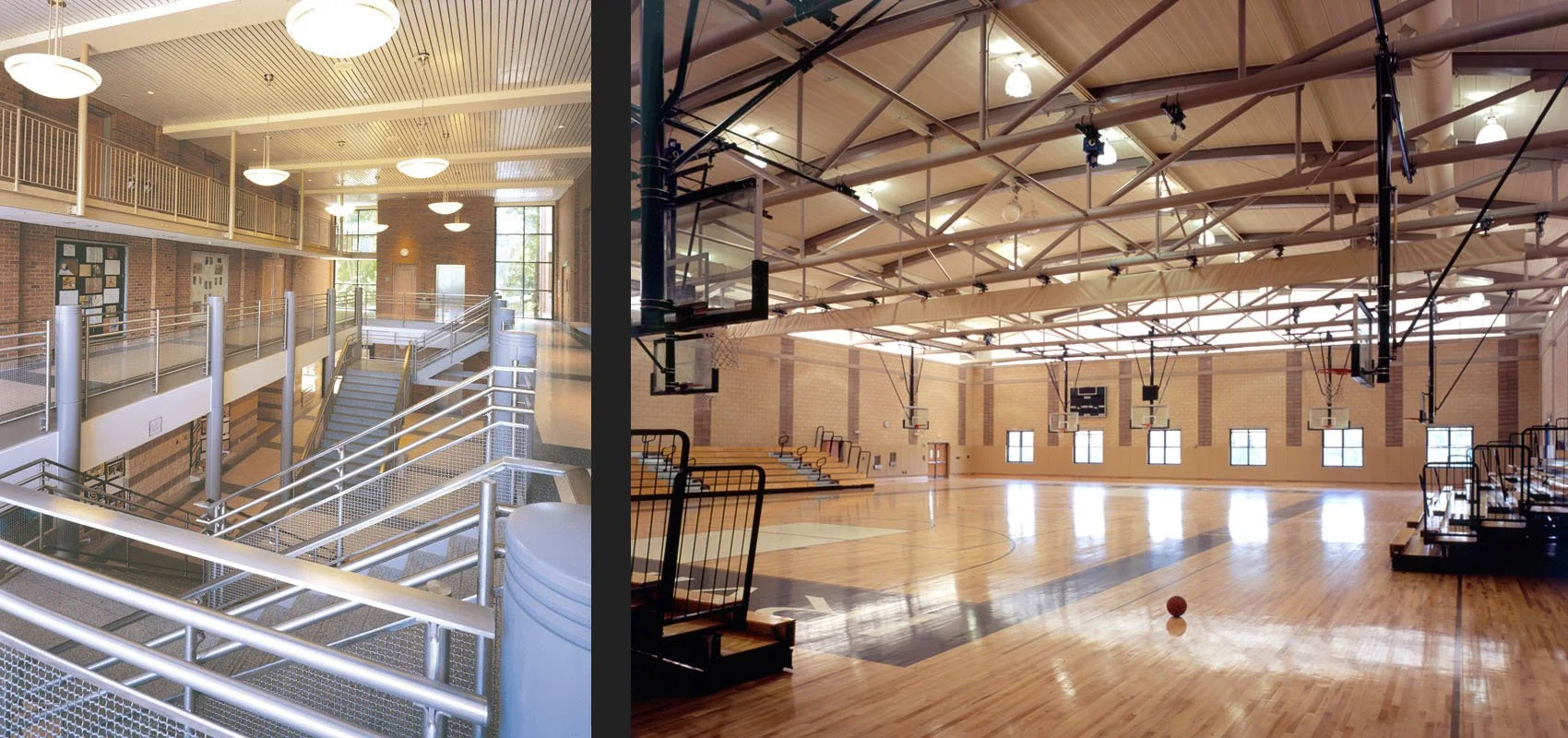
Movement across the campus is clear and legible, with primary routes oriented toward the linked outdoor courts. Covered walkways support sheltered passage between buildings and reinforce visual connections between entries. Short, single-sided corridors accommodate supervision and straightforward wayfinding.
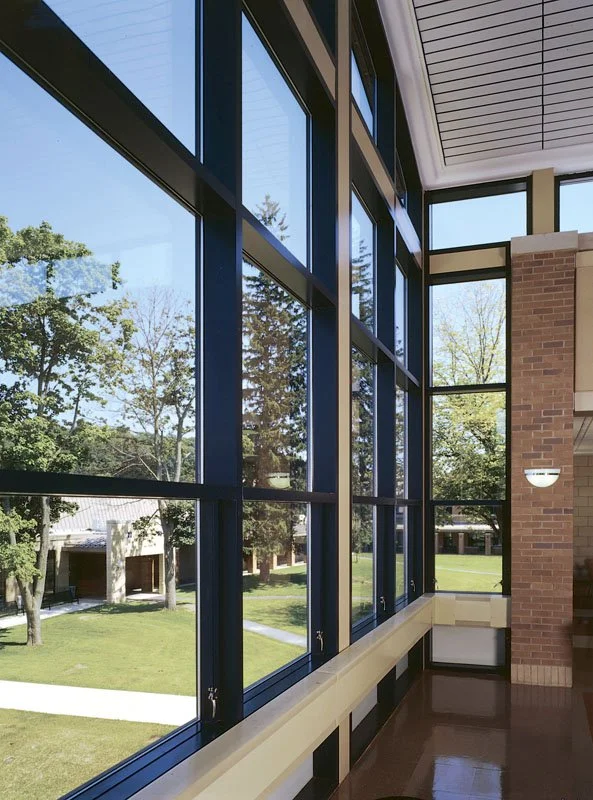
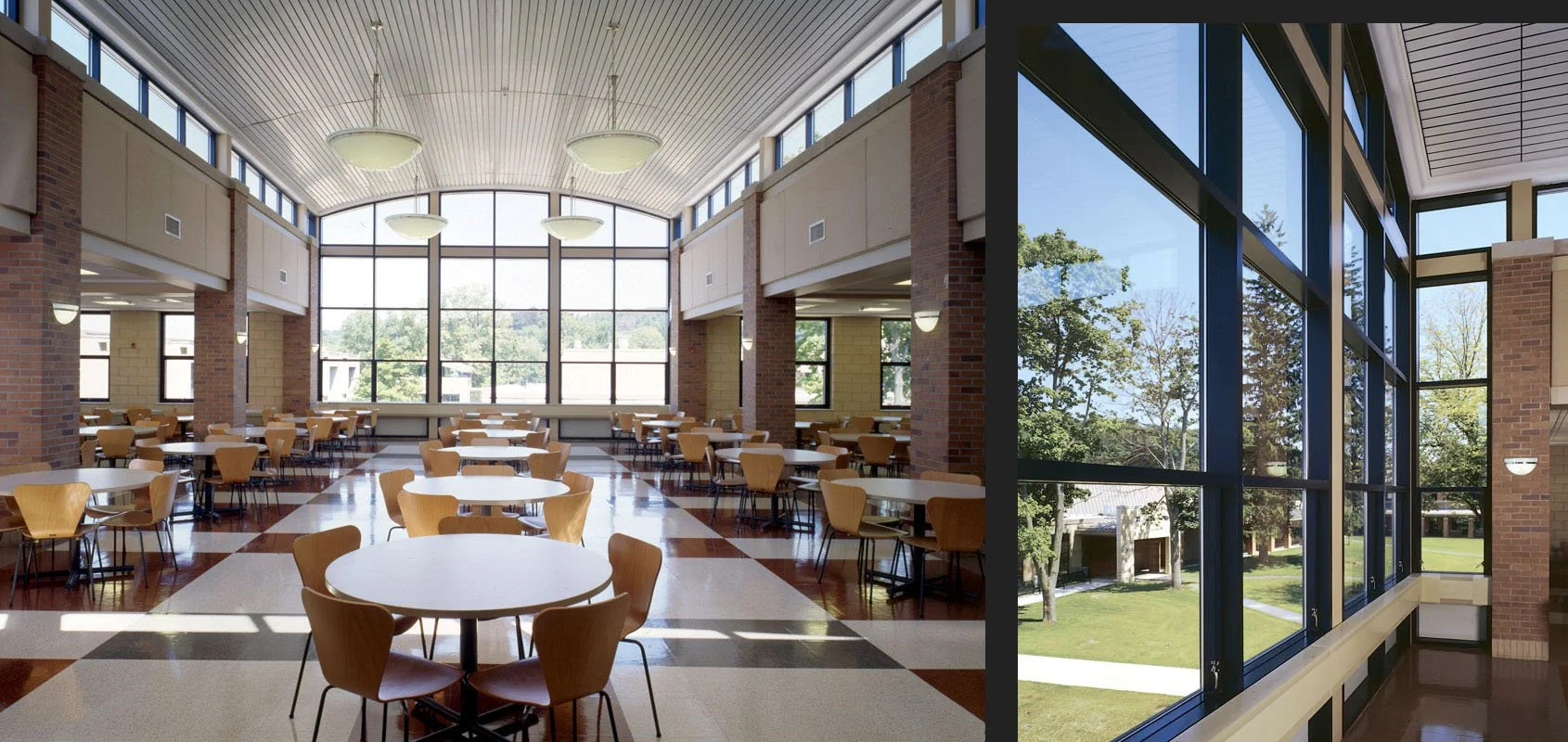
Interior spaces adjacent to the outdoor courts receive steady daylight and offer direct sightlines into common areas. Major lobbies and commons step toward the exterior rooms, which reinforces orientation and daylight penetration. These relationships make activity patterns visible and legible across levels.
Shared performance, dining, and library spaces accommodate use by different age groups and community users without fragmenting circulation. Repurposed rooms and centralized mechanical systems support adaptability and efficient operations. The arrangement reinforces separable school identities while maintaining connected campus use.
let’s continue the conversation
Every project begins with listening. If you’re considering a new campus, building, or landscape, we’d welcome the chance to talk through your goals, challenges, and aspirations. Our team works collaboratively to shape places that feel grounded, connected, and built to serve people well over time.