oxford library
2017
oxford, ct
10,000 sf
new building; master plan
collaborators
Project Manager: Michael Tribe
Project Architect: Klaus Kalmbach
Landscape: Ronen Wilke
Designer: Patricia Montero
Designer: Brigitte Demmel
Photographer: Robert Mintzes
Structural: B-Cubed Engineering
MEP: Werner Tietjen
Site/Civil: B&B Engineering
Other: Watsky
Estimating: Daedalus
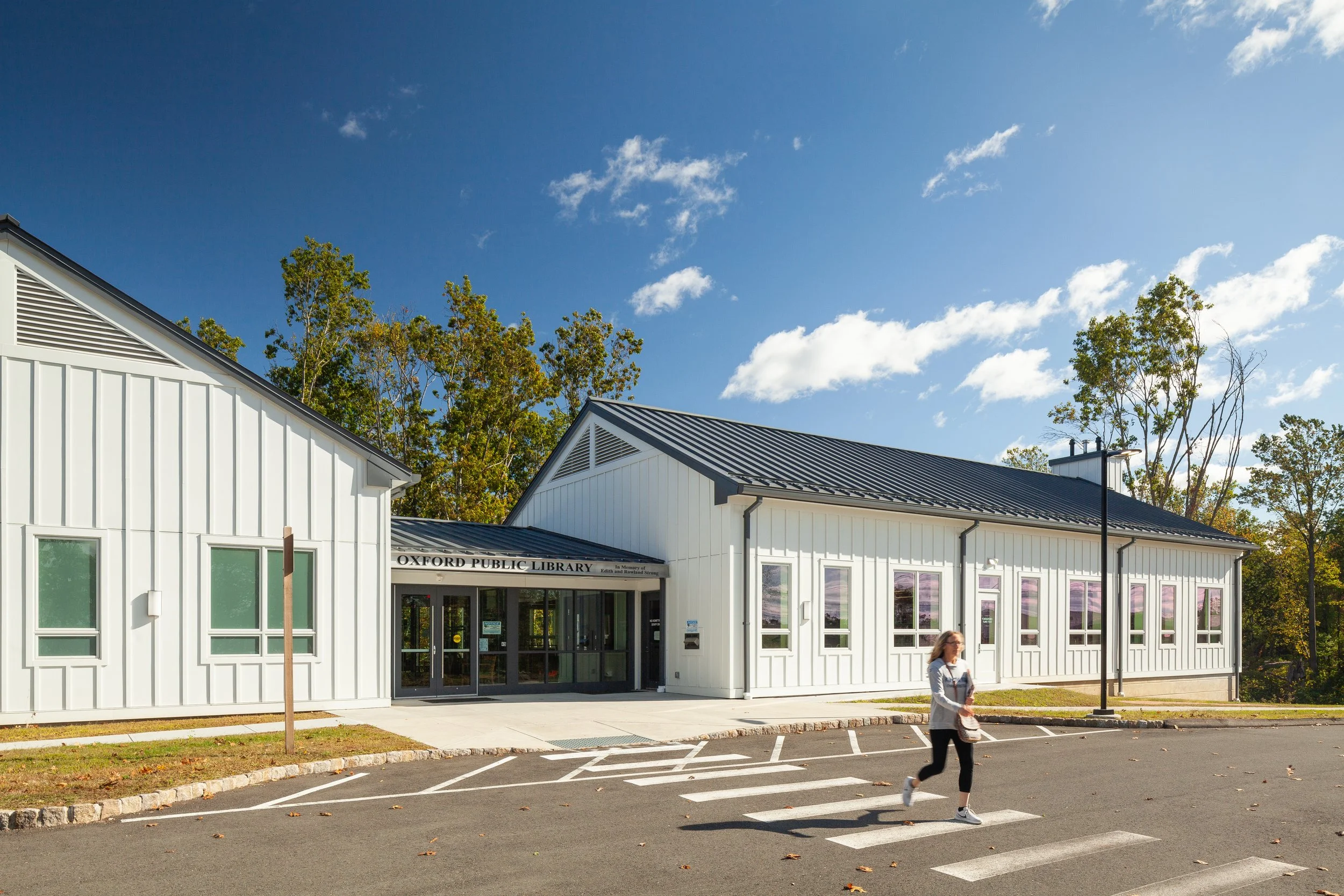
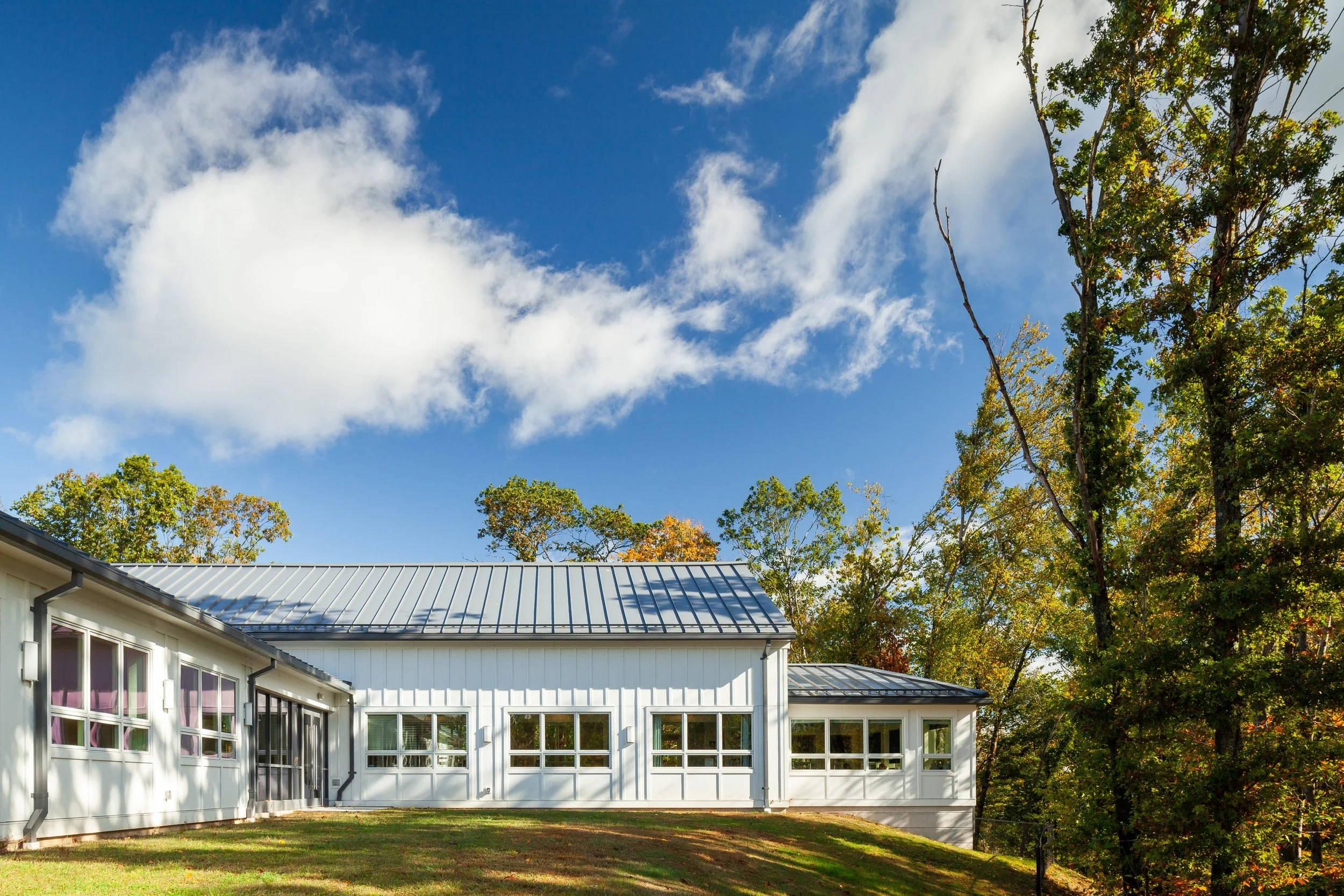
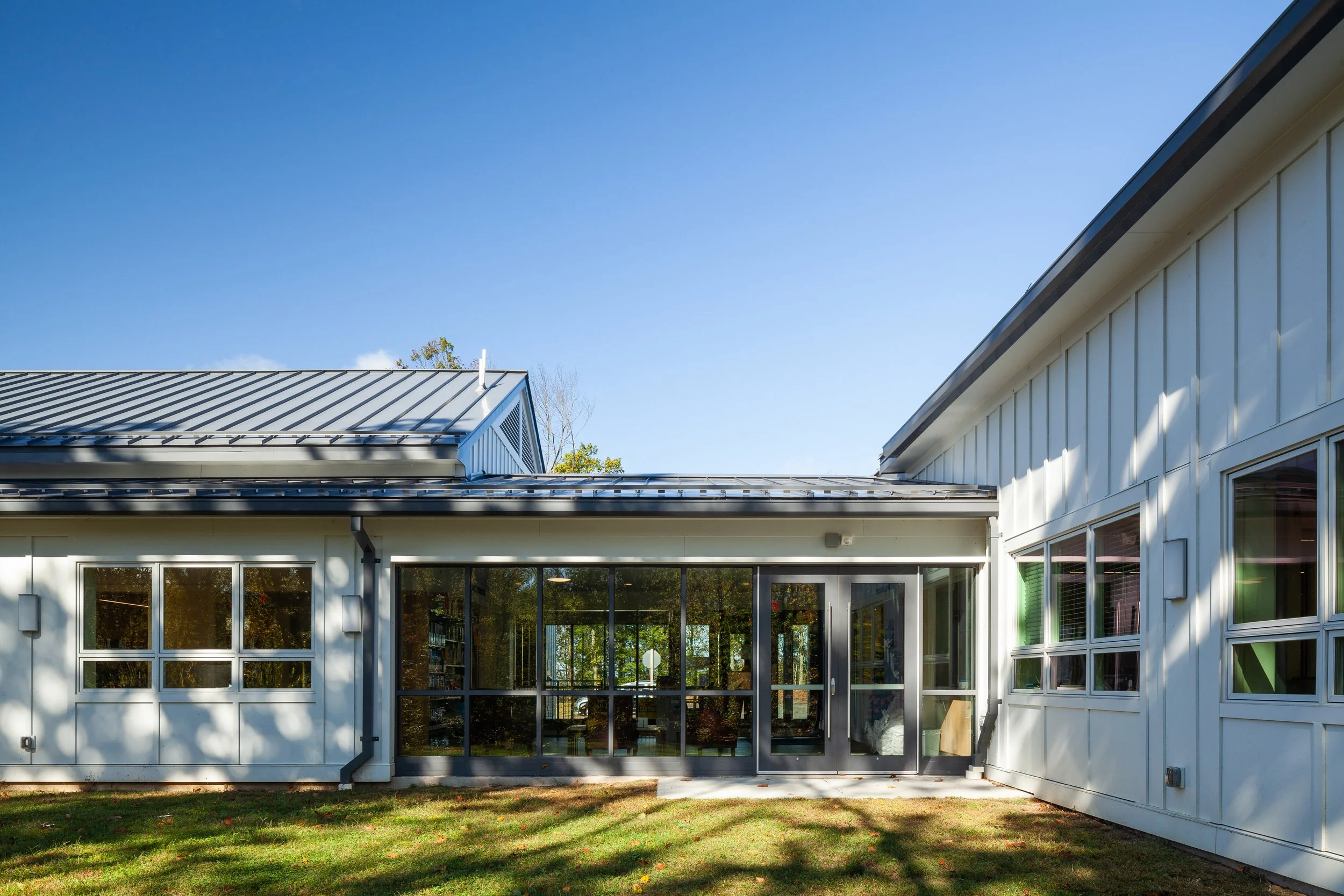
a compact, light-filled library composed of two gabled volumes joined by a glazed connector.
Located across from Quaker Farms Elementary School, the new Oxford Library provides the town with expanded space for cultural and civic programs. The brief called for a building that complements the pastoral context, separates adult, teen, and children’s areas, includes a community room usable after hours, and allows for future growth.
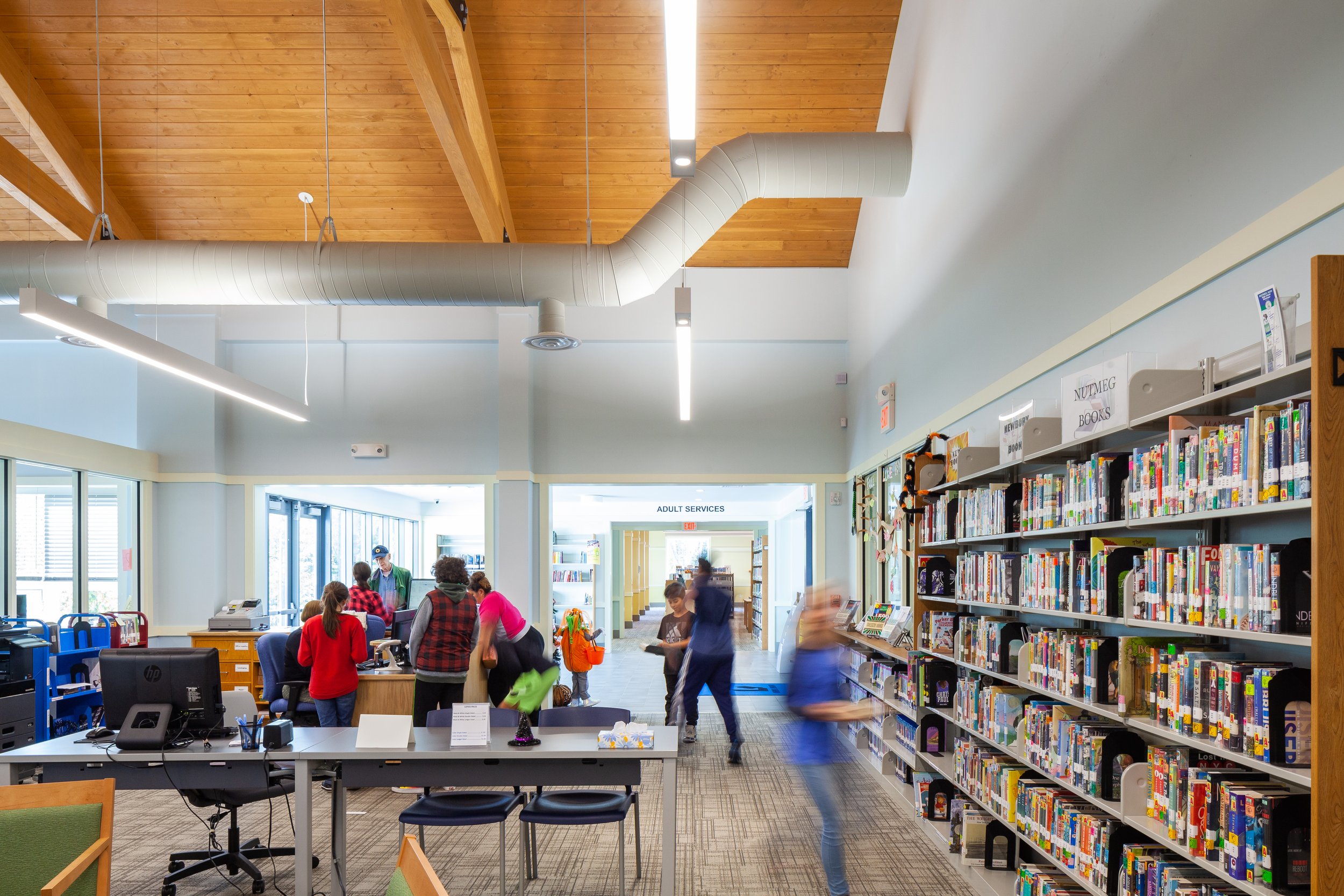
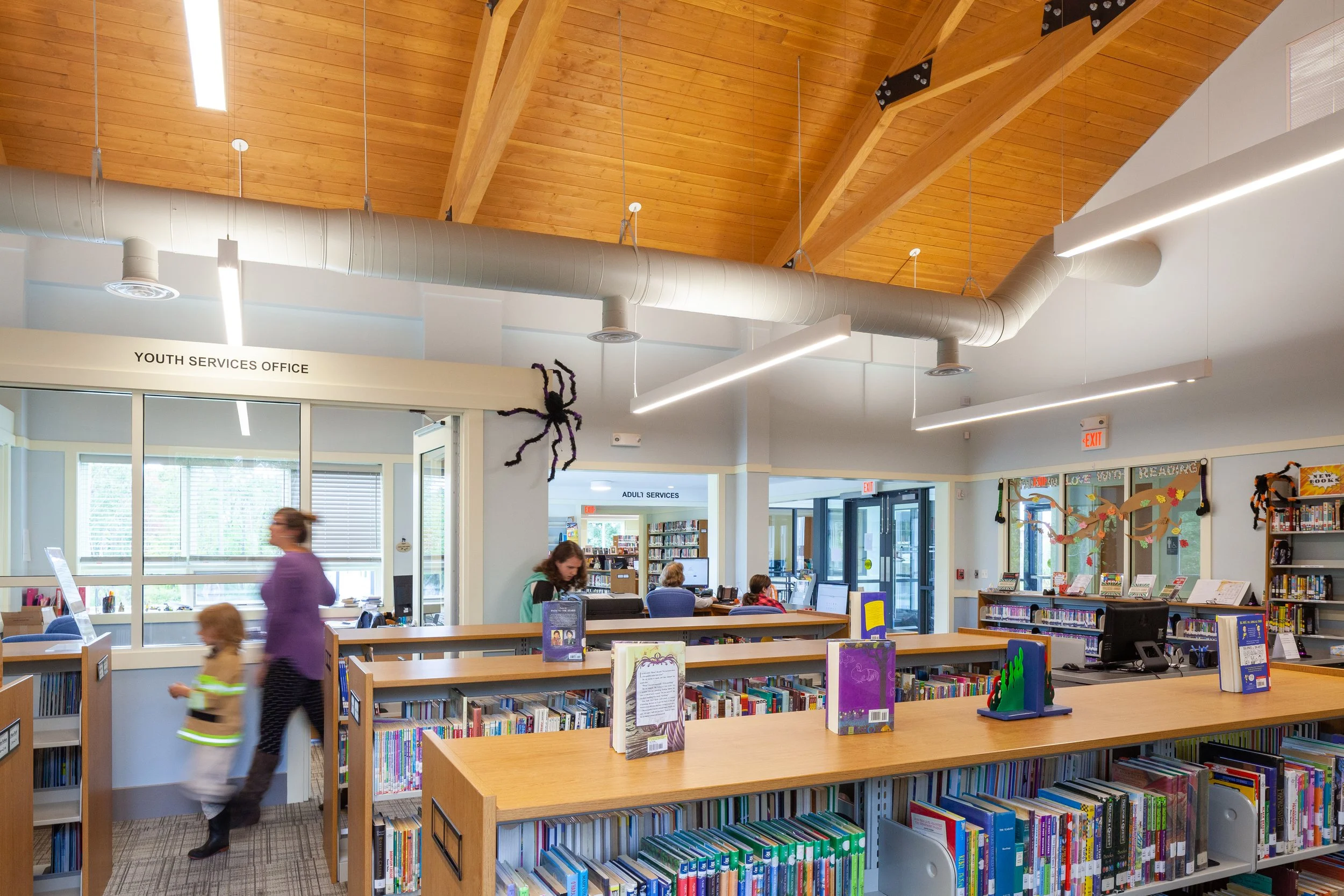
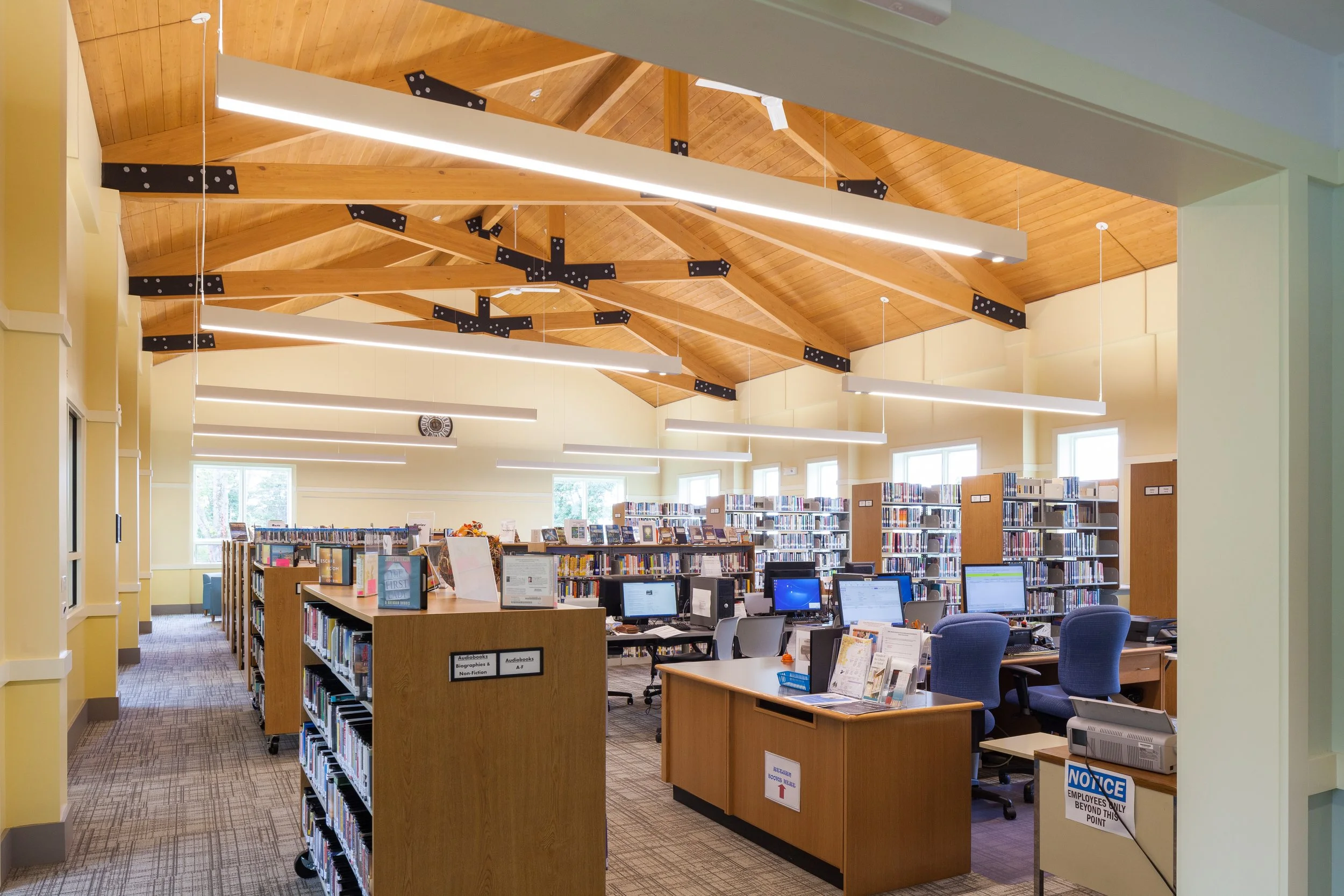
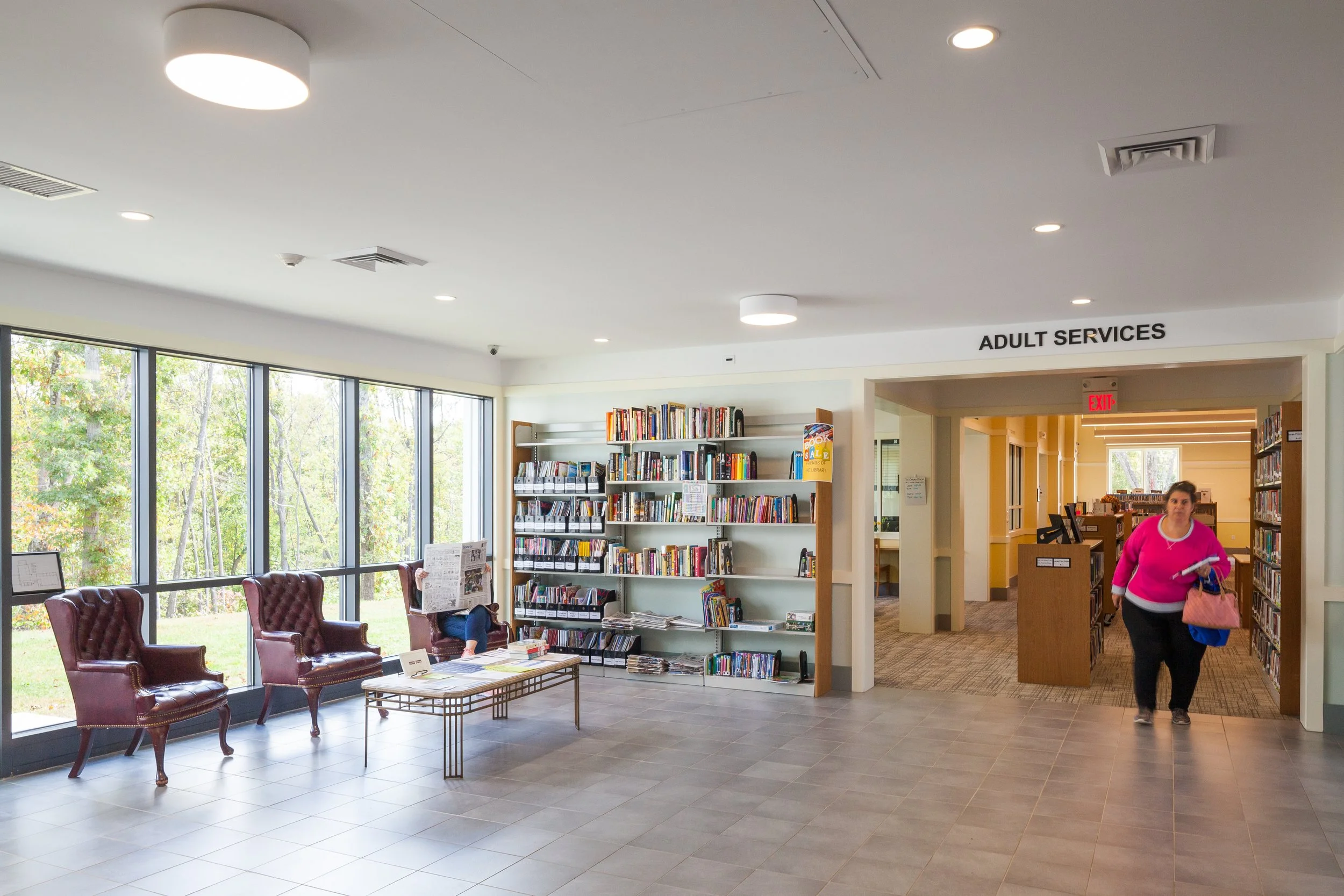
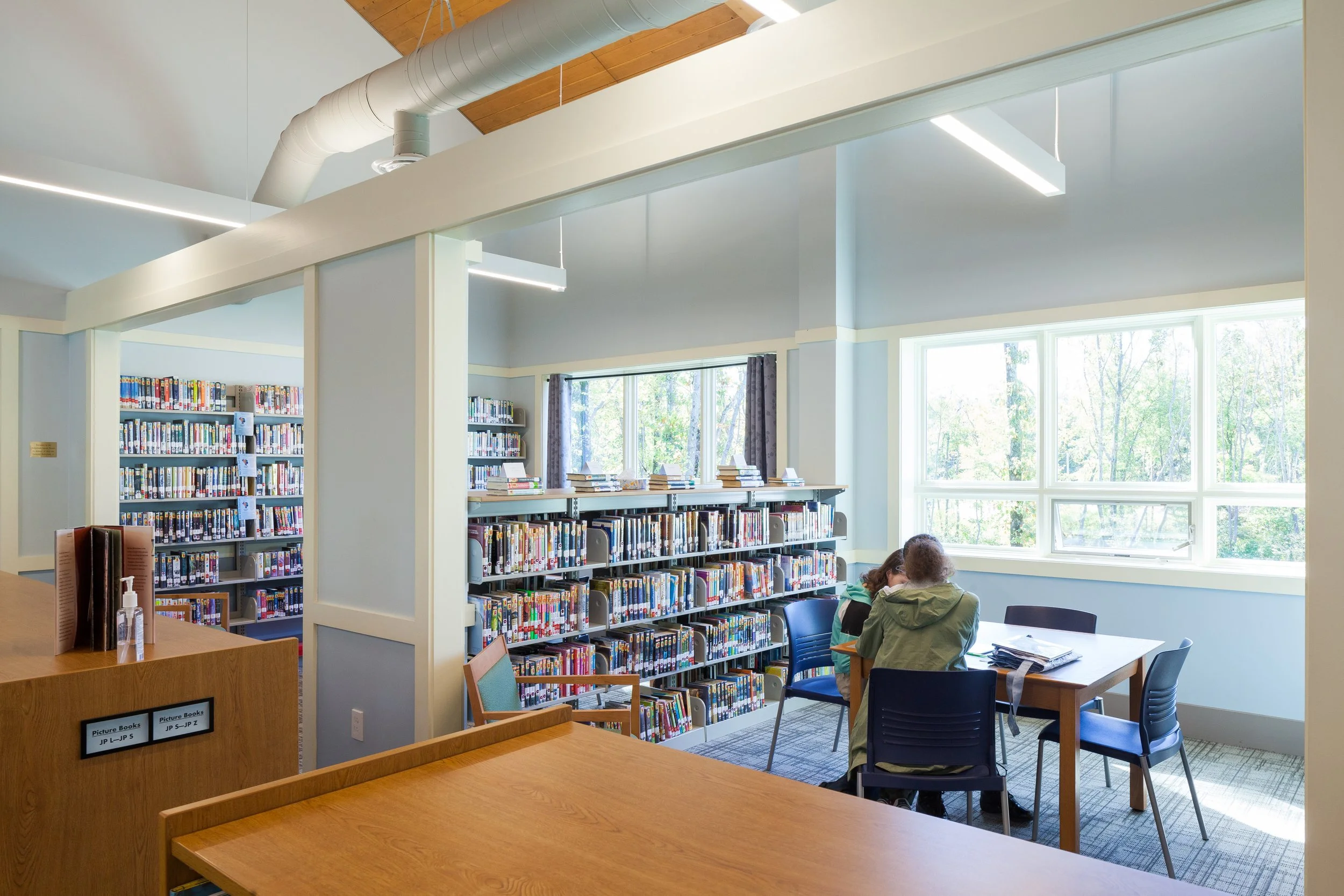
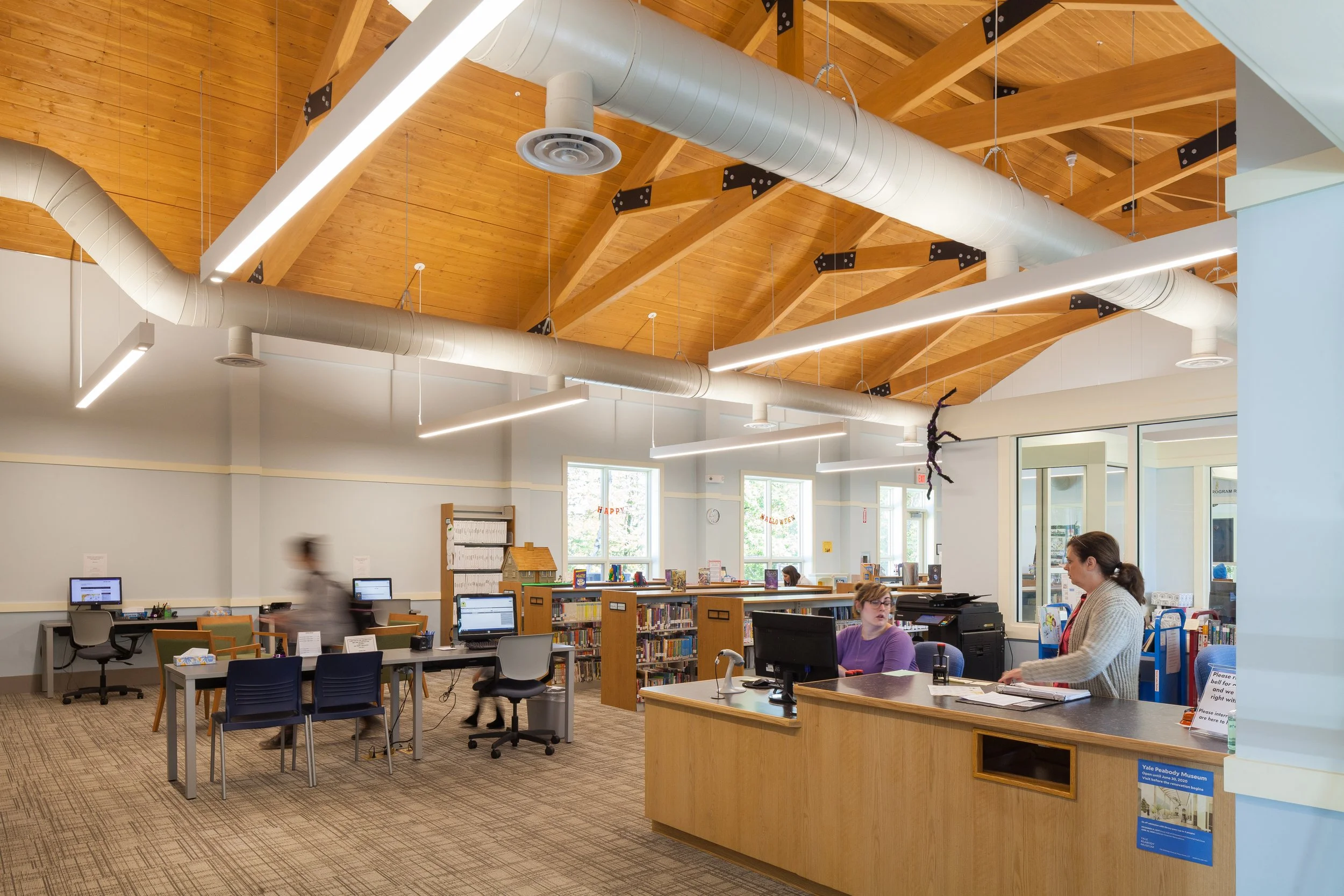
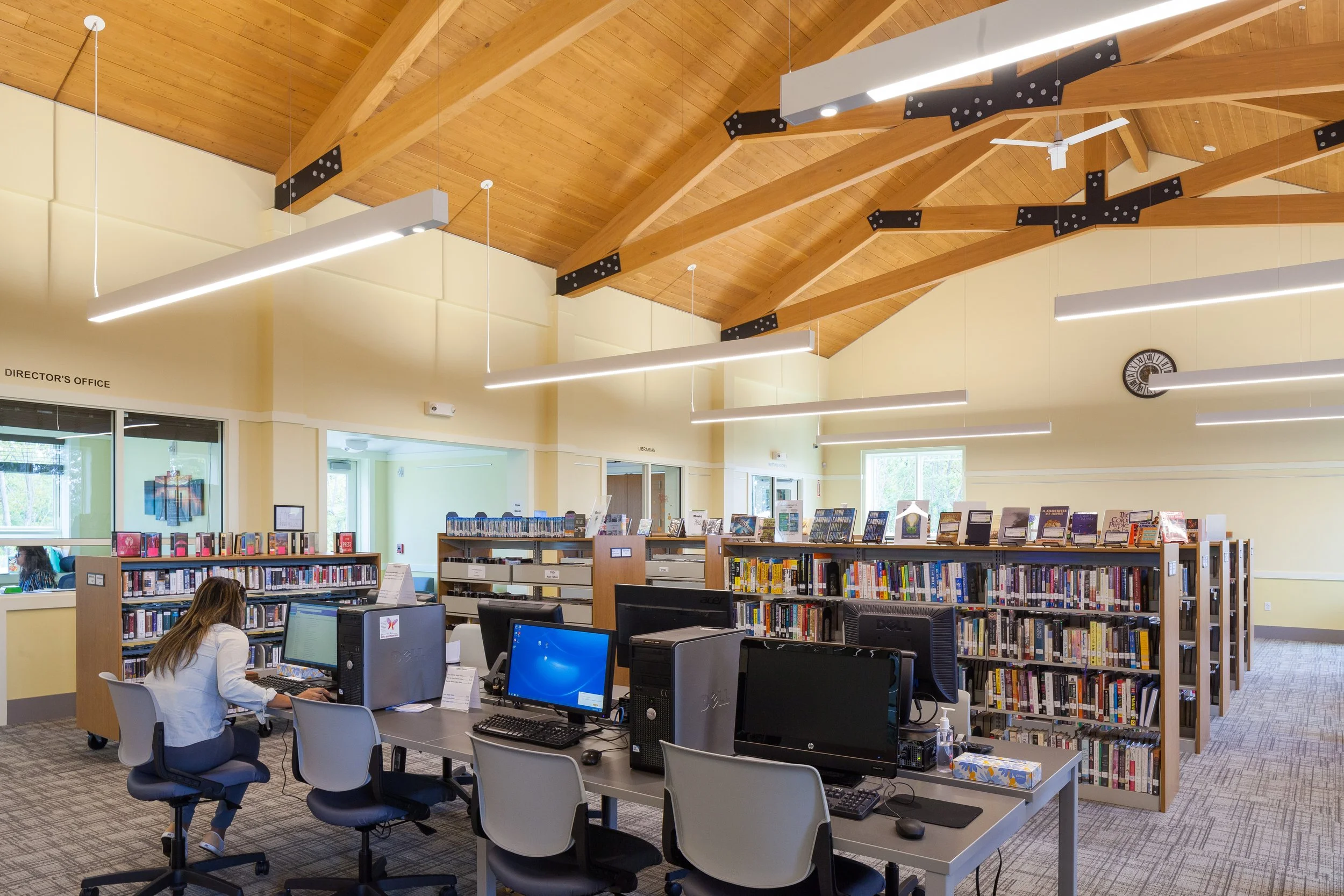
The plan arranges two simple rectangular volumes clad in board-and-batten around a glass-enclosed lobby, creating clear circulation and daylight penetration. Vaulted wood ceilings and open trusses establish a warm, legible interior while durable, low-maintenance materials and an efficient envelope support long-term performance.
project narrative
-
Oxford required a larger, more flexible library that would read comfortably within a rural-residential context while serving diverse user groups and community programs.
The design brief demanded distinct spaces for adults, teens, and children, a community room that can function after hours, and an ability to expand without disrupting daily use. To address this, the project needed a clear spatial strategy that balanced intimacy and visibility.
-
The concept organizes program into two simple gabled volumes connected by a transparent lobby so the building reads as a collection of domestic-scaled forms within the pastoral setting.
Building on this idea, the glazed connector frames views between zones and brings daylight deep into the plan, while the paired volumes allow each program area to maintain its own character and circulation logic.
-
The concept is realized through straightforward massing, traditional siding, and a restrained material palette that responds to local vernacular.
Vaulted wood ceilings and open trusses reinforce a sense of openness, while durable exterior materials and a highly insulated envelope improve comfort and longevity.
Systems strategies—including targeted radiant heating, efficient split HVAC, and LED lighting—support operational efficiency and occupant comfort.
project outcome
The plan supports clear circulation through a central glass connector that clarifies wayfinding between program zones. Transitions between adult, teen, and children’s areas remain visible and manageable, accommodating concurrent activities and after-hours use of the community room.
Daylight reaches deep into interior spaces via the transparent link and vaulted ceilings, producing even illumination and legible sightlines for supervision and study. Warm interior surfaces and durable finishes support comfortable reading conditions while reducing maintenance needs.
The spatial arrangement accommodates incremental growth without interrupting daily operations and reinforces discrete circulation paths. A highly insulated envelope and resilient exterior materials support thermal comfort and longevity. Targeted radiant heating and efficient HVAC support steady indoor conditions and operational efficiency.
let’s continue the conversation
Every project begins with listening. If you’re considering a new campus, building, or landscape, we’d welcome the chance to talk through your goals, challenges, and aspirations. Our team works collaboratively to shape places that feel grounded, connected, and built to serve people well over time.