westchester reform temple
scarsdale, ny
a new center for jewish life that weaves a light-filled sanctuary, historic house, and landscape.
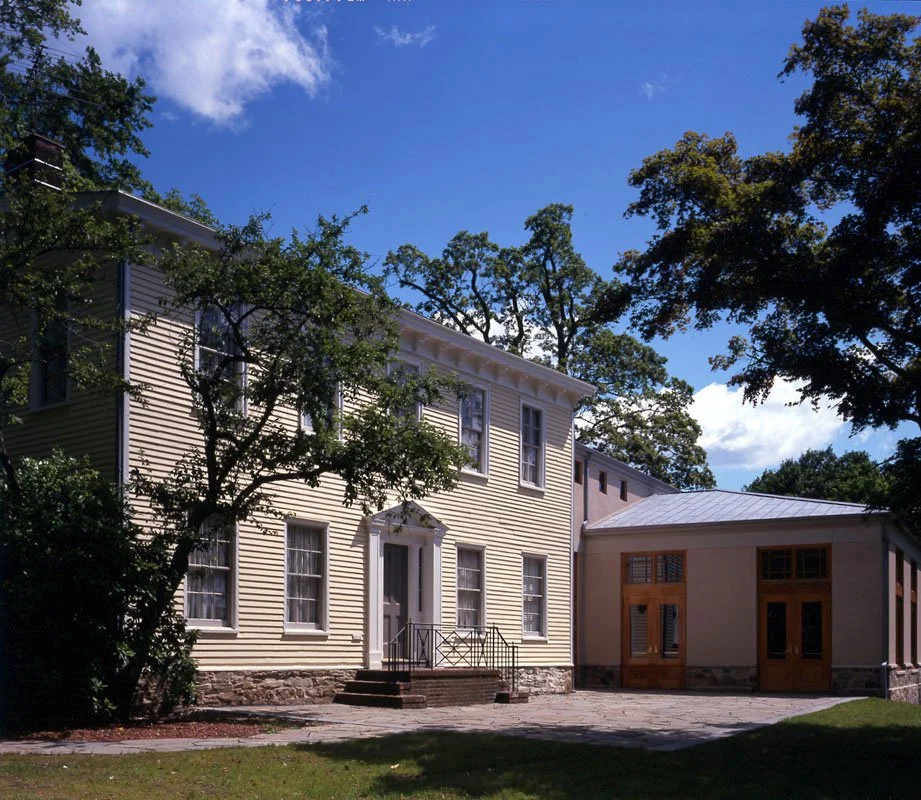
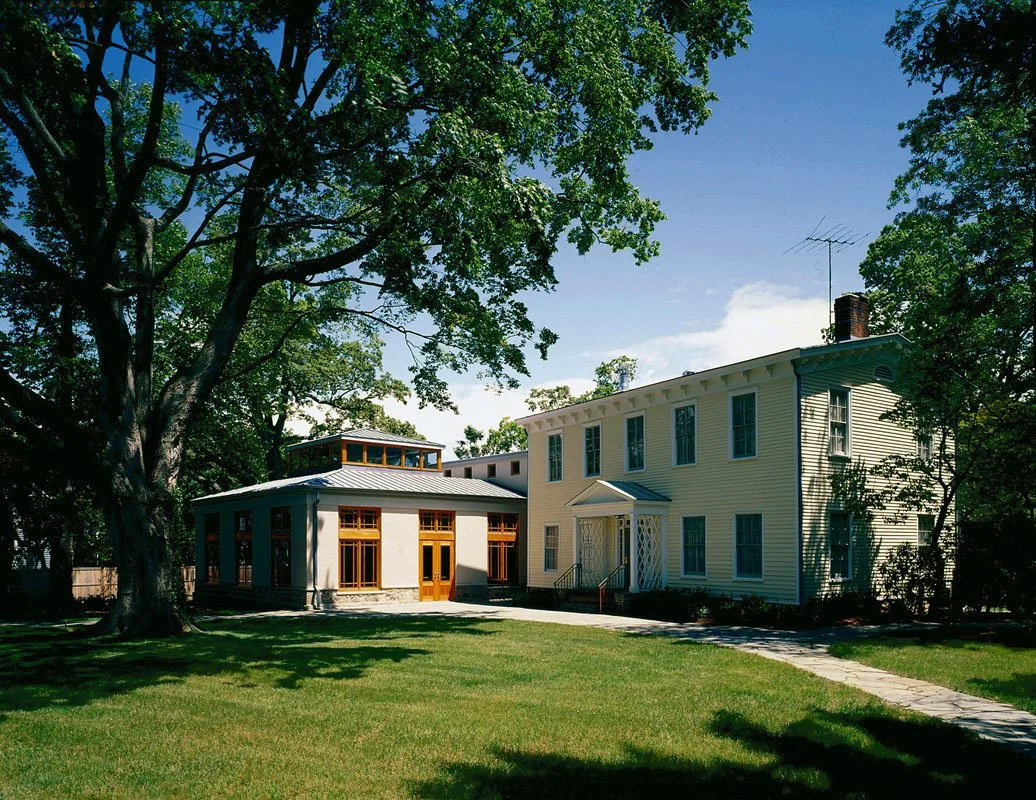
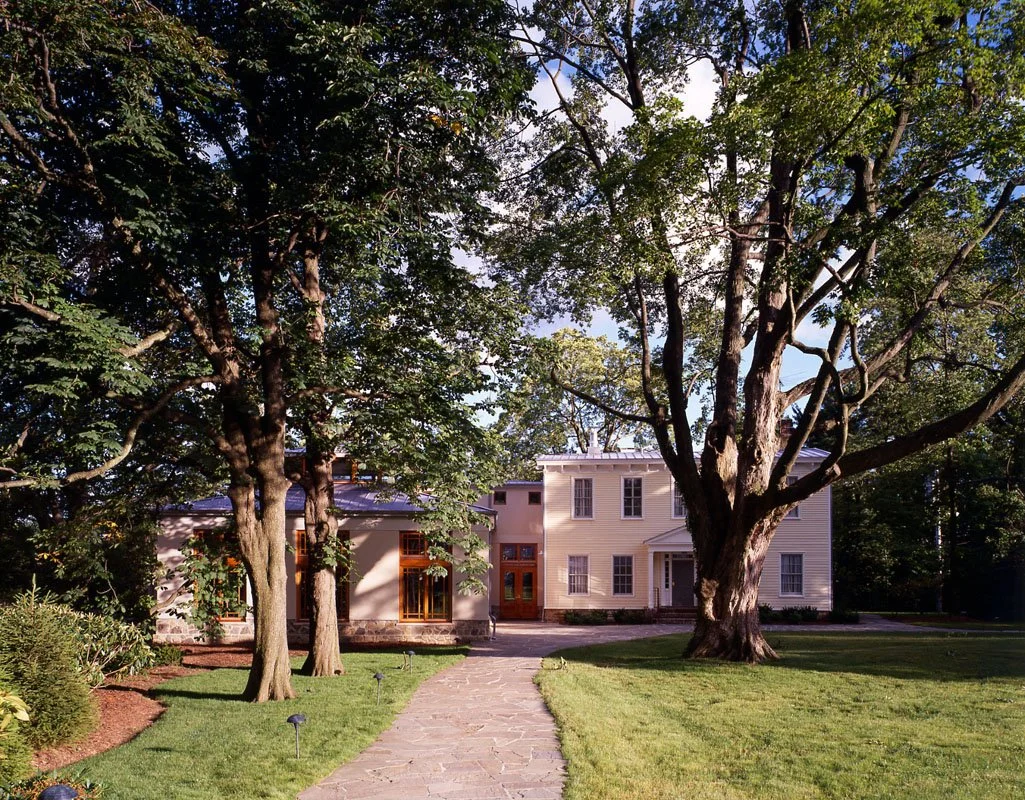
Westchester Reform Temple expanded its campus to accommodate a growing congregation by adding a new Center for Jewish Life and incorporating an adjacent protected house. The program brings worship, life-cycle functions, education, social activities, and dining together within a single, connected setting.
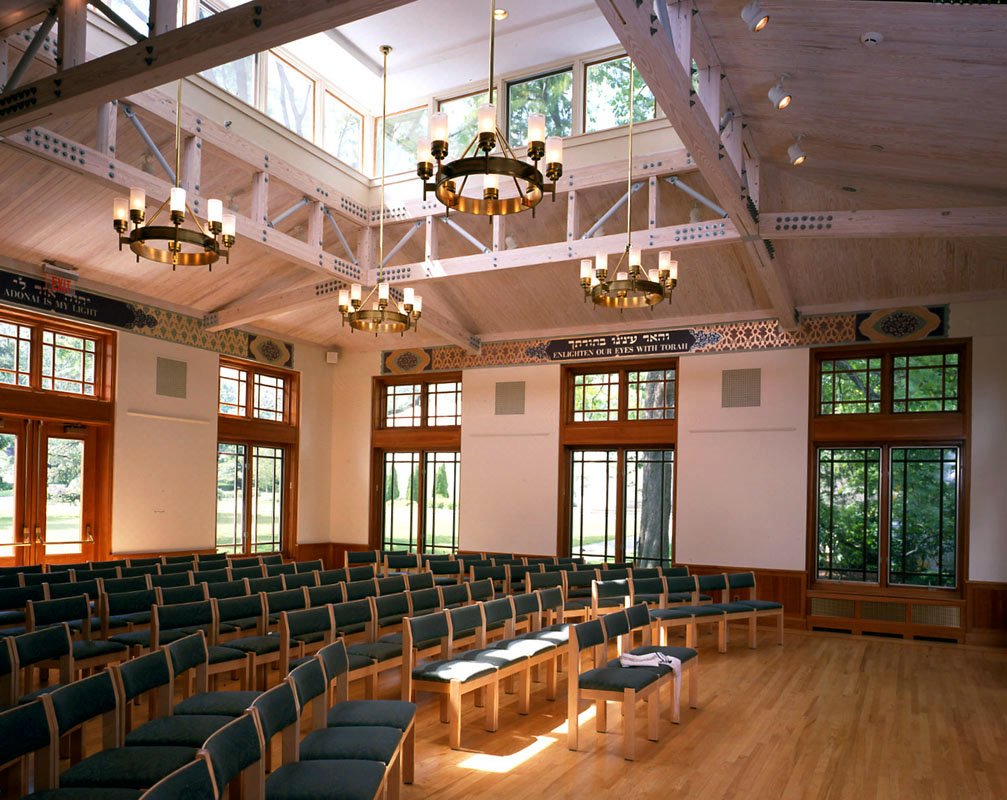
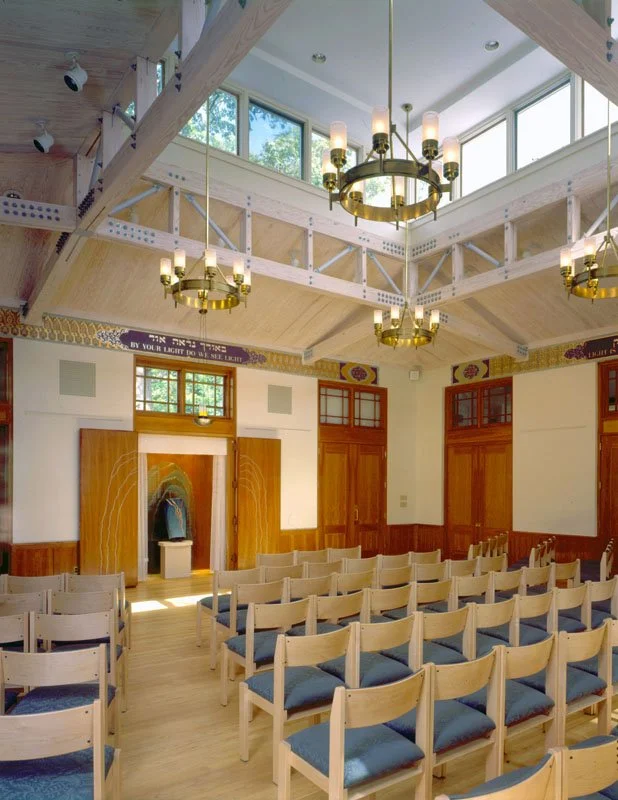
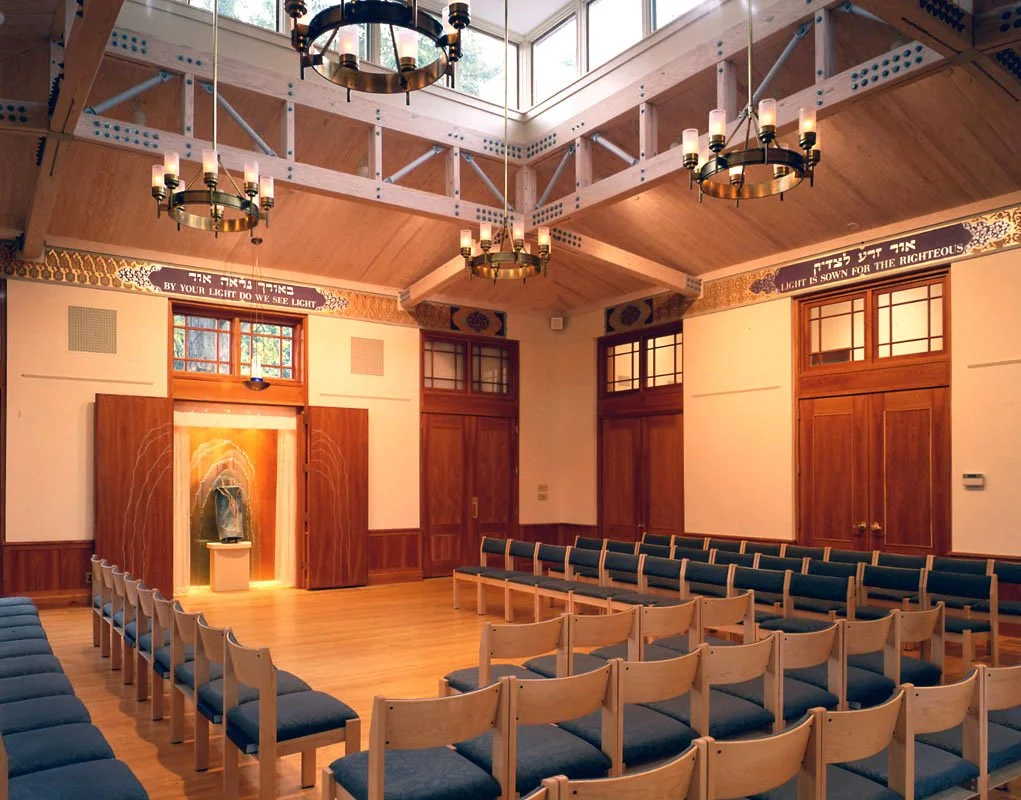
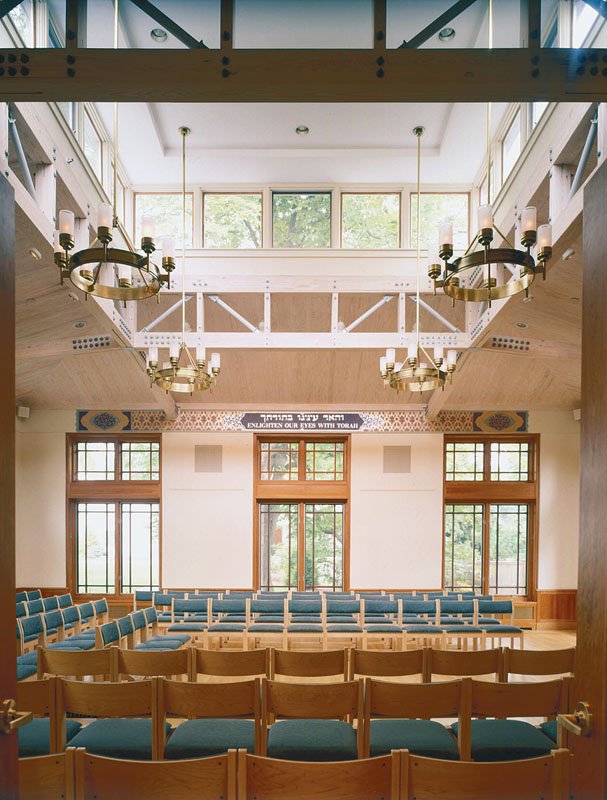
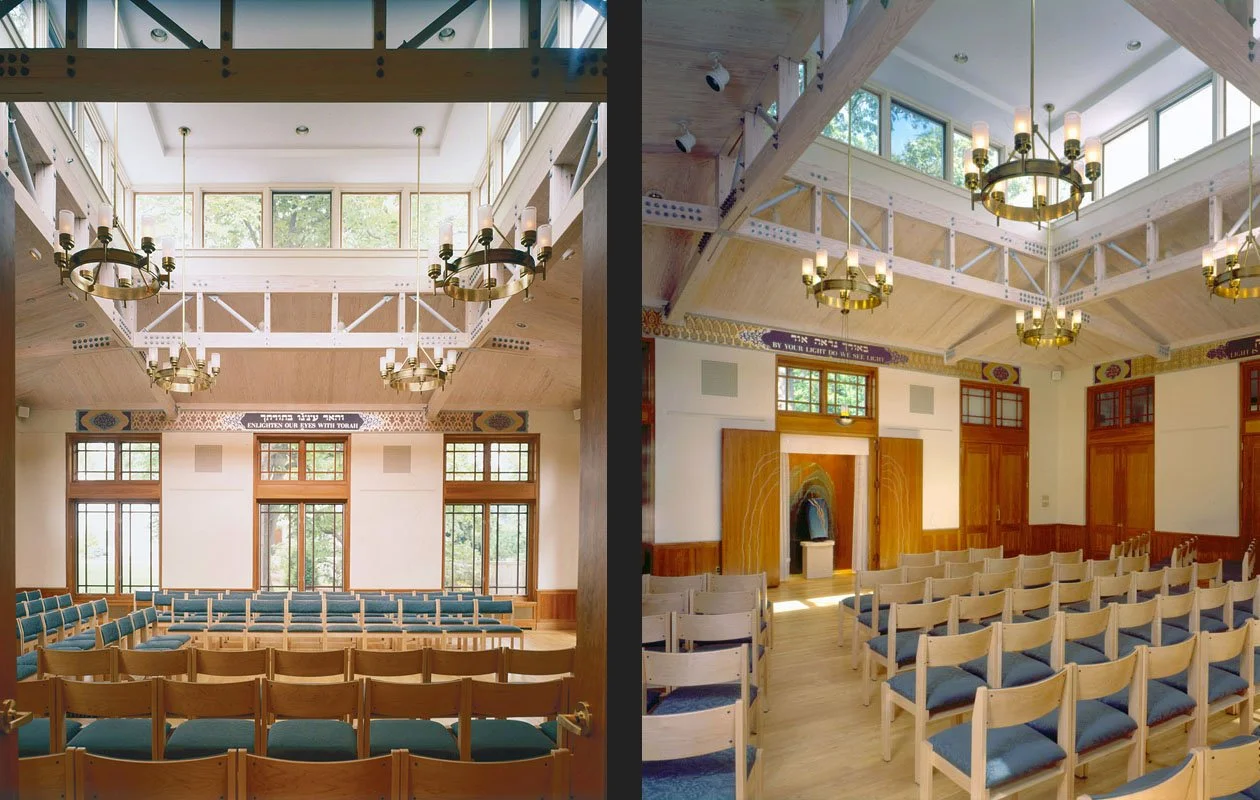
The sanctuary is organized to place the Ark on the east wall and is illuminated by a central clerestory and tall perimeter windows. Flexible seating supports communal arrangements while landscape interventions define a sacred outdoor garden for ceremonies and quiet reflection.
project narrative
-
The congregation needed expanded facilities to support a broader program of worship, life-cycle events, education, and dining, and acquired the neighboring house to create room for growth.
When the house was found to be protected by a historic preservation ordinance, the team had to reconcile the desire for a new Center with the obligation to retain and transform the existing structure.
To address this, the project embraced both new construction and a careful rehabilitation that together define a more legible campus and a clear place in the landscape.
-
The design concept unites new and existing fabric into a single campus experience that prioritizes light, sequence, and the ceremony of arrival.
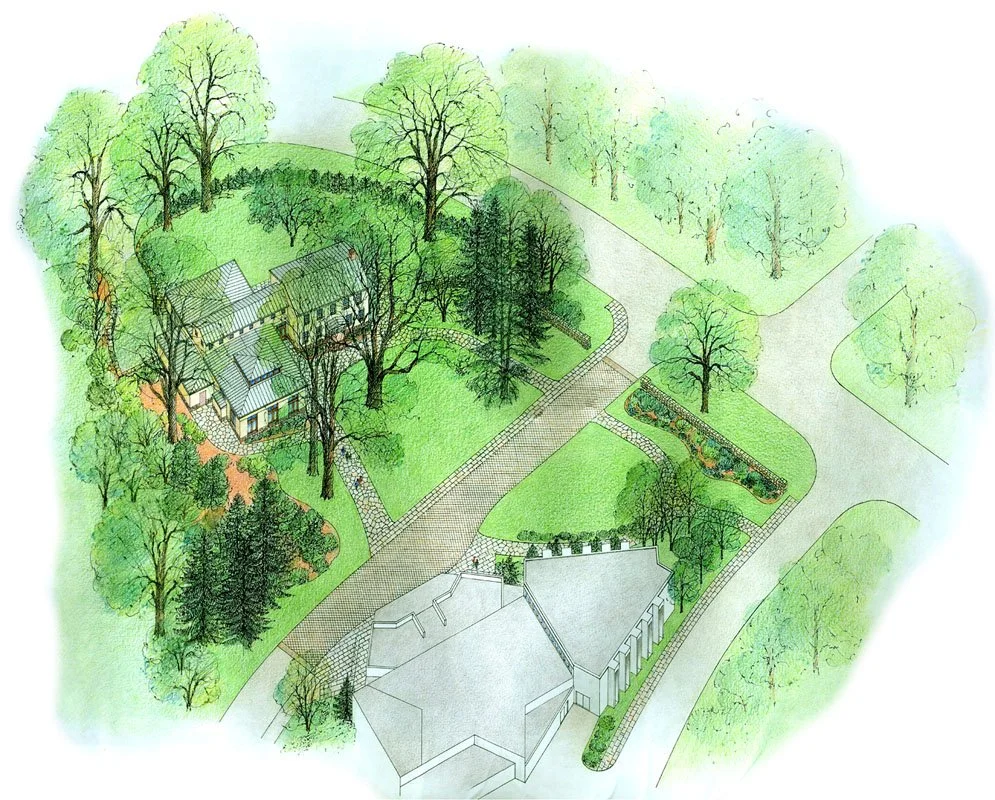
Building on the need to preserve the protected house, the plan treats the new Center as a companion piece that frames a contemplative outdoor room.
This strategy reinforces continuity between interior gathering spaces and the landscape, allowing rituals and daily life to flow between sheltered and open settings.
-
The sanctuary is sited and oriented to emphasize the Ark on the east wall and to capture natural light through a central clerestory and tall perimeter glazing.
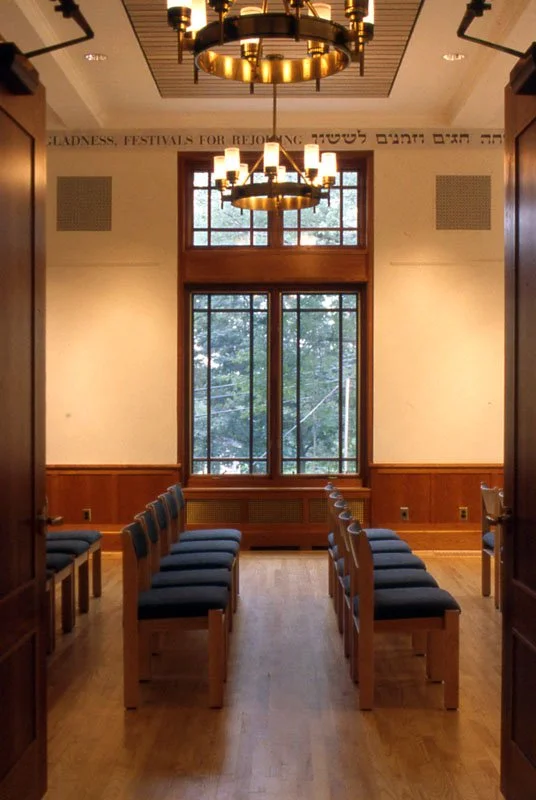
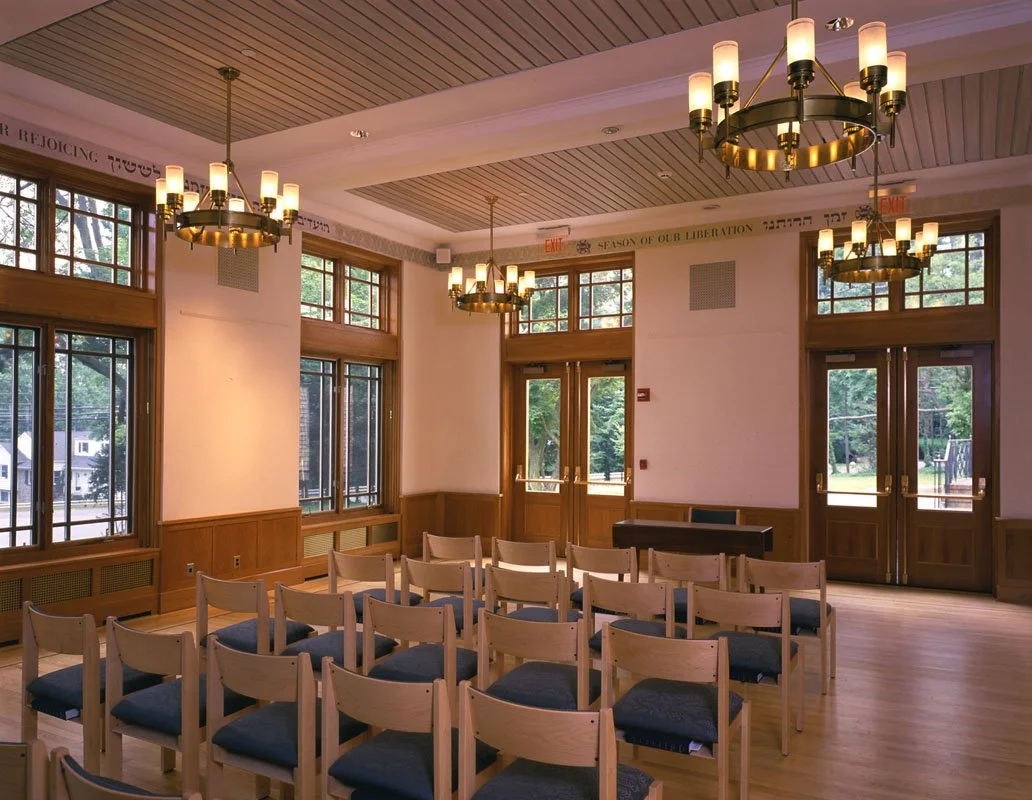
Flexible seating and clear circulation support a range of communal configurations while material choices and detailing establish a measured dialogue with the adjacent historic house.
Landscape architecture shapes a sacred outdoor garden that serves both as a place of reflection and a protected setting for outdoor observances and gatherings.
project outcome
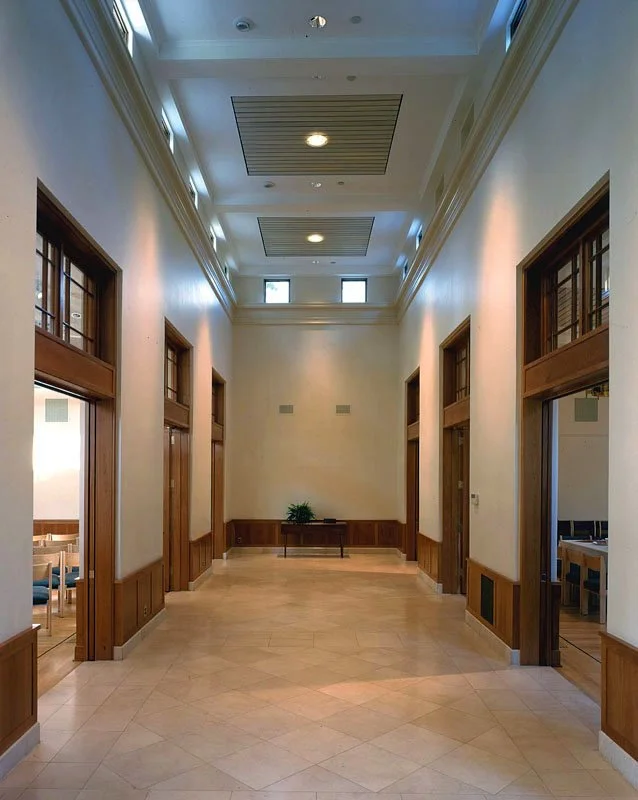
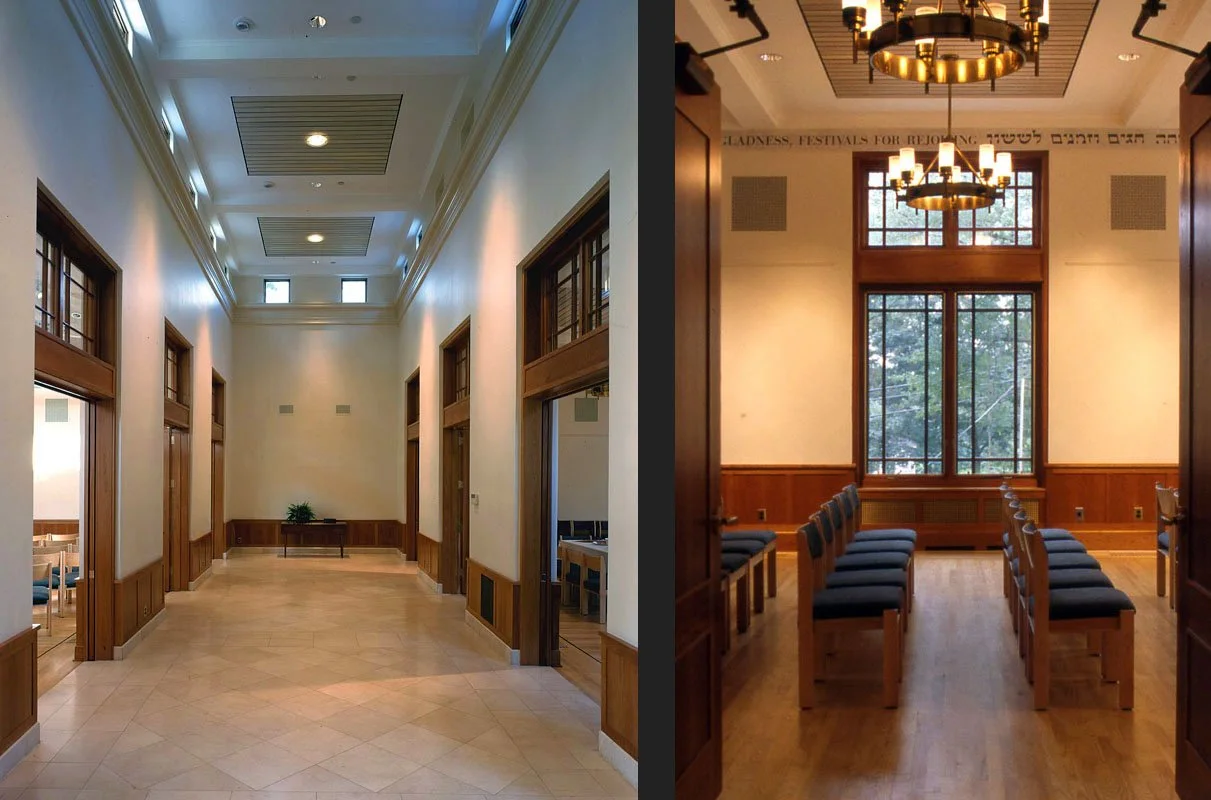
The campus plan clarifies movement between sanctuary, rehabilitated house, and garden, so daily flows remain direct and legible. Entry sequences and pathways support both ceremonial circulation and informal gatherings, reducing overlap between worship, education, and dining activities.
Daylight from a high clerestory and tall perimeter glazing reinforces vertical spatial order and maintains visual connection to the landscape while orienting attention toward the east wall where the ark is located. Even distribution of light and clear sightlines make interior volumes easy to read and occupy.
Flexible seating accommodates shifts between communal arrangements, education, and dining without specialized equipment. The adjacent house remains active in daily use, which supports long-term maintenance and programmatic resilience. The outdoor garden functions as an accessible setting for ceremonies and quiet reflection, reinforcing the campus as a sequence of indoor and outdoor rooms.
let’s continue the conversation
Every project begins with listening. If you’re considering a new campus, building, or landscape, we’d welcome the chance to talk through your goals, challenges, and aspirations. Our team works collaboratively to shape places that feel grounded, connected, and built to serve people well over time.